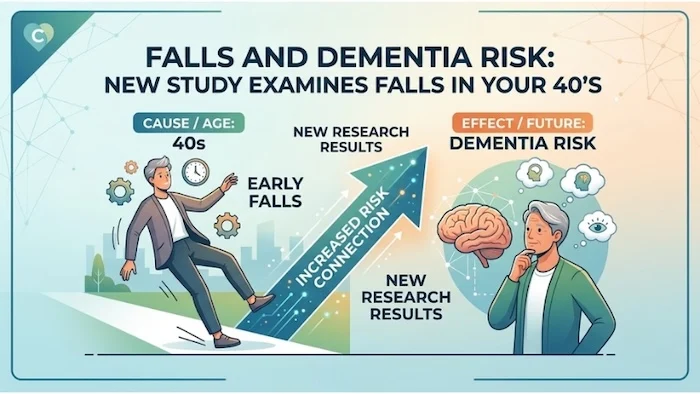
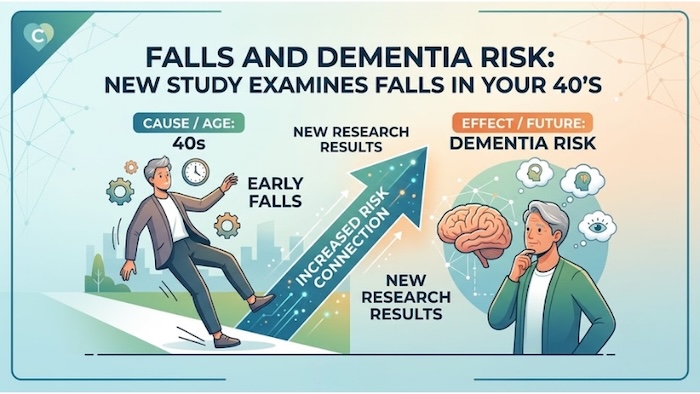
The discomforting reality of aging often brings with it an increased awareness of one’s physical and cognitive vulnerabilities. Among these, the established link between unexplained falls in middle-aged adults and a heightened risk of developing dementia later in life is emerging as a particularly critical public health concern. What was once dismissed as simple clumsiness or an isolated incident is now understood by the medical community as a potential "blinking red warning light," signaling underlying neurodegenerative processes that demand immediate attention long before overt memory loss manifests.
For decades, the prevailing medical paradigm largely compartmentalized physical injuries and cognitive decline, viewing them as distinct and separate pathologies. Falls were typically assessed through the lens of orthopedic health or environmental hazards, while dementia research focused primarily on cognitive biomarkers and genetic predispositions. However, a growing body of robust scientific evidence is dismantling this outdated assumption, revealing an intricate and alarming connection. If individuals in their 40s or 50s experience recurrent or unexplained falls, their brains may already be transmitting a crucial message about their neurological integrity, indicating a need for proactive intervention to potentially mitigate future cognitive decline.
The Shifting Paradigm: Falls as Neurological Indicators
The conceptual shift recognizing falls as potential neurological indicators rather than mere accidents marks a significant advancement in our understanding of aging and brain health. Historically, falls were predominantly associated with advanced age, frailty, and musculoskeletal issues. While these remain important factors, the focus has broadened to include falls occurring in younger cohorts—specifically, middle-aged adults—as potential harbingers of cognitive impairment. This re-evaluation is driven by sophisticated longitudinal studies and meta-analyses that have meticulously tracked populations over extended periods, correlating physical stability with long-term brain health outcomes.
This new perspective emphasizes that balance, gait, and spatial awareness are complex functions requiring precise coordination across multiple brain regions, including the cerebellum, basal ganglia, and frontal cortex. Disturbances in these neural networks, often subtle and imperceptible in their early stages, can first manifest as impaired balance or coordination, leading to falls. These early signs can precede more recognizable cognitive symptoms like memory loss or executive dysfunction by many years, offering a critical window for intervention. The implication is profound: by the time memory issues become apparent, significant neurodegeneration may have already occurred. Thus, a fall, particularly one that seems out of character for a middle-aged individual, is increasingly viewed not as an isolated physical event but as a robust clinical marker of accelerating neurodegenerative decline.
Deep Dive into the Research: Key Studies and Data
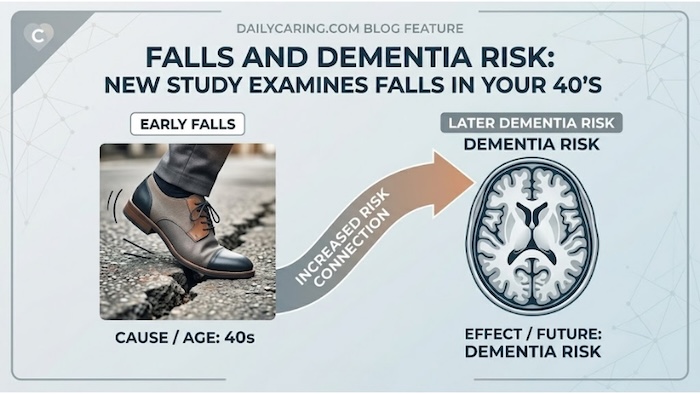
Recent research has solidified the statistical and mechanistic links between falls and dementia risk. One of the most compelling pieces of evidence comes from a systematic review published in the Journal of Post-Acute and Long-Term Care Medicine. This comprehensive analysis synthesized data from nearly 3 million participants across various studies, providing a statistically powerful insight into the relationship. The findings were stark: a single fall after the age of 40 was found to increase an individual’s future dementia risk by a substantial 20 percent. Even more concerning, for patients experiencing multiple falls, that risk skyrocketed to an alarming 74 percent. These figures are not merely statistical curiosities; they represent a grim reality for middle-aged adults grappling with unexplained physical instability, underscoring falls as a potent predictor of impending cognitive decline. The researchers unequivocally concluded that these falls serve as a robust clinical marker, revealing underlying neurological decay long before memory loss becomes overtly noticeable to the individual or their loved ones.
This Changchun University review is not an anomaly; its conclusions are consistently corroborated by independent research conducted by other prestigious institutions. For instance, researchers from the Washington University School of Public Health have made significant strides in understanding the intricate relationship between falls and Alzheimer’s disease. Their pioneering data demonstrates a tight linkage, showing that falls signal faster cognitive decline and represent a risk factor on par with the established presence of Alzheimer’s brain proteins, such as amyloid-beta plaques and tau tangles. This revelation suggests that the neural pathways affected by early Alzheimer’s pathology may directly impair motor control and balance, leading to increased fall risk. The convergence of physical instability with biochemical markers of Alzheimer’s disease paints a clearer picture of the disease’s multifaceted progression.
Further reinforcing this connection, a massive study conducted by Brigham and Women’s Hospital, which meticulously analyzed data from two million Medicare patients, yielded equally compelling results. The study revealed that a significant 10.6 percent of older adults who suffered a traumatic fall were subsequently diagnosed with Alzheimer’s disease or a related dementia within a mere one-year timeframe following the incident. This rapid diagnostic turnaround post-fall strongly indicates that the fall itself was likely a symptom of pre-existing, yet undiagnosed, cognitive impairment. The sheer scale and demographic breadth of these studies leave little room for doubt: the connection between falls and dementia risk is an established medical reality that healthcare providers and the public can no longer afford to ignore.
Unpacking the Mechanisms: Why Falls Signal Cognitive Decline
The intricate relationship between falls and cognitive decline is multifaceted, involving a complex interplay of neurological, physiological, and behavioral factors. Understanding these mechanisms is crucial for developing effective prevention and intervention strategies.
One primary mechanism involves neurodegeneration itself. Medical professionals increasingly confirm that the earliest stages of neurodegenerative diseases, including Alzheimer’s, can begin years, even decades, before a formal diagnosis. This insidious process quietly erodes various brain functions, including those responsible for balance, judgment, spatial awareness, and executive functions like planning and impulse control. For example, subtle changes in white matter integrity, which facilitates communication between different brain regions, can impair gait and coordination. Additionally, atrophy in brain regions like the hippocampus and cerebellum, critical for memory and motor control respectively, can directly contribute to instability. When these underlying brain changes reach a critical threshold, they can manifest physically as an unexplained fall.
Beyond the initial neurological changes, the physical trauma of a fall can also significantly accelerate the progression of cognitive decline. Head injuries, even seemingly minor ones, can induce microbleeds, inflammation, and cellular damage within the brain, potentially exacerbating existing neuropathology or initiating new cascades of damage. Repeated head trauma, which can occur with multiple falls, has been specifically linked to an increased risk of developing various forms of dementia, including chronic traumatic encephalopathy (CTE) and Alzheimer’s-like pathology. The immediate physiological stress and systemic inflammation following a fall can also have detrimental effects on brain health, further compromising cognitive reserves.

Furthermore, behavioral and psychological consequences subsequent to a fall create a vicious cycle that accelerates cognitive decay. Adults who experience a fall, especially a significant one, often develop a profound fear of falling again, known as "post-fall syndrome" or "basophobia." This fear frequently leads to a drastic reduction in physical activity and increased social isolation. Reduced physical activity, in turn, weakens muscles, diminishes balance, and decreases cardiovascular health—all factors independently linked to poorer cognitive outcomes. Social isolation is also a well-documented risk factor for cognitive decline and depression, further compounding the negative effects on brain health. This self-imposed withdrawal creates an environment ripe for accelerated neurodegeneration, transforming a single physical incident into a catalyst for rapid cognitive deterioration.
The Broader Impact on Public Health and Clinical Practice
The undeniable link between falls in middle age and future dementia risk has profound implications for public health strategies and clinical practice. It necessitates a paradigm shift in how healthcare providers screen for, assess, and manage fall risk, moving beyond traditional geriatric concerns to include younger populations.
From a public health perspective, these findings underscore the urgency of proactive awareness campaigns. Educating the public, particularly those in their 40s and 50s, about falls not as benign accidents but as potential neurological warning signs is paramount. Such campaigns could encourage earlier conversations with healthcare providers and promote preventative measures.
In clinical settings, the new data demands a re-evaluation of standard diagnostic protocols. When a middle-aged patient presents with an unexplained fall, a comprehensive neurological assessment should become a standard part of their evaluation, extending beyond immediate injury treatment. This assessment should aim to establish a baseline cognitive function, identify subtle balance or gait impairments, and explore other potential neurological markers that might indicate early neurodegenerative processes. This could involve specialized gait analysis, neuroimaging (e.g., MRI to detect white matter lesions or microbleeds), and cognitive screening tools.
Furthermore, primary care physicians play a critical role. They are often the first point of contact for patients experiencing falls. Equipping them with the knowledge and tools to recognize these falls as potential early signs of dementia and to refer patients for appropriate neurological evaluations is essential. This integrated approach emphasizes that physical health and cognitive health are inextricably linked, particularly as individuals age.
Proactive Strategies for Prevention and Early Intervention

Given the severe implications, proactive action is not merely advisable but essential. Preventing falls must become a primary focus for anyone committed to maintaining their cognitive health throughout their lifespan. A multi-pronged approach encompassing environmental modifications, rigorous clinical assessments, and medication management is crucial.
-
Home Safety Audit: The majority of falls occur within one’s own living environment, often in familiar spaces like the living room or bathroom. A thorough home safety audit is an immediate and critical step. This involves systematically identifying and eliminating common trip hazards such as loose rugs, cluttered pathways, and trailing electrical cords. Installing grab bars in bathrooms, particularly near toilets and in showers, provides vital support. Enhancing lighting throughout the home, especially in hallways, staircases, and entryways, can significantly improve visibility and reduce the risk of missteps. Resources like the DailyCaring Fall Prevention Guide offer comprehensive checklists and practical advice for making homes safer.
-
Clinical Assessment: If unexplained falls occur after the age of 40, scheduling a comprehensive neurological examination is imperative. This goes beyond a routine physical. A neurologist or geriatric specialist can evaluate baseline cognitive function, assess gait stability, balance, and motor coordination, and investigate potential underlying neurological conditions. Such an assessment might include tests of executive function, visual-spatial abilities, and processing speed, alongside physical examinations to identify subtle signs of neurological impairment that contribute to fall risk. Early identification allows for potential interventions, lifestyle adjustments, and monitoring that could slow cognitive decline. Reviewing detailed clinical data and discussing it with healthcare professionals is key to understanding individual risk profiles.
-
Medication Review: Polypharmacy, the concurrent use of multiple medications, is a significant contributor to fall risk, particularly in middle-aged and older adults. Many commonly prescribed drugs, including sedatives, antidepressants, antipsychotics, certain blood pressure medications, and even over-the-counter remedies, can cause side effects such as severe dizziness, orthostatic hypotension (a sudden drop in blood pressure upon standing), drowsiness, or impaired coordination. It is critical to proactively engage doctors and pharmacists in a thorough review of all current medications, including supplements, to identify potential drug interactions or side effects that could increase fall risk. Healthcare providers should be encouraged, and if necessary, "forced," to re-evaluate prescriptions, explore alternative medications, or adjust dosages to minimize adverse effects on balance and cognition.
-
Promoting Physical Activity and Balance Training: Regular physical activity, particularly exercises that focus on balance, strength, and flexibility, is a powerful preventative measure. Tai Chi, yoga, and specialized balance training programs can significantly improve stability and reduce fall risk. Strength training helps maintain muscle mass, which is crucial for supporting joints and maintaining posture. Engaging in consistent cardiovascular exercise also benefits overall brain health by improving blood flow and reducing inflammation. Public health initiatives and community programs promoting these activities for middle-aged adults could play a vital role in fall prevention and cognitive preservation.
Expert Perspectives and Calls to Action
Leading medical organizations and experts are increasingly vocal about this burgeoning crisis. Dr. Sharon Sha, a neurologist specializing in dementia at Stanford Health Care, emphasized in a recent interview, "We’ve always known falls are a problem in older adults, but what’s striking now is seeing them as a preclinical marker in middle age. It’s a critical opportunity to intervene." Public health bodies, such as the Centers for Disease Control and Prevention (CDC), while historically focusing on falls in the elderly, are beginning to broaden their scope to include younger populations in their fall prevention guidelines, advocating for early screening and lifestyle modifications. Patient advocacy groups, like the Alzheimer’s Association, are also incorporating fall prevention into their broader messaging on brain health, urging individuals and families to take these warnings seriously. The collective voice of the medical and public health community is clear: ignoring these early physical warning signs is not merely negligent but constitutes a direct gamble with long-term cognitive health.
The Economic and Societal Burden
The implications of falls signaling early dementia extend beyond individual health to encompass significant economic and societal burdens. Falls are a leading cause of injury-related deaths and healthcare utilization, generating billions in direct medical costs annually. When these falls are linked to accelerating dementia, the costs multiply, including long-term care expenses, increased caregiver strain, and lost productivity. The emotional toll on families and caregivers, navigating both physical recovery from falls and the complexities of cognitive decline, is immense. Addressing falls proactively in middle age could therefore alleviate substantial future healthcare expenditures and enhance the quality of life for countless individuals and their families.
Conclusion: A Paradigm Shift in Understanding Aging and Cognition
The medical consensus is unequivocal: a fall in middle age is far from a normal part of aging or a simple moment of clumsiness. Instead, it must be recognized as a potential early warning system for the brain, signaling incipient neurodegenerative processes. Data from leading research institutions robustly confirms that falls act as potent clinical markers for cognitive decline, sharing a similar risk profile to established Alzheimer’s biomarkers like amyloid plaques and tau tangles.
If you or a loved one are experiencing unexplained falls, immediate action is paramount. It is crucial to address the possibility of both physical and neurological risks without delay. This involves scheduling a comprehensive clinical assessment with a healthcare professional, meticulously auditing your living space for potential hazards, and prioritizing physical stability through targeted exercises and medication management. Waiting for the next fall is a perilous gamble with long-term cognitive health, potentially squandering valuable time for early intervention. By understanding and acting upon these critical warning signs, individuals can empower themselves to proactively safeguard their brain health and potentially alter the trajectory of cognitive decline.
Disclaimer: The content provided on this platform is for informational and educational purposes only and does not constitute professional medical advice, diagnosis, or treatment. Always seek the advice of your physician or other qualified health provider with any questions you may have regarding a medical condition or physical injury.