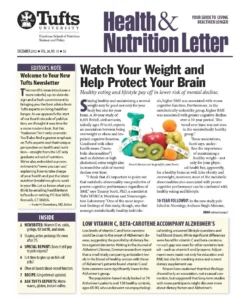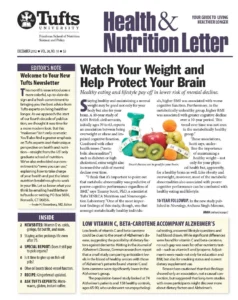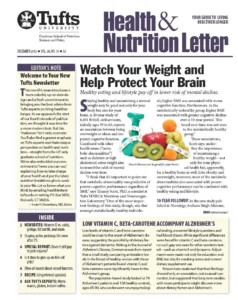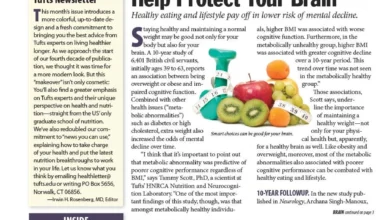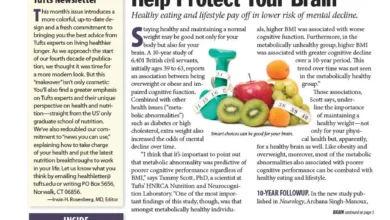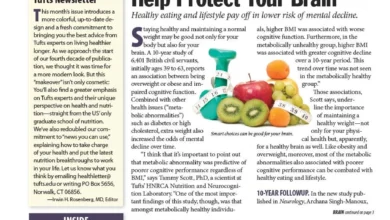
Unlocking Evidence-Based Dietary Guidance: Inside the Mission of Tufts Health & Nutrition Letter

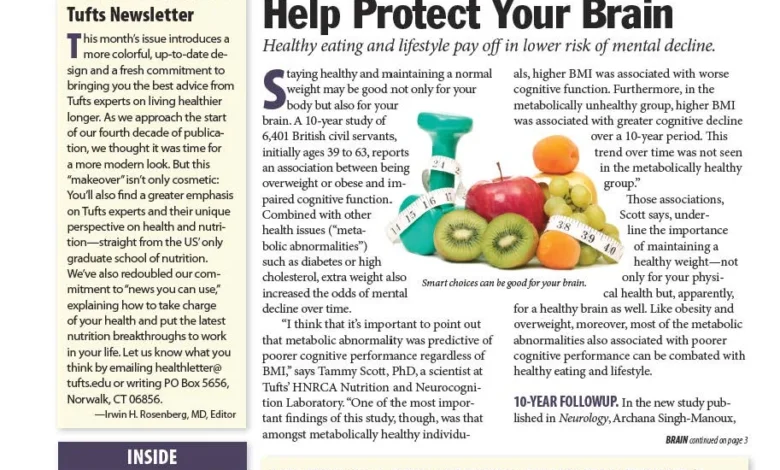
The modern landscape of nutritional science is often characterized by a cacophony of conflicting headlines, passing fad diets, and sensationalized claims that leave the average consumer bewildered about what to put on their plate. Amid this daily influx of dietary advice, distinguishing between rigorous, peer-reviewed science and marketing-driven pseudoscience has become an increasingly daunting challenge. For decades, academic institutions and specialized publications have stepped into this void to provide clarity, translating complex biochemical research into actionable, everyday dietary recommendations. Among the most respected entities in this endeavor is the Tufts Health & Nutrition Letter, a publication originating from the prestigious Friedman School of Nutrition Science and Policy at Tufts University. Designed to bridge the gap between academic laboratories and the public dining table, the publication has long served as a trusted resource for evidence-based health guidance. However, as the digital age transforms how people consume health information, the mechanisms by which authoritative institutions deliver their findings have evolved, highlighting the critical balance between open access to public health data and the financial models required to sustain rigorous journalistic integrity.
Main Facts and the Contemporary Landscape of Nutritional Literacy
At its core, the mission of the Tufts Health & Nutrition Letter is rooted in public education and chronic disease prevention. Chronic conditions such as cardiovascular disease, type 2 diabetes, and obesity continue to impose staggering burdens on global healthcare systems. According to data from the Centers for Disease Control and Prevention (CDC) and the World Health Organization (WHO), poor dietary patterns are among the leading preventable risk factors for premature mortality worldwide. Despite the abundance of food available in developed nations, malnutrition in the form of nutrient-poor, highly processed diets remains a pervasive public health crisis.
Navigating this crisis requires reliable, unbiased information that is free from commercial bias or corporate sponsorship. Academic publications produced by university-affiliated centers operate under strict editorial guidelines, relying on double-blind peer reviews, meta-analyses, and randomized controlled trials rather than anecdotal success stories. The challenge for these institutions, however, is dissemination. While sensationalized diet trends can go viral overnight across social media platforms, nuanced scientific consensus regarding macronutrient distribution, micronutrient bioavailability, and gut microbiome health requires careful explanation. Publications like the Tufts Health & Nutrition Letter strive to dismantle complex topics—such as the physiological impacts of saturated fats versus unsaturated fats, or the glycemic index of various carbohydrates—into formats that empower consumers to make informed choices.
Chronology and Evolution of University-Backed Health Journalism
The evolution of university-backed health publications mirrors the broader transformation of media, public relations, and digital publishing over the past half-century. In the late 20th century, academic institutions recognized that groundbreaking research conducted within their laboratories often remained trapped within academic journals, inaccessible and incomprehensible to the general public. This realization catalyzed the creation of consumer-facing newsletters produced by leading medical and agricultural universities, including Harvard, Mayo Clinic, and Tufts.
During the 1980s and 1990s, these publications relied heavily on print subscriptions delivered via postal mail. Readers looked forward to monthly issues detailing the latest findings on fiber intake, cholesterol management, and the emerging Mediterranean diet. The launch of the internet in the late 1990s and early 2000s initiated a profound paradigm shift. Academic publishers began migrating their content online, offering digital archives alongside physical copies. This digital transition democratized access to information to an unprecedented degree, allowing users worldwide to search vast libraries of past articles instantaneously.
However, the shift to digital platforms also disrupted traditional revenue models. As ad-supported web content proliferated—often incentivizing clickbait, extreme headlines, and unverified health claims to capture web traffic—authoritative publications faced a severe economic dilemma. High-quality, evidence-based journalism requires substantial financial investment to support fact-checking, editorial oversight, and expert consultation. To protect their editorial independence and maintain rigorous standards without succumbing to corporate advertising pressures, many academic health publications adopted subscription-based models. This framework ensures that the primary accountability remains with the reader and the scientific community, rather than commercial advertisers whose interests might conflict with objective nutritional advice.
Supporting Data and the Economics of Evidence-Based Publishing
The financial sustainability of independent, science-based health journalism is a matter of considerable significance within academic publishing. Producing accurate health content demands continuous engagement with newly published literature across major scientific journals, including the New England Journal of Medicine, The Lancet, JAMA, and the American Journal of Clinical Nutrition. Analysts estimate that reviewing, synthesizing, and translating a single landmark nutritional study into consumer-friendly language involves dozens of hours of expert vetting by registered dietitians, epidemiologists, and science journalists.
To fund this meticulous process while remaining independent, publications often utilize tiered subscription models. For instance, introductory rates—such as annual digital subscriptions priced at accessible thresholds around $18—allow broader segments of the population to access verified health information while providing the necessary revenue to cover operational costs. These subscriptions typically include comprehensive access to digital archives, back issues, and specialized online content. By keeping costs minimal, institutions aim to fulfill their public service mandate of health education while ensuring long-term financial viability.
Furthermore, the data underscores why investment in nutritional literacy yields profound economic returns. Preventative healthcare measures, driven by accurate dietary education, significantly reduce the incidence of diet-related chronic illnesses. Economic models developed by health economists indicate that every dollar spent on effective public health nutrition education can save multiple dollars in future medical expenditures associated with treatments for heart disease, stroke, and diabetes. Consequently, subscribing to verified health newsletters is viewed by many public health advocates not merely as a consumer purchase, but as a proactive investment in personal and societal well-being.
Official Responses and Institutional Commitments to Integrity
Academic institutions maintain stringent ethical standards to safeguard their reputations and ensure public trust. When universities lend their names to consumer publications, the content is subjected to rigorous institutional oversight. Editors and advisory boards are typically composed of prominent researchers, physicians, and professors who have no financial ties to the food industry or pharmaceutical companies.
Statements from academic leadership consistently emphasize transparency, objectivity, and the separation of research from commercial interests. In an era where misinformation can spread rapidly across digital networks, university-backed publications position themselves as buldrwarks of factual accuracy. Editorial policies explicitly prohibit conflicts of interest, ensuring that recommendations regarding dietary supplements, superfoods, or specific eating regimens are based strictly on reproducible scientific evidence rather than prevailing market trends.
When updates occur within official dietary guidelines—such as the periodic revisions of the Dietary Guidelines for Americans—university publications play a crucial role in contextualizing these changes for the public. They analyze the underlying methodologies of advisory committees, explain the shifts in scientific consensus regarding topics like sodium intake or added sugars, and provide practical guidance on how individuals can implement these recommendations within their daily lives.
Broader Impact and Implications for the Future of Nutritional Science
The ongoing digital transformation of health communications carries profound implications for the future of nutritional science and public health. As artificial intelligence, machine learning, and personalized nutrition begin to reshape how individuals approach their diets, the demand for reliable, foundational guidance will only intensify. Future dietary recommendations are expected to move increasingly toward personalized nutrition, tailoring advice based on genetic profiles, metabolic responses, and gut microbiome composition.
In this rapidly shifting landscape, the role of trusted, university-backed publications will remain indispensable. While algorithms can process vast datasets and wearable devices can track real-time physiological metrics, the human capacity for critical synthesis, contextualization, and ethical communication cannot be automated. Publications that maintain a steadfast commitment to evidence-based reporting serve as vital anchors in a sea of dietary confusion.
Ultimately, the availability of accessible, affordable, and scientifically rigorous health information is a cornerstone of an educated society. By bridging the gap between complex academic research and everyday consumer choices, publications rooted in institutional excellence empower individuals to take control of their health outcomes. As new challenges and breakthroughs emerge in the nutritional sciences, the imperative for transparent, independent, and meticulously researched journalism will continue to guide the path toward a healthier future for all.
Related posts: