IAPC Unveils New Infographic on Palliative Care at Home to Expand Community Health Literacy

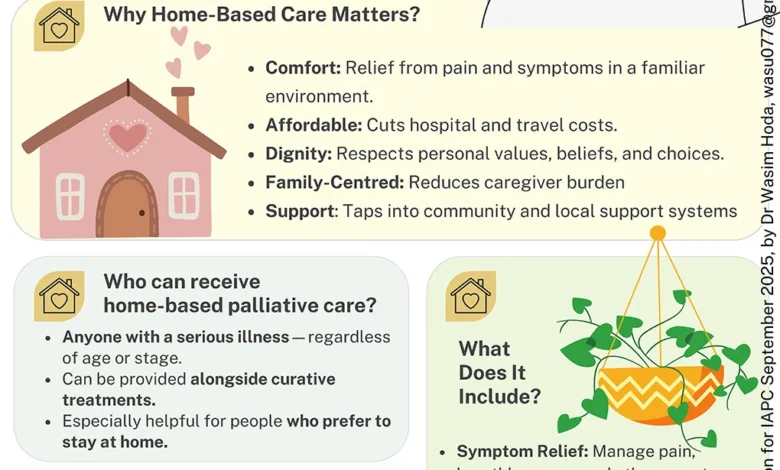
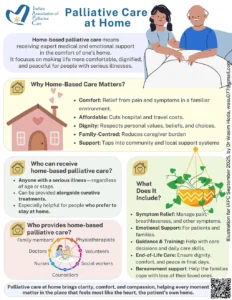
The Indian Association of Palliative Care (IAPC) has officially released the third installment of its ongoing educational infographic series, focusing specifically on the essential practice of Palliative Care at Home. This initiative, launched in September 2025, represents a significant step in the organization’s broader mission to decentralize specialized medical support and integrate palliative services into the domestic environment. By moving away from hospital-centric models, the IAPC aims to address the rising demand for comfort-oriented care for patients suffering from chronic, progressive, or life-limiting illnesses.
This latest release follows a strategic timeline that began in June 2025 with the introduction of the "Care Continuum" series. The series was designed to map the patient journey from diagnosis to end-of-life care, providing clinicians, caregivers, and families with a visual framework to navigate complex medical systems. The decision to highlight home-based care in the third installment underscores the growing clinical consensus that palliative care is most effective when it is accessible, familiar, and delivered within the patient’s own living space.
The Evolution of the IAPC Educational Series
The IAPC’s commitment to disseminating high-quality, accessible information has evolved significantly over the past year. Recognizing that public awareness is the primary barrier to the adoption of palliative services, the association launched its infographic initiative to distill complex medical concepts into digestible, actionable visual data.
The chronology of this initiative reflects a structured pedagogical approach:
- June 2025: Launch of the "Care Continuum" series, providing a high-level overview of how patients transition through different levels of care.
- July–August 2025: Intermediate focus on specialized interventions, allowing the medical community to provide feedback on the clarity and utility of the educational materials.
- September 2025: Official release of "Palliative Care at Home," a deep dive into the logistics, ethics, and emotional support structures required for effective domestic palliative care.
The production of this latest infographic involved collaboration with experts from premier institutions, including Dr. Wasimul Hoda of the Department of Anaesthesia, Critical Care and Pain Medicine at AIIMS New Delhi. This partnership highlights the importance of integrating academic research with practical, community-facing healthcare resources.
Supporting Data and Clinical Necessity
The urgency of the IAPC’s current campaign is supported by a growing body of global and national health data. According to reports from the World Health Organization (WHO), only about 14% of people who need palliative care worldwide currently receive it. In the context of an aging global population and the increasing prevalence of non-communicable diseases (NCDs) such as cancer, cardiovascular disease, and chronic respiratory conditions, the traditional hospital-based model is increasingly unsustainable.
Data suggests that home-based palliative care offers significant advantages:
- Cost Efficiency: Studies have consistently shown that home-based care models significantly reduce the financial burden on both the healthcare system and the family, as they minimize unnecessary hospital admissions and emergency room visits.
- Psychosocial Well-being: Patients receiving care in their homes report higher satisfaction rates. The ability to remain in a familiar environment surrounded by family members is a critical factor in managing the psychological symptoms of illness, such as depression and anxiety.
- Symptom Management: Research indicates that trained palliative care teams can manage pain and other distressing symptoms as effectively at home as in a clinical setting, provided there is adequate support and training for the primary caregiver.
The IAPC’s infographic serves as a bridge, translating these data-backed benefits into a guide that informs families on how to prepare their homes, communicate with healthcare providers, and manage the administrative aspects of home care.

Analyzing the Impact of Home-Based Palliative Models
The transition toward home-based care is not merely a preference but a systemic necessity. In many regions, the concentration of palliative specialists in urban, tertiary-care hospitals leaves vast rural populations underserved. By promoting the "Palliative Care at Home" model, the IAPC is advocating for a shift in healthcare policy that prioritizes the empowerment of local community health workers and family caregivers.
The implications of this shift are multi-faceted:
- Policy Implications: There is an urgent need for national health policies to recognize the formal role of the "primary caregiver." Currently, much of the labor involved in palliative care is unpaid and unrecognized, leading to "caregiver burnout." The IAPC’s initiative encourages a more structured approach to providing support for these individuals.
- Educational Implications: The initiative signals a move toward "health literacy" as a core pillar of medical practice. By simplifying the complexities of care, the IAPC is reducing the intimidation factor associated with end-of-life planning, thereby encouraging families to seek professional help earlier in the disease trajectory.
- Logistical Implications: Effective home care requires a robust support network, including reliable access to pain medications (such as oral morphine), regular visits from palliative care nurses, and tele-consultation capabilities. The IAPC infographic serves as a foundational document that families can present to their local practitioners to advocate for these necessary services.
Expert Perspectives and Stakeholder Reactions
Dr. Wasimul Hoda, in his contribution to the project, noted that the integration of pain medicine into the home setting is often the most overlooked aspect of palliative care. "Effective pain management is the cornerstone of comfort," he stated. "When we provide families with the tools to understand their loved one’s pain levels and the appropriate medication protocols, we empower them to improve the quality of life significantly, preventing the need for traumatic, last-minute hospital trips."
Advocacy groups have praised the initiative, noting that the visual nature of the IAPC infographics makes them ideal for dissemination in diverse environments—from hospital waiting rooms and community clinics to social media platforms. The IAPC’s strategy of making these resources available for free download ensures that the barrier to entry is as low as possible, fostering an inclusive environment for patients of all socioeconomic backgrounds.
The Role of Technology in Scaling Palliative Access
As the IAPC continues to expand its digital footprint, the role of technology in scaling these initiatives cannot be overstated. The association has leveraged social media platforms to ensure that the "Palliative Care at Home" guide reaches not only medical professionals but also the general public.
In an era of digital health, the infographic acts as a foundational digital asset that can be shared via WhatsApp, email, or printed as a pamphlet. This versatility is crucial in India, where digital connectivity is expanding, yet physical access to specialized care remains unequal. The IAPC is effectively using these digital tools to create a "knowledge network" that links patients to professional expertise, even when physical distance is a factor.
Future Outlook and Continuing Initiatives
The IAPC has indicated that the "Care Continuum" series is only the beginning. With the third part now released, the organization is looking toward future topics that address the remaining gaps in the palliative care landscape. Stakeholders expect that upcoming installments will focus on specific symptom management protocols, the ethics of care, and legal frameworks surrounding advanced directives.
The success of these initiatives will ultimately be measured by the degree to which palliative care becomes a standardized component of primary healthcare. As the medical community moves toward a more holistic view of health, the IAPC’s work serves as a critical blueprint for how national health organizations can influence public perception and policy.
The IAPC encourages all healthcare professionals, non-profit organizations, and interested citizens to access the complete library of their infographic series through their official website. By standardizing the information provided to the public, the association aims to build a more compassionate and informed society where every individual has the right to live with dignity, regardless of their diagnosis or location. The transition to home-based care is a testament to the idea that the most profound acts of healing often occur not within the sterile walls of a hospital, but in the heart of the home.
Related posts: