
Recent findings from medical researchers have fundamentally shifted how the healthcare community understands the relationship between physical trauma and neurological health. For generations, medical professionals routinely treated physical injuries, such as unexpected slips and trips, as isolated orthopedic incidents entirely separate from cognitive health. However, a growing body of robust clinical data now confirms that physical instability in middle-aged adults is frequently a critical early warning sign of underlying neurodegenerative decline.
Rather than simple clumsiness, an unexplained fall during a person’s forties or fifties can serve as a flashing red indicator that the brain is undergoing structural and functional changes years before conventional symptoms of memory loss or cognitive impairment become clinically noticeable. This evolving medical consensus challenges traditional diagnostic frameworks and emphasizes the urgent need for multidisciplinary approaches to midlife healthcare.
Landmark Research Quantifies the Threat
The conversation surrounding midlife physical stability and cognitive decline was significantly advanced by a comprehensive systematic review published in the Journal of Post-Acute and Long-Term Care Medicine. Conducted by researchers at Changchun University, the study evaluated health data drawn from nearly three million participants to determine the statistical correlation between physical falls and the subsequent onset of dementia.
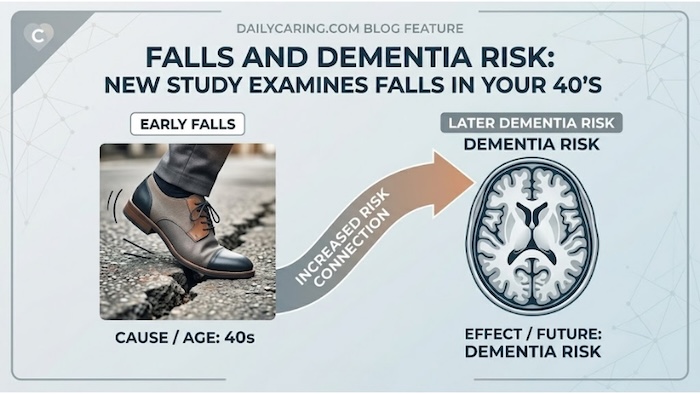
The findings of this review are stark and undeniable. According to the data, experiencing even a single fall after the age of forty correlates with a twenty percent increase in a patient’s future risk of developing dementia. When individuals suffer multiple falls during this stage of life, the statistical risk escalates dramatically, surging by seventy-four percent.
Researchers behind the review concluded that these incidents cannot be dismissed as random occurrences. Instead, they function as robust clinical markers that reveal accelerating neurodegenerative decay. This physical manifestation provides an early window into pathological brain changes long before standard cognitive screenings flag an issue.
Corroborating Evidence from Major Medical Institutions
The Changchun University review is supported by independent research from several premier medical and academic institutions across the United States. These studies reinforce the hypothesis that physical instability and cognitive impairment share a deeply intertwined pathological pathway.
At the Washington University School of Public Health, investigators recently published findings demonstrating that unexpected falls are tightly correlated with the onset of Alzheimer’s disease. Their analysis revealed that midlife and late-life falls signal a faster trajectory of cognitive decline, carrying a prognostic risk factor weight that is comparable to the presence of established Alzheimer’s brain biomarkers, such as abnormal tau tangles and amyloid-beta proteins.

Furthermore, a large-scale epidemiological study conducted at Brigham and Women’s Hospital examined Medicare data encompassing two million older adults. The Harvard-affiliated researchers discovered that approximately 10.6 percent of older patients who experienced a traumatic fall received a formal diagnosis of Alzheimer’s disease or a related dementia within a single year following the incident. This rapid transition highlights how physical trauma and underlying neurodegeneration often converge to accelerate overall cognitive deterioration.
The Biological Mechanism Connecting Physical Instability and Brain Health
To understand why a physical fall can indicate cognitive decline, neurologists point to the complex ways neurodegeneration impacts the brain. Pathological processes associated with dementia—such as the gradual death of neurons and the disruption of neural networks—frequently begin a decade or more before a formal clinical diagnosis is rendered.
As these changes occur quietly within the brain, they subtly erode executive function, spatial awareness, reaction times, balance, and motor planning. When these foundational neurological systems begin to fail, the physical body becomes increasingly susceptible to missteps, trips, and falls.
Conversely, the physical trauma resulting from a severe fall can act as a compounding stressor. Concussions, skeletal fractures, and the subsequent immobilization can accelerate inflammatory pathways and neurochemical disruptions within the central nervous system. Furthermore, adults who suffer a fall frequently develop a profound psychological fear of walking or leaving their homes. This anxiety often triggers a rapid cycle of social isolation and a drastic reduction in physical activity, both of which are independently recognized as major risk factors that accelerate cognitive decay.

Clinical Implications and Recommended Interventions
Given the strength of the data linking midlife falls to future dementia diagnoses, public health advocates and medical professionals are urging a shift in clinical practice. Healthcare providers are increasingly encouraged to treat an unexplained fall in a middle-aged adult not merely as an orthopedic concern requiring a cast or physical therapy, but as a potential neurological event that warrants comprehensive cognitive and physical assessment.
Medical experts emphasize that proactive intervention can alter the trajectory of decline. Recommended steps for patients and healthcare providers include:
- Comprehensive Neurological Assessments: Patients experiencing unexplained balance issues or frequent trips after the age of forty should request a thorough clinical evaluation to establish a baseline for cognitive and neurological function.
- Detailed Medication Reviews: Many commonly prescribed pharmaceutical drugs—including those for hypertension, anxiety, and depression—can cause severe dizziness, drowsiness, and orthostatic hypotension, directly increasing fall risks. Clinicians must routinely audit patient drug regimens to mitigate these hazards.
- Proactive Home Safety Audits: Because a significant percentage of falls occur within the home environment, individuals are advised to remove common domestic trip hazards, install supportive grab bars in bathrooms, and ensure adequate lighting in hallways and stairwells.
- Targeted Physical Conditioning: Maintaining core strength, flexibility, and balance through supervised exercise programs can significantly reduce physical instability, thereby breaking the feedback loop between physical trauma and cognitive withdrawal.
Broader Public Health Impact and Future Outlook
The growing recognition of falls as early indicators of dementia underscores a broader evolution in preventative medicine. As global populations age, healthcare systems face mounting pressure to identify neurodegenerative diseases at their earliest, most manageable stages.
By reframing a simple fall from a benign accident into a critical diagnostic clue, physicians gain an invaluable window of opportunity. Early identification allows patients and their families to implement lifestyle modifications, explore clinical trials, and establish long-term care plans well before advanced symptoms compromise independence.
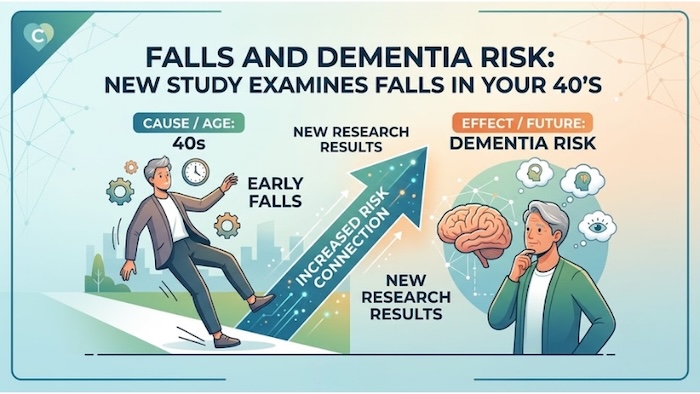
Ultimately, medical authorities stress that ignoring a midlife fall is a significant gamble with long-term cognitive health. As ongoing research continues to illuminate the complex crosstalk between the brain and the musculoskeletal system, the mandate for clinical practice is clear: treat the fall, but investigate the brain.