Redefining the Limits of Possibility: How Carlos Murillo is Transforming the Landscape of Adaptive Adventure


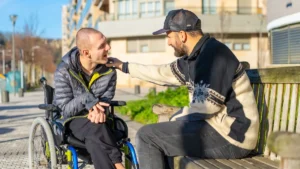
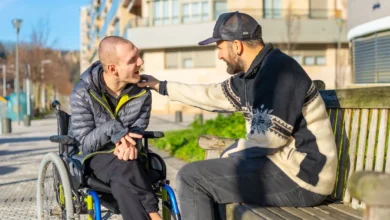
Carlos Murillo, a 32-year-old resident of Illinois, is systematically dismantling the societal misconceptions surrounding disability through a rigorous, high-adrenaline commitment to adaptive sports and accessible travel. Born with spina bifida and a wheelchair user since the age of three, Murillo has spent the last decade curating an expansive portfolio of athletic achievements that spans from high-altitude zip-lining to deep-water scuba diving. His journey serves as both a personal quest for discovery and a blueprint for others navigating the complex, often restrictive, landscape of physical disability. By turning a personal bucket list into a structured mission, Murillo is providing empirical evidence that the barrier to entry for extreme sports is often one of perception rather than physical capability.
The Evolution of an Adaptive Athlete
The foundation of Murillo’s athletic trajectory was laid in 2007, when he attended a holiday event hosted by GLASA (Great Lakes Adaptive Sports Association). This initial exposure to adaptive basketball acted as a catalyst, shifting his perspective from viewing disability as a stationary condition to seeing it as a platform for specialized athletic engagement. Over the ensuing years, he transitioned from traditional team sports to a wide array of individual and high-stakes disciplines. His resume now includes sled hockey, wheelchair rugby, archery, horseback riding, and rock climbing.
The transition to his current, more ambitious phase occurred approximately two years ago. Recognizing that his interests were outpacing his current activities, Murillo formalized his desires into a written bucket list. This document is not merely a collection of aspirations but a strategic roadmap that dictates his travel, budgeting, and physical training. He views these challenges not as insurmountable hurdles, but as necessary "lessons" that characterize his evolution from his 20s into his 30s.
The Geography of Access: Navigating Infrastructure
Murillo’s commitment to travel has necessitated a sophisticated understanding of infrastructure and accessibility. His travels have taken him across the United States—including significant time in Texas, California, Florida, Michigan, Minnesota, and Wisconsin—as well as international destinations like Canada and Mexico.
The logistical reality of this travel is complex. Each excursion requires meticulous planning regarding hotel accommodations, specialized transportation, and the availability of adaptive equipment at the destination. Murillo notes that while the United States offers robust support through various organizations and federal ADA (Americans with Disabilities Act) mandates, the international landscape is inconsistent. For instance, he identifies the prevalence of historic cobblestone streets in parts of Mexico as a significant, though surmountable, obstacle for mobility devices.
His experience underscores a critical gap in the travel industry: the marketing of "accessible" travel often ignores the nuances of different types of mobility needs. Murillo emphasizes that current resources frequently fail to communicate the reality that, even in 2024, significant portions of the world remain fundamentally inaccessible. His advocacy efforts center on encouraging travelers to look beyond standard marketing and perform deep, independent research to ensure their safety and independence.
The Stadium Initiative: A Data-Driven Approach to Fandom
Beyond individual adventure sports, Murillo has embarked on a comprehensive mission to visit professional, collegiate, and minor league sports stadiums across the country. This project highlights a unique intersection of sports fandom and civic participation. His interest in minor league baseball parks—specifically in locales like Kenosha, Schaumburg, South Bend, and Midland—is driven by a combination of affordability and accessibility.
By engaging directly with front-office management, Murillo has successfully secured attendance at numerous venues, often leveraging his position as an advocate to request accessibility insights from management teams. He highlights the Schaumburg Boomers’ stadium as a benchmark for how local organizations can effectively accommodate wheelchair users, suggesting that smaller venues are often more agile in their ability to provide inclusive experiences compared to massive, legacy stadiums that may struggle with retrofitting older architecture.
Supporting Data and the Adaptive Industry
The growth of the adaptive sports industry, of which Murillo is a beneficiary, is supported by a growing number of specialized organizations. Groups such as H2O Adaptive Sports, Diveheart, and the Shirley Ryan AbilityLab provide the technical expertise and equipment necessary to facilitate the activities Murillo pursues.
The industry’s expansion is rooted in the "social model of disability," which posits that individuals are disabled by societal barriers—such as a lack of access to adaptive equipment or infrastructure—rather than by their physical impairments alone. When individuals like Murillo gain access to zip-lining gear or specialized mountain bikes, the "disability" in those contexts is effectively neutralized. Statistics from national adaptive sports associations suggest that participation rates in these programs have risen by nearly 15% annually over the last decade, as technology has made custom-fitted equipment more affordable and widely available.
Strategic Implications and Future Objectives
Murillo’s next phase of objectives includes high-adrenaline pursuits such as NASCAR driving experiences, adaptive paragliding, and white-water rafting. These goals are selected through a rigorous cost-benefit analysis, where he weighs the physical demands against the thrill of the activity. His approach to these future challenges is methodical; he relies on the expertise of professional coaches and the community built through organizations like the Wisconsin Adaptive Ski program to mitigate risk.
The implications of his journey are significant for both the disability community and the broader public. For the former, he provides a psychological framework for overcoming the "fear of the first attempt." For the latter, he serves as a reminder that accessibility is not a niche requirement but a fundamental necessity for full participation in modern life.
Conclusion: A Message of Intentionality
When asked about his legacy, Murillo expresses a desire to change the narrative surrounding disability. He rejects the label of "inspirational" if it is used to diminish the effort and technical planning required for his feats. Instead, he views his work as a demonstration of agency.
His advice to those recently adjusting to life with a disability is pragmatic: the resources exist, but they must be sought out. By documenting his own successes and failures, Murillo is effectively creating an unofficial database of possibilities for others. As he prepares for an upcoming cruise to Honduras, the Bahamas, and Mexico, he continues to advocate for a world that does not just tolerate, but actively facilitates, adventure for all. His life stands as a testament to the fact that when one refuses to allow obstacles to define the boundaries of their experience, the world—and its many challenges—becomes a space of limitless potential.
Related posts: