Revolutionary Shifts in Medicare Part D for 2026: Out-of-Pocket Cap and Donut Hole Elimination Reshape Prescription Drug Costs

Managing an older adult’s medications has historically presented a persistent and often unpredictable financial burden for millions of American families and their caregivers. For years, beneficiaries navigated a complex landscape of coverage phases, making precise budgeting for essential prescription drugs a formidable challenge. The comprehensive Medicare Part D changes taking effect in 2026 are set to fundamentally alter this dynamic, ushering in a new era of financial predictability and stability in the prescription drug market. This transformative overhaul, largely stemming from the landmark Inflation Reduction Act, culminates years of legislative efforts aimed at curbing escalating healthcare costs and providing much-needed relief to seniors and individuals with disabilities relying on Medicare Part D for their medication needs.
The Genesis of Change: The Inflation Reduction Act’s Impact on Drug Pricing
The sweeping reforms to Medicare Part D are the direct result of the Inflation Reduction Act (IRA), signed into law in August 2022. This pivotal legislation included a series of provisions designed to lower prescription drug costs for seniors, enhance Medicare’s ability to negotiate drug prices, and reduce the federal deficit. While the IRA introduced several changes that began phasing in during 2023, 2026 marks the final and arguably most impactful stage of its implementation for Part D beneficiaries.
Prior to the IRA, the structure of Medicare Part D often left beneficiaries vulnerable to unexpectedly high out-of-pocket costs. The system was characterized by a standard deductible, followed by an initial coverage phase, then the infamous "donut hole" or coverage gap, and finally, catastrophic coverage. Each phase involved different cost-sharing percentages, creating a bewildering and financially taxing journey for those with chronic conditions or multiple prescriptions. The primary goal of the IRA’s Part D reforms was to simplify this structure, cap annual out-of-pocket spending, and empower Medicare to play a more active role in controlling drug prices.
A Decade of Disparity: Understanding the "Donut Hole" and Its Elimination

For over a decade, the most criticized and financially destructive element of Medicare Part D for seniors was the coverage gap, universally known as the "donut hole." This phase was introduced with the inception of Medicare Part D in 2006 as a cost-sharing mechanism. Beneficiaries would pay their deductible, then a percentage of drug costs in the initial coverage phase. However, once their combined spending (what they paid and what their plan paid) reached a certain threshold, they would suddenly enter the donut hole. In this gap, beneficiaries were responsible for a significantly larger percentage of their drug costs, often 25% for both generic and brand-name drugs, until their total out-of-pocket spending reached a much higher threshold for catastrophic coverage.
The financial impact of the donut hole was profound and often devastating. Millions of seniors, particularly those managing chronic conditions like diabetes, heart disease, or cancer, found themselves facing thousands of dollars in unexpected costs each year. This led to difficult choices: rationing medications, delaying refills, or foregoing essential treatments altogether to conserve funds. Patient advocacy groups consistently highlighted the donut hole as a major barrier to medication adherence and overall health equity. The Affordable Care Act (ACA) of 2010 initiated efforts to gradually close the donut hole, but it wasn’t until the full implementation phases of the Inflation Reduction Act that its complete elimination became a reality.
As of January 1, 2026, the dreaded donut hole is permanently defunct. It no longer exists within the Medicare Part D structure. This means beneficiaries will no longer face a period of significantly increased cost-sharing before reaching catastrophic coverage.
The New Financial Architecture: Key Part D Changes for 2026
The 2026 reforms introduce a simplified and far more predictable cost-sharing model. Two critical components define this new landscape:
-
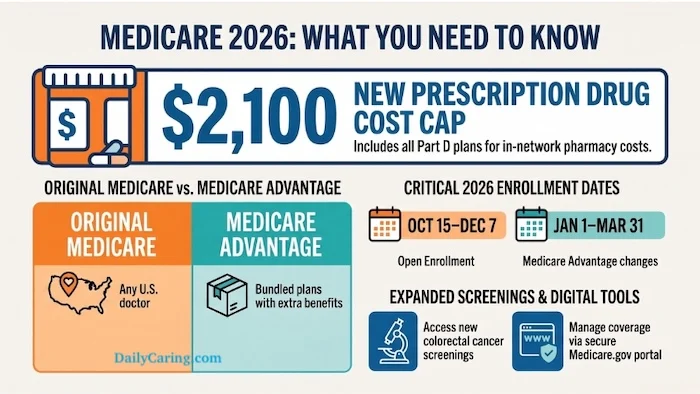
The $2,100 Out-of-Pocket Spending Cap: This is perhaps the most significant change. Thanks to the final implementation phases of the Inflation Reduction Act, out-of-pocket costs for covered prescription drugs are now strictly capped at $2,100 annually. This cap applies to costs accumulated from the deductible, copayments, and coinsurance for medications explicitly covered by a beneficiary’s Part D plan or Medicare Advantage plan. Once an enrollee spends exactly $2,100 out of their own pocket in a single calendar year, their Part D plan or Medicare Advantage plan will pay 100% of the cost of all covered medications for the remainder of that year. There are no exceptions, and crucially, there is no catastrophic phase where the patient owes 5% coinsurance. The cost drops to zero. This measure provides unprecedented financial relief and peace of mind for seniors and caregivers, ensuring that even those with the highest prescription drug needs have a clear maximum annual expenditure.

-
The Standard Deductible: For 2026, the maximum standard deductible is legally set at $615. This is the amount a beneficiary must pay out-of-pocket before their plan begins to cover a portion of their drug costs. It is important to note that while this is the maximum standard deductible, some plans may offer lower deductibles or even no deductible, often in exchange for higher monthly premiums. The deductible counts towards the $2,100 annual out-of-pocket cap.
Timeline of Part D Reforms under the Inflation Reduction Act:
- 2023: Medicare beneficiaries saw several immediate benefits, including a $35 monthly cap on insulin costs for those with Medicare Part D, and the elimination of cost-sharing for adult vaccines recommended by the Advisory Committee on Immunization Practices (ACIP).
- 2024: The 5% coinsurance requirement in the catastrophic coverage phase was eliminated. This was a precursor to the full elimination of beneficiary costs in catastrophic coverage, providing relief to those with the highest drug spending even before the overall cap.
- 2025: An interim out-of-pocket cap was established at $3,500. This served as a bridge to the final $2,100 cap in 2026, already providing substantial relief compared to previous years where there was no true cap.
- 2026: Full implementation: The out-of-pocket cap is reduced to $2,100, the "donut hole" is entirely eliminated, beneficiaries pay $0 for covered drugs after hitting the cap, the Medicare Prescription Payment Plan is fully in effect, and the premium stabilization program begins.
Mitigating Upfront Costs: The Medicare Prescription Payment Plan
Recognizing that even a $615 deductible or accumulated copayments could represent a significant upfront financial hit for many seniors, the 2026 mandates include the continuation and expansion of the Medicare Prescription Payment Plan. This innovative program is strictly opt-in and designed to smooth out-of-pocket costs over the calendar year.
Instead of facing potentially large lump-sum payments at the pharmacy counter, particularly at the beginning of the year when the deductible might be met, caregivers can opt their loved ones into this program. The pharmacy then bills the insurance plan, and the insurance plan sends the enrollee a monthly bill, effectively spreading their projected annual out-of-pocket costs into manageable, equal monthly installments. This helps prevent financial shocks and improves budgeting for essential medications, aligning with the broader goal of financial predictability.
Addressing Industry Responses: Formulary Manipulation and Premium Stabilization

While these changes are overwhelmingly beneficial for beneficiaries, they introduce significant financial shifts for the pharmaceutical industry and insurance providers. Insurance companies are not absorbing these new costs out of altruism; they are actively adapting their strategies.
-
Formulary Manipulation: This remains a critical concern and requires diligent attention from beneficiaries and caregivers. Insurers are aggressively manipulating their covered drug lists (formularies) and shifting medications into higher pricing tiers to offset these mandated caps. A drug that was fully covered in 2025 may be dropped entirely from a plan’s formulary in 2026, or its cost-sharing tier may be elevated. This means that while the $2,100 cap is absolute for covered drugs, if a specific medication essential to a beneficiary is removed from the formulary, the money spent on that non-covered drug will not count toward the $2,100 cap. This necessitates meticulous verification during the Annual Enrollment Period (AEP) to ensure that all of a loved one’s specific medications remain on their chosen plan’s formulary. Patient advocacy groups have cautioned that this practice could inadvertently limit access to certain therapies for some beneficiaries, underscoring the importance of careful plan selection.
-
Premium Stabilization: Another critical, though less publicized, Medicare Part D change is the premium stabilization program. To prevent insurers from simply hiking monthly premiums to cover the new out-of-pocket caps, the law caps base premium increases at 6% per year. However, it is crucial to understand that this cap applies only to the base premium, which is an average across all plans. Individual plan premiums will still fluctuate based on various factors, including the plan’s specific benefits, network, and geographic location. This makes annual comparison shopping during the Annual Enrollment Period (typically October 15 to December 7) absolutely critical to ensure beneficiaries are in the most cost-effective plan that covers their specific medications.
Broader Implications and Expert Analysis
The 2026 Medicare Part D changes are poised to have far-reaching implications across the healthcare ecosystem:
- For Beneficiaries and Caregivers: The most direct and positive impact will be enhanced financial security and predictability. The elimination of the donut hole and the strict out-of-pocket cap will reduce the risk of catastrophic drug costs, potentially improving medication adherence and overall health outcomes. Caregivers, who often bear the brunt of managing these complex financial decisions, will find budgeting significantly simplified. According to analyses by organizations like the Kaiser Family Foundation, millions of seniors who previously incurred costs above the new cap will see substantial savings.
- For Pharmaceutical Companies: These reforms place increased pressure on pharmaceutical companies regarding drug pricing. With Medicare gaining greater negotiation power for certain high-cost drugs and beneficiaries’ out-of-pocket spending capped, the industry will face renewed scrutiny and potential revenue adjustments. This could incentivize innovation in certain areas or prompt adjustments in pricing strategies for new medications.
- For Insurance Providers: Medicare Part D plans will need to strategically adapt their offerings. While they face limitations on premium increases, they will also be compelled to manage their formularies and network agreements carefully to remain competitive while absorbing higher costs for high-spending beneficiaries. The focus on efficiency and value will intensify.
- For the Healthcare System: Reduced financial barriers to medication access could lead to better management of chronic diseases, fewer hospitalizations due to non-adherence, and ultimately, a healthier senior population. This could result in long-term savings for the broader healthcare system. Government officials have emphasized these changes as a cornerstone of efforts to make healthcare more affordable and accessible for all Americans.
Actionable Advice for 2026: Navigating the New Landscape
Understanding these Medicare prescription caps is vital for effective eldercare financial planning. While the days of the dreaded coverage gap are officially over, proactive engagement remains paramount:
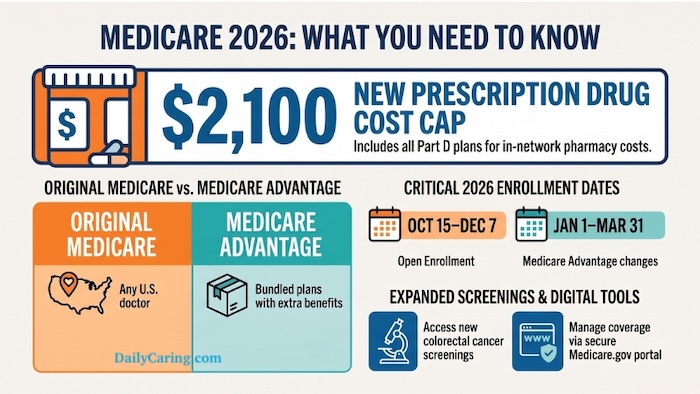
- Prioritize Annual Enrollment Period (AEP): The AEP (October 15 – December 7) is your critical window to review and potentially change your Part D or Medicare Advantage plan for the upcoming year. Do not assume your current coverage is safe.
- Meticulously Verify Formularies: Insurance companies frequently alter their covered drug lists to offset new caps. You must verify that your loved one’s specific medications remain on their plan’s formulary for 2026. If a drug is not on the formulary, the money spent on it will not count toward the $2,100 cap.
- Consider the Medicare Prescription Payment Plan: If managing large upfront costs is a concern, explore opting into this program to spread out your annual out-of-pocket expenses.
- Utilize Official Resources: The official Medicare Part D portal at Medicare.gov/health-drug-plans is an invaluable tool for comparing plans, checking drug coverage, and learning more about the payment plan.
- Consult Experts: Always consider consulting with a qualified Medicare advisor or financial planner. These professionals can provide personalized guidance based on your specific health needs, financial situation, and medication regimen. For a deeper dive into managing your loved one’s assets, explore comprehensive eldercare financial planning guides.
The 2026 Medicare Part D changes represent a monumental shift towards greater financial security and predictability for millions of Americans. The elimination of the "donut hole" and the implementation of a strict out-of-pocket cap are historic achievements that will profoundly impact the lives of seniors and their caregivers. However, vigilance and proactive planning remain essential to fully leverage these benefits and navigate the evolving landscape of prescription drug coverage.
| Medicare Policy Area | 2026 Update Details |
|---|---|
| Out-of-Pocket Cap | Strictly capped at $2,100 maximum per year. Once reached, beneficiaries pay $0 for all covered prescription drugs for the remainder of the year. |
| Standard Deductible | Set at $615 for the 2026 plan year. This amount counts towards the $2,100 out-of-pocket cap. |
| "Donut Hole" Elimination | The coverage gap (donut hole) has been completely eliminated. Beneficiaries transition directly from the initial coverage phase to $0 cost-sharing once the $2,100 cap is met. |
| Prescription Payment Plan | An opt-in program allowing beneficiaries to spread their annual out-of-pocket prescription costs into predictable monthly payments, preventing large lump-sum expenditures. |
| Premium Stabilization | Base premium increases for Part D plans are capped at 6% per year. Individual plan premiums may still vary, emphasizing the need for annual comparison shopping. |
| Catastrophic Coverage Phase | As of 2026, beneficiaries pay $0 for covered prescription drugs once they reach the $2,100 out-of-pocket maximum, effectively eliminating patient cost-sharing in the catastrophic phase that was previously 5%. |
Disclaimer: The information provided in this article is for educational purposes only and does not constitute professional financial or legal advice. Always consult with a qualified Medicare advisor or financial planner regarding your specific situation.