Beyond the Stumble: New Medical Research Links Midlife Falls to Accelerating Dementia Risk


For generations, the medical community and the general public alike maintained a rigid divide between physical trauma and cognitive health. A fall in middle age or early seniority was frequently dismissed as an isolated mishap—the result of a momentary lapse in concentration, an uneven pavement stone, or simple clumsiness. However, a growing body of rigorous epidemiological research and large-scale clinical studies has fundamentally shattered this conventional wisdom. A growing consensus among neurologists, geriatricians, and public health researchers reveals that an unexplained fall in one’s forties, fifties, or sixties is rarely just a physical incident. Instead, it frequently serves as a blinking red warning light, acting as a powerful clinical marker for underlying, accelerated neurodegenerative decline long before traditional symptoms of memory loss or cognitive impairment become clinically noticeable.
This paradigm shift in neurology forces a critical re-examination of how healthcare systems identify and monitor early signs of cognitive impairment. Recent systematic reviews and population-wide health analyses involving millions of participants demonstrate an undeniable statistical correlation between unexpected physical instability and the future onset of Alzheimer’s disease and related dementias. As medical science begins to recognize the profound interconnectedness of the central nervous system, the skeletal frame, and spatial-motor control, researchers are urging both patients and primary care physicians to treat midlife falls not as benign accidents, but as urgent neurological alarms requiring immediate diagnostic evaluation.
The Hard Truth: Unpacking the Landmark Findings on Midlife Physical Instability
The modern empirical foundation linking physical trauma to cognitive decline has been substantially reinforced by a comprehensive systematic review published in the Journal of Post-Acute and Long-Term Care Medicine. Conducted by researchers at Changchun University, the review synthesized data from nearly three million participants worldwide to evaluate the longitudinal outcomes of adults who experienced unexpected falls during middle age.
The findings of the Changchun University review are stark and unequivocal. According to the data, a single recorded fall occurring after the age of forty elevates an individual’s lifetime risk of developing dementia by 20 percent compared to their non-falling peers. More alarmingly, for individuals who experienced recurrent or multiple falls during the same developmental window, the future dementia risk skyrocketed by 74 percent.
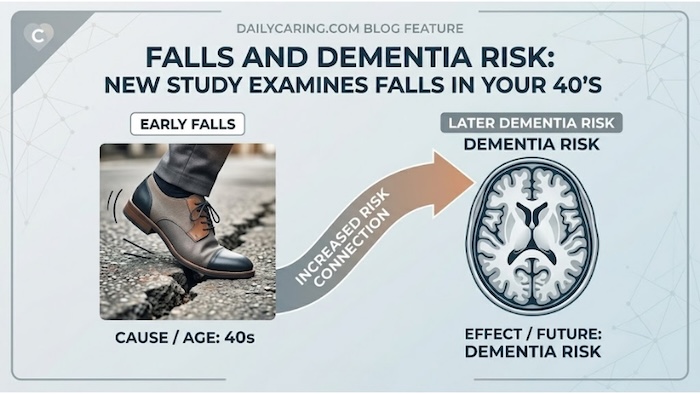
These staggering statistics underscore a grim reality regarding neurodegeneration in middle-aged populations. The researchers concluded that sudden physical instability is not merely a localized orthopedic issue, but a robust clinical indicator of rapid central nervous system decay. Because maintaining upright posture, balance, and spatial orientation requires complex, integrated processing across multiple regions of the brain—including the cerebellum, frontal lobes, and sensory pathways—any breakdown in these areas often manifests physically before it manifests cognitively. Sub-clinical brain atrophy silently erodes coordination and judgment, ultimately precipitating a fall well in advance of a formal dementia diagnosis.
Corroborating Evidence from Leading Research Institutions
The findings published in the Journal of Post-Acute and Long-Term Care Medicine do not stand in isolation. Over the past several years, independent epidemiological studies and retrospective cohort analyses conducted by some of the world’s foremost medical research institutions have arrived at remarkably similar conclusions, reinforcing the validity of the fall-dementia nexus.
At the Washington University School of Public Health, a team of neuroscientists recently investigated the precise timeline connecting physical falls to the onset of cognitive decline. Their research revealed that falls are tightly coupled with the pathological hallmarks of Alzheimer’s disease. Specifically, the data established that physical instability signals a significantly faster rate of cognitive deterioration over time. Crucially, the predictive value of a midlife fall for future cognitive impairment was found to be on par with the presence of established biological biomarkers of Alzheimer’s disease, such as the accumulation of amyloid-beta and tau proteins within neural tissue.
Further validating these concerns, a massive, population-wide study conducted out of Brigham and Women’s Hospital analyzed electronic health records and Medicare data spanning over two million older adults. The results of this Harvard-affiliated study were striking: approximately 10.6 percent of older adults who suffered a traumatic fall were formally diagnosed with Alzheimer’s disease or a related form of dementia within a mere twelve months of the incident. This rapid transition from physical trauma to cognitive diagnosis highlights the urgent need for physicians to screen for neurological health immediately following any unexplained fall, rather than focusing solely on treating broken bones, sprains, or contusions.
The Vicious Cycle: How Physical Trauma Accelerates Cognitive Decay

To fully comprehend why a fall can trigger or accelerate cognitive decline, medical professionals point to the complex feedback loops that occur within the human body and mind following physical trauma. Neurodegeneration is a progressive disease process that quietly erodes brain architecture years—and sometimes decades—before clinical criteria for dementia are met. As this underlying atrophy compromises spatial awareness, executive function, and motor planning, the physical vulnerability of the individual increases.
When this sub-clinical neurological decay finally results in a fall, the cascading consequences can be severe. The immediate physical trauma, whether it involves a concussion, severe soft-tissue damage, or bone fractures, places immense physiological stress on an already compromised brain. Beyond the direct physical damage, psychological factors play a profound role in accelerating the disease process. Adults who experience a traumatic fall frequently develop a pervasive, debilitating fear of walking or leaving their homes.
This psychological distress often precipitates immediate social isolation, a well-documented catalyst for cognitive decline. Deprived of environmental stimulation, social interaction, and regular physical exercise, the brain loses its neuroplasticity at an accelerated rate. This creates a vicious, self-reinforcing cycle: neurological decay causes a fall, the fall causes physical and psychological trauma, and the resulting inactivity and isolation further speed up cognitive decay. Breaking this downward spiral requires proactive intervention that addresses both the physical and neurological dimensions of health.
A Chronological Overview of Evolving Medical Consensus
The recognition of falls as a symptom of neurological decline represents a major evolution in geriatric medicine and neurology. Tracing the trajectory of this research highlights how medical perspectives have shifted over the past decade:
- Early 2010s: Clinical focus on falls remained largely compartmentalized within geriatrics and orthopedics. Falls were viewed primarily as environmental hazards or the result of muscular weakness, poor vision, or medication side effects, with little attention paid to central nervous system pathology.
- Mid-2010s: Small-scale observational studies began noting a higher-than-average prevalence of cognitive impairment among patients admitted for recurrent falls, prompting researchers to investigate potential shared pathways between motor dysfunction and cognitive decline.
- Late 2010s to 2020: Landmark cohort studies, including early Medicare database analyses, began quantifying the short-term risk of dementia diagnoses following traumatic injuries, establishing that a significant percentage of patients develop cognitive symptoms within a year of a fall.
- 2024–2025: Major epidemiological publications, including the Brigham and Women’s Hospital Medicare study and the comprehensive Changchun University systematic review encompassing nearly three million participants, firmly established the statistical link, quantifying the risk increase at 20 percent for a single fall and 74 percent for multiple falls.
Clinical Implications and the Urgent Need for Proactive Action

The definitive establishment of the link between midlife falls and dementia risk carries profound implications for clinical practice, public health policy, and individual preventative care. For decades, standard medical protocols following a fall in middle-aged or older adults have centered exclusively on treating the acute physical injury, managing pain, and offering basic physical therapy to restore baseline mobility. Rarely did a physician follow up an unexplained stumble with a cognitive screen or a comprehensive neurological evaluation.
In light of recent data, healthcare experts argue that this siloed approach is no longer tenable. Medical professionals are increasingly calling for policy updates that mandate neurological screenings for any patient over the age of forty who presents with an unexplained or recurrent fall. By treating the fall as a potential sentinel symptom of central nervous system pathology, clinicians can identify early-stage neurodegeneration at a time when lifestyle interventions, therapeutic management, and clinical trials offer the greatest potential to slow disease progression.
Furthermore, public health advocates emphasize that awareness campaigns must shift focus. Educating the public to view balance issues and stumbles not as harmless signs of aging, but as critical physiological warnings, can empower individuals to seek timely medical attention. Early detection allows patients and their families to implement comprehensive safety measures, review and adjust medications that contribute to dizziness, and engage in targeted physical rehabilitation designed to enhance neuro-motor coordination.
Mitigation Strategies: Protecting Cognitive and Physical Health
Because the medical evidence clearly demonstrates that waiting for the next fall is a direct gamble with long-term cognitive health, taking proactive measures to ensure physical stability and neurological evaluation is paramount. Healthcare providers and aging-support organizations recommend a multi-faceted approach to risk mitigation:
- Comprehensive Home Safety Audits: Because a vast majority of accidental falls occur within the familiar confines of the living room, bedroom, or bathroom, individuals must systematically evaluate their living environments. Immediate steps include removing loose rugs and tripping hazards, installing sturdy grab bars in showers and hallways, improving ambient and task lighting, and clearing cluttered pathways.
- Rigorous Clinical Assessments: Anyone experiencing unexplained falls, balance issues, or spatial disorientation after the age of forty should immediately schedule a comprehensive neurological examination. Establishing a baseline for cognitive function can help detect early markers of neurodegeneration and facilitate timely medical interventions.
- Medication and Drug Interaction Reviews: Many commonly prescribed medications—including antihypertensives, sedatives, antidepressants, and anti-anxiety drugs—can cause severe side effects such as dizziness, drowsiness, and orthostatic hypotension, all of which significantly elevate fall risk. Patients should actively consult with their primary care physicians and pharmacists to review current drug regimens and minimize adverse interactions.
- Targeted Physical and Neurological Conditioning: Engaging in structured physical activities that challenge balance, core strength, and coordination—such as tai chi, yoga, or supervised physical therapy—can help maintain motor control and preserve functional independence, interrupting the cycle of physical decline and social isolation.
Conclusion: Heeding the Warning Signs
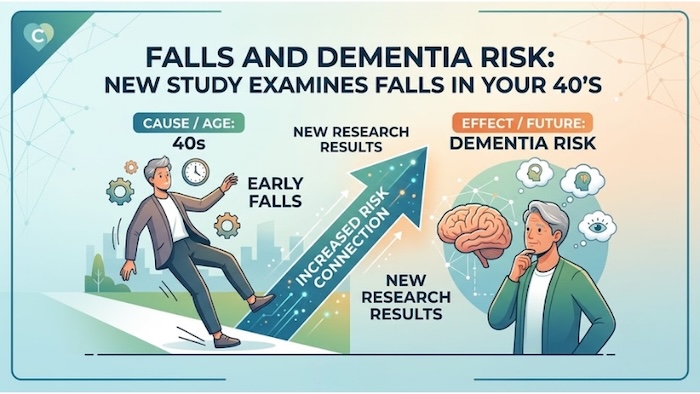
The convergence of data from millions of clinical records, massive epidemiological cohorts, and rigorous systematic reviews leaves no room for ambiguity. A fall in middle age is neither a normal component of the natural aging process nor an insignificant, clumsy accident. It is a potential early warning system deployed by the central nervous system, serving as a robust clinical marker for underlying cognitive decline and sharing a risk profile comparable to established Alzheimer’s biomarkers.
Ignoring these physical warning signs exposes individuals to compounded risks of accelerated neurodegenerative decay, traumatic physical injury, and the isolating psychological impacts of reduced mobility. By recognizing the profound connection between physical stability and neurological health, individuals and healthcare providers can transform a moment of crisis into an opportunity for early intervention. Taking immediate action through comprehensive medical evaluations, home safety modifications, and proactive lifestyle adjustments remains the most effective strategy to preserve both physical safety and long-term cognitive vitality.