Beyond the Panic Button: How Modern Medical Alert Systems Are Revolutionizing Aging in Place

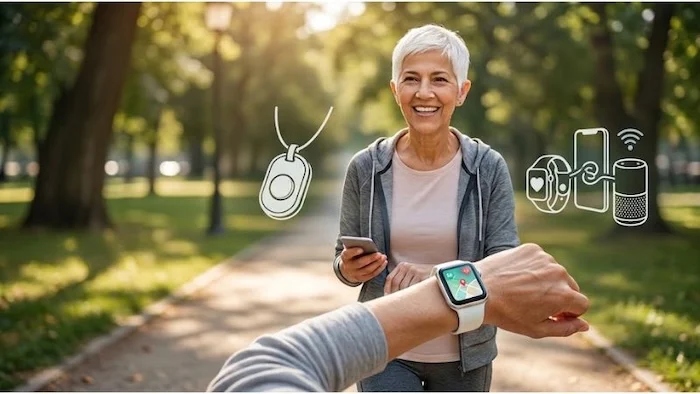
As populations age across the globe, the fundamental desire of older adults to maintain their independence remains a powerful driving force behind a rapidly evolving market for home safety technology. Recent data compiled by organizations such as AARP indicates that nearly 90 percent of adults aged 65 and older prefer to age in place within their own homes rather than transition into assisted living facilities or nursing homes. This overwhelming preference has catalyzed significant technological innovations within the personal emergency response system (PERS) industry, pushing market valuations to new heights. Industry projections from financial analysts indicate that the global medical alert systems market is on track to reach $11.8 billion, fueled by an escalating demand for proactive health monitoring and sophisticated safety infrastructure.
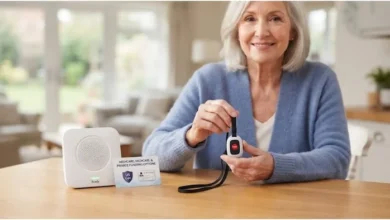
For decades, the standard for emergency response technology remained largely stagnant. The quintessential format relied on a wearable panic button tethered to a localized base unit, which in turn depended on traditional analog landline telephone service to bridge the gap to a monitoring center. While revolutionary for its era, this legacy configuration suffered from glaring vulnerabilities. Its utility was strictly bound to a limited radius—often no more than a few hundred feet from the base station. Furthermore, the system was entirely reactive, functioning only if the user remained conscious after an incident, retained the physical capability to depress the button, and remembered to wear the device consistently throughout the day. These limitations often left significant safety gaps for individuals with mobility challenges, chronic health conditions, or early-stage cognitive decline.
The landscape of personal safety technology has undergone a profound transformation, moving far beyond the traditional panic pendant. Contemporary systems incorporate wearable artificial intelligence, cellular connectivity, and ambient sensor arrays to create comprehensive safety ecosystems. This evolution reflects a broader shift in elder care toward predictive health management and real-time monitoring. Rather than simply reacting to a crisis after it occurs, modern hardware is engineered to detect anomalies in movement, monitor vital signs, and provide continuous connectivity regardless of whether the user is inside the home, walking in the neighborhood, or traveling across the country.
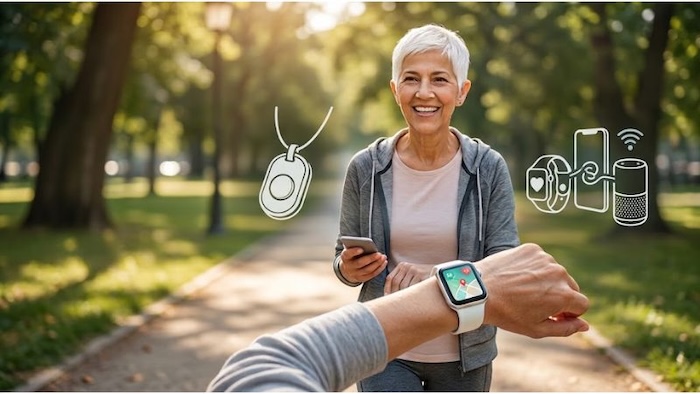
A chronological examination of personal emergency response systems reveals a steady trajectory from isolation-prone landline devices to hyper-connected smart ecosystems. In the late 20th century, the introduction of the first wired alert pendants provided a basic lifeline for homebound seniors. By the early 2000s, the integration of cellular technology began to untether users from fixed landlines, introducing mobile units with rudimentary GPS capabilities. The past several years, however, have marked an unprecedented acceleration in capability. The integration of machine learning algorithms, micro-electromechanical systems (MEMS) sensors, and smart home automation has redefined what caregivers and family members can expect from assistive technology.
To understand the scope of these improvements, industry experts frequently contrast traditional setups with current alternatives across several critical metrics.
| Feature | The Old Standard (Landline) | Modern Smartwatch (Cellular) | Ambient Sensors (Radar / AI) |
|---|---|---|---|
| Range & Connectivity | Limited to approximately 800 feet of a home base unit. | Unlimited nationwide cellular coverage supplemented by precise GPS tracking. | Whole-home coverage facilitated via secure Wi-Fi networks and wall-mounted monitors. |
| Fall Detection Mechanics | Basic mechanical impact triggers that frequently resulted in high false-alarm rates. | Advanced AI-filtered accelerometers and gyroscopes capable of distinguishing actual falls from normal daily movements. | Passive radar and optical sensors that detect falls without requiring the user to wear a physical device. |
| Caregiver App Integration | Non-existent; communication was typically restricted to automated phone call notifications. | Comprehensive real-time tracking of location, device battery status, and emergency call logs via dedicated mobile applications. | Continuous activity tracking, sleep pattern analysis, and automated routine deviation alerts. |
| Ideal User Demographic | Budget-conscious, predominantly homebound older adults. | Active seniors seeking discreet, everyday wearable technology with aesthetic appeal. | Seniors experiencing cognitive decline or dementia who consistently refuse to wear traditional devices. |
The integration of artificial intelligence into wearable devices represents one of the most substantial leaps forward in modern safety equipment. Traditional fall detection mechanisms relied on simple impact thresholds, which often failed to differentiate between a sudden drop onto a couch and a dangerous fall onto a hardwood floor, leading to frequent false alarms. Modern devices utilize sophisticated accelerometers and gyroscopes calibrated by machine learning models to analyze trajectory, velocity, and post-impact orientation. This analytical capability drastically reduces false positives while ensuring that emergency services are dispatched rapidly when genuine emergencies occur.
Concurrently, the emergence of ambient sensor technology has addressed a persistent challenge in elder care: compliance. Many seniors with cognitive impairments or sensory sensitivities refuse to wear pendants or smartwatches. Ambient systems use radar, infrared, and wall-mounted sensors to map normal household routines and detect sudden changes, such as a prolonged absence of movement in a bathroom or kitchen, without requiring any active participation from the resident.

Despite these technological strides, healthcare professionals and family caregivers emphasize that assistive technology is not a panacea. Medical alert systems and smart home monitors are designed specifically as risk-mitigation tools—engineered to buy critical minutes during an emergency—rather than as replacements for direct human supervision, structured in-home care, or professional medical interventions. Experts strongly advise families to consult comprehensive guidelines, such as those provided by the National Institute on Aging regarding fall prevention and home modifications, before finalizing a safety plan for an aging relative.
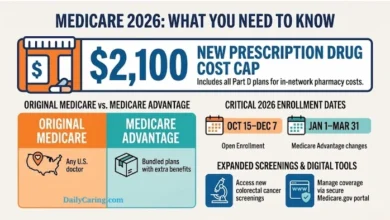
The financial implications of acquiring modern safety equipment also require careful navigation. Original Medicare, encompassing Part A and Part B, generally does not provide coverage for medical alert systems, as these devices are not classified under durable medical equipment guidelines. Consequently, the cost falls primarily on the individual or their family. However, certain Medicare Advantage plans (Part C) and state-specific Medicaid programs have begun offering limited coverage, partial reimbursements, or specialized partnership discounts depending on regional policy frameworks and individual care plans.
Selecting the appropriate system demands a thorough assessment of the user’s specific physical, cognitive, and lifestyle requirements. A feature-rich smartwatch equipped with a high-resolution touchscreen and complex navigation menus may overwhelm an individual experiencing advanced dementia or significant visual impairment. Conversely, a minimalist ambient sensor network might prove insufficient for an active, mobile senior who frequently travels away from home and requires nationwide GPS coverage. Matching the technology to the user’s cognitive baseline and daily habits remains the cornerstone of a successful implementation strategy.
As the marketplace continues to expand toward the projected $11.8 billion valuation, manufacturers are expected to refine further the intersection between dignity, discretion, and safety. The stigma once associated with bulky, clinical panic buttons has largely been replaced by sleek, consumer-friendly designs that blend seamlessly into contemporary lifestyles. By bridging the gap between independence and vigilant oversight, these modern safety networks provide families with invaluable peace of mind while empowering older adults to remain safely in the comfort of their own homes.