Navigating Insurance and Financial Assistance for Medical Alert Systems: A Comprehensive Guide for Seniors and Caregivers

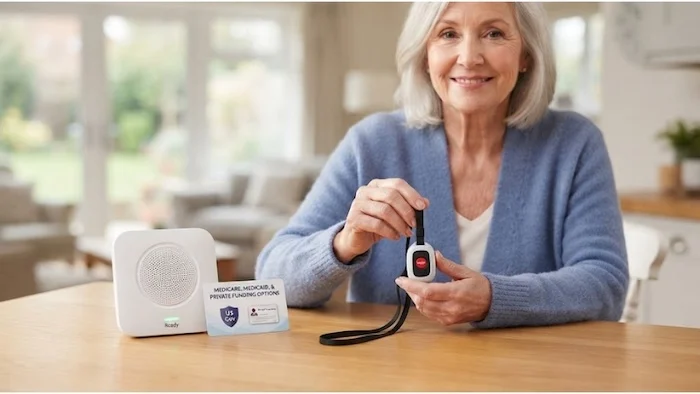
Purchasing a personal emergency response system (PERS) is widely recognized as a critical investment in personal safety for older adults wishing to age in place, but navigating the complex web of payment options requires precise information. Many seniors and family caregivers mistakenly assume that federal healthcare programs automatically cover the cost of these life-saving devices. The reality, however, is far more fragmented. For those researching how to pay for medical alert systems, coverage depends entirely on an individual’s specific insurance policy, state of residence, and veteran status.
The Regulatory Landscape and Federal Coverage Realities
To understand how personal emergency response systems are financed, one must first examine the strict definitions enforced by federal healthcare authorities. Original Medicare—comprising Part A (hospital insurance) and Part B (medical insurance)—does not provide coverage for medical alert systems. The Centers for Medicare & Medicaid Services (CMS) explicitly rules that PERS devices do not fall under the statutory definition of Durable Medical Equipment (DME). Because equipment must serve a strictly medical purpose, withstand repeated use, and be appropriate primarily for home use within the context of an illness or injury, standard medical alert pendants and base stations are excluded. Consequently, beneficiaries relying solely on Original Medicare must pay 100% of the equipment and monitoring costs out of pocket.
The financial calculus shifts significantly when examining Medicare Advantage (Part C) plans. Administered by private insurance companies approved by Medicare, Part C plans possess the structural flexibility to offer supplemental health benefits that are absent from Original Medicare. In recent years, an increasing number of Medicare Advantage insurers have incorporated partial or full coverage for medical alert systems into their supplemental packages. Insurance executives and healthcare economists note that this inclusion is largely driven by preventative economics; providing a PERS device helps mitigate the risk of catastrophic falls that frequently result in expensive emergency room visits and inpatient hospital readmissions. However, because these supplemental benefits vary drastically by provider and geographic region, policyholders must meticulously review their annual Evidence of Coverage documents or contact their insurance representatives directly to verify whether a specific device qualifies for reimbursement.
State-Level Variations and Medicaid HCBS Waivers
While federal programs draw strict boundaries, Medicaid offers a more promising, albeit conditional, path toward funding personal emergency response systems. Medicaid is jointly funded by the federal government and state governments, resulting in a patchwork of regulations that vary significantly across state lines.
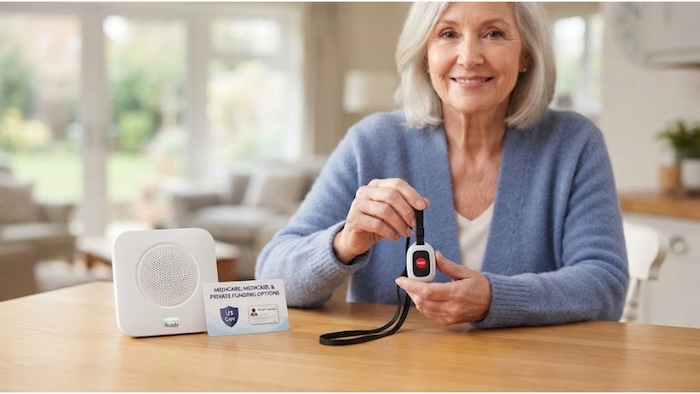
Under Medicaid’s Home and Community-Based Services (HCBS) waiver programs—authorized typically under Section 1915(c) of the Social Security Act—many states recognize the fiscal and humanitarian value of keeping seniors in their homes rather than transitioning them into costly institutional nursing facilities. Through these HCBS waivers, eligible low-income seniors can have the costs of both the medical alert hardware and the continuous monthly monitoring fees fully covered by the state.
Despite this availability, obtaining a medical alert system through Medicaid is rarely a simple administrative process. Beneficiaries must navigate strict financial and functional eligibility criteria, secure approval through a local case manager, and often select from a restricted list of approved hardware vendors vetted by the state health department.
Veteran Benefits and the Department of Veterans Affairs
For military veterans, the pathway to acquiring a fully funded medical alert system is considerably more streamlined than civilian alternatives. The Department of Veterans Affairs (VA) provides personal emergency response systems at no cost to qualifying veterans who meet specific health and service-connected criteria.
Unlike private insurance models where a consumer purchases a device out of pocket and files for reimbursement, the VA system operates through direct clinical assessment. A veteran must request a formal consultation with their primary care physician within the VA healthcare network. If the clinician determines that a medical alert system is clinically necessary to ensure the veteran’s safety at home, the VA orders the equipment directly from an approved federal vendor. Crucially, the VA covers both the initial installation of the hardware and the ongoing monthly monitoring fees for the duration of the clinical necessity, removing financial barriers for aging veterans and their families.
Alternative Financing: Flexible Spending Accounts, Grants, and Local Resources
For individuals who find themselves locked out of government-sponsored healthcare coverage, several alternative financing mechanisms can help defray out-of-pocket expenses for personal emergency response systems.

Flexible Spending Accounts (FSAs) and Health Savings Accounts (HSAs) frequently permit individuals to use pre-tax dollars to pay for medical alert systems, provided they can secure a Letter of Medical Necessity from a licensed physician. This documentation confirms that the device is being utilized to treat, mitigate, or prevent a specific medical condition or physical impairment, thereby satisfying Internal Revenue Service (IRS) compliance standards.
Beyond tax-advantaged accounts, families can tap into community-level resources. Local Area Agencies on Aging (AAAs), non-profit aging advocacy groups, and charitable foundations frequently offer small grants, localized subsidies, or temporary loaner programs for assistive technologies. Social workers and geriatric care managers routinely recommend contacting regional aging networks to uncover hidden philanthropic funding sources that are unavailable through traditional medical channels.
Broader Implications for Aging in Place and Caregiver Stress
The financial burden of outfitting a home with modern medical alert technology underscores a broader socioeconomic challenge: the expanding strain on family caregivers. Healthcare advocates point out that leaving families to navigate a convoluted labyrinth of private insurance policies, conditional Medicaid waivers, and VA bureaucracy places an unfair emotional and administrative tax on households already managing complex caregiving duties.
As the population of older adults continues to grow exponentially, public policy experts and elder law advocates are increasingly lobbying for standardized federal coverage of preventative safety technologies. Proponents argue that the relatively low cost of a monthly monitoring subscription is negligible when weighed against the devastating physical, psychological, and financial toll of an undetected fall resulting in prolonged immobility or emergency hospitalization.
Until legislative reforms alter the classification of personal emergency response systems, proactive research remains the most effective defense against unexpected healthcare expenditures. Experts advise families to conduct thorough policy reviews well in advance of a medical crisis, consulting licensed insurance brokers, elder law attorneys, or local aging resources to verify eligibility. For millions of older adults, securing a medical alert system is not merely a purchase, but a fundamental prerequisite for maintaining independence and aging safely within the comfort of home.
Related posts: