Apple Expands Accessibility on Streaming Service with Integrated Sign Language Interpretation for Major Film Releases

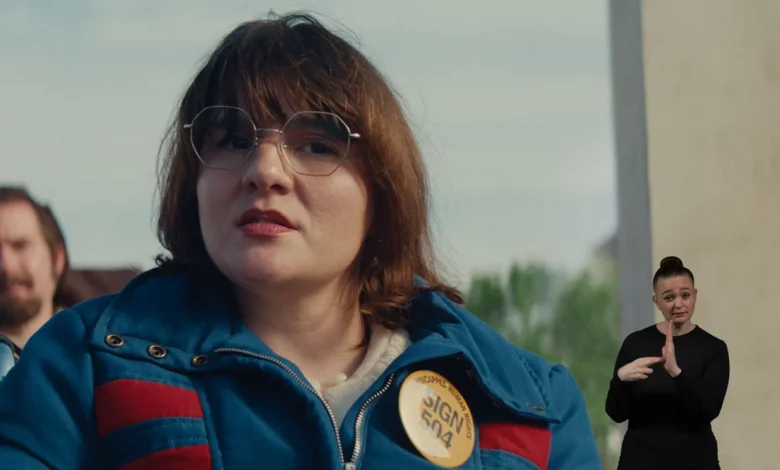
Apple has announced a significant expansion of accessibility features across its Apple TV streaming platform, introducing integrated sign language interpretation for select feature films and original content. The rollout coincides with the release of Being Heumann, a biographical drama chronicling a pivotal moment in the American disability rights movement. By incorporating both American Sign Language (ASL) and British Sign Language (BSL) directly into the viewing experience via on-screen interpreters, the tech giant aims to bridge a longstanding gap in media inclusivity for Deaf and hard-of-hearing audiences.
The initiative launches with availability on Being Heumann, an Apple Original film that premiered on the streaming service, as well as the 2025 Formula 1-themed feature F1. Additional high-profile titles, including Way of the Warrior Kid and the Tom Hanks-starrer Greyhound, are slated to receive the sign language treatment in the near future. Industry analysts view this move as a critical step in setting a new standard for mainstream digital entertainment, pushing major streaming platforms to look beyond traditional closed captions and audio descriptions to serve a broader demographic of viewers.
Chronology and Historical Context of Being Heumann
The thematic inspiration behind Apple’s latest accessibility push is rooted in real-world history that fundamentally altered civil rights protections for individuals with disabilities in the United States. Being Heumann is based on the memoir of the same name by Judy Heumann, a pioneering activist who became a central figure in the fight for systemic equality.
The film dramatizes the landmark 1977 San Francisco Federal Building sit-in. Led by Heumann, more than a hundred individuals with disabilities occupied the federal building for nearly a month. The protest was organized to pressure the federal government into finally signing and enforcing Section 504 of the Rehabilitation Act of 1973. This crucial legislation prohibited discrimination against individuals with disabilities in any program receiving federal financial assistance, laying the groundwork for the Americans with Disabilities Act (ADA) passed over a decade later.
In the cinematic adaptation, Heumann is portrayed by actor Ruth Madeley, who has spina bifida. The production also features Deaf actor Daniel Durant, who takes on the role of disability rights activist Steve McClelland. By casting actors with lived experiences related to the characters they portray, the production underscores Hollywood’s ongoing, albeit slow, shift toward authentic representation both in front of and behind the camera.
Design, Testing, and Production of Sign Language Integration
Unlike standard secondary video feeds or separate streaming channels, Apple’s new sign language offering embeds the interpreter directly into the primary video stream. During playback, a professional sign language interpreter is superimposed onto the screen, allowing viewers to watch both the cinematic action and the translation simultaneously without shifting their gaze away from the central narrative.
Developing this feature required meticulous coordination with members of the Deaf community. Apple reported that it collaborated closely with Deaf and native signers throughout the testing and refinement phases to ensure that the visual interpretations faithfully captured the nuances, pacing, and emotional depth of the source material.
Crucially, the translation for Being Heumann was directed by Daniel Durant. Drawing on his dual perspective as a professional actor and a member of the Deaf community, Durant oversaw the translation process to guarantee high artistic and linguistic quality.
“Bringing this experience to life required a lot of care to ensure every translation captured the emotion and meaning of the story,” Durant said following the release. “I’m proud to have been part of Being Heumann and thrilled to see Apple TV supporting greater accessibility for Deaf audiences.”
Technical Implementation and User Experience
To ensure that subscribers can easily locate and utilize the new accessibility features, Apple has integrated specific navigational tools within the Apple TV application interface. Movies equipped with sign language interpretation will be clearly identified by a distinct sign language icon on their title pages.
Furthermore, users can discover participating content by utilizing specific search queries within the app, such as searching for phrases like “with ASL.” To activate the feature during playback, viewers must first enable the option within their general Apple TV settings and subsequently select the designated sign language button on the player controls.
This streamlined approach reflects a growing industry emphasis on user-friendly accessibility design. Historically, alternative viewing formats for Deaf audiences were difficult to find or required cumbersome external devices and specialized applications. By baking these options directly into the native user interface across multiple operating systems and hardware devices—ranging from smart TVs to mobile phones and tablets—Apple is lowering the technical barriers that often discourage viewers from utilizing accessibility tools.
Official Responses and Corporate Strategy
Executives at Apple have framed the rollout not merely as a feature update, but as a reaffirmation of the company’s foundational corporate values. Sarah Herrlinger, senior director of global accessibility policy and initiatives at Apple, emphasized that inclusive design remains a top priority across the corporation’s hardware and software ecosystems.
“Bringing sign language interpretation to Apple TV is an exciting step forward in making the viewing experience more accessible and inclusive for Deaf audiences,” Herrlinger stated. “Accessibility is a core value at Apple, and we’re proud to continue creating experiences that allow more people to enjoy the content they love.”
This strategy aligns with broader tech industry trends where accessibility is increasingly marketed as a key differentiator rather than an afterthought. By investing in specialized translation talent, linguistic testing, and user interface updates, Apple is signaling to consumers and advocacy groups that digital equity is a vital component of modern media consumption.
Broader Industry Trends and the Evolution of Streaming Accessibility
Apple is not the pioneer of on-screen sign language interpretation within the modern streaming landscape, but its entry into the space marks a significant validation of the format.
The trend gained major momentum in late 2023 when HBO Max introduced a unique accessibility option featuring integrated sign language interpretation for the blockbuster film Barbie. Following positive user reception and critical acclaim, Warner Bros. Discovery expanded the availability of the feature throughout 2024 and 2025, applying it to high-profile cinematic releases and television series such as Godzilla x Kong: The New Empire, Beetlejuice Beetlejuice, and the critically acclaimed video game adaptation The Last of Us.
The adoption of these practices by multiple multi-national media conglomerates indicates a structural shift in how the entertainment industry approaches content localization. Traditionally, localization efforts for film and television were heavily skewed toward spoken-language dubbing and standard text subtitles. While closed captions have long been a legal and practical baseline for television and streaming, they primarily serve individuals who are hard of hearing or watching in silent environments, whereas American Sign Language and British Sign Language are distinct, visually expressive languages with their own unique grammatical structures and cultural idioms.
Providing signed interpretations tailored specifically to the emotional beats of narrative cinema represents a much higher standard of linguistic access. As more streaming platforms observe the successful deployment of these features by competitors like HBO Max and Apple TV, pressure is likely to mount on other major players—including Netflix, Amazon Prime Video, and Disney+—to adopt similar inclusive standards.
Future Implications for Creators and Consumers
As the technology behind digital video distribution continues to evolve, the integration of sign language interpretation opens up new creative and professional avenues for Deaf artists, translators, and filmmakers. The involvement of industry professionals like Daniel Durant in directing and supervising translations demonstrates that Deaf talent is essential not only to on-screen representation, but to the technical execution of accessibility initiatives.
Moreover, disability advocacy organizations have frequently noted that increased media visibility plays a vital role in shifting societal attitudes toward disability rights. When mainstream audiences consume historical dramas like Being Heumann alongside contemporary blockbusters equipped with advanced accessibility features, public awareness of systemic inequalities naturally expands.
For the millions of Deaf and hard-of-hearing individuals worldwide who rely on sign language as their primary mode of communication, the expansion of these services on premier streaming platforms represents long-overdue progress toward equitable cultural participation. As Apple and its competitors continue to scale these offerings, the standard for what constitutes a truly accessible home-viewing experience is undergoing a permanent and welcome transformation.