How to Choose the Right Medical Alert System for Your Loved One: A Comprehensive Guide to Personal Emergency Response Systems

Selecting an appropriate medical alert system, commonly referred to as a Personal Emergency Response System (PERS), has become a critical decision for families managing the care of aging or medically vulnerable relatives. As the senior population expands globally, the market for assistive living technologies has grown exponentially, offering a diverse array of features designed to bridge the gap between independent living and professional care. Navigating this marketplace requires careful evaluation of lifestyle requirements, technological capabilities, and financial constraints to ensure safety is maintained without sacrificing personal comfort or autonomy.
Industry Background and the Evolution of Personal Emergency Response Systems
The personal emergency response sector has undergone a profound technological transformation over the past two decades. Historically, medical alert systems were rudimentary, tethered entirely to traditional landline telephone networks via a stationary base unit with a limited operational radius. These legacy systems restricted users to the confines of their homes and immediate yards, presenting significant limitations for active seniors who maintained independent lifestyles.
The convergence of cellular technology, global positioning systems (GPS), and miniaturized micro-electro-mechanical systems (MEMS) sensors has fundamentally altered the landscape. Modern devices frequently integrate cellular connectivity, eliminating the necessity for a landline. Furthermore, the incorporation of advanced accelerometers and gyroscopes has allowed manufacturers to develop automatic fall detection algorithms capable of signaling emergency dispatchers even when an incapacitated user is unable to press a manual help button. Industry analysts project continued expansion in the assistive technology sector as families increasingly seek decentralized, technology-driven solutions to support aging-in-place initiatives.

Core Evaluation Criteria: Determining the Right System Architecture
When evaluating available options on the market, consumers must first determine the structural configuration that aligns with the daily routines and mobility levels of the intended user. Industry professionals categorize these solutions into three primary classifications: in-home systems, mobile GPS systems, and hybrid configurations.
In-Home Systems
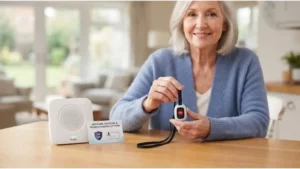
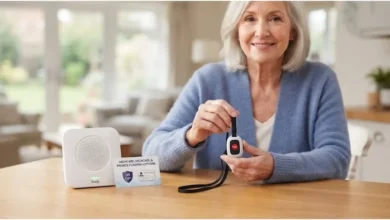
Traditional in-home medical alert systems are engineered specifically for individuals who are largely homebound or who rarely venture outside without the accompaniment of a caregiver. These units typically feature a primary base station that communicates via a landline or cellular network, paired with a lightweight wearable pendant or wristband. The operating range between the wearable transmitter and the base station generally spans 800 to 1,400 feet, which is sufficient for covering most residential interiors, patios, and immediate gardens. Because these stationary pendants do not utilize power-intensive GPS chips, their internal batteries are designed to last for years without requiring recharging or replacement.
Mobile and GPS-Enabled Systems
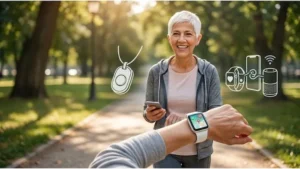
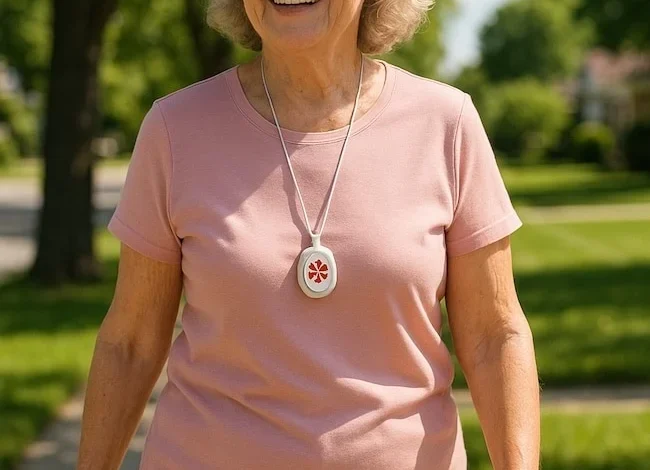
For active seniors who regularly drive, run errands, walk independently, or travel, mobile medical alert systems provide a vital safety net outside the residential perimeter. These cellular-enabled pendants and specialized smartwatches integrate built-in GPS tracking technology, allowing emergency monitoring centers to pinpoint a user’s exact geographic coordinates nationwide. While these devices offer unprecedented freedom, they require routine battery maintenance, typically necessitating daily or weekly recharging depending on the specific model’s power consumption profile.
Hybrid Configurations
Hybrid systems represent an increasingly popular middle ground, pairing a cellular-connected base station with mobile-capable peripherals suitable for multi-level living spaces or modern multi-family residential complexes where traditional landline infrastructure is frequently absent. These setups often feature comprehensive internal battery backups designed to maintain operational integrity during commercial power outages, ensuring continuous connectivity during severe weather events or utility failures.

Automatic Fall Detection: Technology, Utility, and Considerations
A critical feature available in contemporary medical alert architecture is automatic fall detection. Standard emergency buttons rely entirely on manual activation, requiring the user to consciously press the device during a medical crisis. However, scenarios involving sudden syncopal episodes, strokes, or severe trauma resulting from a fall can leave an individual unconscious or physically unable to reach the trigger.
Automatic fall detection addresses this vulnerability by employing internal motion sensors that analyze velocity, impact angles, and physical orientation changes. When the system registers a motion profile consistent with a sudden, uncontrolled descent, it initiates a protocol to contact the monitoring center automatically. Industry experts emphasize that while fall detection technology significantly enhances safety for high-risk individuals, it generally incurs an additional monthly subscription fee and may occasionally generate false alarms triggered by rapid, deliberate movements such as dropping the pendant onto a hard surface.
Monitoring Services, Response Protocols, and Technical Reliability
The operational backbone of any medical alert system is the central monitoring facility. Quality standards dictate that providers maintain 24-hour, year-round professional monitoring staffed by certified emergency dispatch operators. When evaluating providers, healthcare advocates recommend scrutinizing average response times, with industry standards aiming for operator contact within 30 seconds of an alarm being triggered.
Furthermore, the method of transmission plays a vital role in system reliability. Cellular-connected systems have largely superseded landline-dependent models due to their resilience against local phone line disruptions and residential power failures. Families are advised to verify whether a prospective provider utilizes redundant monitoring centers, which ensures uninterrupted service even if a primary facility experiences technical difficulties or regional weather disruptions.

Financial Analysis: Upfront Costs, Subscription Models, and Contract Terms
Navigating the financial obligations of medical alert systems requires a comprehensive assessment of upfront equipment costs, recurring monthly subscription fees, and contractual obligations.
- Upfront and Equipment Expenses: Some manufacturers require consumers to purchase the base unit and wearables outright, while others supply the hardware at no initial cost under the condition that a continuous service agreement is maintained.
- Recurring Subscriptions: Monthly fees typically fluctuate between $20 and $50, depending on the inclusion of premium tiers such as nationwide cellular coverage, GPS tracking, and automated fall detection.
- Contractual Flexibility: Consumer advocacy groups consistently advise against entering into long-term, multi-year contracts. Flexible, month-to-month service agreements allow families to cancel or modify services without penalty if the user’s health status changes, if they transition to an assisted living facility, or if the chosen equipment proves unsatisfactory.
- Hidden Fees: Buyers must carefully review terms of service for activation charges, equipment return shipping fees, and cancellation penalties.
Usability, Comfort, and Ergonomic Design
The practical utility of a medical alert device is directly tied to its physical wearability and ease of use. If a pendant or wristband is excessively heavy, aesthetically stigmatizing, or uncomfortable, users are statistically less likely to wear it consistently, rendering the technology ineffective. Modern engineering emphasizes lightweight, water-resistant materials that can be worn comfortably in the shower or bath—locations where slip-and-fall incidents frequently occur.
Additionally, device setup procedures should be intuitive, accompanied by clear, accessible documentation designed for both seniors and their supporting family caregivers. Integration with smart home ecosystems, such as automated family notification alerts sent via smartphone applications, represents an emerging benchmark in modern personal safety solutions.
Chronology and Market Trends in Assistive Care Technology
- Early 2000s: The PERS market relies heavily on landline-connected base units with restricted in-home ranges and manual-only activation buttons.
- 2010s: The introduction of cellular-enabled base stations and early-generation mobile pendants begins to untether seniors from landline infrastructure.
- Late 2010s to 2020s: Integration of commercial GPS tracking and multi-axis accelerometer sensors brings reliable automatic fall detection into mainstream consumer devices.
- Present Day: The market sees widespread adoption of hybrid cellular systems, wearable smartwatches with embedded health monitoring, and smart home integration, reflecting a broader societal shift toward proactive, technology-enabled aging-in-place strategies.
Broader Implications and Expert Recommendations
The integration of medical alert systems into eldercare strategies carries significant implications for healthcare systems and familial caregivers alike. By mitigating the risks associated with delayed medical intervention following a fall or acute health event, these technologies help reduce emergency room admissions, lower rates of long-term institutionalization, and alleviate the chronic stress experienced by informal caregivers.

Healthcare professionals emphasize that purchasing a medical alert system should be approached as a collaborative decision involving the senior, family members, and primary care physicians. Consulting with a clinical team ensures that the selected device accurately addresses the specific functional, cognitive, and physical profile of the user, ultimately fostering an environment of sustained safety, dignity, and independence.