IAPC launches third installment of Care Continuum series focusing on Palliative Care at Home

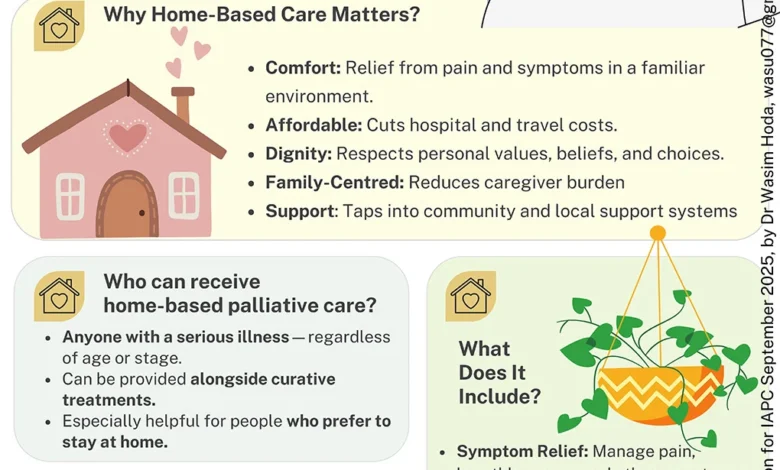
The Indian Association of Palliative Care (IAPC) has officially released the third installment of its ongoing Care Continuum infographic series, focusing specifically on the critical domain of Palliative Care at Home. This latest educational resource serves as a strategic component of the organization’s broader mission to decentralize pain management and supportive care, moving the focus from tertiary hospital settings to the patient’s own living environment. By distilling complex medical guidelines into accessible visual formats, the IAPC aims to bridge the information gap that currently exists for patients, caregivers, and primary healthcare providers across India.
The Evolution of the Care Continuum Series
The initiative, which began in June 2025, was conceived as a systematic educational roadmap designed to simplify the multi-layered nature of palliative medicine. The first two installments laid the groundwork by defining the scope of palliative services and identifying the touchpoints where patients intersect with the healthcare system. The decision to dedicate the third installment to home-based care is rooted in the recognition that for the majority of patients suffering from chronic, life-limiting illnesses, the home is the most viable and dignified setting for care.
The chronology of this project highlights a deliberate, phased approach to public health education. By breaking down the continuum of care into digestible visual segments, the IAPC is addressing a long-standing challenge: the misconception that palliative care is exclusively an end-of-life intervention delivered within hospital walls. This series aims to reframe palliative care as a continuous, proactive process that begins at the time of diagnosis and extends into the domestic sphere.
The Necessity of Home-Based Palliative Care
In the Indian context, the demand for home-based palliative care has reached an inflection point. With a demographic transition leading to an aging population and a rising prevalence of non-communicable diseases (NCDs) such as cancer, cardiovascular ailments, and neurodegenerative conditions, the healthcare infrastructure is under significant pressure. Data from the World Health Organization (WHO) and regional health assessments indicate that fewer than 4% of those in need of palliative care in India currently receive it.
The transition toward home-based care is not merely a matter of patient preference but a clinical and economic necessity. For families in rural or semi-urban areas, where specialized palliative care units are scarce, home-based models provide a vital safety net. These models alleviate the financial burden of repeated hospitalizations, reduce the risk of hospital-acquired infections, and provide a familiar environment that contributes significantly to psychological comfort and quality of life.
Clinical Insights and Expert Collaboration
The development of the latest infographic was facilitated by the contributions of Dr. Wasimul Hoda, a Fellow in Pain Medicine at the Department of Anaesthesia, Critical Care, and Pain Medicine at AIIMS, New Delhi. The involvement of subject matter experts from premier institutions like AIIMS underscores the clinical rigor applied to these educational materials.
The infographic delineates the essential components of home-based care, which include pain and symptom management, psychological support, caregiver training, and the coordination of medical equipment delivery. By mapping these services, the IAPC provides a framework that allows families to navigate the complexities of long-term illness with a higher degree of agency. The integration of pain medicine expertise into this document is particularly salient, as the management of chronic pain is often the primary barrier to maintaining a patient’s functionality and comfort at home.
Fact-Based Analysis: Implications for Public Health
The release of this resource has several implications for the future of palliative medicine in India. Firstly, it signals a shift in the IAPC’s communication strategy toward digital-first engagement. By making these infographics available on social media and the organization’s official website, the IAPC is leveraging digital reach to bypass traditional geographic barriers to education.
Secondly, the emphasis on home care aligns with global health policy shifts. International models, such as the "Gold Standards Framework" for palliative care, emphasize the importance of community-based interventions. By adopting these standards in an Indian context, the IAPC is helping to align domestic practices with international benchmarks.

However, the transition to home-based care is not without challenges. These include:
- Logistical Barriers: The challenge of ensuring the availability of essential medicines, particularly opioid analgesics, which are often subject to strict regulatory oversight.
- Resource Disparity: The gap in trained palliative care nurses and community health workers capable of conducting home visits.
- Caregiver Burnout: Without adequate training and institutional support, the burden on family members can be overwhelming, leading to a breakdown in the care continuum.
The IAPC’s infographic serves as an educational bridge, but it also highlights the need for further policy intervention. To be truly effective, the principles outlined in the infographic must be supported by state-level policies that facilitate the training of local healthcare providers in home-based palliative techniques.
Official Responses and Institutional Support
While the IAPC has spearheaded this initiative, the reception from the broader medical community has been largely positive. Proponents of the model argue that decentralized care is the only sustainable solution for a nation of India’s size. By providing clear, visual, and actionable information, the IAPC is enabling a "grassroots" approach to palliative care, where informed families become active participants in the therapeutic process rather than passive recipients of hospital-based services.
The collaboration with institutions such as AIIMS reflects a growing consensus among top-tier medical professionals: that the hospital-centric model must be complemented by robust community and home-based support. This alignment between academic expertise and public awareness is essential for the long-term success of the palliative care movement in India.
Future Directions for the Care Continuum Series
The IAPC has indicated that the "Care Continuum" series will continue to evolve. Following the release of the "Palliative Care at Home" infographic, there is anticipation regarding how subsequent installments will address the remaining gaps in the system, such as specialized care for pediatric patients, geriatric populations, and those living in remote or conflict-affected regions.
The current strategy of releasing these materials periodically allows for sustained engagement. Rather than overwhelming the public with a single, massive manual, the IAPC’s choice to use infographics ensures that specific topics receive focused attention. This modular approach is particularly effective for social media dissemination, where visual brevity often correlates with higher retention rates.
Conclusion and Call to Action
The IAPC’s latest effort serves as a reminder that palliative care is a human right, not a luxury. By focusing on the home as a legitimate and effective site for such care, the organization is challenging deep-seated medical orthodoxies that prioritize institutional intervention above all else.
As these resources are disseminated, the impact will ultimately be measured by the ability of families and local caregivers to implement these guidelines effectively. The IAPC encourages stakeholders, healthcare workers, and the general public to utilize these infographics as a starting point for discussions on care planning and symptom management. Interested parties are encouraged to visit the official IAPC website to access the full collection of infographics, which now serves as a comprehensive digital repository for palliative care knowledge in India.
For the healthcare sector, the mandate is clear: as the population ages and the burden of chronic illness grows, the ability to deliver high-quality, compassionate care in the home will define the next decade of medical advancement. The IAPC’s work, supported by experts like Dr. Wasimul Hoda, is a necessary step toward building a more inclusive and resilient healthcare architecture.