Global COVID-19 Data and Policy Tracking Framework Transitioned as International Health Reporting Evolves

The landscape of global health data monitoring has experienced a profound structural shift, marked by the official conclusion of primary governmental response trackers and the consolidation of epidemiological data sources. Public health researchers, policymakers, and international health agencies now rely on finalized archival frameworks and streamlined international dashboards to analyze the multi-year trajectory of the SARS-CoV-2 pandemic. Central to this transition is the retirement of the Policy Actions tracker component, a decision precipitated by the cessation of data collection by foundational government response monitoring entities, most notably the Oxford Covid-19 Government Response Tracker (OxCGRT).
For the better part of half a decade, comprehensive tracking mechanisms provided vital visibility into how nations managed the unprecedented public health, economic, and social shocks of the coronavirus pandemic. As the acute emergency phase of the pandemic receded and national governments dismantled emergency administrative apparatuses, the continuous, real-time logging of containment policies, economic stimulus packages, and health system interventions naturally drew to a close. The final datasets, capturing policy frameworks established through the end of 2022, remain preserved as a historical benchmark for comparative public health administration, offering researchers an exhaustive repository of state responses to a global pathogen.
Chronology and Evolution of Global Data Sources
The architecture of global COVID-19 tracking underwent significant methodological milestones throughout the public health crisis. In the initial phases of the pandemic, academic institutions and global research initiatives stepped in to aggregate fragmented national data. Johns Hopkins University (JHU) served as the preeminent global clearinghouse for confirmed cases and mortality figures through its widely utilized Coronavirus Resource Center map. The JHU resource became an indispensable tool for epidemiologists, journalists, and the general public, establishing standardized metrics for infection rates and cumulative deaths across diverse geopolitical landscapes.
However, as the pandemic entered a protracted endemic phase and national reporting methodologies shifted—with many countries transitioning away from universal PCR testing toward sentinel surveillance and hospital admission metrics—the maintenance requirements for pandemic data infrastructure evolved. On March 7, 2023, primary reliance for global case and mortality data transitioned definitively to the World Health Organization’s (WHO) Coronavirus Dashboard, following the conclusion of operations at the Johns Hopkins Coronavirus Resource Center on March 10, 2023.
Simultaneously, the granularity of policy tracking experienced its own administrative evolution. The Oxford Covid-19 Government Response Tracker, which had systematically cataloged containment policies, economic relief programs, and health system adaptations across more than 180 countries, concluded its active data-gathering operations. Consequently, derivative tools that relied on OxCGRT data feeds—such as specialized policy action dashboards maintained by policy research organizations—froze their indicators at late-2022 baselines. To maintain transparency and prevent server latency, active epidemiological dashboards were structurally optimized to house data from the preceding 200 days, while ensuring complete, longitudinal historical datasets remained accessible to the public via open-source repositories like GitHub.
Methodological Framework and Epidemiological Metrics
Interpreting the vast troves of global epidemiological data necessitates a rigorous understanding of the underlying methodologies established by the WHO, the World Bank, and the United Nations. Case and mortality tracking rely on standardized weekly aggregations rather than daily averages, a reporting clarification formally integrated into data portals to prevent analytical misinterpretation. Population denominators utilized for per-capita rate calculations are derived from the United Nations World Population Prospects 2021 estimates, ensuring consistent comparative metrics across varying demographic densities.
Furthermore, geopolitical analyses segment data using established international frameworks. Income-level classifications are anchored to the World Bank’s Country and Lending Groups taxonomy, allowing public health economists to evaluate how wealth disparity influenced epidemiological outcomes, vaccine access, and the durability of economic safety nets. Regional classifications align with WHO geographic designations, facilitating the identification of localized transmission waves and regional policy divergences.
To account for administrative reporting discrepancies, data streams typically incorporate a standard two-week reporting lag. This buffer accommodates the time required for local health departments to verify, aggregate, and transmit diagnostic results to national ministries of health, which in turn report figures to international bodies.
Categorization of Government Interventions
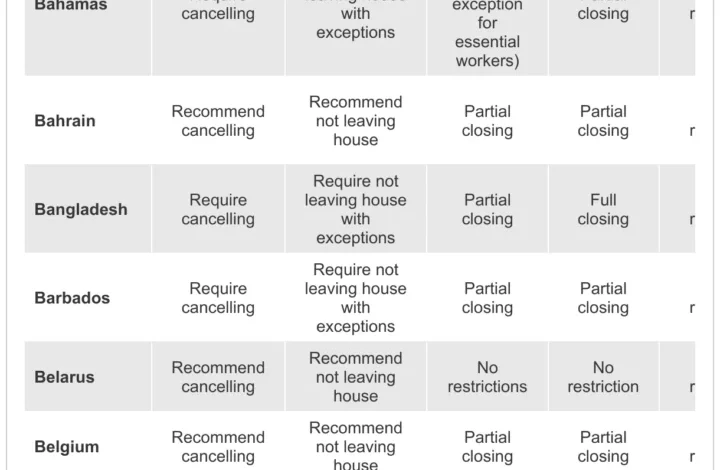
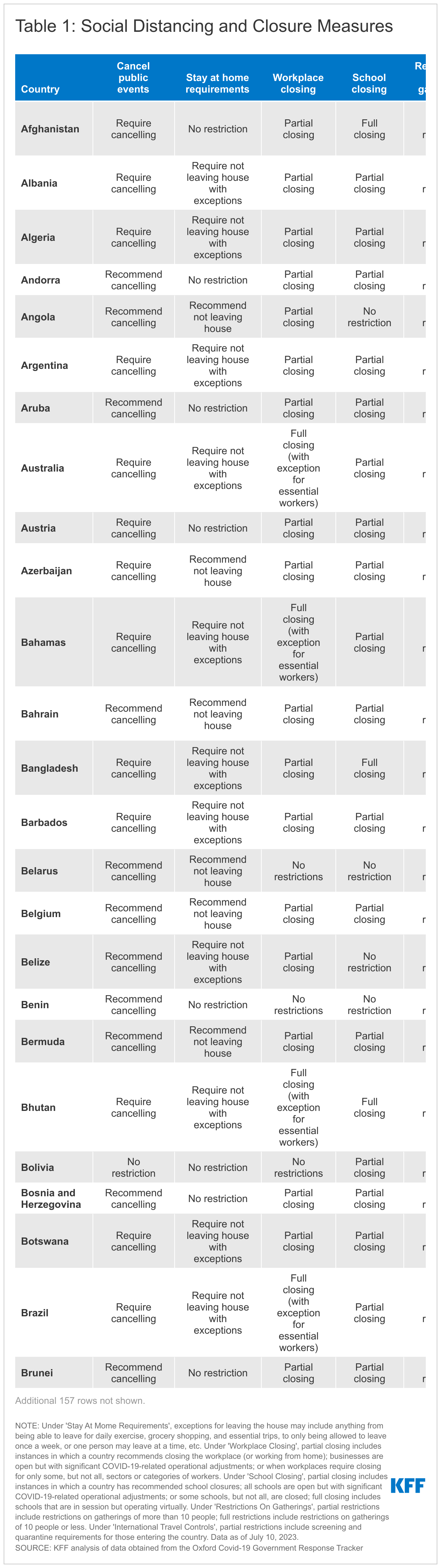
The historical policy action datasets established a tripartite taxonomy for evaluating state responses: social distancing and closure measures, economic support mechanisms, and health systems interventions. Each category utilized standardized coding criteria to evaluate the severity and scope of government intervention.
Social distancing and closure frameworks tracked stringent containment measures, including workplace closures, school suspensions, restrictions on public gatherings, international travel controls, and stay-at-home mandates. Coding guidelines accounted for degrees of implementation; for instance, workplace closures were differentiated by whether mandates were fully enforced across all non-essential sectors, partially applied to specific industries, or merely recommended alongside teleworking incentives. Similarly, school closures captured the spectrum from complete physical shutdowns with remote learning continuity to hybrid operational adjustments and localized quarantines.
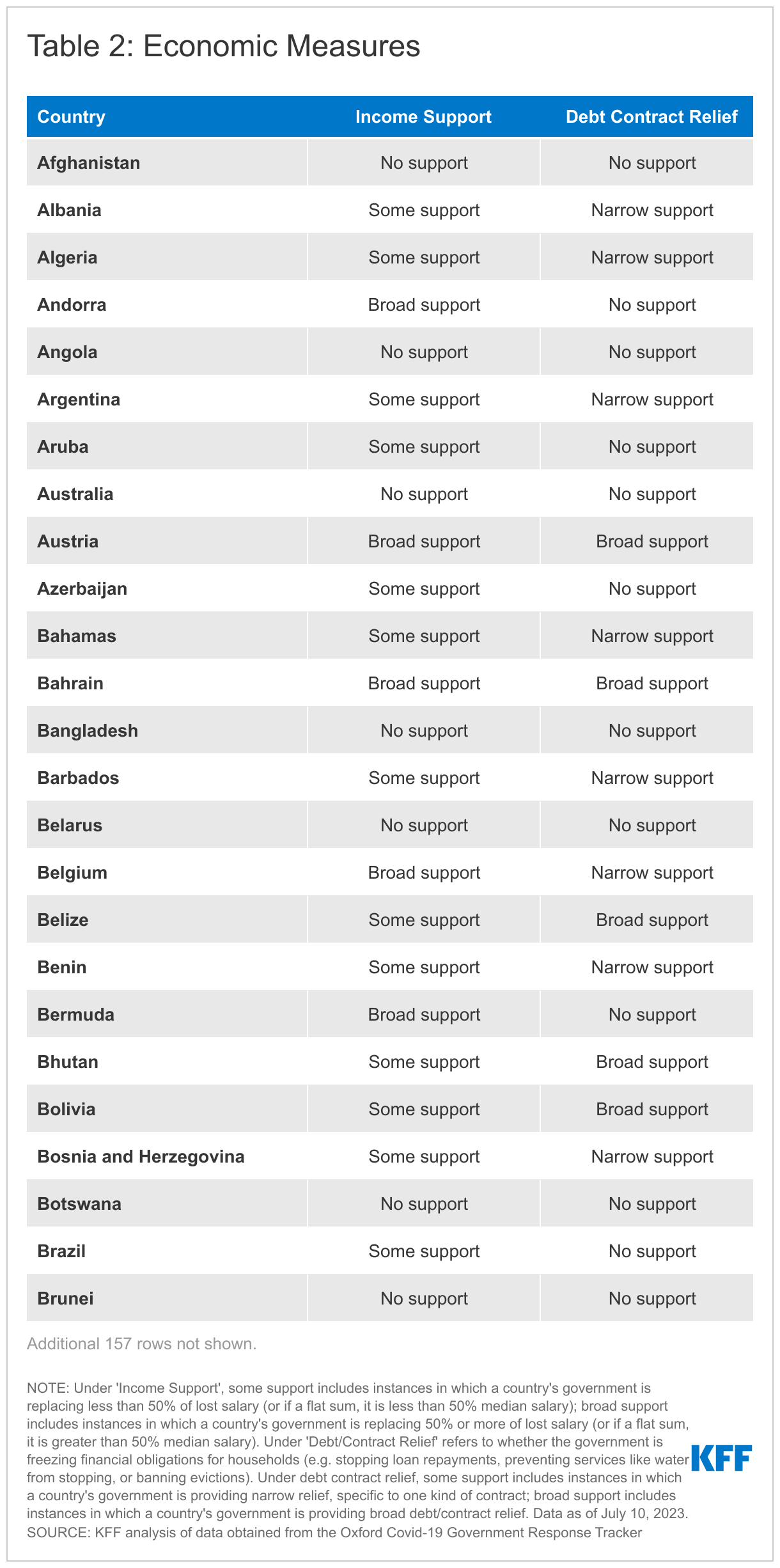
Economic policy tracking evaluated fiscal interventions designed to mitigate the secondary financial shocks of lockdowns and supply chain disruptions. Income support indicators measured whether governments replaced a significant portion—typically benchmarked at 50% or more—of lost wages for affected workers, or whether narrow, targeted stipends were deployed. Debt and contract relief metrics similarly distinguished between comprehensive moratoria on residential mortgages and utility disconnections versus isolated protections covering specific commercial agreements or vulnerable debtor demographics.
Health systems policy metrics focused on operational capacity and public health defense mechanisms. Vaccine eligibility indicators traced the phased rollout of immunization campaigns, noting when access expanded from high-risk elderly populations and frontline healthcare workers to broader demographic cohorts. Facial covering mandates were similarly categorized by enforcement level, ranging from universal indoor requirements to localized recommendations contingent upon physical distancing feasibility.
Implications and Legacy for Future Pandemic Preparedness
The freezing of policy tracking data and the consolidation of epidemiological reporting under the WHO mark the close of an unprecedented chapter in global data science. Public health analysts are already utilizing these historical archives to conduct retrospective evaluations of pandemic management. Preliminary findings emphasize that the success of non-pharmaceutical interventions was heavily mediated by institutional trust, baseline healthcare infrastructure, and the speed at which economic safety nets could be deployed to support compliant populations.
The transition underscores critical lessons for global health security architecture. The fragmentation of early data sources highlighted the necessity for standardized, interoperable digital health reporting systems that can withstand geopolitical friction and administrative fatigue during a prolonged global crisis. As international bodies collaborate on updated pandemic prevention treaties and surveillance frameworks, the standardized taxonomies developed during the COVID-19 pandemic—ranging from OxCGRT policy codings to WHO epidemiological reporting standards—will serve as the foundational blueprint for responding to future biological threats.
Researchers, policymakers, and historians seeking to interrogate the complete corpus of pandemic policy actions and longitudinal case data retain full access to open-source archives hosted on institutional repositories. While daily government response monitoring has drawn to a close, the analytical legacy of these datasets will continue to inform public health policy, epidemiological modeling, and crisis management strategies for decades to come.
Related posts: