The landscape of public healthcare coverage in the United States continues to undergo monumental shifts, driven by evolving federal policies, post-pandemic administrative adjustments, and ongoing reporting by the Centers for Medicare & Medicaid Services (CMS). Recent data updates released through the Performance Indicator Project provide a clear picture of enrollment trends for the Medicaid and Children’s Health Insurance Program (CHIP) programs, capturing critical metrics through mid-2026. These latest figures emerge alongside archived datasets that document the massive, nationwide post-pandemic "unwinding" period, which fundamentally altered healthcare access for tens of millions of Americans between 2023 and late 2024.
As healthcare policy analysts, state administrators, and federal lawmakers evaluate these numbers, the intersection of routine program management and looming legislative changes—such as the 2025 federal budget reconciliation law—has placed public health coverage under intense scrutiny. This comprehensive overview examines current enrollment dynamics, historical trajectories, and the lasting footprint of the historic Medicaid unwinding process.
Current Enrollment Landscape and Mid-2026 Metrics
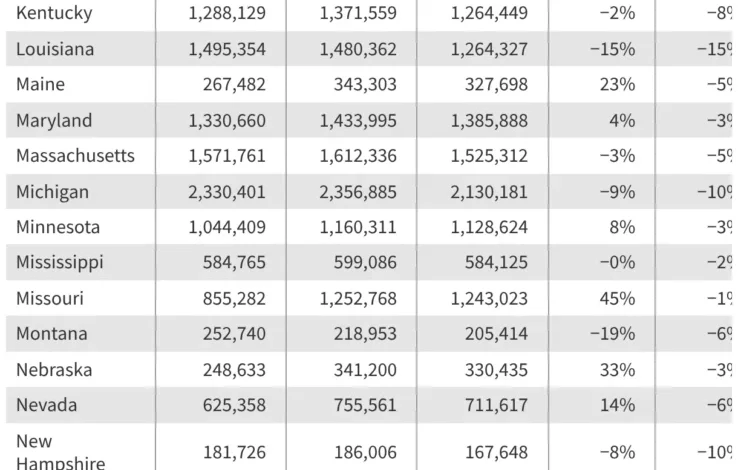
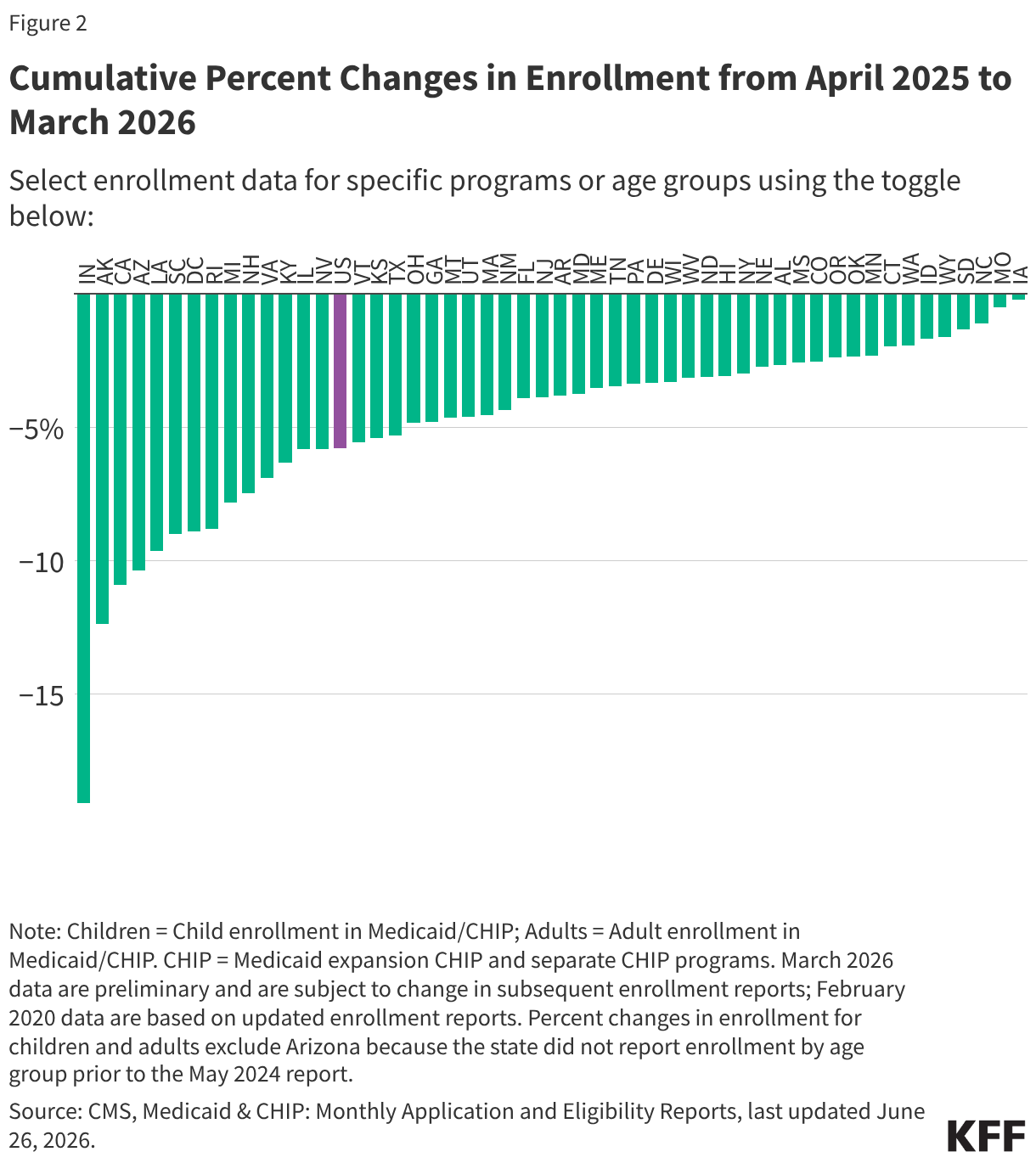
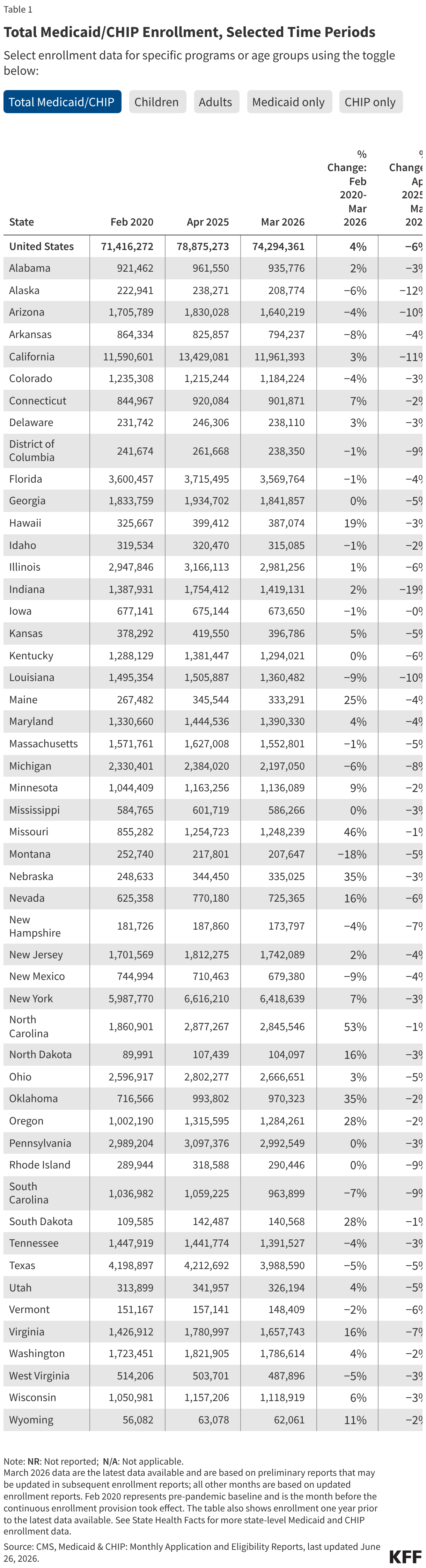
Monthly Medicaid and CHIP enrollment tracking managed via CMS performance indicators offers vital insight into the health security of vulnerable populations, specifically children and adults. According to preliminary data stretching through June 2026, enrollment figures capture the ongoing stabilization of the programs following the turbulence of the pandemic era and the subsequent redetermination period.
However, these datasets come with distinct analytical parameters. The monthly CMS metrics primarily capture full-benefit enrollees. Individuals receiving limited benefits—such as those qualifying strictly for family planning services—are excluded from these counts. Consequently, while these numbers are invaluable for identifying broad macro-level enrollment trends across the country, they do not represent the absolute aggregate count of every individual touching the broader Medicaid ecosystem. Furthermore, these monthly updates do not isolate specific eligibility pathways, making it challenging to monitor granular fluctuations within specific subsets, such as the ACA expansion adult population, without referencing specialized auxiliary datasets.
The stability observed in mid-2026 sets the stage for a new era of programmatic adjustments. With preliminary data indicating subtle shifts in national enrollment totals, state health agencies are increasingly focused on adapting to administrative changes mandated by recent federal legislative packages.
Legislative Horizons: The 2025 Reconciliation Law and Work Requirements
The future trajectory of Medicaid enrollment is poised for a significant inflection point due to major policy shifts enacted in the 2025 budget reconciliation law. Most notably, the legislation introduces mandatory work and reporting requirements for adults in the Medicaid expansion group, as well as participants in certain Section 1115 waiver programs. Set to take effect in January 2027, these provisions are projected by policy experts and budget analysts to reduce total Medicaid enrollment over the subsequent decade compared to projections under prior law.
The implementation of these work requirements marks a departure from previous administrative models, prompting intense tracking by research organizations such as KFF. State-level implementation strategies vary widely, and public health advocates have raised concerns regarding administrative hurdles that could lead to procedural disenrollments similar to those witnessed during the post-pandemic unwinding. Conversely, proponents argue that such measures encourage workforce participation and ensure program resources are directed toward individuals meeting specific statutory criteria. As the implementation date approaches, monitoring how states operationalize these mandates will remain a critical focus for healthcare journalists and policy researchers alike.
Historical Context: The Long Shadow of the Pandemic and Continuous Enrollment
To fully comprehend the current state of Medicaid and CHIP, one must examine the baseline established prior to the COVID-19 public health emergency. In February 2020, just before the implementation of the Families First Coronavirus Response Act’s continuous enrollment provision, national enrollment stood at a specific pre-pandemic baseline. That federal provision prohibited states from disenrolling most Medicaid beneficiaries, effectively freezing rolls and causing enrollment figures to swell to historic highs as millions of Americans weathered economic uncertainty during the pandemic.
When the continuous enrollment provision officially expired on March 31, 2023, states were granted the authority to resume routine eligibility renewals and disenrollments—a massive administrative undertaking commonly referred to as the "unwinding." This multi-month operational challenge required state Medicaid agencies to process renewals for roughly 90 million enrollees.
Archived Unwinding Data: A Historic Administrative Reckoning
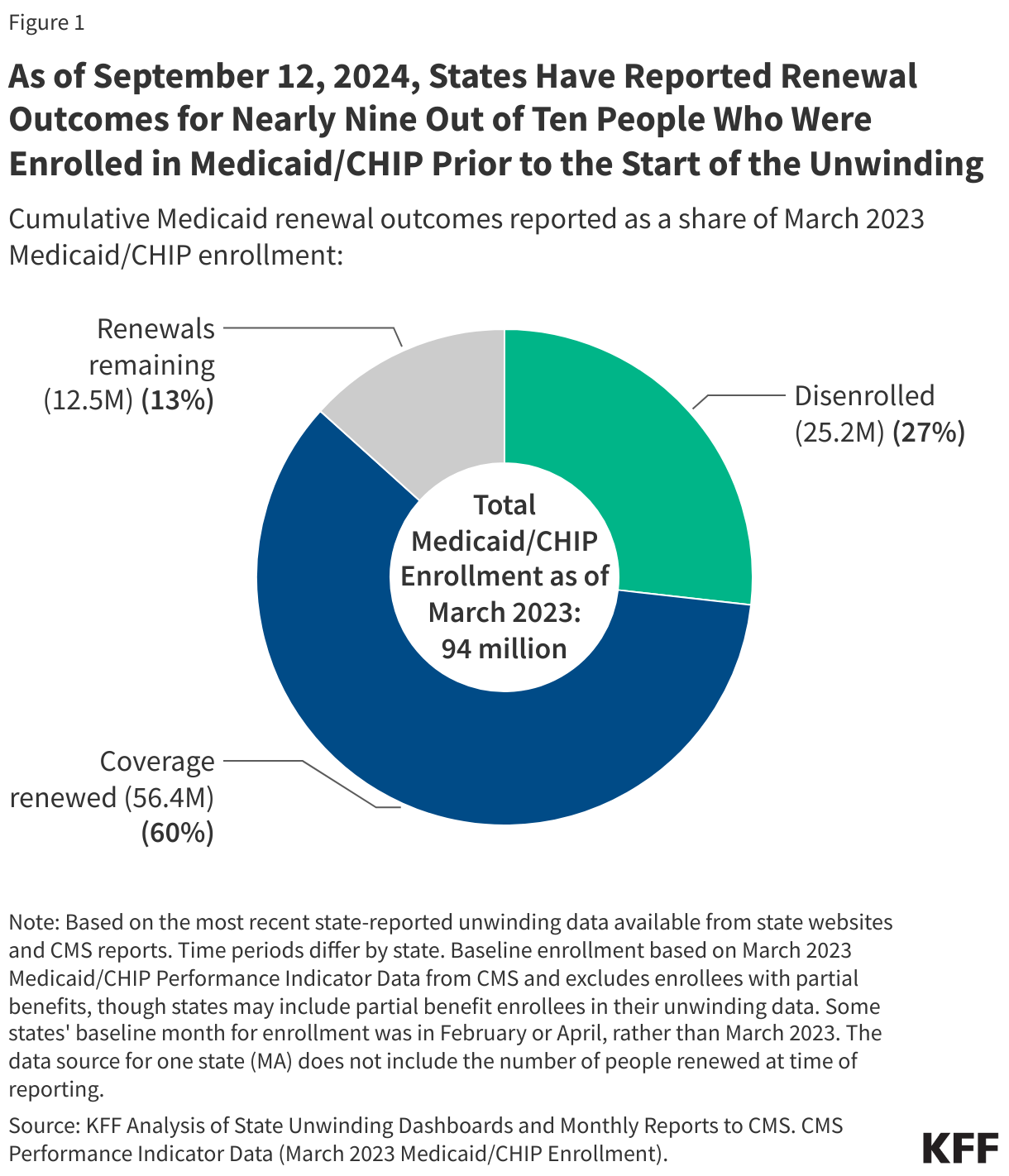
With the vast majority of states having concluded their individual unwinding processes, final archival metrics published in late 2024 offer a definitive historical record of this unprecedented administrative undertaking. As of September 12, 2024, cumulative data showed that states had successfully completed renewal actions or reported outcomes for nearly nine out of ten individuals who were enrolled in Medicaid or CHIP at the start of the unwinding.
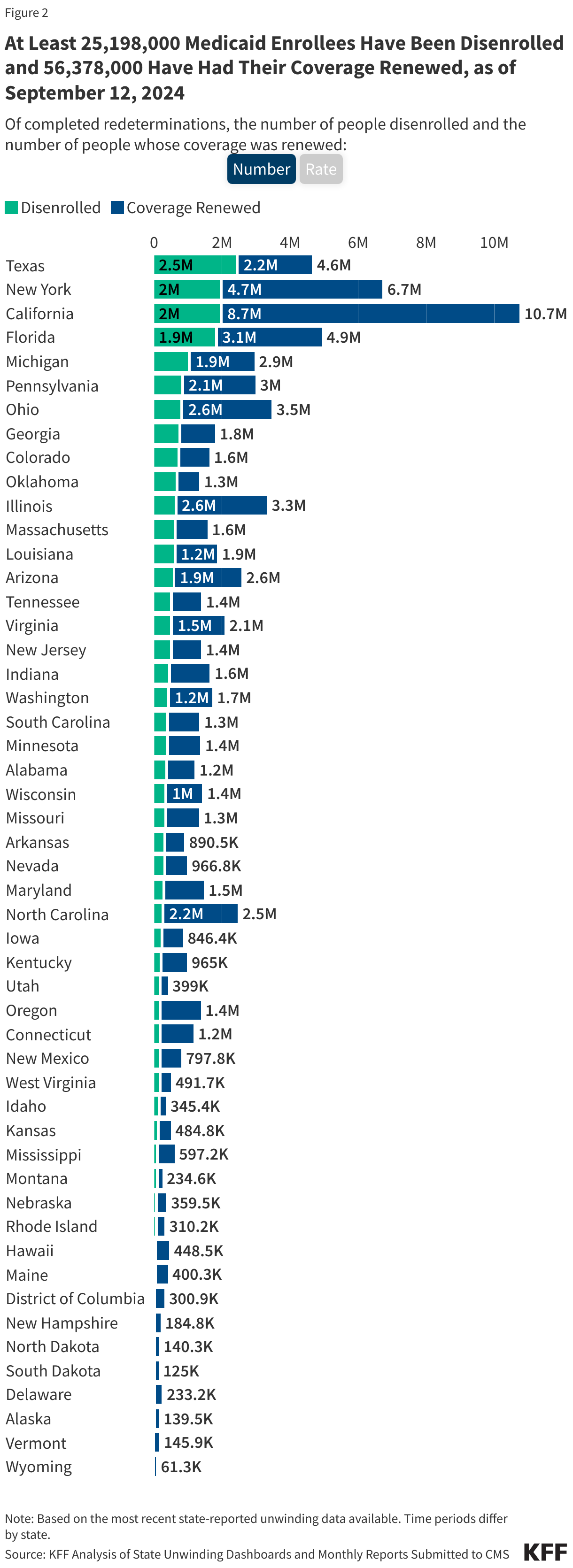
The sheer scale of the turnover is reflected in the numbers: at least 25,198,000 Medicaid enrollees were disenrolled from the program, while 56,378,000 successfully had their coverage renewed. However, these national aggregates mask deep disparities and variations across state lines. Disenrollment rates among completed redeterminations varied dramatically, ranging from a high of 57% in Montana to a low of 12% in North Carolina. These disparities underscored differences in state administrative capacity, proactive outreach efforts, and the specific strategies deployed to contact transient or hard-to-reach populations.
Procedural Disenrollments and the Paperwork Barrier
One of the most defining and scrutinized aspects of the unwinding period was the prevalence of "procedural disenrollments." These occurred when coverage was terminated not because an individual was formally determined to be financially or medically ineligible, but because the state agency could not reach the enrollee or because the beneficiary failed to complete the required renewal paperwork.
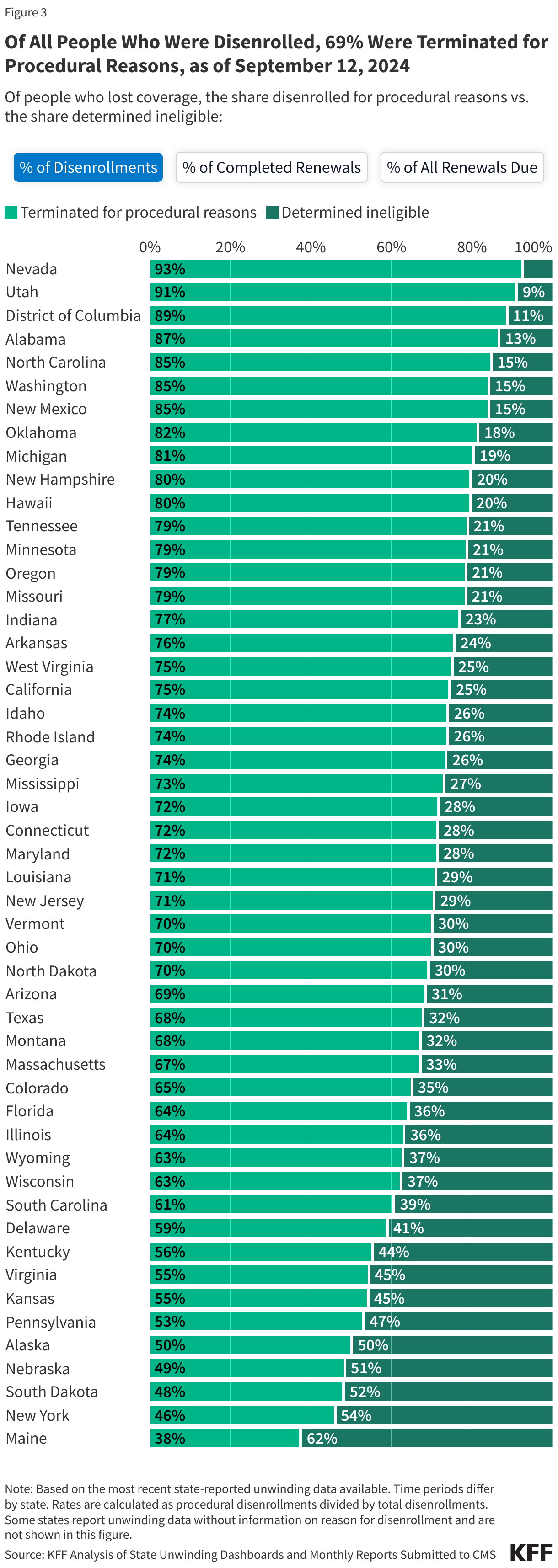
Archived data highlights that procedural administrative issues accounted for a staggering share of total terminations. Of all individuals who lost their coverage during the unwinding, approximately 69% were terminated for procedural reasons. When examined as a share of all completed renewals, procedural terminations accounted for roughly 21% of cases, while 20% of all renewals due resulted in procedural disenrollment.
These figures sparked intense criticism from patient advocacy groups and healthcare providers, who argued that outdated contact information, lengthy wait times on state call centers, and complex renewal packets created insurmountable barriers for eligible low-income families, children, and people with disabilities. In response, CMS issued targeted guidance and allowed states to adopt various mitigation strategies—such as partnering with managed care organizations to update contact data and pausing procedural terminations while addressing system backlogs—to curb unnecessary coverage losses.
Ex Parte Renewals and State Innovations
Despite the high volume of procedural disenrollments, state agencies also demonstrated successes through automated administrative renewal processes, known as ex parte reviews. Overall, data reveals that approximately 61% of individuals who successfully retained their Medicaid coverage during the unwinding were renewed automatically using existing electronic data sources, such as wage databases and SNAP program records, without requiring any direct action from the beneficiary.
States that heavily invested in robust data-matching infrastructure and streamlined technology systems generally achieved lower procedural disenrollment rates, demonstrating the critical role of institutional modernization in public benefit administration. State-specific dashboards and monthly reports submitted to CMS—alongside updated figures filed three months post-submission to account for pending case resolutions—provided the granular data necessary to track these operational nuances.
Implications for the Future of Public Coverage
The lessons learned from the post-pandemic unwinding period continue to influence federal oversight and state-level planning. The massive churn of individuals moving in and out of Medicaid highlighted the fragility of healthcare safety nets and underscored the critical need for continuous coverage pathways, such as multi-year continuous eligibility for children—a policy adopted by numerous states following federal authorization.
As the healthcare sector looks toward the implementation of the 2025 reconciliation law’s work requirements in 2027, policymakers face the dual challenge of maintaining administrative efficiency while safeguarding coverage for vulnerable populations. The extensive tracking infrastructure built by organizations like KFF and federal agencies during the unwinding will serve as an essential benchmark for evaluating future policy changes.
Stakeholders, researchers, and public health officials seeking granular state-level breakdowns, historical tables, or ongoing updates can access detailed metrics through official CMS reports or state health data portals. As public health policy continually evolves, transparent data reporting remains the cornerstone of accountability in maintaining the health and financial security of millions of Americans.
Related posts: