IAPC Launches New Palliative Care at Home Infographic to Expand Healthcare Literacy Across India

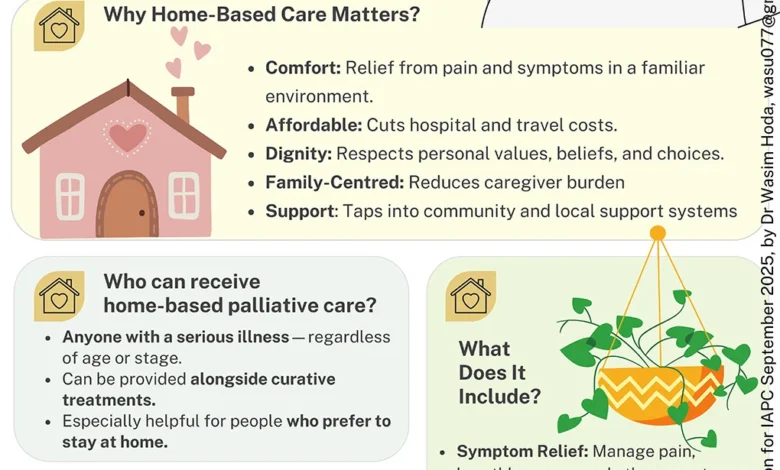
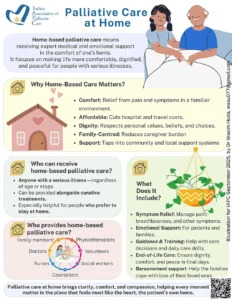
The Indian Association of Palliative Care (IAPC) has officially released the third installment of its ongoing "Care Continuum" educational series, focusing this month on the critical domain of Palliative Care at Home. This strategic initiative serves as a cornerstone of the organization’s long-term mission to decentralize specialized care, bringing essential comfort and medical support directly into the domestic environment for patients facing life-limiting illnesses. By leveraging visual communication tools, the IAPC aims to bridge the gap between complex clinical practices and the practical, everyday needs of patients and their families, ensuring that the philosophy of holistic care extends far beyond the walls of traditional hospital settings.
The Evolution of the Care Continuum Series
The IAPC’s commitment to public health literacy is evidenced by the systematic rollout of its infographic series. Launched in June 2025, the "Care Continuum" project was conceptualized as a multi-phase educational framework designed to simplify the trajectory of palliative medicine. The first installment established the fundamental concepts of palliative care, while the subsequent parts have focused on specific modalities of service delivery.
The September 2025 release, dedicated to "Palliative Care at Home," marks a significant milestone in this timeline. By focusing on home-based care, the IAPC is addressing one of the most pressing challenges in the Indian healthcare landscape: the shift toward community-based support systems. As the burden of non-communicable diseases—such as cancer, chronic organ failure, and neurological conditions—rises, the strain on tertiary care hospitals has reached critical levels. Home-based palliative care offers a viable, patient-centered alternative that preserves the dignity of the individual while alleviating the logistical and financial burdens associated with prolonged hospital admissions.
Supporting Data and the Clinical Necessity of Home Care
The necessity for this educational outreach is rooted in current epidemiological data. According to the World Health Organization (WHO), fewer than 10% of people who need palliative care globally currently receive it. In India, the disparity is even more pronounced, with a significant majority of patients diagnosed with terminal conditions lacking access to adequate pain management or psychosocial support.
Clinical research underscores that palliative care at home significantly improves patient quality of life. Studies consistently show that patients who receive home-based support report lower levels of physical pain, reduced anxiety, and higher satisfaction scores regarding their end-of-life experience compared to those receiving exclusively hospital-based care. Furthermore, home-based interventions facilitate a more integrated approach, involving multidisciplinary teams that include physicians, nurses, social workers, and counselors, all working in concert to manage the patient’s symptoms within their familiar surroundings.
The IAPC’s latest infographic serves to demystify this process, outlining the essential components of a home-care plan: pain titration, psychological counseling, spiritual support, and caregiver training. By providing these resources in a visual, easy-to-digest format, the IAPC is empowering families to act as informed members of the caregiving team.
Expert Collaboration and Institutional Backing
The development of this educational resource was bolstered by the expertise of Dr. Wasimul Hoda, a Fellow in Pain Medicine at the Department of Anaesthesia, Critical Care and Pain Medicine at the All India Institute of Medical Sciences (AIIMS), New Delhi. His involvement highlights the institutional synergy between premier medical research centers and public advocacy organizations.
Professional input from practitioners at the level of AIIMS ensures that the information disseminated by the IAPC remains clinically accurate and aligned with international standards of practice. The collaboration also highlights the academic community’s increasing recognition of palliative care as a vital component of medical education. As palliative medicine gains traction in the national curriculum, the reliance on accessible, high-quality infographics becomes a vital tool for both training medical students and educating the general public.

Chronology of the Care Continuum Initiative
The roadmap for the "Care Continuum" series reflects a methodical approach to healthcare advocacy:
- June 2025: Initial launch of the "Care Continuum" infographic series, establishing the foundational principles of palliative medicine.
- July-August 2025: Expansion of the series with secondary infographics, addressing specific patient needs and navigating the healthcare system.
- September 2025: Publication of "Palliative Care at Home," the third major entry, focusing on domestic implementation and caregiver education.
- Future Outlook: The IAPC has signaled its intention to continue this series throughout the year, with subsequent infographics likely to focus on bereavement support, pediatric palliative care, and the integration of palliative principles into primary healthcare.
Broader Impact and Policy Implications
The implications of this initiative extend beyond simple information sharing. In the context of India’s healthcare policy, there is a growing push to integrate palliative care into the National Health Mission (NHM). By promoting home-based care, the IAPC is effectively lobbying for a shift in healthcare delivery models.
The economic implications are equally significant. Hospital bed-day costs in metropolitan areas are among the highest healthcare expenditures for families. By moving appropriate care to the home, the system can achieve substantial cost savings for both the state and the individual. Furthermore, home care mitigates the risk of hospital-acquired infections, a growing concern in tertiary care settings, and allows for personalized care plans that are difficult to execute in high-turnover clinical environments.
However, the transition to widespread home-based palliative care faces hurdles. These include the need for better training for primary care physicians, the requirement for robust referral networks, and the legal complexities surrounding the home administration of essential palliative medications, such as opioids. The IAPC’s infographic series serves as an informal policy instrument, highlighting these needs and fostering a culture of acceptance for home-based care among both the public and policy-making bodies.
Accessibility and Community Engagement
Recognizing that information is only effective if it reaches the intended audience, the IAPC has adopted a multi-channel distribution strategy. The infographics are hosted on the official IAPC website and are disseminated across various social media platforms, including LinkedIn, Twitter, and Facebook. This digital-first approach ensures that the content can be shared instantly among healthcare networks, non-governmental organizations (NGOs), and patient support groups.
The organization has explicitly encouraged stakeholders to share these materials within their professional and personal networks. By lowering the barrier to entry—making the information free, accessible, and shareable—the IAPC is fostering a grassroots movement toward better end-of-life care. This decentralized distribution model is particularly effective in reaching rural and semi-urban areas, where access to specialized palliative clinics is often non-existent.
Conclusion and Future Directions
The IAPC’s focus on "Palliative Care at Home" represents a mature phase of its advocacy. It acknowledges that while high-level clinical research is essential, the battle for compassionate care is won in the living rooms and bedrooms of the patients themselves. By standardizing the information provided to families, the IAPC is reducing the "knowledge asymmetry" that often leaves caregivers feeling helpless and ill-equipped.
As the organization looks toward the next quarter, the "Care Continuum" series remains a testament to the power of targeted, visual communication in public health. With the support of medical professionals like Dr. Wasimul Hoda and the weight of institutions like AIIMS behind it, the initiative is well-positioned to drive meaningful change.
The ongoing challenge for the IAPC will be to ensure that the momentum generated by these infographics is translated into actionable policy and expanded clinical infrastructure. As the series continues to evolve, it will likely serve as a foundational resource for the next generation of healthcare providers, cementing the role of home-based palliative care as an indispensable pillar of the Indian healthcare system. For those interested in accessing the full library of resources produced to date, the IAPC continues to maintain a comprehensive repository on its official portal, serving as an enduring legacy of the organization’s dedication to improving the quality of life for all, regardless of their medical prognosis.