Beyond the Premium: How Hospital Consolidation and Underlying Spending Drive the American Healthcare Crisis

The debate over soaring healthcare expenditures in the United States often focuses heavily on insurance companies, with politicians from across the political spectrum frequently targeting carriers for rising costs, high premiums, and administrative friction. However, a comprehensive analysis by KFF (Kaiser Family Foundation) highlights a more foundational driver of the nation’s financial strain: underlying healthcare spending, particularly the escalating cost of hospital care, physician services, and prescription drugs. While insurers certainly absorb administrative overhead and utilize mechanisms like prior authorization and narrow networks that frustrate consumers, they largely function as pass-through entities for an inherently expensive medical ecosystem. Total U.S. health spending climbed to an estimated $5.3 trillion by 2024, placing unprecedented pressure on employers, workers, and government budgets alike. Understanding the true mechanics of this crisis requires looking past the rhetoric directed at insurers and examining the structural issues—such as widespread hospital consolidation and employer demands for expansive provider networks—that continue to inflate American healthcare costs.
The Evolution of Healthcare Cost Pressures in the United States
To contextualize the current financial burden on American consumers, it is essential to examine the historical trajectory of healthcare spending over the past several decades. For generations, healthcare expenditures have consistently outpaced general economic growth, driven by medical advancements, an aging population, administrative complexities, and the rising unit price of care.
Throughout the 1990s and 2000s, managed care evolved rapidly, shifting from restrictive HMOs (Health Maintenance Organizations) toward broader PPOs (Preferred Provider Organizations) to appease consumers and employees who desired uninhibited access to their preferred physicians and hospitals. This shift inadvertently removed key leverage points that insurers previously used to contain medical utilization and price growth.
The legislative landscape further transformed the industry with the passage of the Affordable Care Act (ACA) in 2010. While the ACA successfully extended health insurance coverage to tens of millions of previously uninsured Americans and instituted crucial consumer protections—such as banning pre-existing condition exclusions and mandating coverage of essential health benefits—it also integrated private insurers deeply into the public-private hybrid marketplace. This dynamic fueled ongoing political debates. Critics on the right argued that the legislation enriched large insurance corporations through subsidized market structures, while progressive lawmakers increasingly targeted corporate insurers for prioritizing shareholder profits over patient affordability.
Despite these shifting regulatory frameworks and political battles, the core economic engine of healthcare inflation remained largely untouched: the underlying cost of delivering medical services. Insurers, operating in competitive markets where profit margins typically hover between 3% and 5%—well below many other sectors of the economy—must ultimately cover medical claims or risk insolvency. Consequently, when medical providers raise their prices, insurers pass those exact costs along to employers and consumers via higher premiums, deductibles, and cost-sharing requirements.
The Anatomy of Spending: Hospitals, Physicians, and Pharmaceuticals
A closer examination of the $5.3 trillion spent annually on healthcare in the United States reveals precisely where the financial weight lies. Hospital care commands the largest single share of national health expenditures and has served as the primary catalyst for spending growth, accounting for approximately 40% of the overall increase in recent years.
Unlike retail goods or consumer services, healthcare pricing lacks standard market transparency. Patients facing medical emergencies or complex surgeries rarely shop around based on price, and insurers negotiating on their behalf often face heavily skewed market dynamics. While outpatient care, physician services, and retail prescription drugs also contribute significantly to the upward trajectory of national health expenditures, inpatient hospital care remains the most potent inflationary force.
Prescription drug spending continues to draw intense public scrutiny, particularly regarding specialty medications, biologics, and novel therapies. While pharmaceuticals represent a smaller overall percentage of total health spending compared to hospitals, their rapid year-over-year price increases directly inflate premiums and heavily burden patients reliant on maintenance medications for chronic conditions. Similarly, physician and clinical services have seen steady cost escalations, driven by corporate consolidation of medical practices, rising administrative burdens, and increasing compensation demands among specialists.
The Market Power of Hospital Consolidation
The primary engine behind rising hospital care costs is unprecedented market consolidation. Over the past twenty years, independent community hospitals have been steadily absorbed by massive regional health systems, creating regional monopolies or tight oligopolies.
Data from recent years illustrate the severity of this trend. By 2024, data indicated that just one or two health systems controlled the entirety of inpatient hospital care in nearly half of all U.S. metropolitan areas. When a single health system dominates a regional market, it possesses immense pricing power during contract negotiations with commercial insurance companies. Insurers that refuse to meet a dominant hospital system’s pricing demands risk being dropped from the network, making the insurance product unmarketable to local employers and consumers who rely on access to that specific facility.
Faced with the prospect of losing entire member bases, insurers routinely capitulate to higher hospital reimbursement rates, which are subsequently baked into commercial insurance premiums. This dynamic effectively turns private insurers into collection agencies for consolidated hospital networks, diffusing accountability and obscuring the root cause of consumer financial distress.

The Role of Employers and the Paradox of Broad Networks
While insurance companies frequently absorb the blame for capitulating to high hospital prices, they do not operate in a vacuum. Corporate employers—who purchase health insurance for the majority of working-age Americans and their families—bear significant responsibility for maintaining the status quo.
Human resource departments and corporate leadership consistently demand broad provider networks. Employers view healthcare benefits as a vital tool for recruiting and retaining talent, fearing that offering a narrow network that excludes popular local hospitals or prestigious health systems will spark employee dissatisfaction and hurt workforce morale.
However, demanding comprehensive, all-inclusive provider networks directly undercuts the primary negotiating leverage insurers possess. To extract price concessions from powerful hospital systems, an insurer must be willing and able to walk away from the negotiating table and exclude that system from its network. When employers refuse narrow networks, insurers lose that threat entirely. This creates a circular dilemma: employers want lower premiums, but they also want unrestricted access to high-priced medical providers, rendering meaningful cost containment nearly impossible.
Administrative Friction and Patient Frustration
Even though underlying medical costs drive the vast majority of premium inflation, insurers cannot be entirely absolved of consumer dissatisfaction. The day-to-day experience of navigating the American health insurance system is frequently characterized by administrative friction, complex paperwork, and adversarial processes.
To manage utilization and control expenses in an inflated market, insurers rely heavily on administrative tools such as prior authorization requirements, step therapy protocols, and rigorous claims reviews. While these measures are designed to prevent unnecessary medical procedures and curb waste, they frequently result in delayed patient care, administrative burdens for physicians, and frustrating claim denials.
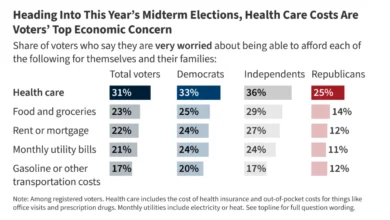
Furthermore, consumers must contend with substantial out-of-pocket costs, including rising deductibles, copayments, and coinsurance. Even individuals with comprehensive employer-sponsored coverage often face thousands of dollars in potential out-of-pocket liability before their insurance benefits fully activate. This financial exposure, combined with the perception that insurance companies post steady corporate profits while individuals struggle to pay medical bills, sustains a deeply adversarial relationship between consumers and carriers.
Policy Responses and Legislative Proposals
Faced with mounting public anger over healthcare affordability, policymakers at both the federal and state levels continue to propose a wide array of regulatory interventions, though ideological divisions frequently stall comprehensive reform.
Conservative proposals have historically emphasized market-based solutions, increased transparency, and consumer empowerment. Proponents of this approach argue that reducing regulatory mandates, encouraging cross-state insurance sales, and expanding tax-advantaged Health Savings Accounts (HSAs) will foster competition and drive down costs. Critics, however, contend that these measures do little to address the underlying market failures of hospital monopolies or provide adequate financial protection for chronically ill populations.
Conversely, progressive and Democratic lawmakers advocate for strengthening consumer protections, capping corporate insurance profits, and increasing federal oversight of healthcare pricing. Proposals frequently include measures to ban surprise medical billing permanently, crack down on anti-competitive contracting practices by hospital systems, and increase price transparency mandates so patients and employers can better evaluate the true cost of care. Some progressive coalitions continue to push for structural overhauls, such as public option programs or single-payer frameworks, arguing that the private insurance model is fundamentally incapable of achieving universal affordability.
Implications for the Future of American Healthcare
The ongoing convergence of rising hospital consolidation, employer preferences for broad networks, and escalating underlying medical expenditures points toward a challenging financial horizon for the U.S. healthcare system. As national health spending continues its upward trajectory, the strain on corporate budgets, public programs, and household finances will only intensify.
Addressing this crisis requires shifting the policy focus away from superficial political finger-pointing and toward structural reform. Real, sustainable cost containment will necessitate tackling anti-competitive practices within the healthcare provider market, encouraging innovative payment models that reward value over volume, and compelling employers and insurers to embrace network designs that genuinely incentivize cost-effective care. Until policymakers and healthcare stakeholders confront the dominance of consolidated hospital systems and the realities of underlying medical inflation, American consumers and employers will continue to bear the crushing weight of a fractured economic model.