Assessing the Impact of the Second Trump Administration: An Analysis of PEPFAR Fiscal Year 2025 Fourth Quarter Performance Data

Since the inauguration of the second Trump administration, the President’s Emergency Plan for AIDS Relief (PEPFAR)—historically heralded as one of the most successful global health initiatives in history, credited with saving approximately 26 million lives worldwide—has navigated a turbulent period marked by structural shifts, funding freezes, and sweeping foreign policy reviews. Recent data released by the U.S. State Department offers the first concrete, program-level glimpse into the operational realities of the initiative following these sweeping changes. Authored through an analysis by global health policy experts at KFF and Boston University, the newly available metrics from the fourth quarter (Q4) of Fiscal Year (FY) 2025 illuminate a complex and mixed landscape of healthcare delivery, highlighting both areas of resilience and concerning indicators of decline across critical HIV/AIDS prevention, testing, and treatment services.
Background and Context of the Foreign Aid Overhaul
Established in 2003 under President George W. Bush, PEPFAR transformed the global response to the HIV/AIDS epidemic, particularly across sub-Saharan Africa, by deploying billions of dollars in bilateral aid, pharmaceuticals, and infrastructure support. For more than two decades, the program operated primarily through disease-specific frameworks, funneling resources directly into testing, antiretroviral therapy (ART) scale-up, and targeted community interventions.
However, the return of the Trump administration introduced a drastically different philosophy regarding U.S. foreign assistance. As part of a comprehensive foreign aid review, the administration initiated a series of disruptive policy actions starting early in 2025. These measures included a temporary stop-work order on numerous active awards, the subsequent cancellation of various grants, and strict limitations on which clinical and community services could continue under existing agreements.
Concurrently, the administration launched the "America First Global Health Strategy." This strategic pivot aimed to transition U.S. global health architecture away from vertical, disease-specific programming toward a more integrated approach. The new framework heavily emphasizes bilateral compacts directly with partner-country governments, focusing investments primarily on frontline medical commodities and core health system services rather than standalone global health interventions.
Compounding these structural changes was an unprecedented disruption in public data transparency. PEPFAR’s flagship data platform—traditionally used by researchers, policymakers, and public health advocates to track financial disbursements and program-level metrics via the Monitoring, Evaluation, and Reporting (MER) system—was taken offline in early 2025. When the platform was eventually restored, it noticeably omitted all program data for the first three quarters of FY 2025, leaving a significant blind spot for the global public health community.
Chronology of Data Disclosures and Methodological Scope
The information vacuum partially cleared on April 17, 2026, when the State Department published its FY 2025 Q4 MER dataset, covering the period from July 1 to September 30, 2025. According to the State Department, data for the first three quarters of the fiscal year were withheld due to profound reporting and implementation challenges stemming from the operational disruptions of the administrative transition.
To evaluate PEPFAR’s performance amidst these unprecedented headwinds without skewed baseline comparisons, health analysts from KFF and Boston University adopted a specific methodological approach. They compared the newly released FY 2025 Q4 results against Q4 data from the previous four fiscal years (FY 2021 through FY 2024) across a subset of MER indicators. Examining identical quarters helps control for seasonal fluctuations and recurring reporting cycles, though researchers acknowledge that this snapshot approach cannot fully quantify cumulative disruptions experienced throughout the entirety of FY 2025.
Furthermore, methodological caveats complicate the interpretation of the dataset. For several key indicators, reporting requirements were altered from "required" to "optional" during FY 2025. Consequently, observed drops in certain reported metrics may stem either from genuine reductions in service delivery on the ground or from administrative gaps where partner organizations simply ceased tracking and submitting data that was no longer mandatory.
Mixed Treatment Results: Stability in Overall Care, Declines in New Enrollments
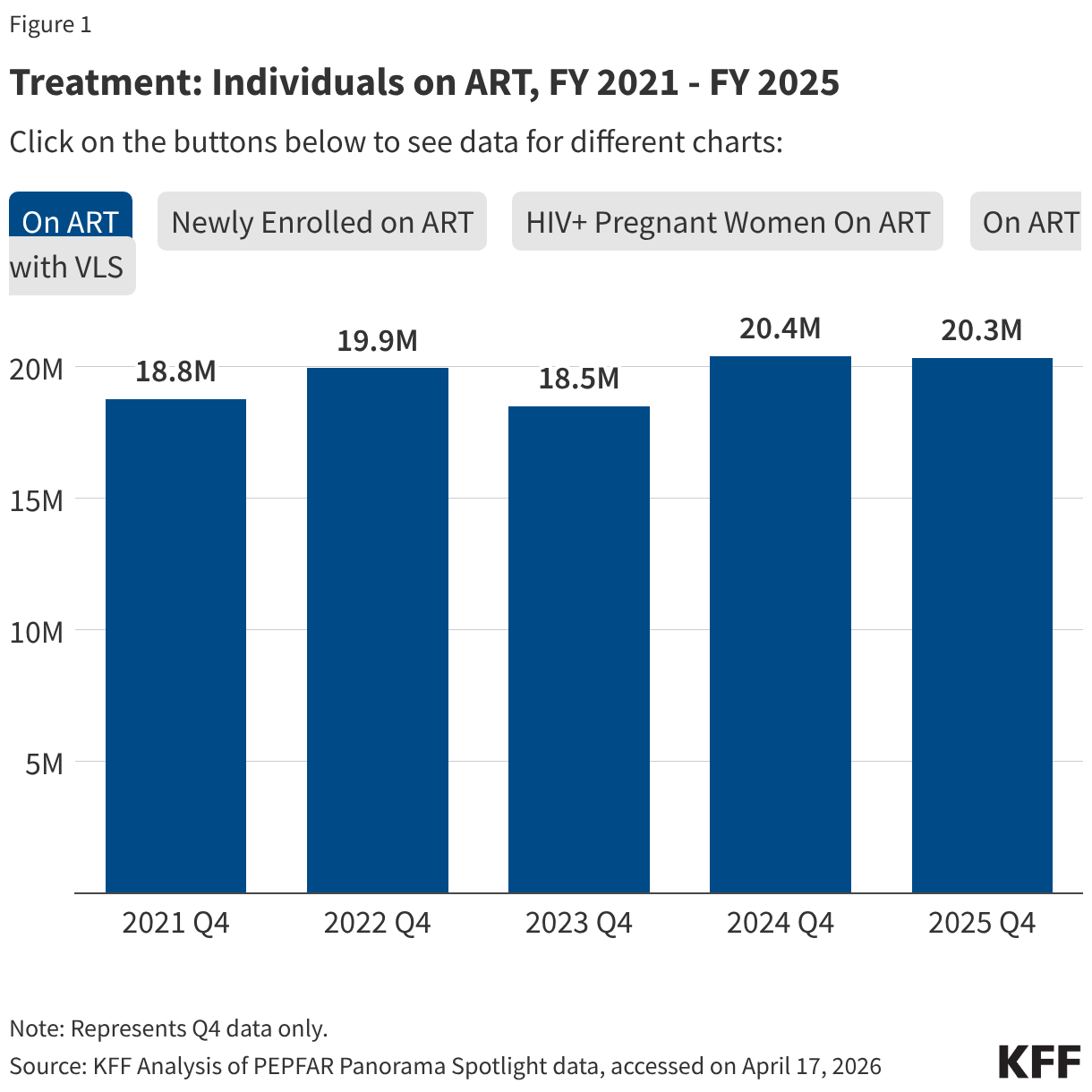
A granular review of the FY 2025 Q4 treatment data reveals a bifurcated reality. On one hand, core indicators measuring the total number of individuals actively receiving antiretroviral therapy remained remarkably stable. Millions of established patients continued to collect their life-saving medications, demonstrating the resilience of supply chains and local clinical staff despite sweeping top-down administrative interventions. Similarly, metrics tracking pregnant women living with HIV who were established on ART, as well as the proportion of patients achieving viral load suppression, held steady compared to prior years.
Conversely, the data exposed a troubling decline in new patient pipelines. Specifically, the number of individuals newly enrolled on ART dropped notably in Q4 FY 2025 compared to historical fourth-quarter averages. Because new enrollment is a primary indicator of identifying undiagnosed individuals and bringing them into continuous care, this contraction suggests that bottlenecks in testing and linkage-to-care systems are actively impeding the initiative’s ability to capture new patients.
Ambiguities in HIV Testing and Diagnostic Outcomes
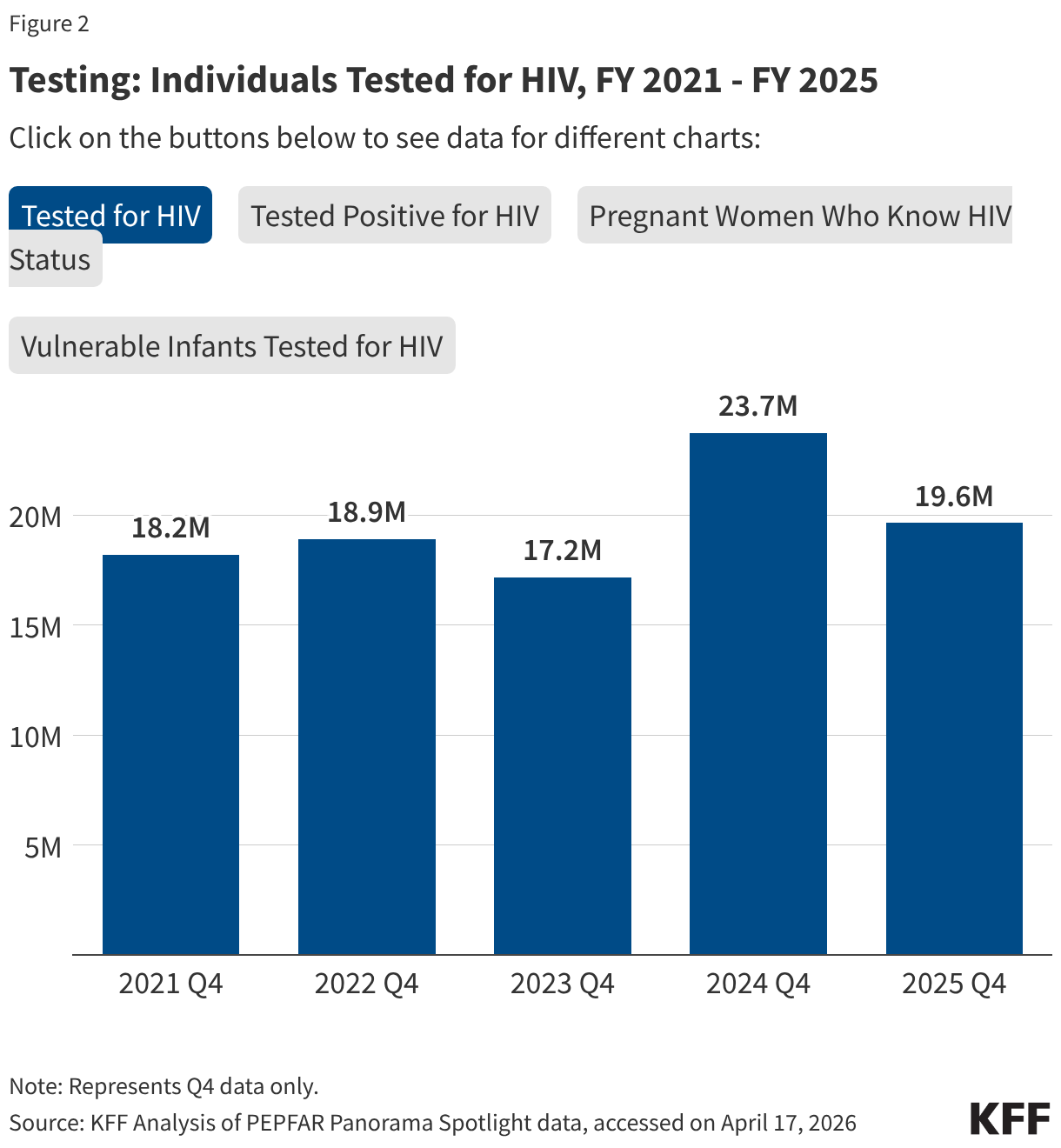
Testing metrics during the final quarter of FY 2025 presented complex interpretive challenges. Both the total number of individuals tested for HIV and the absolute number of individuals testing positive declined relative to Q4 FY 2024.
Public health analysts emphasize that this trend carries two diametrically opposed potential interpretations. On an optimistic note, the drop could reflect a genuine epidemiological shift—meaning that decades of sustained prevention efforts have successfully reduced overall community transmission rates, resulting in fewer new infections and naturally lower testing positivity. However, given the widespread suspension and reorganization of outreach programs, a more pessimistic explanation is equally plausible: the decline may simply reflect reduced community-level access to testing facilities, resulting in fewer individuals being screened and diagnosed.
Targeted Prevention Services Experience Steep Contractions
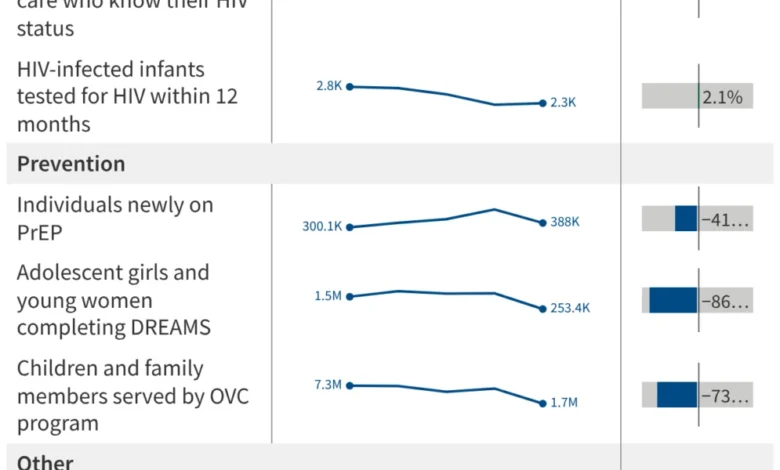
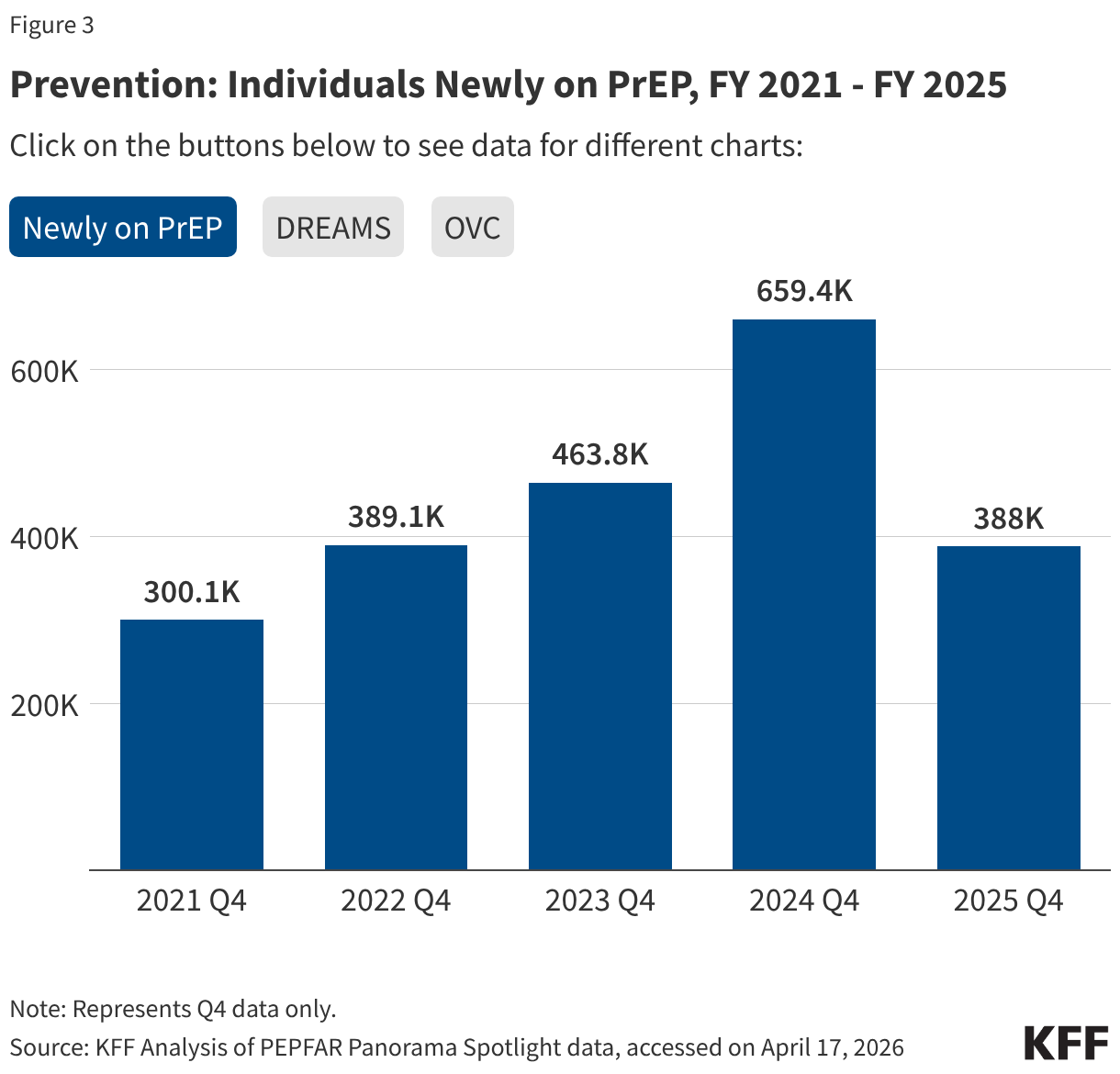
While treatment numbers demonstrated baseline resilience, prevention initiatives bore the brunt of the administrative cutbacks. The data reveals sharp contractions in several key prevention pillars that had previously been heavily prioritized under PEPFAR.
Most notably, the number of individuals newly initiated on pre-exposure prophylaxis (PrEP)—a critical biomedical intervention proven to prevent HIV transmission among high-risk populations—saw significant declines. Similarly, participation rates in the DREAMS program (Determined, Resilient, Empowered, AIDS-free, Mentored, and Safe), which targets adolescent girls and young women to reduce vulnerability to HIV infection through multifaceted socioeconomic and clinical support, experienced measurable cutbacks.
Public health experts warn that reductions in prevention access do not manifest immediately in clinical data; rather, they carry a delayed impact that could precipitate a resurgence in new HIV infections in partner countries over the coming years.
Tuberculosis Co-Infection and Specialized Care Outcomes
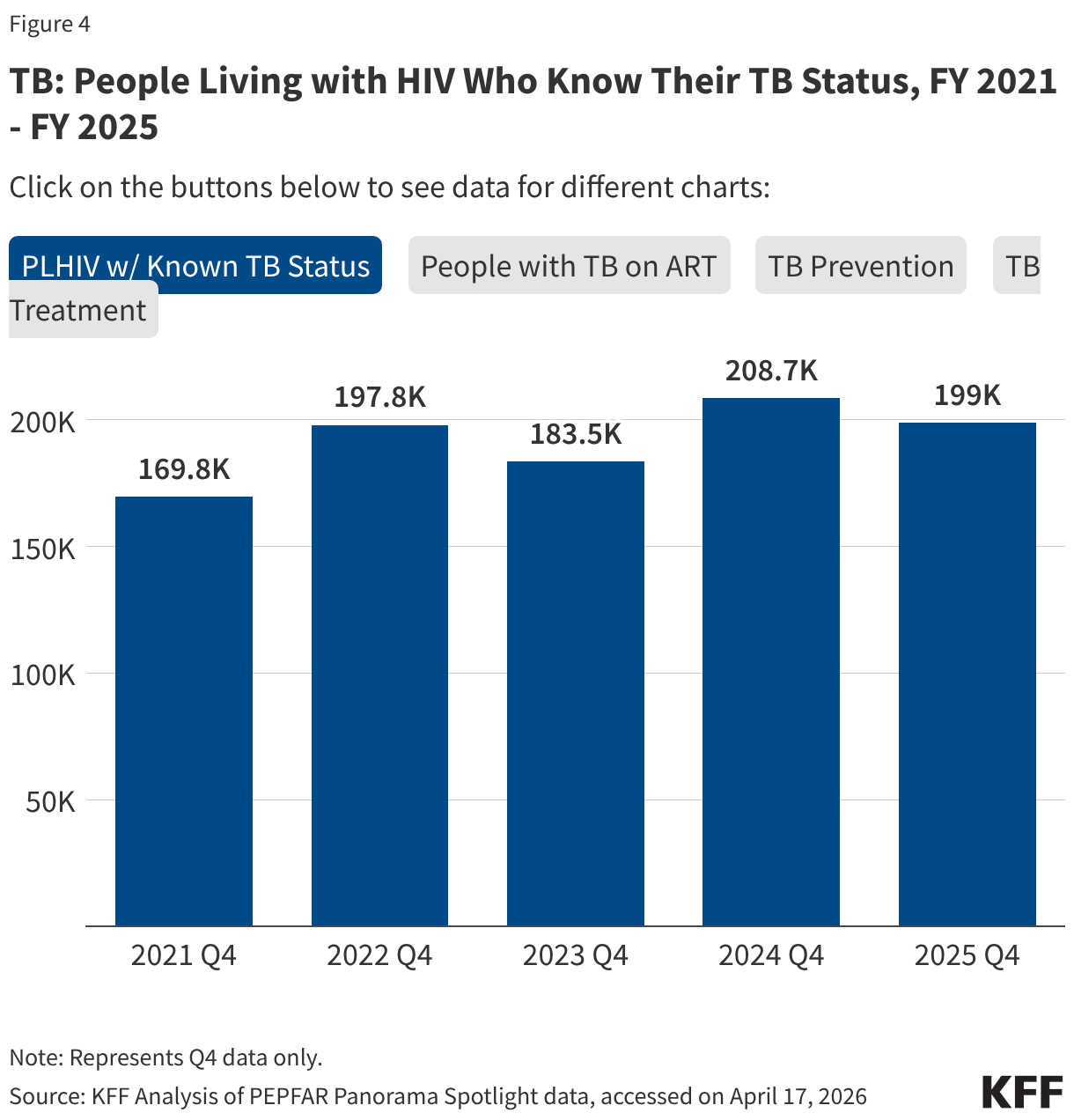
TB remains the leading cause of morbidity and mortality among people living with HIV (PLHIV). The FY 2025 Q4 data regarding TB-HIV integration presented a mixed picture. While support for certain specialized interventions fluctuated, PEPFAR maintained significant operational output in identifying and treating co-infections. The number of co-infected individuals actively receiving both ART and tuberculosis treatment showed positive resilience, reflecting ongoing institutional commitment to managing overlapping epidemic burdens.
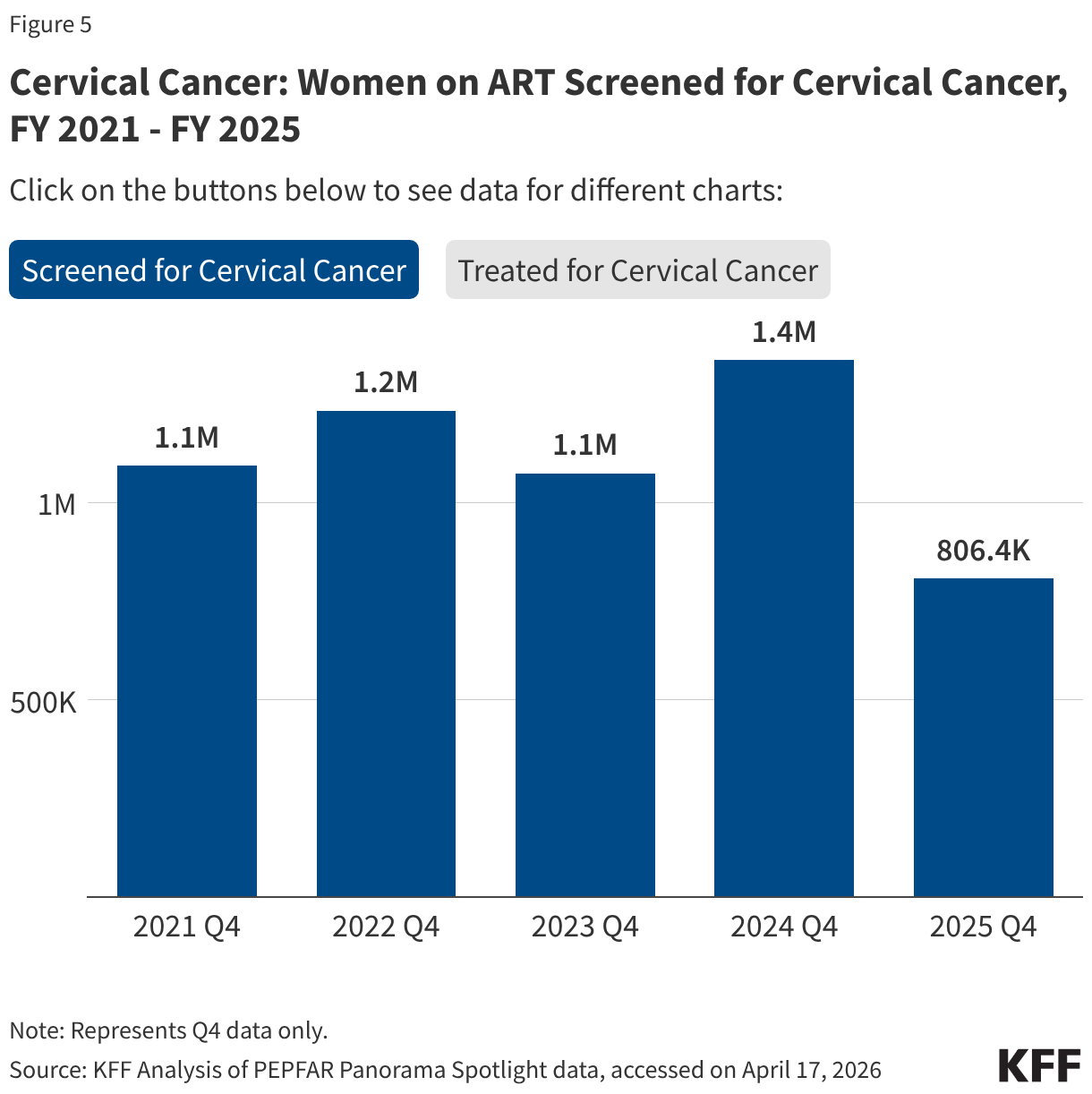
In contrast, screening and prevention metrics for other secondary conditions associated with HIV showed varying degrees of strain. Cervical cancer screening among women living with HIV—an essential preventative oncology service given the heightened vulnerability of immunosuppressed women—declined during the quarter. However, for those women who did screen positive, the proportion successfully receiving follow-up treatment (such as cryotherapy, thermocoagulation, or loop electrosurgical excision procedure) held steady, indicating that while front-end screening capacity was constrained, downstream clinical treatment pathways remained operational for those who navigated the system.
Broader Implications and Future Outlook
The publication of the FY 2025 Q4 dataset provides a vital, albeit narrow, window into the state of the U.S. global HIV/AIDS response under the revised "America First" strategy. The evidence confirms that while mature treatment programs have largely sustained established patients, foundational prevention efforts, new patient enrollments, and screening pipelines have experienced measurable contractions.
These shifts carry profound implications for the global goal of ending the HIV/AIDS epidemic as a public health threat by 2030. As the U.S. government transitions greater operational control to partner-country health ministries and pivots from vertical disease management to integrated health frameworks, questions regarding long-term data transparency remain acute. Independent researchers and international health organizations stress that without consistent, rigorous, and transparent reporting mechanisms, assessing the true clinical and epidemiological outcomes of these historic foreign aid reforms will remain exceptionally difficult, leaving both policymakers and vulnerable populations navigating an uncertain future.
Related posts: