Medical Guardian Maintains Prominent Position in 2026 Medical Alert System Market Amidst Evolving Senior Care Technology

Medical Guardian, a prominent provider in the personal emergency response system (PERS) market, continues to solidify its standing in 2026, serving an extensive user base of approximately 625,000 individuals who rely on its services daily. Positioned as a leading option among the top medical alert systems available this year, the company’s offerings are frequently highlighted in marketing campaigns targeting seniors and their caregivers. However, a comprehensive evaluation beyond promotional messaging is essential to ascertain whether the investment aligns with specific user requirements and budgetary considerations.
The Evolving Landscape of Personal Emergency Response Systems
The contemporary medical alert system market has transcended the simplistic "panic button" model of previous decades. Today, providers like Medical Guardian offer a diverse array of devices and service plans, each engineered to cater to distinct user lifestyles and needs. This shift reflects a broader trend in senior care technology, where personalization, advanced features, and seamless integration with daily life are becoming paramount. The perception that all PERS solutions offer identical value is outdated; significant technological and service differentiations now characterize the market.
Medical Guardian’s strategic positioning suggests a focus on delivering a premium experience, encompassing confidence in reliability, aesthetically pleasing designs, flexible cancellation policies, and a proprietary mobile application for caregivers. While this approach often entails a slightly higher price point, the justification for this premium frequently lies in the enhanced features and peace of mind it offers. For individuals primarily seeking a fundamental emergency call function without advanced tracking or caregiver integration, more basic and potentially less expensive alternatives exist, though the overall cost differential in service plans across the industry may not be substantial.
Addressing the Imperative of Senior Safety: Falls and Beyond
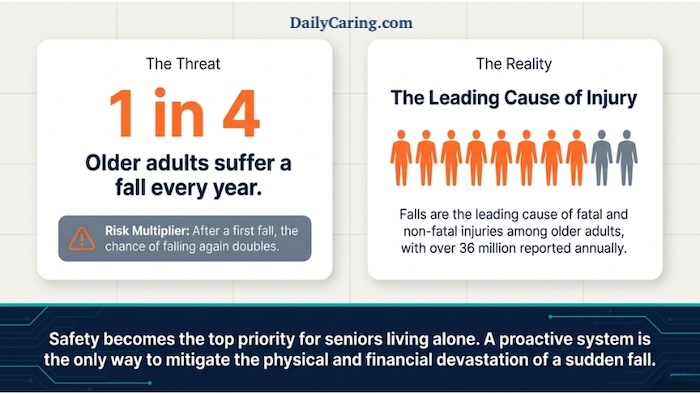
The critical importance of reliable PERS systems is underscored by compelling public health data. The Centers for Disease Control and Prevention (CDC) reports that over 36 million falls are documented among older adults annually in the United States, making falls the leading cause of fatal and non-fatal injuries within this demographic. These statistics highlight the indispensable role of a robust emergency response system in safeguarding the well-being and independence of older adults. Beyond falls, PERS systems provide crucial support for other medical emergencies, security concerns, or simply the reassurance of immediate access to assistance, fostering a greater sense of autonomy for users and reducing anxiety for their caregivers.
The decision to invest in a PERS is therefore not merely a convenience but a critical component of a comprehensive safety strategy for aging individuals. It empowers them to maintain independence in their homes and communities, knowing that help is readily available at the press of a button or, with advanced features, even automatically.
Medical Guardian’s Diverse Product Portfolio: Tailoring Solutions for Modern Lifestyles
Medical Guardian has structured its product offerings into distinct categories, moving away from a uniform pricing model. Most options involve an upfront equipment fee in addition to monthly service charges. This tiered approach allows for greater customization but necessitates careful consideration of features versus cost.
As of June 12, 2026, the key product models and their associated costs are as follows:
| Product Model | Connection Type | Base Monthly Cost | Upfront Equipment Fee |
|---|---|---|---|
| MGHome Cellular | Cellular (AT&T or Verizon) | $38.95 | $149.95 |
| MGMini | Cellular, Wi-Fi, GPS | $43.95 | $149.95 |
| MGMini Lite | Cellular, Wi-Fi, GPS | $46.95 | $149.95 |
| MGMove Smartwatch | Cellular, Wi-Fi, GPS | $42.95 | $199.95 |
These offerings reflect a strategic segmentation designed to match specific user profiles:

- MGHome Cellular: Primarily designed for homebound individuals, this system offers comprehensive coverage within and around the residence, typically negating the need for frequent mobile battery charging. Its cellular connectivity ensures reliability even in homes without a traditional landline.
- MGMini: Tailored for active seniors, this mobile pendant incorporates GPS and cellular data, enabling emergency dispatchers to precisely locate the user anywhere in the United States. It is ideal for those who regularly engage in activities outside the home, such as driving, golfing, or running errands.
- MGMini Lite: Addressing the needs of petite individuals, this wrist-worn device is remarkably lightweight, significantly reducing the physical burden often associated with heavier neck lanyards and enhancing user comfort and compliance.
- MGMove Smartwatch: This option caters to style-conscious users, offering the functionality of a medical alert system in a discreet smartwatch form factor. It effectively bypasses the social stigma sometimes associated with traditional medical alert devices, making it a preferred choice for older adults who prioritize aesthetics and integration with modern wearable technology.
Technological Sophistication: GPS, Wi-Fi, and the Caregiver Ecosystem
Medical Guardian’s hardware is widely considered among the most capable in the market, particularly beneficial for long-distance caregivers who require precise GPS tracking and advanced digital monitoring capabilities. The integration of cellular, Wi-Fi, and GPS technologies across its mobile and wearable devices represents a significant advancement from earlier generations of PERS. This multi-modal connectivity ensures robust signal reliability and accurate location services, which are paramount during an emergency.
The proprietary mobile caregiver application is a cornerstone of Medical Guardian’s premium offering. This application allows authorized caregivers to monitor the user’s location, review activity logs, and receive alerts, providing an invaluable layer of oversight and peace of mind. For the estimated 34.2 million Americans who provide unpaid care to an adult aged 50 or older, and especially for those providing care from a distance, such granular tracking data and real-time communication tools are transformative. They enable caregivers to be proactively involved in their loved one’s safety without needing to be physically present, reducing stress and enhancing response times in critical situations.
The Value Proposition of Fall Detection Technology
Fall detection technology represents a significant leap forward in passive monitoring capabilities within PERS. This advanced feature uses accelerometers and gyroscopes to identify sudden changes in motion indicative of a fall, automatically initiating an emergency call to the monitoring center even if the user is incapacitated or unable to press their alert button. Given that falls are a leading cause of severe injury and even death among seniors, the ability to automatically summon help without manual intervention is a critical safety net.
Medical Guardian offers its fall detection service as an add-on, typically for an additional $10 per month. While this increases the overall cost, the data strongly supports its value. Prompt medical attention after a fall can significantly reduce recovery time, prevent complications, and improve outcomes. For individuals with a higher risk of falling—due to age, medical conditions, or medication side effects—this feature can be an invaluable investment in their safety and longevity. The cost-benefit analysis often tips in favor of incorporating fall detection, considering the potential for averted serious injuries and associated healthcare expenses.

Understanding the Investment: Pricing and Value in Premium Systems
The pricing structure of Medical Guardian, characterized by both upfront equipment fees and recurring monthly service costs, places it in the premium segment of the PERS market. This financial model is designed to support the development and maintenance of sophisticated hardware, advanced monitoring infrastructure, and dedicated customer service. The value proposition extends beyond the physical device to encompass the reliability of the monitoring center, the responsiveness of emergency dispatch, and the ongoing technological updates that enhance system performance.
For consumers, understanding this value proposition is key. A premium price often translates to:
- Enhanced Reliability: State-of-the-art monitoring centers with redundant systems and highly trained operators.
- Advanced Features: GPS, Wi-Fi, fall detection, and caregiver applications that offer functionalities beyond basic emergency calls.
- Superior Design: Devices that are more discreet, comfortable, and aesthetically pleasing, encouraging consistent use.
- Flexible Terms: The ability to cancel services without long-term contracts, providing greater consumer control.
- Dedicated Customer Support: Access to responsive and knowledgeable support teams for troubleshooting and assistance.
Conversely, individuals on a restrictive budget might find these premium features beyond their financial reach, prompting them to explore more economical options. However, it is crucial to recognize that cost savings in this sector can sometimes come at the expense of certain advanced features, device aesthetics, or the breadth of support services.
Strategic Considerations for Consumers and Caregivers
When evaluating Medical Guardian or any other medical alert system, consumers and caregivers should consider several factors:
- Lifestyle Match: Align the device’s features (e.g., home-based vs. mobile, discreet vs. prominent) with the user’s daily routines and preferences.
- Connectivity Needs: Determine whether cellular-only, Wi-Fi, or GPS capabilities are essential based on where the user spends their time.
- Caregiver Involvement: Assess the necessity of a caregiver app and its advanced tracking features. For long-distance caregivers, this can be a decisive factor.
- Budgetary Constraints: Balance desired features against financial capacity, remembering that the cheapest option may not always provide the best value in terms of safety and peace of mind.
- Contractual Terms: Always verify cancellation procedures, equipment warranties, and any hidden fees before committing to a service.
- Customer Service Reputation: Research the company’s track record for customer support, technical assistance, and emergency response efficiency.
Conclusion: Medical Guardian’s Role in Future-Proofing Senior Independence
Medical Guardian positions itself not merely as a provider of emergency buttons but as a comprehensive solution for senior safety and caregiver support in 2026. Its focus on premium features, advanced technology, and user-centric design caters to a demographic willing to invest in sophisticated tools for independence and peace of mind. While the systems may not be suitable for those on a restrictive budget, the value proposition for long-distance caregivers seeking granular tracking data and sleek device design is compelling.
Through extensive testing, Medical Guardian’s alert systems have consistently demonstrated their adequacy and reliability in critical situations. Coupled with established company leadership and a commitment to customer service, the brand has cultivated a reputation as a trustworthy medical alert system provider. As the population continues to age, and the demand for innovative, reliable, and discreet safety solutions grows, Medical Guardian appears well-equipped to maintain its significant role in empowering seniors and alleviating the concerns of their loved ones. The continuous evolution of their product line reflects a proactive approach to meeting the dynamic needs of the elder care landscape, ensuring that crucial assistance is always just a button press away, or even automatically detected.