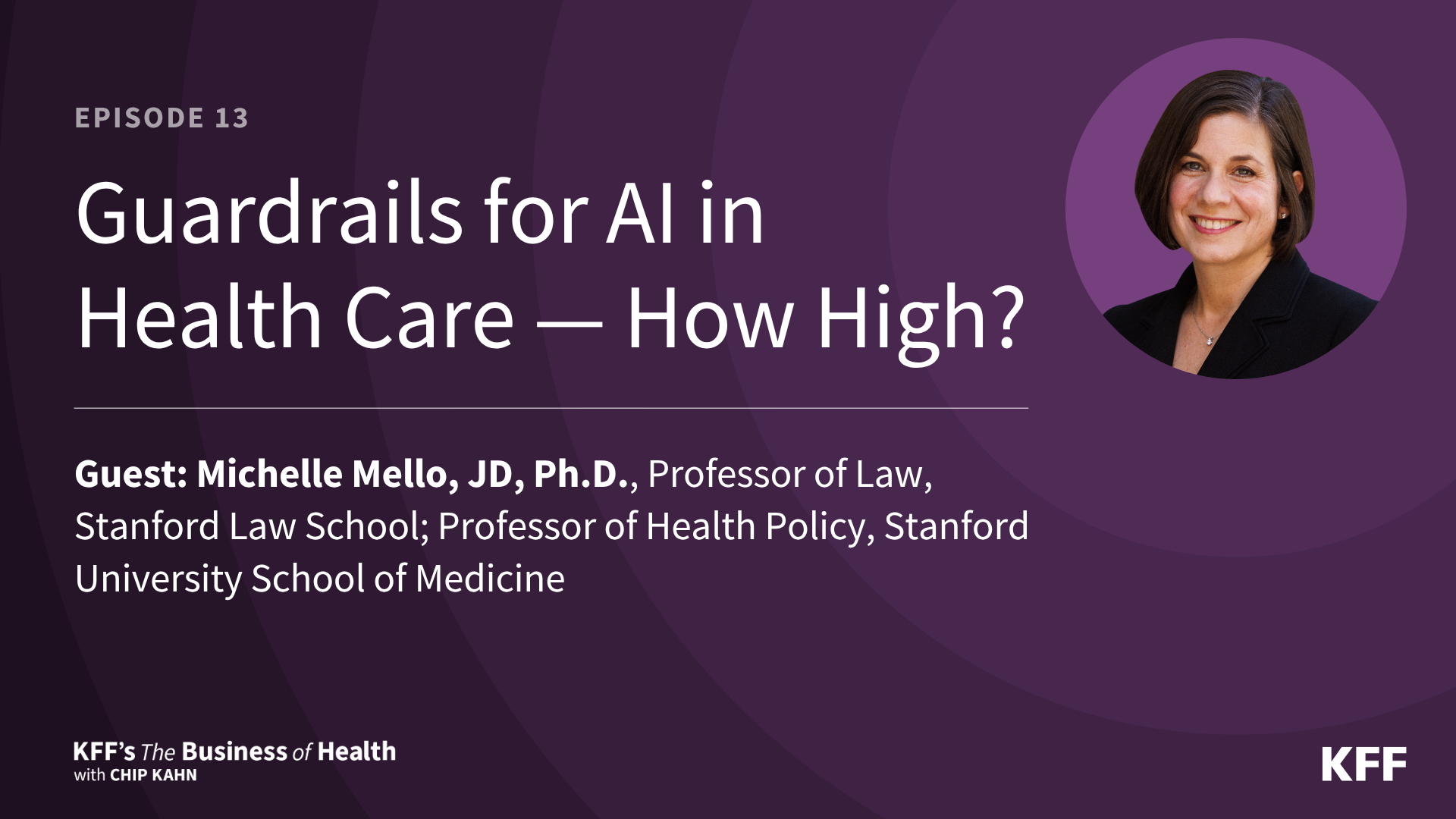
Dr. Mello, who co-leads Stanford’s Healthcare Ethical Assessment Lab for AI (HEAL-AI), provides a comprehensive look at the mechanisms currently in place—and those notably absent—to ensure that AI tools are both effective and equitable. The discussion serves as a high-level briefing on the systemic shifts required to manage a future where algorithms influence life-altering medical decisions.
The Regulatory Gap and the "Wild West" of Clinical AI
The central thesis of the discussion focuses on the discrepancy between the pace of technological innovation and the speed of legislative response. While the Food and Drug Administration (FDA) has cleared hundreds of AI-enabled medical devices over the last decade, the vast majority of these are "locked" algorithms—tools that perform a specific task, such as identifying a fracture on an X-ray, and do not change after they are deployed.
However, the conversation with Dr. Mello highlights the emergence of "generative" and "adaptive" AI, which can learn and evolve based on new data. This shift poses a significant challenge for traditional regulatory models. Dr. Mello notes that the current oversight environment often resembles a "Wild West," where hospitals and health systems are left to decide for themselves which tools are safe to implement. Without a centralized, rigorous standard for post-market surveillance, the responsibility for catching errors often falls on the individual clinician, who may not fully understand the underlying logic of the software they are using.
HEAL-AI: A Blueprint for Institutional Oversight
One of the most significant contributions to the episode is the deep dive into the Healthcare Ethical Assessment Lab for AI (HEAL-AI) at Stanford. As hospitals become the primary gatekeepers of AI technology, the need for internal "ethics boards" for technology has become paramount. HEAL-AI represents an institutional response to the "black box" problem of AI—the difficulty in seeing how an algorithm arrives at a specific conclusion.
Dr. Mello explains that HEAL-AI conducts rigorous ethical assessments before any AI tool is deployed within Stanford Health Care facilities. This process involves evaluating the tool for potential biases, ensuring transparency in how the tool interacts with patient data, and determining whether the AI’s "recommendations" align with established clinical standards. This internal vetting process is increasingly seen as a necessary safeguard in an era where federal regulation remains focused primarily on the initial market entry rather than the long-term clinical impact.
The Liability Conundrum: Who Answers When AI Fails?
A major portion of the dialogue is dedicated to the thorny issue of medical liability. In traditional medicine, the "standard of care" is determined by what a reasonably competent physician would do under similar circumstances. When an AI tool is introduced into that equation, the lines of responsibility become blurred.
Dr. Mello addresses several critical questions: If an AI fails to detect a tumor, is the developer of the software liable? Is the hospital that purchased the software at fault? Or is the physician, who may have relied on the AI’s "all clear," the one held responsible? Current legal precedents suggest that the burden remains largely on the physician, as AI is currently categorized as a "tool" to assist, rather than replace, human judgment. However, as AI becomes more autonomous, Dr. Mello suggests that the legal system may need to evolve toward a model of "product liability" for software developers, ensuring that companies are held accountable for the inherent flaws in their algorithms.
A Chronology of AI Integration in Modern Healthcare
The integration of AI into healthcare has followed a distinct timeline, which provides context for the current urgency regarding regulation:
- 2010–2015: The Era of Pattern Recognition. Early AI applications focused on image analysis in radiology and pathology. These tools were largely "locked" and served as a second set of eyes for clinicians.
- 2016–2020: Predictive Analytics. Health systems began using AI to predict patient outcomes, such as the likelihood of sepsis or hospital readmission. This era introduced the first major concerns regarding algorithmic bias, as many models were trained on skewed data sets.
- 2021–2024: The Generative AI Explosion. The rise of Large Language Models (LLMs) allowed AI to summarize medical records, draft patient correspondence, and assist in diagnostic reasoning. This shifted AI from a specialized tool to an everyday administrative and clinical assistant.
- 2025–Present: The Push for Governance. As evidenced by the "Business of Health" series, the current era is defined by the search for "guardrails." Institutional bodies, federal agencies, and international organizations are now working to codify the ethical and legal standards discussed by Dr. Mello and Chip Kahn.
Supporting Data: The Scale of the AI Transition
The urgency of the conversation is underscored by recent industry data. According to market research and FDA records:
- As of early 2024, the FDA had authorized over 700 AI and machine learning-enabled medical devices, a number that continues to grow exponentially.
- Radiology accounts for over 75% of these authorizations, though cardiovascular and neurological applications are rising.
- A 2023 survey of healthcare executives found that nearly 90% of hospital systems have an AI strategy in place, yet fewer than 25% have a dedicated committee for AI ethics or governance.
- Investment in healthcare AI reached an estimated $15 billion annually by the mid-2020s, reflecting the massive financial stakes involved in getting the technology "right."
Addressing Algorithmic Bias and Health Equity
One of the most pressing ethical concerns raised by Dr. Mello is the potential for AI to exacerbate existing health disparities. Because AI models are trained on historical data, they often inherit the biases present in that data. For example, if a predictive model for heart disease is trained primarily on data from white male patients, it may be less accurate for women or people of color.
Dr. Mello emphasizes that "getting it right" involves more than just technical accuracy; it requires social accuracy. This involves ensuring that the data sets used to train AI are representative of the diverse populations the healthcare system serves. The discussion highlights the role of "algorithmic auditing," a process where third-party experts or internal labs like HEAL-AI stress-test software to ensure it produces equitable outcomes across different demographic groups.

Official Responses and Policy Implications
While the podcast focuses on the expertise of Dr. Mello, it reflects a broader national conversation occurring within the Department of Health and Human Services (HHS) and the Office of the National Coordinator for Health Information Technology (ONC). In recent months, federal officials have signaled a move toward greater transparency. New rules are being proposed that would require AI developers to provide "transparency reports" detailing the data used to train their models and the known limitations of their software.
Chip Kahn’s role as a policy expert brings a pragmatic lens to these official responses. He notes that for AI to be truly integrated into the "business of health," there must be a clear return on investment that does not come at the cost of patient trust. Policy, therefore, must balance the need for innovation with the non-negotiable requirement for safety.
The Broader Impact: Trust as the Ultimate Currency
Ultimately, the episode concludes that the successful implementation of AI in medicine depends on trust. If patients feel that their data is being misused or that their doctors are abdicating responsibility to a machine, the potential benefits of AI—increased efficiency, earlier diagnoses, and personalized treatment—will never be fully realized.
Dr. Mello and Chip Kahn agree that the "rules of the road" must be built on a foundation of transparency and accountability. By establishing clear protocols for who makes the rules, who ensures the technology is accurate, and who is held responsible for failures, the healthcare industry can navigate the complexities of the AI revolution. As the series continues to track these developments, Episode 13 stands as a definitive guide to the ethical and legal landscape that will define the next decade of American medicine.
Related posts: