Navigating the Market: A Comprehensive Guide to Choosing the Right Medical Alert System for Seniors

The global landscape of aging-in-place technology has undergone a profound transformation over the past decade, shifting from rudimentary landline-tethered push-buttons to sophisticated, context-aware mobile security ecosystems. As the demographic wave of aging Baby Boomers swells—with the U.S. Census Bureau projecting that all Baby Boomers will be older than age 65 by 2030—the demand for reliable Personal Emergency Response Systems (PERS) has reached unprecedented levels. Choosing the correct medical alert system is no longer a peripheral consumer decision; for millions of older adults and their families, it is a critical infrastructure choice that bridges the gap between independent living and institutional care.
Selecting the right device requires a nuanced evaluation of lifestyle, medical history, technological literacy, and financial capacity. To assist families in navigating this complex marketplace, industry experts and eldercare advocates have established a definitive framework of core considerations. Below is an exhaustive breakdown of the top five questions consumers must ask when evaluating personal emergency response systems, augmented by historical context, market data, and expert analysis.
Evolution of Personal Emergency Response Systems: A Brief Chronology
To understand the current capabilities of medical alert systems, it is instructive to examine their developmental trajectory. The modern PERS industry traces its roots back to the early 1970s, when stationary, hardwired alarm buttons were first introduced to connect homebound individuals to local monitoring centers via traditional landlines. For decades, these systems remained largely unchanged: bulky base units paired with waterproof pendants that functioned exclusively within a rigid residential radius.
The pivotal shift occurred in the late 2000s and early 2010s with the advent of nationwide cellular networks and Global Positioning System (GPS) integration. This technological convergence liberated users from the confines of their living rooms, allowing mobile pendants and cellular-enabled smartwatches to transmit real-time location data from virtually anywhere in the country. Most recently, the widespread integration of micro-electro-mechanical systems (MEMS)—specifically accelerometers and gyroscopes—has introduced automatic fall detection. These modern algorithms can analyze spatial orientation and impact force, initiating emergency protocols even when an incapacitated user is unable to depress a manual button.

1. Determining the Ideal System Architecture: In-Home versus Mobile and Hybrid Models
The foundational decision in selecting a medical alert system lies in matching the hardware architecture to the user’s daily mobility patterns. Industry data indicates that consumer satisfaction is heavily dependent on aligning device range with actual user habits.
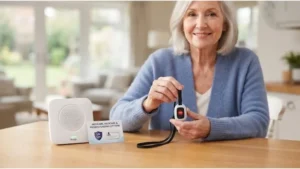
In-Home Systems: Designed primarily for homebound seniors or those with limited mobility, traditional in-home systems rely on a central base station connected to either a digital landline or a cellular network. Wearable buttons typically maintain a radio-frequency connection with the base station, offering a functional radius of 800 to 1,400 feet. This range is generally sufficient to cover a standard single-family home, garage, and immediate garden area. A key advantage of in-home wearable buttons is their passive power profile; because they do not utilize power-intensive cellular transponders, their internal batteries often last for years without requiring a recharge.
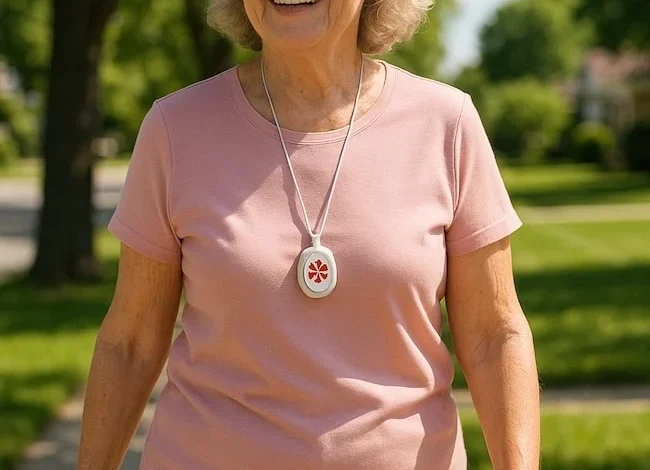
Mobile and GPS Systems: For active older adults who drive, travel, or regularly run errands independently, cellular-based mobile pendants or smartwatch hybrids are essential. These devices incorporate cellular chips and multi-constellation GPS tracking (utilizing satellite networks to pinpoint coordinates). While they liberate the user from geographic constraints, they introduce a maintenance requirement: active monitoring and location broadcasting consume significant battery power, necessitating daily or bi-weekly recharging schedules.
Hybrid Solutions: Addressing the limitations of both categories, modern hybrid systems integrate cellular base stations with mobile-capable pendants. For instance, advanced residential configurations allow users to roam freely throughout modern multi-unit apartment complexes—where traditional landline connections are increasingly obsolete—while the base station provides a robust, centralized hub equipped with battery backups capable of sustaining operations during localized power grid failures.
2. Evaluating Automatic Fall Detection: Technology, Accuracy, and Cost-Benefit Analysis
Accidental falls represent a leading cause of fatal and non-fatal injuries among older adults. According to the Centers for Disease Control and Prevention (CDC), more than one in four older adults falls each year, resulting in millions of emergency department visits. Consequently, automatic fall detection has emerged as one of the most sought-after, yet complex, features in the PERS market.

Automatic fall detection utilizes onboard algorithmic sensors to recognize the distinct velocity and impact signatures of a fall. If a rapid descent followed by sudden deceleration is detected, the device prompts the user to cancel the alert; if no movement or cancellation occurs within a specific window, the system automatically opens a two-way voice channel with a monitoring center.
However, consumers must weigh both the benefits and limitations of this technology:
- False Positives: High-sensitivity accelerometers can occasionally misinterpret abrupt movements—such as dropping the pendant onto a hard floor or rapidly sitting down into an armchair—as actual falls, prompting unnecessary check-ins from operators.
- Financial Overhead: Fall detection is almost universally offered as a premium add-on, typically increasing the monthly subscription fee by $5 to $15.
- Coverage Limitations: No algorithm currently achieves 100% accuracy. Experts emphasize that fall detection should be viewed as a vital safety net rather than an absolute guarantee, particularly for high-risk individuals with specific neurological or mobility conditions.
3. Analyzing Professional Monitoring Services and Operational Response Times
The core value proposition of any medical alert system rests upon the efficiency and reliability of its 24/7 central monitoring facility. When an emergency signal is transmitted, seconds matter. Industry benchmarks dictate that average response times—measured as the duration from signal reception to operator voice contact—should consistently remain under 30 seconds.
When evaluating monitoring providers, prospective buyers should investigate several operational benchmarks:
- Redundancy and Certification: Reputable monitoring centers typically maintain redundant, geographically dispersed facilities (often utilizing Underwriters Laboratories [UL] listings or TMA Five Diamond certifications) to ensure uninterrupted service during regional natural disasters or network outages.
- Operator Training: Certified emergency dispatchers undergo rigorous training in crisis communication, de-escalation, and geriatric sensitivity.
- Communication Protocols: Advanced systems allow users to pre-program tiered response protocols. For non-life-threatening incidents (such as a minor slip without injury or a mislaid item), operators can be instructed to contact designated family members or neighbors prior to dispatching emergency medical services (EMS), thereby minimizing unnecessary hospitalizations and ambulance fees.
4. Financial Considerations: Upfront Expenses, Hidden Fees, and Contractual Flexibility
The financial architecture of the medical alert industry can be labyrinthine, characterized by a mix of equipment purchase options, subscription tiers, and promotional discounts. To prevent unexpected financial strain, consumers must conduct a thorough cost-benefit analysis before committing to a provider.

Upfront versus Subsidized Equipment: Some manufacturers require consumers to purchase cellular base units or specialized smartwatches outright (ranging from $50 to $350), while others bundle hardware costs into the monthly subscription, provided the user enters into an agreed-upon service term.
Monthly Subscriptions: Ongoing operational costs typically range between $20 and $50 per month, depending heavily on the inclusion of mobile GPS tracking, cellular connectivity fees, and fall detection add-ons.
Contractual Terms and Industry Best Practices: Consumer advocacy groups and eldercare experts strongly advise avoiding long-term, multi-year contracts. The most consumer-friendly providers operate on month-to-month billing models, allowing families to cancel service immediately if a loved one transitions to an assisted living facility, rehabilitation center, or passes away. Additionally, buyers should scrutinize activation fees, shipping charges, and equipment return policies to avoid punitive cancellation penalties.
5. Ergonomics, Wearability, and User Compliance
The most technologically advanced medical alert system is fundamentally useless if the end-user finds it uncomfortable, aesthetically unappealing, or excessively complicated to operate. Compliance—the consistent wearing and charging of the device—is the single greatest predictor of system efficacy.
Ergonomic Design Factors: Pendants and wrist-worn devices must be lightweight, waterproof (to accommodate bathroom usage, where a high percentage of residential falls occur), and visually unobtrusive. Bulky smartwatches or heavy plastic housings frequently lead to user fatigue, causing seniors to remove the devices and defeat their purpose.

Interface Simplicity: Emergency buttons must be tactilely distinct—typically featuring a large, concave, red surface—to allow tactile identification even in low-light conditions or moments of panic. Furthermore, system setup must be intuitive, featuring clear audio prompts and straightforward installation protocols that accommodate varying levels of technological literacy among seniors and family caregivers.
Regulatory Context, Smart Home Integration, and Market Outlook
As the PERS market matures, it is increasingly intersecting with the broader smart home ecosystem. Modern medical alert solutions frequently offer application programming interfaces (APIs) or native integrations with mainstream home automation platforms, including Amazon Alexa and Google Home. These integrations allow secondary notifications to be broadcast across smart speakers throughout a residence, or enable voice-activated check-ins from remote family members.
From a regulatory standpoint, medical alert systems marketed strictly as general personal emergency response systems generally operate under Federal Communications Commission (FCC) guidelines regarding radio frequency emissions and cellular compatibility. However, devices claiming specific diagnostic or therapeutic medical capabilities may face heightened scrutiny from the U.S. Food and Drug Administration (FDA). Consumers are advised to verify that cellular-based units utilize modern LTE or 5G networks, ensuring long-term operational viability as telecommunication carriers progressively decommission older 3G infrastructure.
Conclusion
Selecting the appropriate personal emergency response system requires a methodical balancing of lifestyle requirements, technological features, and budgetary constraints. By systematically evaluating whether an in-home, mobile, or hybrid system best suits the user’s daily habits, assessing the genuine utility of fall detection, verifying monitoring center response standards, and insisting on flexible month-to-month contract terms, families can secure a reliable safety net that preserves both dignity and independence. As technological innovations continue to refine location tracking, sensor accuracy, and smart home connectivity, the future of aging-in-place solutions promises even greater integration, empowering older adults to navigate their golden years with confidence and security.