New National Dashboard Reveals Widespread Public Transit Accessibility Barriers For Americans With Disabilities Across The Country

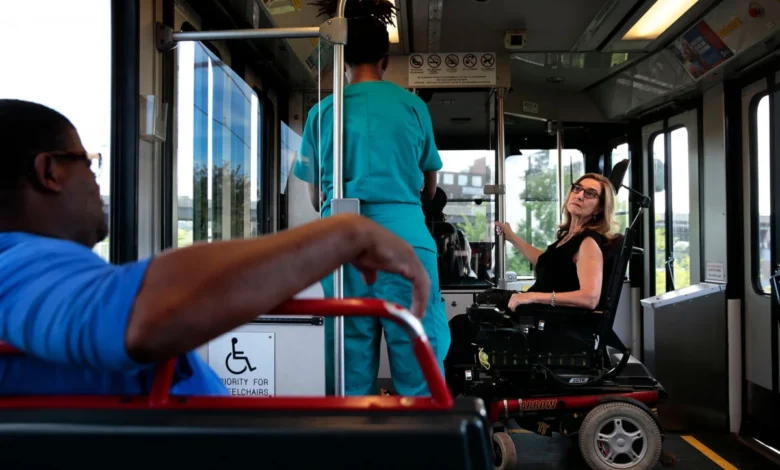
Decades after the passage of landmark civil rights legislation meant to guarantee equal access to public infrastructure, millions of Americans with physical, sensory, and cognitive disabilities continue to encounter profound barriers when attempting to navigate municipal public transportation systems. A groundbreaking new research initiative has laid bare the stark realities of this ongoing crisis, confirming that despite billions of dollars in federal investments and decades of regulatory oversight, the nation’s public transit networks remain fundamentally flawed in their approach to true inclusivity.
The initiative, spearheaded by researchers at the University of Michigan, has culminated in the launch of a first-of-its-kind interactive digital tool known as the Transit Accessibility Dashboard. This comprehensive evaluation platform assesses the operational efficiency, affordability, communication strategies, and physical infrastructure of fixed-route public transit systems across the United States. By aggregating and analyzing vast amounts of data from the nation’s most heavily funded municipal transportation providers, the dashboard offers an unprecedented, holistic look at how well—or how poorly—public transit serves individuals with disabilities.
The findings are both sobering and indicting. According to the analysis, out of the 99 largest fixed-route public transit systems receiving the most federal funding, not a single system achieved a high rating across all evaluated metrics of accessibility. While some metropolitan areas have made notable strides in improving specific elements of their networks, the systemic integration of barrier-free travel remains an elusive goal nationwide.
The Genesis of the Dashboard and Methodological Scope
The creation of the University of Michigan dashboard marks a significant departure from previous evaluative frameworks, which typically focused on isolated compliance metrics, such as the presence of a wheelchair ramp on a bus or an operational elevator at a subway station. While such physical infrastructure remains vital, researchers recognized that a commuter’s journey involves a complex chain of interconnected experiences that can easily be broken by a single point of failure.
Led by Dr. Erica Twardzik, an assistant professor at the University of Michigan School of Kinesiology and director of the Center for Inclusive Mobility Environments, the research team set out to evaluate the complete user experience. The study examined fixed-route public transit systems—including buses, light rail, heavy rail, and ferries—across 85 cities, focusing on four core pillars: affordability, service availability and frequency, communication of accessibility features, and the overall comfort and confidence of riders with disabilities when dealing with transit providers.
"For a rider with a disability, one barrier can make the entire trip impossible," Dr. Twardzik explained. "That is why we designed the dashboard to look across multiple parts of the rider’s experience, not just one feature like ramps or elevators. None of the transit systems we evaluated rated high on all measures of accessibility. This affects ridership and access for the disability community."
By synthesizing these diverse datasets, the dashboard provides transit agencies, policymakers, and advocacy groups with a granular tool to identify specific operational weaknesses. Whether a system suffers from infrequent scheduling that strands passengers using specialized transit, or fails to provide real-time updates regarding out-of-service elevators, the tool pinpoints the exact friction points that discourage or prevent individuals with disabilities from utilizing public transportation.
A Historical Perspective: The ADA and the Unfinished Promise of Transit Equity
To fully understand the significance of the University of Michigan’s findings, one must examine the legal and historical framework governing public transit accessibility in the United States. For generations, public transportation was largely inaccessible to individuals with mobility impairments, developmental disabilities, and sensory challenges. Buses lacked lifts, subway systems relied entirely on stairs, and schedules were printed in formats hostile to the visually impaired.
The landscape changed dramatically on July 26, 1990, when President George H.W. Bush signed the Americans with Disabilities Act (ADA) into law. The ADA represented a monumental shift in civil rights, explicitly prohibiting discrimination against individuals with disabilities in all areas of public life, including jobs, schools, transportation, and all public and private places open to the general public.
Title II of the ADA specifically mandated that public transit entities operating fixed-route systems purchase new buses and rail vehicles equipped with lifts or ramps, ensure that key stations undergo retrofitting to achieve accessibility, and provide complementary paratransit services for individuals unable to use fixed-route transit. In the decades following its enactment, the ADA transformed millions of American lives, forcing transit agencies to invest heavily in fleet modernization and infrastructure overhaul.
However, compliance with the letter of the law has frequently lagged behind its spirit. While the most egregious forms of outright exclusion—such as bus drivers refusing to pick up passengers in wheelchairs—have diminished due to legal mandates and monitoring, subtle and pervasive barriers have persisted. Elevators in legacy subway systems frequently break down and remain out of service for extended periods; audio and visual announcements inside vehicles are often silent or misprogrammed; paratransit booking systems are plagued by long wait times and unreliability; and the physical path of travel leading to and from bus stops routinely lacks curb cuts, proper lighting, or snow removal.
The recent university analysis demonstrates that more than thirty years after the ADA’s passage, the public transit sector remains a patchwork of unequal access, where a person’s mobility rights depend almost entirely on their zip code.
Performance Breakdown: Leaders, Laggards, and the Middle Ground
The University of Michigan dashboard categorizes the evaluated transit systems based on their holistic performance scores, revealing a stark geographic and operational divide.
At the upper end of the spectrum, a select group of metropolitan areas managed to achieve a rating of "sufficient." Among the best-performing systems in the nation were Washington, D.C., Phoenix, and San Diego. These cities demonstrated relative strengths in maintaining more reliable physical infrastructure, offering clearer communication channels regarding accessibility features, and maintaining more robust, frequent service schedules that reduce the vulnerability of stranded riders.
In Washington, D.C., the Washington Metropolitan Area Transit Authority (WMATA) has long been subjected to intense scrutiny due to the historical aging of its heavy rail system. However, sustained capital investments, aggressive station renovation projects, and systemic improvements in elevator reliability have pushed the capital region toward the upper tier of the national rankings. Similarly, newer, purpose-built light rail and bus rapid transit networks in cities like Phoenix and San Diego have benefited from modern design standards that integrated accessibility from their inception, rather than treating it as an expensive retrofitting afterthought.
Conversely, the study identified several metropolitan areas where public transit systems performed exceptionally poorly, struggling across nearly every evaluated domain. The lowest-performing systems in the nationwide analysis included Hampton, Virginia; Allentown, Pennsylvania; and Anchorage, Alaska.
In these regions, smaller municipal budgets, sprawling suburban geography, lower frequency of fixed-route services, and inadequate pedestrian infrastructure combine to create formidable obstacles for residents with disabilities. In a city like Anchorage, extreme winter weather conditions compound existing infrastructural deficits, rendering poorly cleared sidewalks and bus stops completely impassable for wheelchair users and individuals with visual impairments. In smaller transit markets like Hampton and Allentown, limited funding for paratransit extensions and a reliance on aging bus fleets frequently leave transit-dependent residents isolated from employment, healthcare, and social opportunities.
The vast majority of the 99 evaluated transit systems fell into intermediate categories, reflecting a reality where agencies offer some functional accommodations—such as wheelchair-accessible buses—while simultaneously failing in areas like affordability, customer service training, or real-time communication infrastructure.
The Ripple Effects: Economic, Social, and Psychological Implications
The implications of widespread transit inaccessibility extend far beyond mere inconvenience; they represent a profound barrier to full societal participation and economic self-sufficiency. Transportation is the vital link connecting individuals to employment, higher education, medical care, grocery stores, and civic life. When public transit fails, the consequences reverberate across every facet of a person’s existence.
Employment rates among working-age adults with disabilities have historically lagged far behind those of their non-disabled peers. Economists and urban planners have long pointed to lack of reliable transportation as one of the primary structural impediments to closing this employment gap. If a job seeker cannot guarantee that they can arrive at a workplace on time because bus schedules are unreliable or because a connecting transfer point lacks an accessible pathway, they are effectively locked out of the labor market.
Furthermore, inadequate transit access contributes heavily to social isolation and health disparities. Individuals who cannot independently navigate their communities are disproportionately reliant on family members, expensive private rideshare services, or overburdened paratransit systems that often require reservations days in advance. This lack of spontaneity and autonomy can take a severe psychological toll, diminishing mental health and reinforcing systemic dependency.
Public health researchers note that transportation barriers frequently prevent individuals with chronic health conditions or disabilities from attending routine medical appointments, leading to delayed diagnoses and worsening health outcomes. When public transit systems fail to meet the needs of their entire communities, the public health and economic costs are distributed across society as a whole.
The Role of Federal Oversight and Future Funding
The release of the University of Michigan dashboard arrives at a critical juncture for federal transportation policy. In recent years, the federal government has poured unprecedented sums of money into infrastructure development, punctuated by the passage of the Infrastructure Investment and Jobs Act (IIJA). These legislative packages have provided billions of dollars specifically earmarked for public transit modernization, station accessibility upgrades, and the replacement of aging rolling stock.
However, transit advocates and policy analysts emphasize that funding alone is insufficient to solve the crisis. Without strict accountability mechanisms and standardized performance measures, federal dollars can easily be misallocated toward cosmetic upgrades while core accessibility failures persist.
Federal agencies, including the Federal Transit Administration (FTA), hold regulatory authority to enforce ADA compliance across municipal transit systems. Yet, federal oversight has traditionally been reactive, relying primarily on individual civil rights complaints filed by aggrieved passengers rather than proactive, data-driven audits of system-wide performance.
The introduction of tools like the Transit Accessibility Dashboard offers a potential roadmap for more effective regulatory oversight. By providing objective, empirical data on how transit systems perform across multiple dimensions of accessibility, the dashboard empowers federal regulators to target technical assistance and compliance audits toward the most severely underperforming regions.
Reactions from Advocacy Groups and Municipal Leaders
Reactions from the disability advocacy community have been swift, with leaders praising the University of Michigan researchers for quantifying what disabled commuters have known through lived experience for decades.
"For too long, transit agencies have been allowed to grade their own homework when it comes to accessibility," said a spokesperson for a prominent national disability rights organization, reflecting on the broader sentiment within the advocacy sector. "They point to a single accessible bus in their fleet and claim compliance, while ignoring the broken elevators, the missing sidewalk connections, and the paratransit systems that leave people stranded for hours. This dashboard strips away the PR spin and shows us the unvarnished truth."
Meanwhile, municipal transit leaders across the country are grappling with the findings, noting that many agencies face severe structural hurdles that extend beyond institutional indifference. Public transit systems nationwide have struggled to recover pre-pandemic ridership levels, leading to acute budget deficits, staffing shortages, and deferred maintenance backlogs. For cash-strapped transit agencies, funding comprehensive accessibility overhauls often competes directly with basic operational survival.
Nevertheless, transit planners and administrators are increasingly recognizing that true system modernization cannot occur without prioritizing accessibility at every level of decision-making. Incorporating the disability community directly into the planning process—ensuring that riders with diverse impairments are consulted before new routes are designed, rolling stock is purchased, or digital applications are launched—is seen as an essential step toward closing the accessibility gap.
Pathways to Progress: What Transit Agencies Must Do
As the public and policymakers digest the findings of the University of Michigan’s comprehensive evaluation, transit experts agree that meaningful progress will require a multi-pronged approach involving structural investments, operational reforms, and cultural shifts within transit organizations.
First, transit agencies must modernize their communication infrastructure. In an era of advanced digital mapping and real-time transit apps, riders should never be left guessing whether an elevator is functioning or a wheelchair lift is operational. Providing accurate, instantaneous digital updates regarding accessibility barriers is a low-cost, high-impact intervention that can prevent catastrophic travel disruptions.
Second, agencies must move beyond minimum legal compliance and adopt universal design principles. Universal design—the philosophy of designing products and environments to be usable by all people, to the greatest extent possible, without the need for adaptation—ensures that infrastructure serves parents with strollers, elderly travelers, temporary injury victims, and individuals with disabilities equally well.
Third, investment in paratransit systems must be prioritized and modernized. While fixed-route systems remain the gold standard for independent travel, complementary paratransit is a vital safety net for those who cannot utilize fixed routes. Reducing reservation lead times, increasing fleet flexibility, and integrating paratransit services seamlessly into mainstream transit applications can radically improve the quality of life for transit-dependent individuals.
Finally, ongoing collaboration between transit operators and the disability community must become institutionalized. Data-driven tools like the new dashboard provide the baseline metrics, but the lived experiences of disabled commuters must remain the ultimate measure of success.
The University of Michigan’s transit accessibility dashboard has permanently shifted the national conversation surrounding public transportation equity. By illuminating the profound gaps that still exist more than thirty years after the passage of the ADA, the research serves as both a sobering reality check and a vital call to action. For millions of Americans with disabilities, the promise of equal access to public life remains unfulfilled—and the work to bridge that divide is more urgent than ever.