Why Traditional Leg Workouts Fail to Protect Aging Mobility and How Ankle Mechanics Hold the Key to Independence

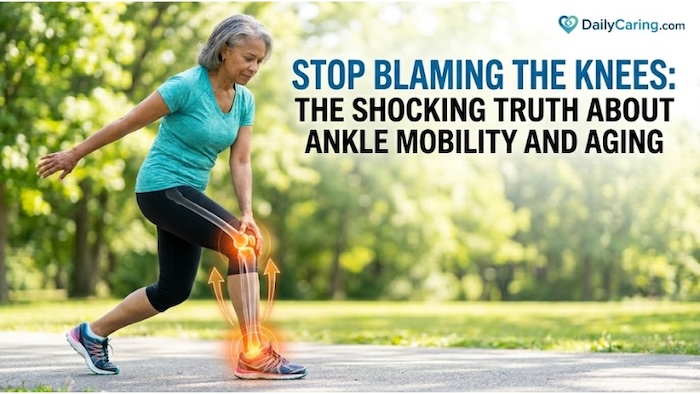
The routine prescription of standard squats, lunges, and general leg-strengthening exercises may be missing the primary anatomical driver of age-related physical decline. When an older adult experiences severe exhaustion during a routine trip to the grocery store, caregivers and family members frequently attribute the fatigue to generalized aging, diminished cardiovascular endurance, or weak knee joints. However, biomechanical research indicates that the underlying culprit is often located much further down the kinetic chain: at the ankles.
The relationship between ankle mobility and the aging process has emerged as a critical yet historically overlooked focal point within the field of eldercare and geriatric biomechanics. Recent scientific investigations reveal that the aging human nervous system systematically alters ankle function to prioritize short-term balance over mechanical efficiency. This biological trade-off results in a significant loss of physical autonomy, higher rates of fatigue, and an elevated risk of accidental falls among older populations.
The Science of Wasted Effort: Unpacking Ankle Mechanics in Older Adults
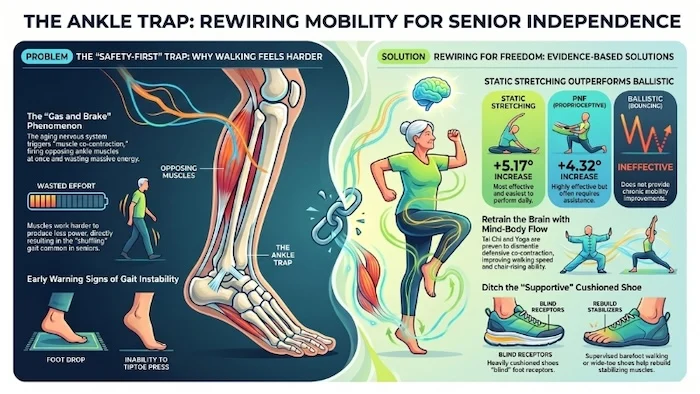
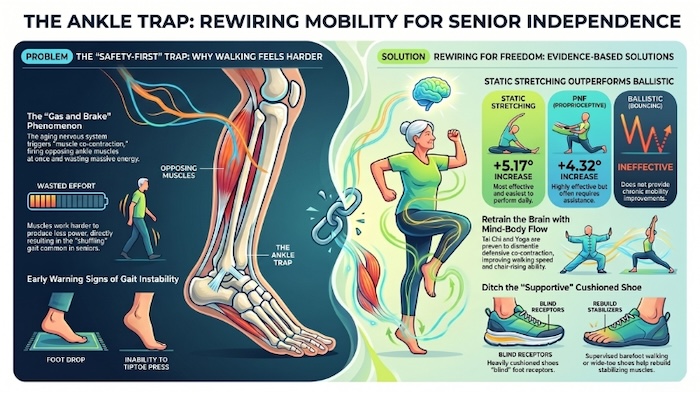
According to a landmark study published in the Journal Gait & Posture, the aging nervous system routinely adopts a rigid, safety-first strategy to manage physical displacement. Rather than allowing joints to move through a fluid, energy-efficient range of motion, the nervous system triggers a physiological phenomenon known as muscle co-contraction. During this process, opposing muscle groups surrounding the ankle joint activate simultaneously, effectively pressing the biological gas pedal and brake at the exact same moment.
This simultaneous activation artificially stiffens the ankle joint in an effort to enhance immediate stability when the foot makes contact with the ground. While this mechanism momentarily reduces the immediate risk of an unsteadied step, it introduces severe mechanical inefficiencies. The opposing muscles are forced to work significantly harder while generating only a fraction of the traditional push-off power. Consequently, older adults experience shortened strides and a marked reduction in overall walking velocity.
This biomechanical friction explains why aging individuals encounter disproportionate fatigue during mundane walking tasks. Rather than suffering from a simple lack of cardiovascular fitness, they are expending valuable metabolic energy fighting their own muscle contractions. This constant internal resistance accelerates exhaustion and compounds the cumulative risk of balance-related injuries over time.
Expert Insights on Real-World Mobility and Biomechanics
Medical professionals emphasize that conventional, isolated gym routines are insufficient for addressing these deeply ingrained neurological shifts. Dr. Kristie Leong, a medical contributor specializing in senior wellness, notes that exposing the lower extremities to dynamic, unpredictable environments is essential for functional preservation.
"Uneven terrain asks your ankles, hips, feet, and balance system to constantly adapt, so you’re optimizing real-world movement capacity," Dr. Leong explains, highlighting outdoor activities such as hiking for maintaining physical adaptability.

Furthermore, experts point to footwear as a major contributor to modern mobility decline. Standard, heavily cushioned orthopedic shoes frequently act as a mechanical cast, insulating the foot from sensory feedback. Dr. Leong advocates for alternative footwear solutions, noting that "barefoot shoes offer a similar benefit in a different way by giving your feet more room to spread, and they recruit the small stabilizing muscles in your feet."
Identifying Early Warning Signs of Gait Instability
Waiting for a catastrophic fall to trigger a formal medical intervention is a dangerous strategy in eldercare. The human nervous system provides clear physical indicators that defensive ankle co-contraction has begun to dominate a senior’s gait pattern.
Caregivers and healthcare providers are advised to monitor older adults closely during routine daily activities. Early warning signs include shuffling feet across flooring surfaces rather than executing a clean, lifted step. Another hallmark indicator is "foot drop," wherein an individual frequently catches their toes on low thresholds, rugs, or uneven sidewalks. Furthermore, simple functional tests—such as asking an adult to reach for an item on a high shelf and observing whether they can smoothly elevate onto their tiptoes—can reveal a critical loss of push-off power.
Recognizing these subtle manifestations of gait instability allows families and clinical teams to intervene proactively, potentially preventing emergency room admissions resulting from severe falls.

Rewiring the Nervous System for Effective Fall Prevention
Standard fitness regimens that focus exclusively on raw muscle hypertrophy frequently fail because they do not retrain the central nervous system to abandon its defensive posture. Restoring ankle efficiency requires targeted interventions designed to dismantle co-contraction habits and rebuild neurological trust in natural joint range of motion.
Clinical biomechanics data supports a structured framework of restorative exercises tailored for older populations:
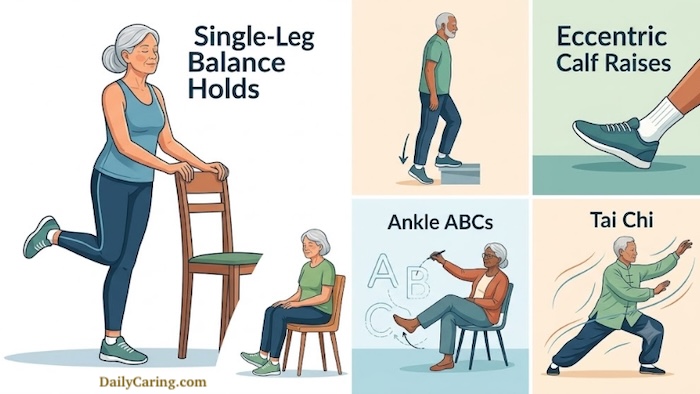
- Single-Leg Balance Holds: Designed to improve proprioception and timing. Practitioners use a sturdy chair for physical security, aiming for thirty-second intervals per leg, and progressing toward eyes-closed variations only after high stability is demonstrated.
- Eccentric Calf Raises: Focused on building tendon strength and restoring push-off power. Patients elevate onto both toes before lowering their heels to the floor through a deliberately elongated, controlled descent.
- Ankle ABCs: A seated joint mobility exercise where the individual traces the alphabet in the air using their big toe, effectively breaking down chronic stiffness.
- Tai Chi: A coordinated, low-impact martial art that emphasizes fluid, continuous transitions. Clinical trials have consistently demonstrated that regular Tai Chi practice reduces ankle co-contraction and enhances overall spatial coordination.
These targeted protocols move beyond raw strength building. They systematically retrain the brain to release unnecessary joint stiffness, allowing older adults to regain their natural stride length and postural confidence.
The Case Against Clunky Orthopedic Footwear
The physical decline of aging ankles is frequently exacerbated by the very footwear designed to protect seniors. Modern, thick-soled athletic and orthopedic shoes often feature rigid midsoles and elevated heels that disrupt natural biomechanics. By heavily padding the foot, these shoes block essential sensory receptors, neutralizing proprioception—the body’s innate ability to determine its position and movement in space.
To safely restore dorsiflexion and improve mechanical feedback, the foot must interact with its environment. When deemed safe by a medical professional, supervised periods of barefoot walking inside the home can stimulate dormant neurological pathways. Caregivers must closely monitor these sessions to ensure stability is maintained.
For outdoor use or individuals requiring ongoing protection, wide-toe, zero-drop barefoot shoes represent a viable alternative. These designs allow the toes to spread naturally, engaging the intrinsic stabilizing muscles of the foot that remain dormant inside traditional footwear.
Broader Implications and Long-Term Care Strategies
The physiological compromise between speed and stability during the aging process dictates much of modern geriatric care. As life expectancies rise, preserving the physical independence of older adults remains a central priority for public health infrastructure and family caregivers alike.
Ignoring foundational components like ankle mobility and neural co-contraction can lead to a cascading loss of freedom, increased reliance on assisted living facilities, and heightened healthcare expenditures associated with fall-related trauma. Shifting the clinical paradigm away from generic leg strengthening toward precise neurological and biomechanical interventions offers a promising pathway for extending active health spans.
Caregivers are encouraged to evaluate their loved ones’ daily physical routines through a comprehensive lens, ensuring that stability, proprioception, and ankle flexibility receive the attention necessary to safeguard long-term independence.