Navigating the 2026 Medicare Part D Overhaul: What Seniors and Caregivers Need to Know

For millions of older adults and the family members who manage their healthcare finances, the cost of prescription drugs has long been a source of profound economic anxiety. Historically, budgeting for senior healthcare meant navigating a complex maze of coverage phases, deductibles, and the notorious "donut hole"—a gap in coverage that frequently left beneficiaries facing crippling out-of-pocket expenses for vital medications. However, the introduction of the Medicare Part D changes for the 2026 plan year marks a monumental shift in American healthcare policy, bringing mandatory financial predictability to the prescription drug market through strict federal caps and structural reforms.
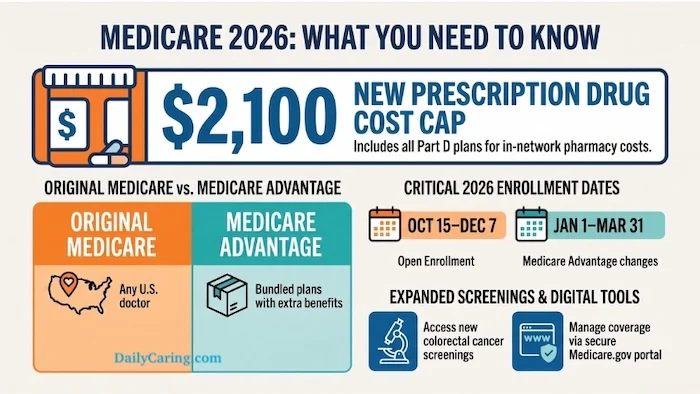
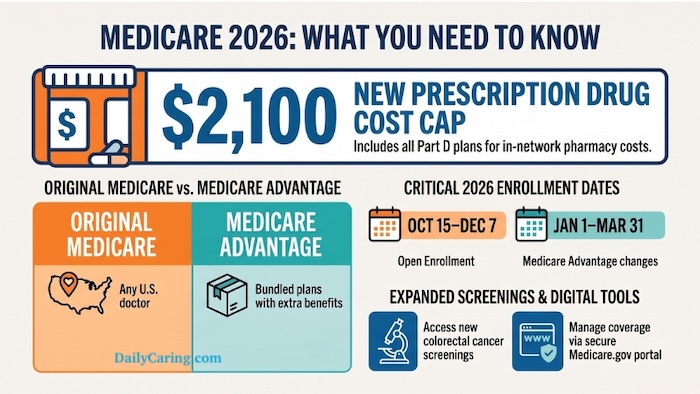
Under the final implementation phases of the landmark Inflation Reduction Act, out-of-pocket costs for covered prescription drugs are now strictly capped at an annual maximum of $2,100. Furthermore, the maximum standard deductible for the 2026 plan year has been legally established at $615. While these reforms promise unprecedented financial relief for seniors with high medication needs, they also introduce new administrative challenges and strategic considerations for caregivers and beneficiaries preparing for the Annual Enrollment Period.
The Permanent Demise of the Medicare Donut Hole
For over a decade, the most destructive and widely criticized element of Medicare Part D was the coverage gap, universally known as the donut hole. Under this legacy system, once a beneficiary’s total drug spending reached a specific initial threshold, they were suddenly thrust into a coverage phase where they became responsible for a massive percentage of their drug costs out-of-pocket. This financial penalty persisted until their total spending crossed a secondary threshold into catastrophic coverage, leaving many seniors scrambling to afford essential treatments mid-year.

As of the 2026 plan year, the donut hole has been permanently eliminated. Understanding this change is a critical component of modern eldercare financial planning. Under the current framework, once an enrollee spends exactly $2,100 out-of-pocket in a single calendar year, their Part D plan or Medicare Advantage plan is mandated to pay 100% of the cost for all covered medications for the remainder of the year. There are no exceptions, and the previous catastrophic phase—which still required a 5% coinsurance payment from the patient—has been completely dissolved, reducing the patient’s financial liability to zero once the cap is reached.
The Hidden Risk: Formulary Manipulation and Insurance Adjustments
Despite the clear consumer protections established by the $2,100 out-of-pocket cap, healthcare policy experts and consumer advocates warn that beneficiaries cannot afford to be complacent. Insurance carriers are commercial enterprises that must absorb the financial impact of these mandated caps, and they are not absorbing these costs without adjustments.
Across the industry, insurance companies have aggressively manipulated their covered drug lists, known as formularies. To offset the revenue losses associated with capping out-of-pocket costs, carriers are frequently shifting medications into higher pricing tiers or dropping certain drugs from their coverage rosters entirely. A prescription medication that was fully covered or cheaply accessible in previous years may be excluded or restricted in 2026.
Consequently, caregivers and enrollees must meticulously verify that their specific medications remain on their chosen plan’s formulary during the Annual Enrollment Period. Healthcare analysts emphasize a crucial caveat: if a prescribed medication is not explicitly included on the plan’s formulary, any money spent on that drug out-of-pocket will not count toward the $2,100 annual cap, potentially leaving families exposed to unexpected financial burdens.

Spreading the Cost: The Medicare Prescription Payment Plan
To prevent enrollees from facing steep, unmanageable financial hits at the pharmacy counter early in the calendar year—such as the immediate $615 standard deductible—the federal government has mandated the continuation of the Medicare Prescription Payment Plan. This initiative is designed to smooth out-of-pocket prescription drug costs evenly across the entire calendar year.
The payment plan is strictly an opt-in program. Instead of requiring a beneficiary to pay a large lump sum for expensive medications all at once, caregivers can proactively enroll their loved ones into the program. Under this arrangement, the pharmacy bills the insurance plan directly, and the insurance plan issues a predictable monthly bill to the enrollee for their share of the costs. This mechanism transforms unpredictable, high-variance pharmacy expenses into stable, manageable monthly payments.
In tandem with payment smoothing, the federal government has implemented a premium stabilization program to prevent insurers from arbitrarily inflating monthly premiums to compensate for the new out-of-pocket caps. Under this rule, base premium increases are capped at 6% per year. However, policy experts note that this stabilization applies strictly to the base premium calculation; individual plan premiums will continue to fluctuate based on market competition and regional offerings, making annual comparison shopping an absolute necessity for households managing fixed incomes.
Broad Economic Impact and Eldercare Implications

The 2026 Medicare Part D reforms represent the most significant structural evolution in senior pharmaceutical coverage since the inception of the program under the Medicare Modernization Act of 2003. By decoupling a senior’s annual medical expenditure from unpredictable clinical needs, the policy aims to curb the alarming rates of medication non-adherence driven by high costs—a phenomenon where older adults intentionally skip or ration doses because they cannot afford the pharmacy counter price.
However, financial planners and eldercare advocates stress that navigating these new rules requires proactive engagement. Families are strongly encouraged to utilize official federal portals, such as the Medicare Part D portal, to evaluate plan options, cross-reference drug formularies, and determine the optimal payment structure for their unique circumstances. Early review and meticulous planning remain the most effective tools for maximizing the benefits of the 2026 policy changes while mitigating the risks posed by aggressive corporate formulary shifts.
Summary of 2026 Medicare Part D Policy Metrics
| Medicare Policy Area | 2026 Update Details |
|---|---|
| Out-of-Pocket Cap | Strictly capped at a maximum of $2,100 per calendar year. |
| Standard Deductible | Legally set at a maximum of $615 for the 2026 plan year. |
| Coverage Gap (Donut Hole) | Permanently eliminated; beneficiaries transition directly to zero-cost coverage after hitting the cap. |
| Premium Stabilization | Base premium increases are federally capped at 6% annually. |
Frequently Asked Questions
Does the $2,100 out-of-pocket cap apply to all medications?
No. The $2,100 cap applies exclusively to medications that are explicitly covered by an individual’s specific Part D or Medicare Advantage plan formulary. If a beneficiary purchases a drug that is not included on their plan’s approved list, those expenditures do not contribute toward the out-of-pocket maximum.
Is the Medicare Prescription Payment Plan mandatory for all enrollees?
No. The Medicare Prescription Payment Plan is a voluntary, opt-in program. Beneficiaries who choose not to enroll will continue to pay standard deductibles and copays in lump sums at the pharmacy counter until they reach the $2,100 threshold.
What happened to the Medicare donut hole under the 2026 guidelines?
The coverage gap, or donut hole, has been completely phased out. Beneficiaries now move directly from their initial coverage phase into a zero-cost catastrophic phase once their out-of-pocket spending reaches $2,100, meaning covered drug costs drop to $0 for the remainder of the year.
Disclaimer: The information detailed in this report is intended strictly for educational and informational purposes and does not constitute formal financial, medical, or legal advice. Beneficiaries and caregivers should consult with qualified healthcare professionals, certified financial planners, or official State Health Insurance Assistance Programs (SHIP) to address their specific circumstances.