State Medicaid Home Care Programs Face Severe Workforce Shortages and Financial Pressures Amid New Federal Transparency Rules in 2026

Long-standing workforce crises within Medicaid home- and community-based services (HCBS) continue to jeopardize the health, safety, and stability of care for over 5 million vulnerable Americans who rely on these vital programs. According to comprehensive data from the 24th annual KFF survey of state Medicaid officials—conducted between April and August 2026 across nearly all 50 states and the District of Columbia—the direct care workforce is buckling under the weight of demanding job descriptions, inadequate compensation, and an increasingly hostile economic and policy environment. These structural deficiencies have translated directly into pervasive staff shortages, widespread provider closures, and mounting administrative friction between state governments and federal regulators.
The consequences of these trends extend far beyond administrative ledgers. With an aging American population driving unprecedented demand for long-term services and supports (LTSS), the inability of state Medicaid programs to attract and retain qualified professionals poses an existential threat to the community-based care infrastructure. As policymakers grapple with tightening fiscal conditions, immigration policy shifts, and strict federal compliance mandates, the fragile safety net supporting millions of seniors and individuals with physical and intellectual disabilities is under intense scrutiny.
The Chronology and Evolution of the Home Care Crisis
The roots of the modern HCBS workforce crisis stretch back decades, fueled by historic underfunding, low reimbursement rates, and a historical reliance on low-wage labor to provide critical daily living assistance. However, the operational landscape shifted dramatically during the COVID-19 pandemic, which exposed and exacerbated deep vulnerabilities in the direct care economy. Enhanced federal funding during the public health emergency temporarily allowed states to boost provider rates and offer retention bonuses, but those temporary lifelines have largely expired.
By 2025 and into 2026, states found themselves confronting a convergence of fiscal and operational pressures. The enactment of the 2025 federal reconciliation law introduced substantial reductions in federal Medicaid spending, forcing state legislatures to reevaluate their budgetary commitments. Simultaneously, the Department of Health and Human Services, through the Centers for Medicare & Medicaid Services (CMS), began rolling out key provisions of the landmark 2024 Medicaid Access Rule. This phased regulatory framework introduced new transparency requirements and established strict guardrails, including rules dictating that proposed rate reductions cannot cause more than a four percent drop in Medicaid expenditures within any specific service category without facing potential federal rejection.
Furthermore, changes in federal immigration enforcement and policy during the second Trump administration have sent shockwaves through the labor pool. Because nearly one in three home care workers is an immigrant, intensified enforcement actions and restrictive policies have heightened anxiety and fear across immigrant communities, leading some workers to step away from formal employment. Combined with tightening state revenue growth and rising inflation, these compounding factors have pushed state Medicaid programs into a precarious balancing act between cutting costs and maintaining statutory compliance.
Scope of Shortages: Nursing, Direct Support, and Personal Care Under Pressure
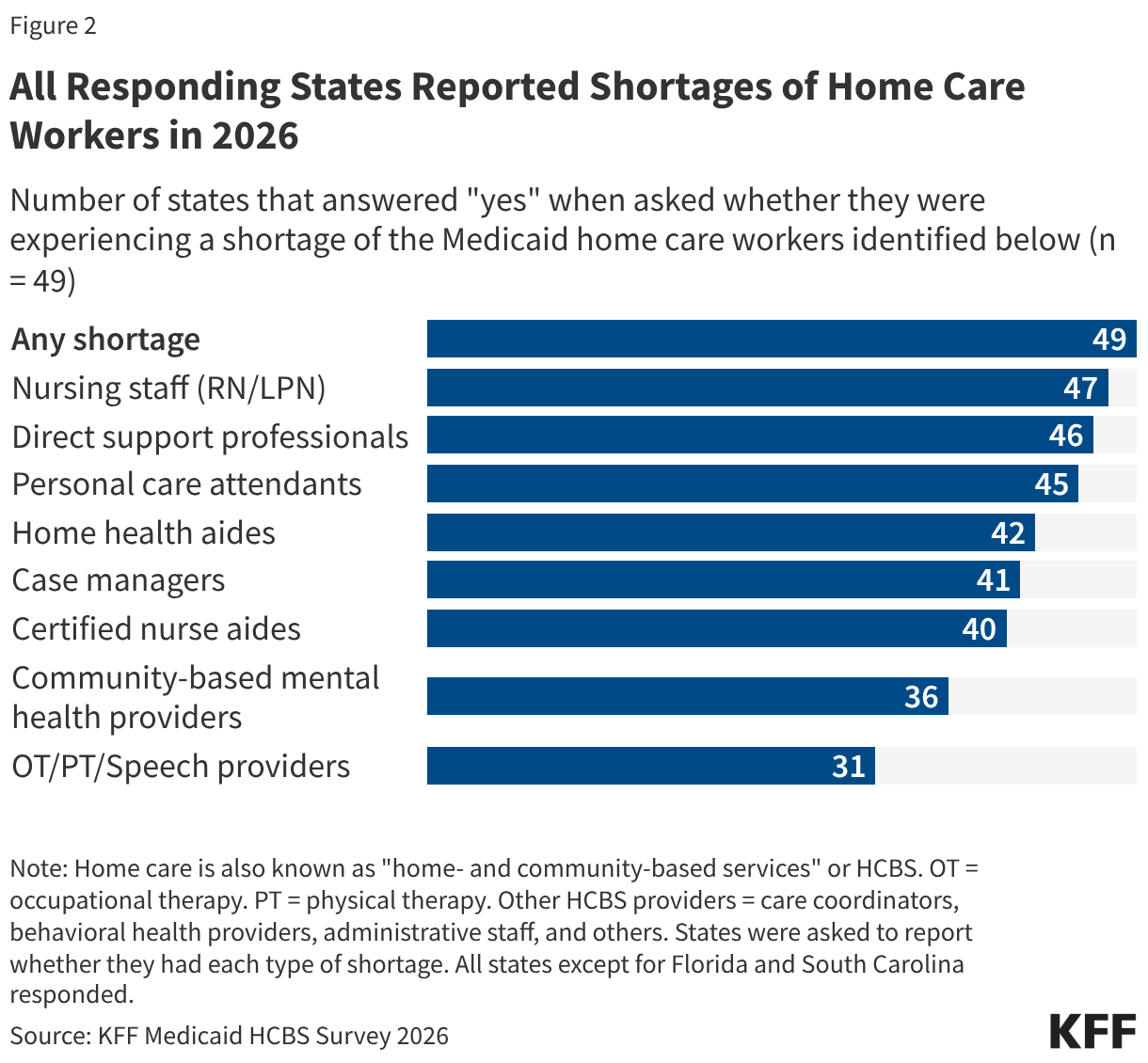
The 2026 KFF survey results underscore the universal nature of the workforce shortage, with every responding state reporting deficits across various categories of home care providers. Unlike prior years where shortages were concentrated in isolated pockets, the 2026 data reveal a sweeping, systemic failure to maintain adequate staffing levels.
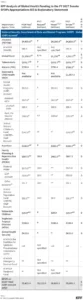
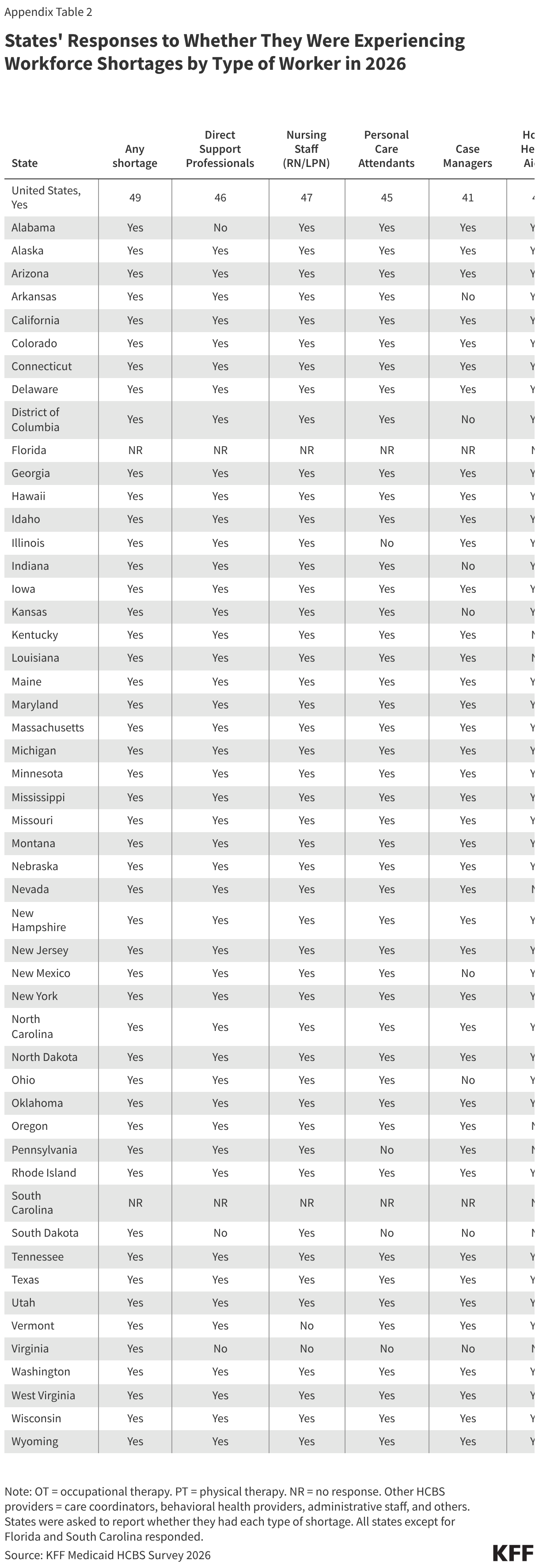
The most severe shortages were reported among nursing staff, cited by 47 states, closely followed by direct support professionals (46 states) and personal care attendants (45 states). Furthermore, 42 states reported shortages of home health aides, 41 reported deficits in case managers, and 40 noted shortages of certified nurse aides (CNAs). Specialized care sectors are similarly starved for talent: 36 states reported shortages of community-based mental health providers, and 31 reported deficits among occupational, physical, and speech therapy professionals.
The human and organizational impact of these shortages is profound. Nearly all responding states—48 in total—reported experiencing shortages across multiple provider types, with 45 states identifying shortages in five or more distinct categories. When asked to identify the primary drivers behind these worsening conditions, state officials overwhelmingly pointed to uncompetitive wages relative to other employment sectors, high employee turnover rates, and escalating demand for services.
Employee turnover remains a staggering operational hurdle. State officials noted that annual turnover rates for direct support workers frequently range between 29% and 48%. Compounding this issue is a chronic lack of workplace benefits; survey responses indicated that roughly only a quarter of home care agencies offer comprehensive benefits to their frontline employees. Inflationary pressures have further eroded purchasing power, leaving wages stagnant and unable to compete with retail, hospitality, and fast-food industries that routinely offer higher starting pay with fewer physical and emotional demands.
Provider Closures and the Shrinking Community Infrastructure
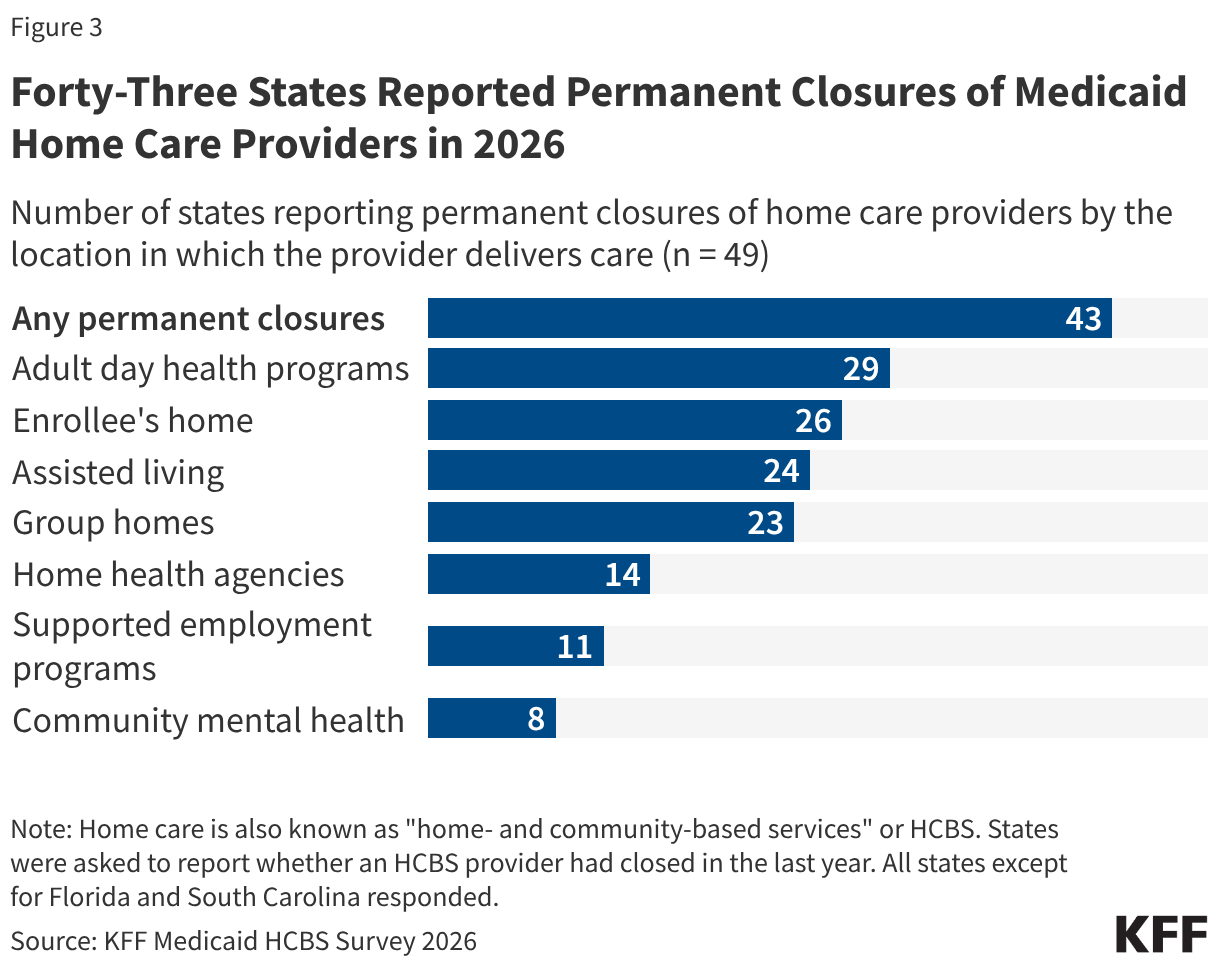
The compounding pressures of low reimbursement rates, high labor costs, and severe staffing shortages have forced widespread institutional and agency retrenchment. Across the country, 43 states reported permanent closures of home care providers within the preceding year.
These closures threaten the physical infrastructure of community-based care. Adult day health programs experienced the most widespread closures, reported by 29 states, followed by agencies delivering care directly in enrollees’ homes (26 states), assisted living facilities (24 states), and group homes (23 states). Additionally, 14 states reported the closure of home health agencies, 11 noted the loss of supported employment providers, and 8 cited closures among community mental health centers.
The ripple effects of these closures are acutely felt by families who rely on self-directed or agency-provided care. State officials frequently commented that even when families are approved for services, an insufficient supply of willing or qualified workers renders the authorization meaningless. In rural areas, the problem is exponentially worse, as geographic isolation compounds recruitment and retention difficulties.
State Policy Responses and Fiscal Constraints
Faced with mounting operational failures, state governments have scrambled to deploy countermeasures, though their policy toolkits are increasingly constrained by tighter fiscal realities.
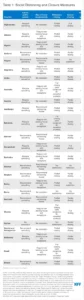
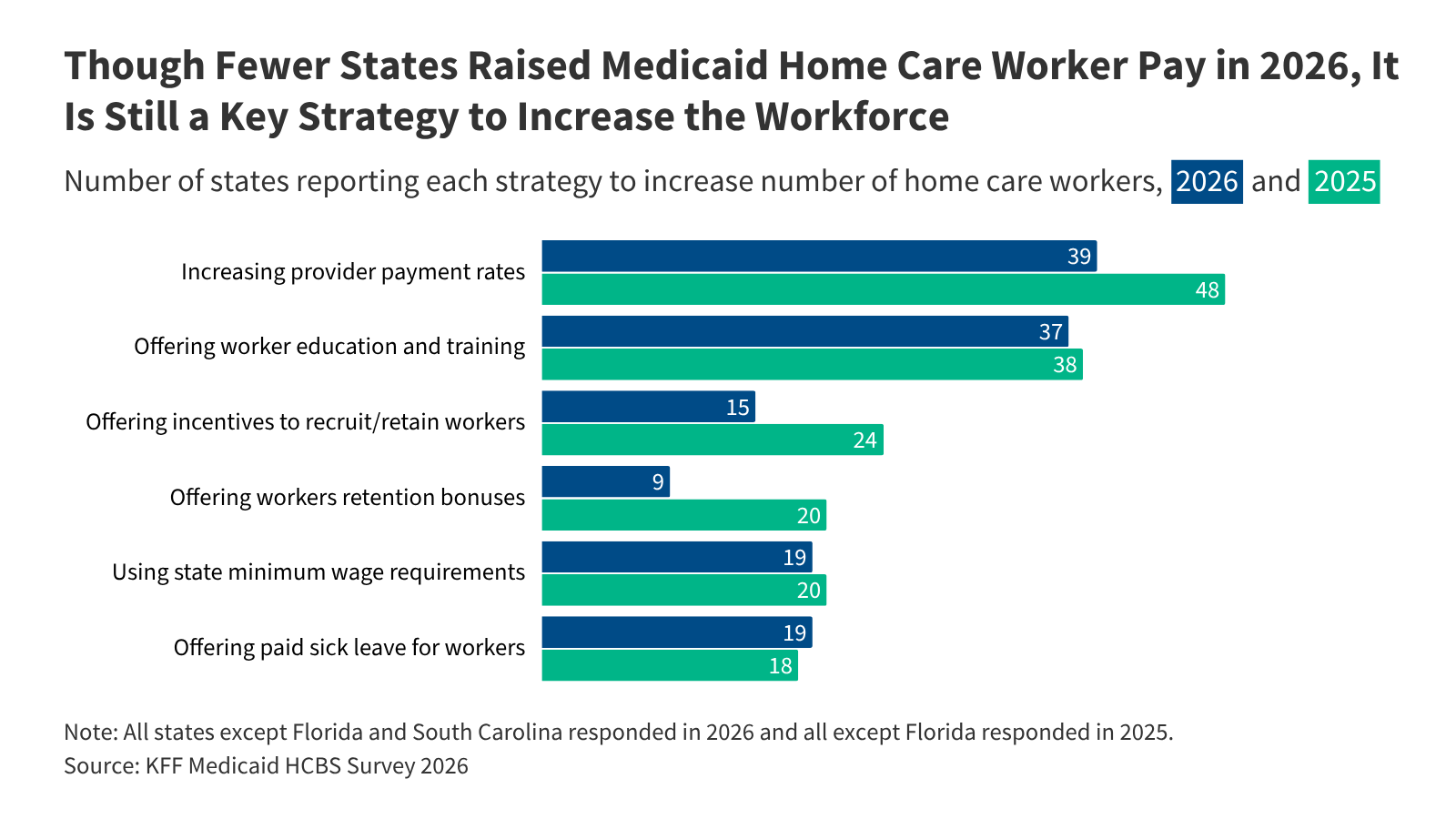
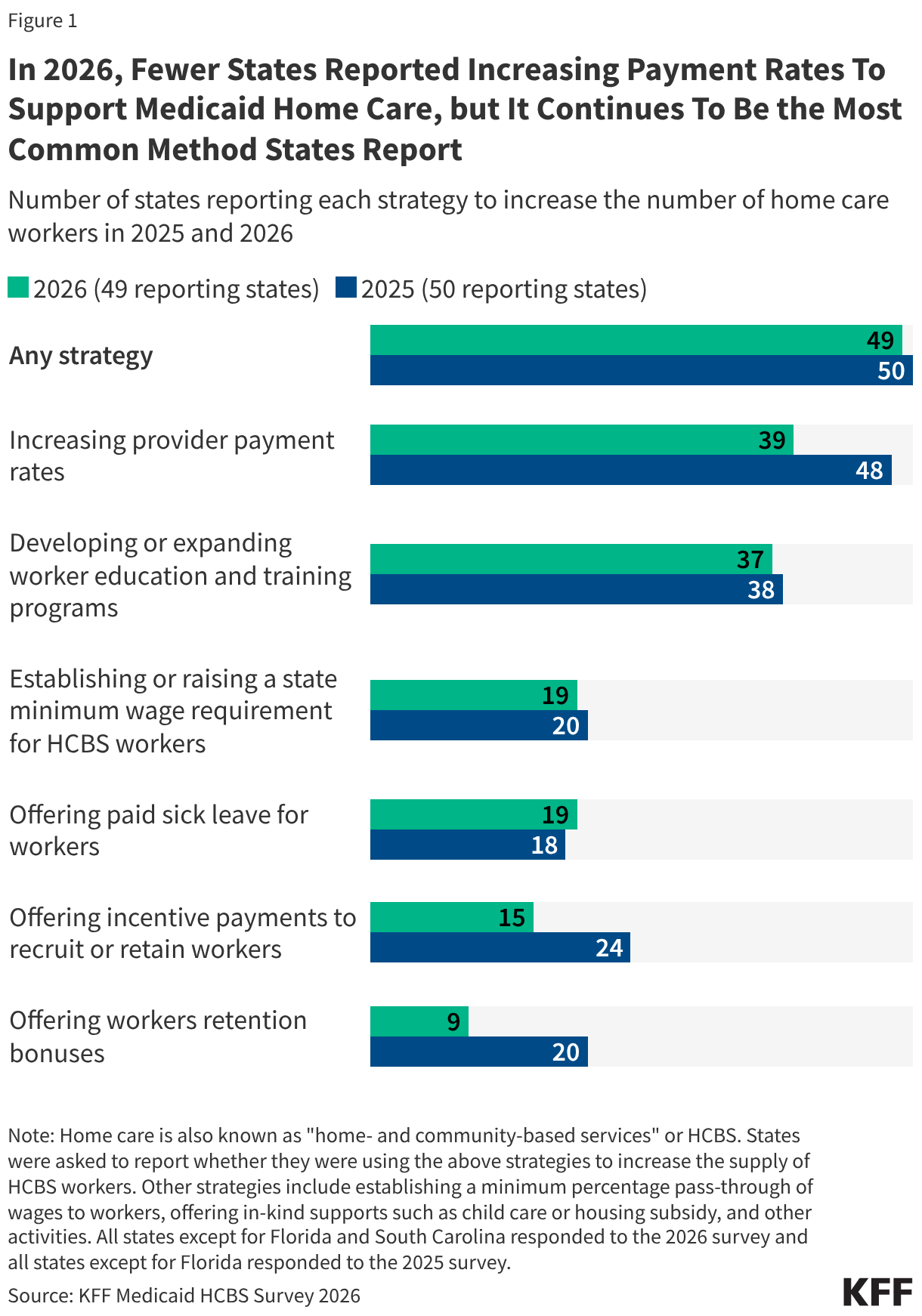
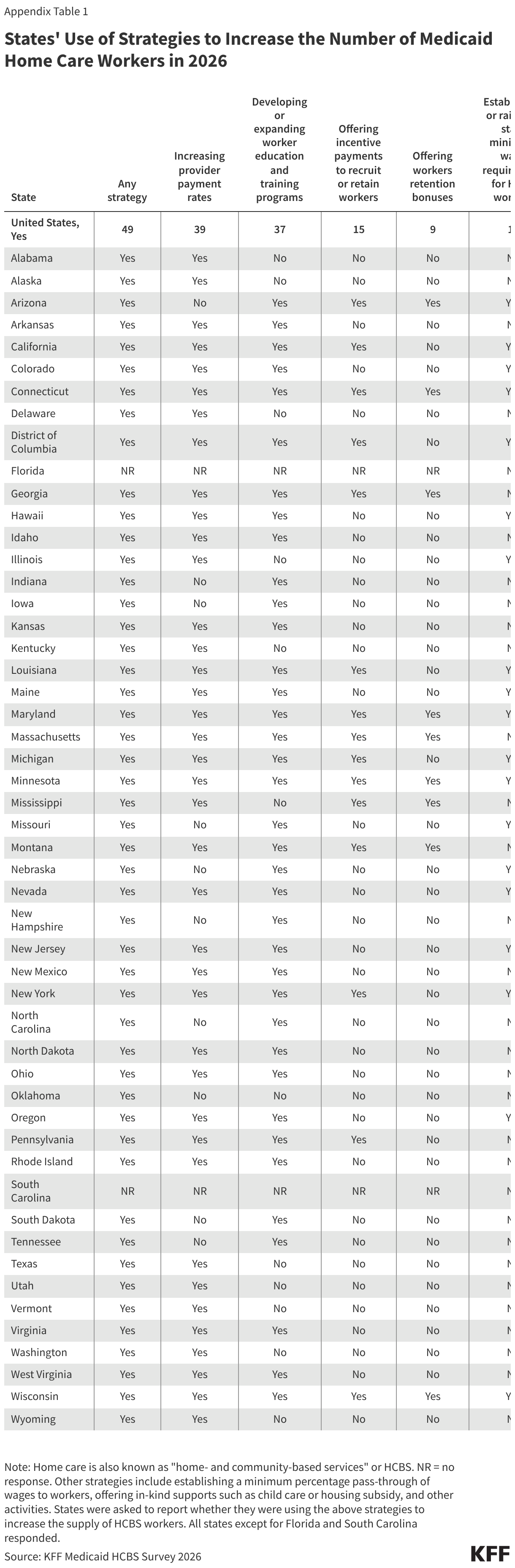
All responding states reported taking at least some action to mitigate provider shortages in 2026. The most common intervention was increasing provider payment rates, utilized by 39 states, followed closely by the development or expansion of worker education and training programs in 37 states. Other strategies were far less common: 19 states established or raised state minimum wage requirements specifically for HCBS workers, 19 offered paid sick leave mandates or incentives, 15 deployed recruitment and retention incentive payments, and only 9 states authorized direct retention bonuses.
A comparative analysis with data from 2025 reveals a distinct cooling off in states’ willingness or ability to fund direct compensation increases. The number of states reporting increased provider payment rates dropped sharply from 48 in 2025 to 39 in 2026. Similarly, states offering recruitment incentives fell from 24 to 15, and those offering retention bonuses plummeted from 20 to 9. Experts note that this contraction in financial support directly reflects a tightening state fiscal climate driven by slower revenue growth and looming federal funding cuts.
Managed care systems add another layer of complexity to the payment landscape. Out of 40 states utilizing managed care to deliver at least some home care services, 14 reported that fee-for-service (FFS) payment rates serve as a mandatory minimum floor that private managed care plans must pay providers. Only one state, Wisconsin, utilized FFS rates as a strict payment ceiling, while nine states indicated that state-set FFS rates have no direct bearing on private plan negotiations.
An Analysis of Payment Rates and Methodologies
Understanding the true financial state of Medicaid home care requires navigating a labyrinth of disparate payment structures, ranging from hourly wages to per-visit and per-diem rates. KFF’s 2026 survey data illustrate significant variation in what states pay agencies and individual workers, though these figures often defy straightforward cross-state comparisons due to differing reporting methodologies.
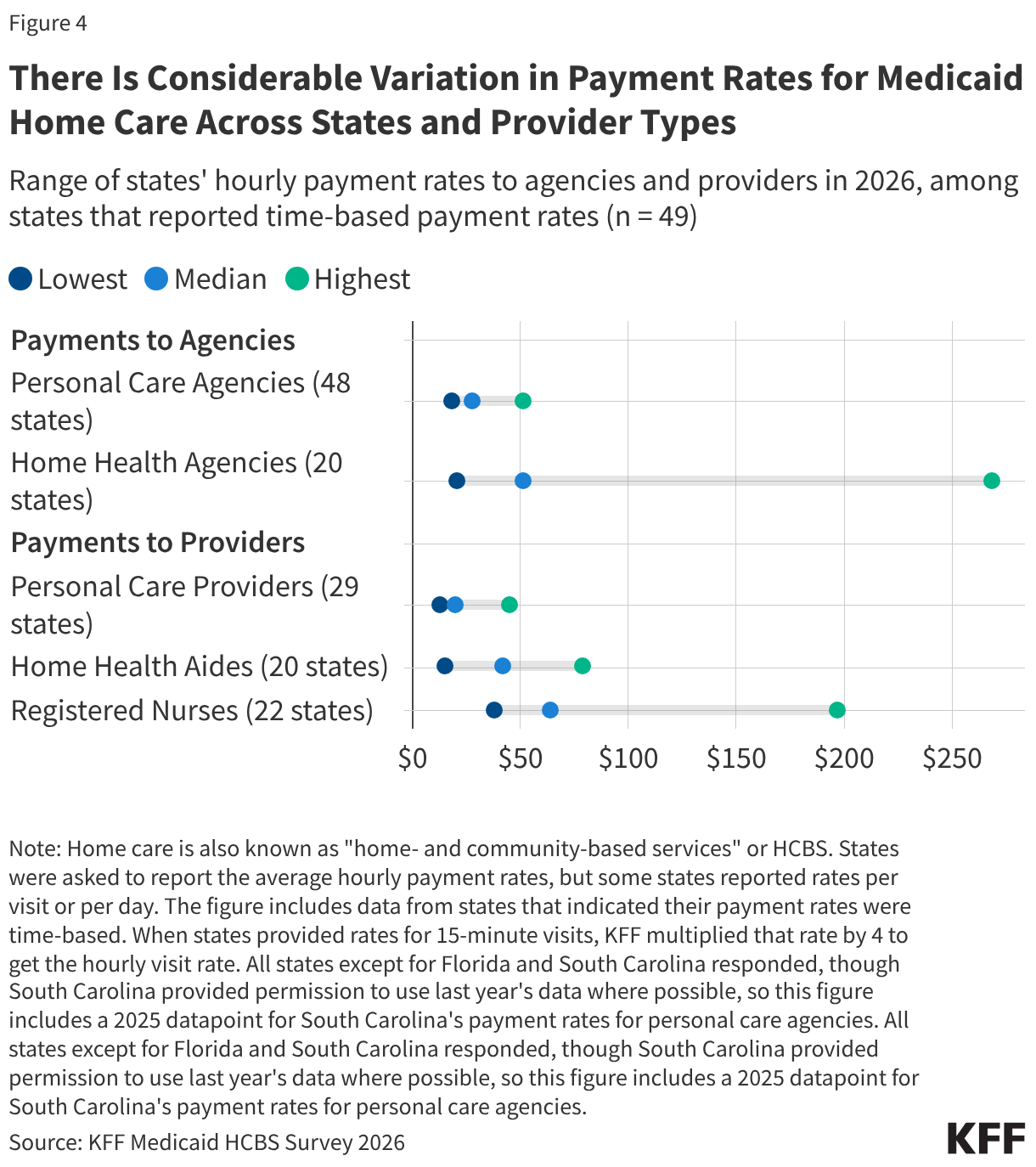
Among responding states, the median hourly payment rate stood at $19 for independent personal care providers, $42 for home health aides, and $64 for registered nurses. At the agency level, median hourly rates were recorded at $27 for personal care agencies and $51 for home health agencies. However, individual state rates exhibited extreme variance: payments for home health agencies spanned from a low of $20 to a staggering $268 per hour, while personal care agency rates ranged from $18 to $51 per hour.
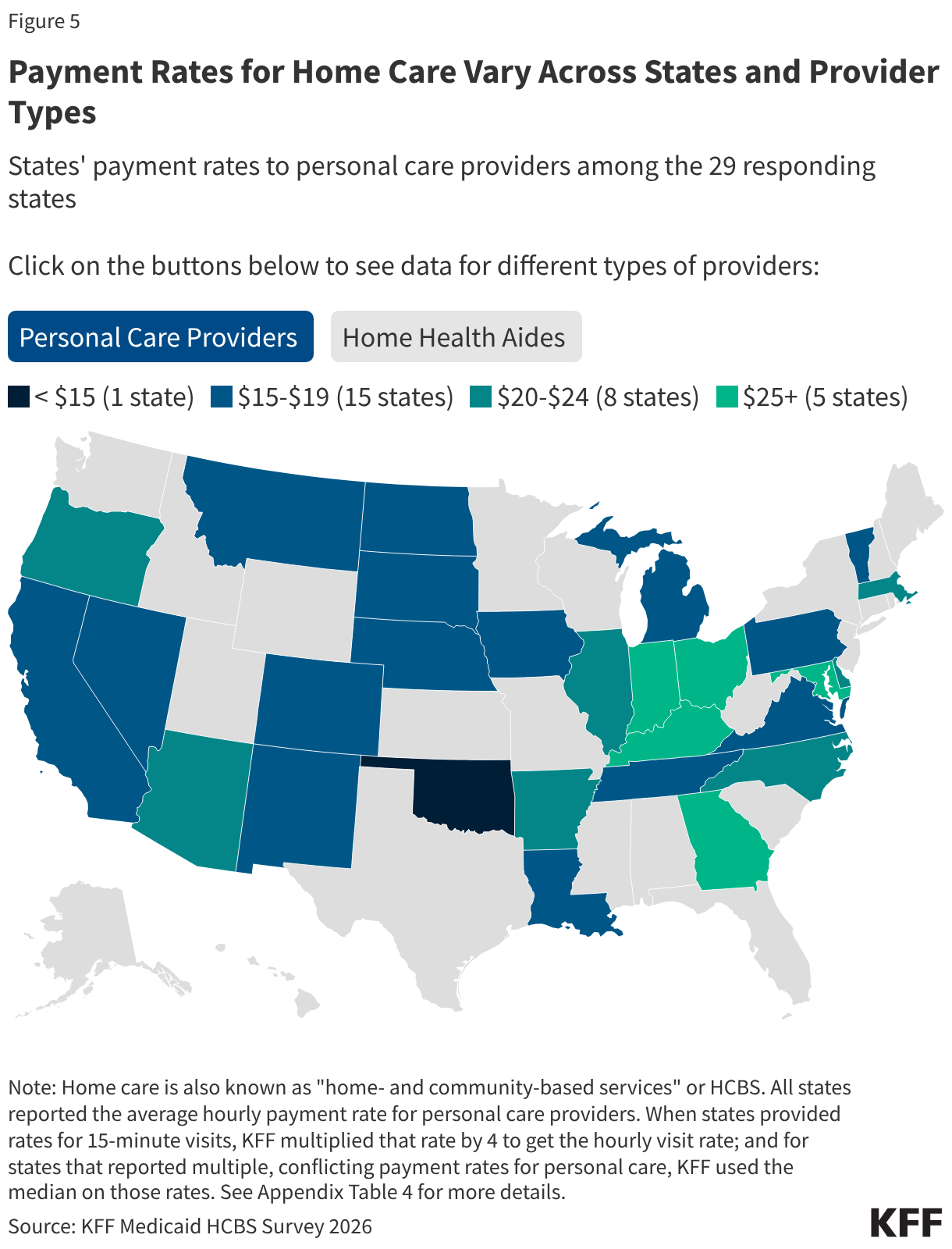
When examining direct wages for frontline workers, payments for personal care workers ranged from under $15 per hour to over $25 per hour among states capable of reporting rate data. Home health aides generally commanded higher rates, reflecting their mandatory clinical training requirements, though some high-end figures reported by states actually represented bundled per-visit or per-day reimbursements rather than pure hourly wages.
Data collection itself remains a major hurdle for state administrators. Many states struggle to aggregate uniform payment data because rates fluctuate wildly across different 1915(c) waiver programs and standard state plan services. For instance, more than half of responding states were unable to provide hourly rate data for registered nurses and home health aides, citing data fragmentation across managed care organizations and disparate waiver authorities. Only 15 states were able to cleanly report comprehensive hourly and agency-level data across all primary categories.
The 2024 Medicaid Access Rule and Future Outlook
The implementation of the 2024 Medicaid Access Rule is reshaping the regulatory relationship between federal authorities and state Medicaid agencies. Designed to inject transparency into a notoriously opaque reimbursement system, the rule requires states to publish detailed fee-for-service payment rates on public websites and track metrics such as paid claims and enrollee utilization.
Looking ahead, the most consequential and controversial provision of the Access Rule—scheduled to take full effect by July 2030—is the requirement that states ensure at least 80% of total Medicaid payments for personal care, home health aide, homemaker, and habilitation services are spent directly on worker compensation. Known informally as the "80/20 rule," this mandate aims to force agencies to channel the vast majority of public dollars onto the front lines, curbing administrative overhead and boosting wages.
However, the intersection of the 80/20 rule, impending federal spending reductions from the 2025 reconciliation law, and aggressive state budget-balancing efforts creates a high-stakes policy dilemma. While the mandate is intended to rescue a collapsing workforce by guaranteeing that rate increases reach workers’ pockets, cash-strapped states warn that rigid federal spending thresholds could destabilize provider agencies already operating on razor-thin margins.
As states navigate these competing pressures through 2026 and beyond, the fundamental challenge remains unresolved. Without sustained financial investment, structural administrative reform, and a stable pipeline of direct care professionals, the promise of community-based long-term care risks remaining unfulfilled for millions of Americans who depend on it for their daily survival and dignity.
Related posts: