The Rise of Inclusive Exploration: A Comprehensive Guide to State-Sponsored All-Terrain Wheelchair Programs Across the United States

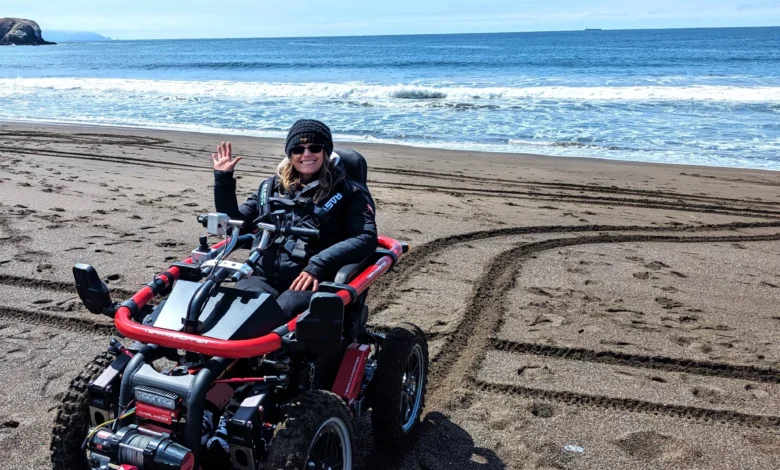
The outdoors, once a domain limited to those with full physical mobility, is undergoing a profound transformation as state and national park systems across the United States adopt inclusive technology. Off-road hiking, hunting, and fishing are no longer gated by the high cost of specialized equipment, as a growing network of public land agencies now provides all-terrain track chairs—high-performance, electric-powered mobility devices—at no cost to visitors. This shift represents a significant evolution in public land management, moving from passive accessibility—such as paved paths—to active participation in rugged, wilderness environments.
The Evolution of Adaptive Outdoor Recreation
The movement began to gain institutional traction around 2016, with Colorado’s Staunton State Park pioneering one of the first state-run programs of its kind. Prior to this, individuals with mobility impairments were largely restricted to accessible boardwalks or visitor centers. The introduction of the Action Trackchair and similar high-traction, tracked mobility devices changed the calculus of what constitutes a "trail-ready" environment.
These devices are engineered to traverse diverse terrains, including loose gravel, mud, snow, and sand, often handling slopes that would be impossible for standard manual wheelchairs. Since 2016, the model has evolved from isolated experiments into comprehensive state-level initiatives. By 2026, the landscape of accessible recreation has expanded to include thousands of miles of previously inaccessible trails across dozens of states, supported by public funding, nonprofit partnerships, and federal grants.
Chronology of Expansion
- 2016: Staunton State Park in Colorado launches the inaugural state-run track chair program, setting the operational standard for reservations and safety protocols.
- 2019–2022: A wave of awareness follows as nonprofits like the Aimee Copeland Foundation and Access Ability Wisconsin demonstrate that track chair programs can be scaled through public-private partnerships.
- 2023–2025: National and state park agencies begin formalizing accessibility policies, integrating chair availability into online reservation systems.
- 2026: Indiana announces a massive statewide rollout, deploying 45 new electric chairs, signaling that accessibility is moving from a "specialty amenity" to a core infrastructure requirement for state park systems.
Regional Highlights and Program Mechanics
The delivery of these services varies by jurisdiction, reflecting the unique geography and administrative capacity of each state.
In the Midwest, Minnesota leads in density, offering track chairs at over 13 state parks. The program operates on a user-friendly, low-barrier model where a signed waiver is the primary requirement. This is contrasted by the logistics in Wisconsin, where the nonprofit Access Ability Wisconsin provides towable chairs. This allows users to transport the equipment to diverse locations, though it requires the user to possess a vehicle capable of towing the specialized trailers.
In the Southeast, Georgia’s program, managed in collaboration with the Aimee Copeland Foundation, emphasizes safety and education. By requiring a "Buddy" system—where a companion must complete virtual training—the state ensures that the equipment is used in environments that match the user’s skill level and the chair’s capabilities.
Western states like Montana and Colorado often focus on specific, rugged trail systems. In Montana, for instance, use is currently restricted to primary trail systems at Lone Pine and Lake Elmo state parks, ensuring that park staff can provide adequate support and that users remain within range of emergency assistance if necessary.
Data-Driven Accessibility: The Technical Landscape
The adoption of track chairs is not merely a matter of purchasing hardware; it involves managing complex operational constraints. Battery longevity remains the most critical technical limitation. Most current-generation electric track chairs, such as the Action Trackchair or Trac-Fab units, offer a range of three to six hours depending on the terrain incline and the weight of the passenger. Consequently, most state parks cap usage at two-to-three-hour blocks to ensure battery safety and equipment availability for multiple users per day.
Weight limits also vary by model and maintenance protocols. While some chairs can support up to 350 lbs, others are strictly rated for 300 lbs. Users are encouraged to verify these specifications during the reservation process, as exceeding load capacities can lead to mechanical failure on steep or uneven terrain.
Official Perspectives and Policy Implications
Public land managers have noted that these programs serve more than just the immediate needs of individuals with disabilities; they serve a broader mandate of conservation and public engagement. By enabling more citizens to experience the wilderness, parks are cultivating a new generation of stakeholders invested in the preservation of public lands.
"The goal is to remove the barrier between the individual and the environment," said an official from the Indiana Department of Natural Resources regarding the state’s 2026 expansion. "By providing the equipment, we are fulfilling our mission to make state parks truly public and inclusive for every citizen, regardless of their physical abilities."
However, challenges remain. The primary constraint for most agencies is the cost of maintenance and the lack of standardized training for staff. As these programs grow, there is a push for a more unified national standard for training, safety, and equipment maintenance, which currently relies on an ad-hoc, state-by-state approach.
Navigating the Reservation Process
For those planning an excursion, the fragmented nature of the current system necessitates significant advance planning. There is no central, federal database that covers every local, state, and national unit. Prospective users should utilize the crowdsourced "Trackchair Finder" tool for nationwide mapping, but they must confirm details directly with the park’s administrative office.
Most programs require:
- Advance Reservation: Many popular sites, such as Staunton State Park, open their reservation windows months in advance.
- Liability Waivers: Almost all jurisdictions require a signed legal release.
- Transfer Assistance: It is crucial to note that at most parks, staff members are not permitted to assist with physical transfers. Users who cannot transfer independently must be accompanied by a companion.
- Permits: While the chairs themselves are free, state park entrance fees or vehicle permits often still apply.
Broader Impact and Future Outlook
The implications of this movement extend beyond recreation. For many, these programs are a vital component of physical therapy and mental health. The psychological benefit of accessing "off-grid" environments, which were previously unreachable, has been lauded by disability advocacy groups as a massive leap forward in societal integration.
As the technology becomes more refined and the costs of manufacturing decrease, it is anticipated that more states will move toward the "Indiana Model"—a comprehensive, statewide distribution of assets that ensures geographic equity. With the National Park Service also continuing to integrate mobility devices on a unit-by-unit basis, the trajectory suggests that the American wilderness is entering a more inclusive era.
Visitors are reminded that while these programs are expanding, they are subject to environmental conditions. Trails that are suitable for track chairs in the summer may be closed or dangerous during the winter, and battery efficiency can be impacted by temperature and mud density. Always consult the official website of the specific state park or the Department of Natural Resources (DNR) in your destination state before departing. By coordinating with park rangers and adhering to the specific site requirements, individuals can take full advantage of these life-changing resources, ensuring that the outdoors remains a shared heritage.