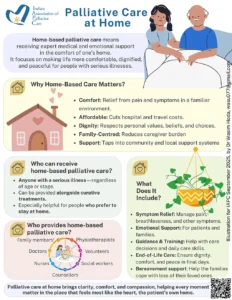
IAPC Launches New Infographic on Palliative Care at Home as Part of Ongoing Educational Series

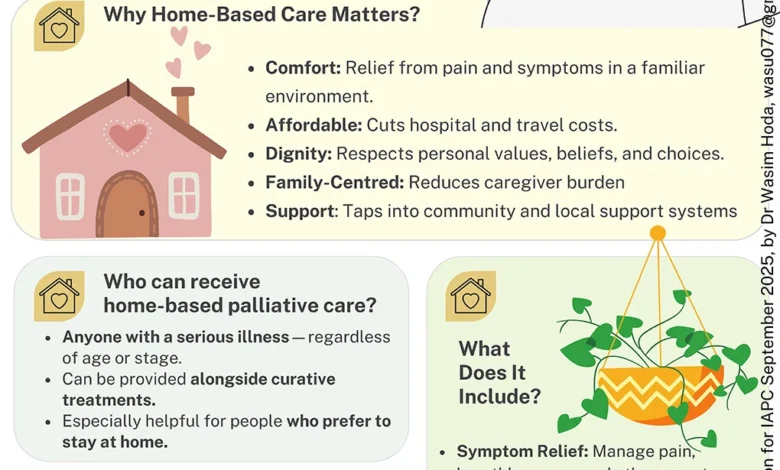
The Indian Association of Palliative Care (IAPC) has officially released the third installment of its "Care Continuum" educational series, focusing this month on the critical domain of Palliative Care at Home. This latest resource serves as a strategic effort to bridge the information gap regarding home-based care models, which are becoming increasingly essential as the demand for chronic disease management and end-of-life support rises across the country. The infographic, developed with technical contributions from Dr. Wasimul Hoda of the Department of Anaesthesia, Critical Care, and Pain Medicine at AIIMS New Delhi, represents the latest step in the IAPC’s long-term mandate to standardize and demystify palliative care protocols for both healthcare providers and the general public.
Background and Evolution of the Care Continuum Series
The IAPC’s current initiative is rooted in a broader strategy launched in June 2025, which introduced the concept of the "Care Continuum"—a framework designed to illustrate how patients transition between different levels of care, ranging from hospital-based acute interventions to community-based support. Palliative care, often misunderstood as being limited to terminal hospital care, is increasingly being recognized as a holistic approach that can and should be delivered in the home environment to improve patient quality of life and reduce the burden on tertiary healthcare facilities.
The chronological progression of this series reflects a shift in national health priorities. In June, the first infographic established the foundational definitions of the care continuum. By the second installment, the focus shifted to the integration of services. This September, the spotlight on "Palliative Care at Home" addresses a specific logistical challenge: how to provide high-quality pain management and symptom control in a residential setting. This initiative is particularly timely, given the shifting demographics in India, characterized by an aging population and an increased prevalence of non-communicable diseases (NCDs) such as cancer, cardiovascular ailments, and chronic respiratory conditions.
The Role of Home-Based Palliative Care in Modern Healthcare
Home-based palliative care is defined by its ability to provide comfort, pain relief, and psychological support within the familiar environment of the patient’s home. The IAPC infographic delineates the key components of this care model, emphasizing the necessity of a multidisciplinary team. According to established global standards, an effective home care team typically comprises specialized doctors, nurses, social workers, and counselors.
The primary objective of this delivery model is to transition from a hospital-centric approach to a patient-centered approach. By facilitating care in the home, the healthcare system can significantly decrease the rate of hospital readmissions and alleviate the physical and financial strain on families. In the context of India’s vast geography, home-based models are instrumental in reaching rural and semi-urban populations where access to specialized palliative care units is frequently limited.
Supporting Data and Demographic Imperatives
The necessity for this educational outreach is supported by sobering statistical data regarding the prevalence of palliative care needs. The World Health Organization (WHO) estimates that only about 14% of people who need palliative care worldwide currently receive it. In India, the gap is arguably wider. Studies published in journals such as The Lancet suggest that millions of Indians suffer from serious health-related suffering, yet access to basic pain management—specifically oral morphine and home-visit services—remains inconsistent.
The IAPC’s focus on home care directly addresses these findings. By simplifying complex clinical guidelines into visual, digestible formats, the organization aims to empower family caregivers, who are often the primary providers of palliative support in the Indian context. Furthermore, the economic impact of chronic illness is profound. Households in India often deplete significant portions of their savings on hospital stays. Providing robust home-based palliative care can reduce "catastrophic health expenditure," a term used by economists to describe out-of-pocket costs that exceed 40% of a household’s non-food income.

Expert Collaboration and Clinical Integration
The collaboration with Dr. Wasimul Hoda, representing AIIMS New Delhi, underscores the clinical rigor behind this initiative. The involvement of academic and tertiary care institutions is vital, as it ensures that the educational materials disseminated by the IAPC align with the latest clinical practices in Pain Medicine and Critical Care.
For many medical professionals, the transition from hospital-based care to home-based care requires a paradigm shift. Doctors trained in curative medicine often find it challenging to navigate the nuances of palliative care, where the focus is not on curing the underlying pathology but on managing symptoms and enhancing the dignity of the patient. The IAPC’s infographic serves as a bridge, offering clinicians a quick reference guide on how to coordinate care with home-visiting teams, manage medications remotely, and communicate effectively with family members regarding the limitations of treatment.
Implications for Healthcare Policy and Advocacy
The release of this infographic is not merely an educational exercise; it is an act of advocacy. The IAPC has consistently lobbied for the inclusion of palliative care in the National Health Mission and state-level health strategies. By consistently publishing high-quality, accessible resources, the association maintains public interest and pressure on policymakers to integrate palliative services into primary healthcare.
The broader implications of this initiative are significant:
- Standardization of Care: By promoting a unified visual guide, the IAPC encourages different states and institutions to adopt similar protocols for home care, leading to a more consistent standard of care across the country.
- Caregiver Support: A significant portion of the burden falls on family caregivers. The infographic provides them with clear, actionable steps, reducing the anxiety associated with managing complex symptoms like breakthrough pain or respiratory distress at home.
- Reduction in Systemic Burden: As hospital beds in urban centers become increasingly scarce, moving patients who require palliative support to home environments allows hospitals to focus resources on acute, life-saving interventions.
- Cultural Alignment: In India, the cultural preference for dying at home—surrounded by family—is prevalent. The IAPC’s initiative respects these cultural values while providing the medical framework to ensure that such care is safe and dignified.
Future Directions and Continued Outreach
The IAPC has indicated that this infographic will be disseminated across its digital channels, including its official website and various social media platforms. The organization encourages healthcare professionals, students, and caregivers to share these materials within their professional and social networks. This grassroots approach is central to the IAPC’s strategy of community-led education.
As the "Care Continuum" series moves forward, the association is expected to address other segments of the health journey, potentially including end-of-life planning, bereavement support, and the legal aspects of advanced directives. The systematic nature of these releases suggests that the IAPC is building a comprehensive library of resources that will serve as a foundational archive for the palliative care community in India for years to come.
The initiative highlights a critical intersection between medicine and social welfare. By empowering the community with knowledge, the IAPC is effectively democratizing access to care. While the infographic is a simple tool, its impact is amplified by the widespread reach of the IAPC’s network, which spans across state chapters, palliative care centers, and volunteer organizations.
In conclusion, the launch of the "Palliative Care at Home" infographic marks a significant milestone in the IAPC’s 2025 outreach agenda. It provides a necessary framework for shifting the narrative of palliative care from the clinical isolation of a hospital room to the supportive, community-oriented setting of the home. As India continues to reform its healthcare infrastructure, resources such as these will remain vital in ensuring that patients receive compassionate, evidence-based care throughout the final stages of the care continuum. The continued support of experts like Dr. Wasimul Hoda ensures that this information is not only accessible but also grounded in the highest standards of medical practice. For those seeking to utilize these resources, the IAPC has archived all previous installments on their official portal, providing a searchable, permanent repository for students and practitioners alike.