Federal Investment Aims To Close Dental Care Gaps For Children With Developmental Disabilities

Securing reliable, specialized dental care has long been one of the most persistent and frustrating hurdles for families raising children with developmental disabilities. Too often, parents face a daunting maze of closed doors, long waiting lists, and dental offices structurally or experientially unequipped to handle sensory processing differences, mobility challenges, or unique communication needs. This systemic failure has left an exceptionally vulnerable population at a severely heightened risk for preventable oral health complications, ranging from severe tooth decay to chronic gum disease.
In a decisive effort to rewrite this narrative, the federal government has launched a sweeping national initiative. Backed by a substantial $51 million funding commitment from the U.S. Department of Health and Human Services (HHS), this program aims to fundamentally transform how community-based clinics deliver oral healthcare to children diagnosed with autism, Down syndrome, cerebral palsy, and other intellectual and developmental disabilities. By injecting vital financial resources directly into local health centers, federal authorities hope to establish a scalable framework of inclusive, high-quality, and accessible dental medicine.
The Scope and Structure of the Federal Grant Program
Administered by the Health Resources and Services Administration (HRSA)—an agency operating under the umbrella of HHS—the newly announced funding initiative targets 28 distinct health centers across the United States. Each participating institution stands to receive up to $2 million over the course of the grant cycle.
Rather than merely supplementing routine operational budgets, the initiative requires health centers to deploy evidence-based clinical models and experiment with innovative care delivery strategies. The funds are strategically earmarked for three primary pillars:
- Expanding preventive care services specifically tailored to patients with specialized behavioral and physical needs.
- Boosting the specialized workforce through targeted training for dentists, dental hygienists, and support staff.
- Developing and testing innovative, community-based care models that can ultimately serve as blueprints for healthcare providers nationwide.
Furthermore, the participating health centers will not operate in isolation. Federal officials have structured the program to incorporate robust collaborative learning and evaluation activities. This means that as individual clinics discover effective protocols—whether through desensitization techniques for children with severe sensory sensitivities or specialized sedation management—those insights will be systematically documented and shared with the broader healthcare community.
The Deep-Rooted Crisis in Pediatric Special Needs Dentistry
To understand the weight of this $51 million investment, one must examine the profound systemic barriers that have plagued pediatric dentistry for decades. Children and adolescents with developmental disabilities experience significantly higher rates of untreated dental caries, periodontal disease, and chronic oral pain compared to their neurotypical peers.
The reasons for this disparity are multi-layered. Traditional dental environments are inherently overwhelming for many children with autism or sensory processing disorders. Bright overhead halogen lights, loud high-pitched drilling sounds, unusual chemical smells, and the physical restriction of lying flat in a dental chair can trigger severe anxiety, panic, or defensive behaviors.
Compounding these sensory challenges is a severe shortage of clinicians trained to treat patients with physical and intellectual disabilities. Dental schools traditionally allocate minimal curriculum hours to special care dentistry. Consequently, many general dentists feel underqualified or entirely unequipped to manage the behavioral, medical, and communication nuances required to treat these patients safely.
When families manage to secure a practitioner willing to attempt treatment, they frequently encounter logistical nightmares. Specialized pediatric dental surgeries often require operating room access under general anesthesia, particularly for patients unable to tolerate routine cleanings or complex procedures while awake. These hospital settings feature notoriously long waiting lists—sometimes stretching upwards of a year—during which minor dental cavities can escalate into severe, systemic infections requiring emergency interventions.
The Human Toll: Real-World Consequences of the Dental Care Gap
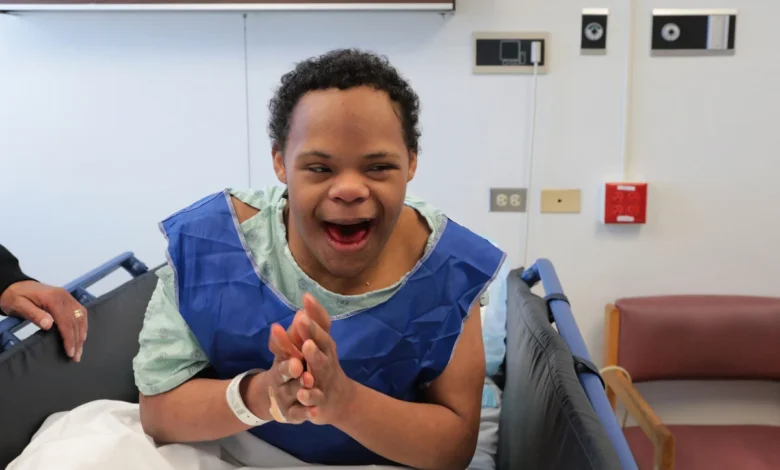
The consequences of this systemic deficiency are vividly illustrated in cases like that of Andy Mitchell, a teenager living with complex intellectual and physical disabilities. In 2018, Mitchell’s untreated tooth decay reached a critical threshold, leaving him in agonizing pain. Yet, his family spent months desperately calling regional dental practices, only to be repeatedly turned away because local offices lacked the physical infrastructure or clinical training necessary to accommodate him.
Ultimately, Mitchell required intensive surgical intervention at St. Bernard Hospital’s dental clinic in Chicago, where he underwent a grueling procedure resulting in 23 dental fillings and eight extractions. Stories like Mitchell’s are far from isolated; they represent a harsh reality for thousands of families nationwide who find themselves forced to wait until a routine dental issue explodes into a medical crisis requiring emergency hospitalization.
Federal Leadership Responds to an Urgent Need
The announcement of the HRSA initiative marks a notable acknowledgment from federal health authorities that the existing infrastructure is failing children with developmental disabilities and their caregivers.
“A parent shouldn’t have to struggle to find a dental provider who is prepared to care for their child,” stated Tom Engels, administrator of the Health Resources and Services Administration, during the announcement of the funding awards. “This investment will help health centers build the skills, services, and approaches needed to make dental care more accessible and responsive to children and families — and help us learn what works so successful models can reach more communities.”
Federal officials specifically targeted federally qualified health centers (FQHCs) for this initiative due to their unique position within the American healthcare landscape. Unlike private practices, FQHCs have a dual mandate: they provide comprehensive primary care regardless of a patient’s insurance status or ability to pay, and they are deeply integrated into the social safety net of their respective communities.
Because these centers are accustomed to addressing the social determinants of health—such as connecting low-income families with transportation assistance, language interpreter services, and educational resources—they are uniquely situated to dismantle the ancillary barriers that often prevent marginalized families from keeping dental appointments. By embedding specialized dental care into established primary care networks, HHS hopes to create a holistic, frictionless healthcare experience for patients with complex needs.
Broader Implications and the Road Ahead
The injection of $51 million into special needs dentistry represents a vital down payment on a larger, systemic overhaul, but public health advocates emphasize that sustained, long-term efforts will be required to solve the crisis entirely.
Experts in developmental disabilities note that transforming the landscape of American dental care will ultimately require policy changes beyond grant-funded pilot programs. Key areas for future reform include:
- Dental School Curriculums: Mandating comprehensive clinical training in special care dentistry as a standard requirement for all graduating dental professionals.
- Medicaid Reimbursement Rates: Elevating low state Medicaid reimbursement rates for complex dental procedures, which currently incentivize private practices to turn away publicly insured or specialized patients due to financial unsustainability.
- Infrastructure Expansion: Investing heavily in physical clinic modifications, such as sensory-friendly quiet rooms, wheelchair-accessible tilt-tables, and specialized sedation suites within community health centers.
For now, the 28 health centers receiving the new HRSA grants carry the responsibility of proving that targeted federal investment can effectively bridge the care gap. As these clinics roll out their innovative models over the coming months and years, the data they generate will be closely monitored by policymakers, healthcare administrators, and advocacy organizations alike.
For millions of parents and caregivers navigating the daily complexities of raising a child with a developmental disability, the initiative offers a cautiously optimistic glimpse of a future where accessing a basic dental checkup no longer requires an exhaustive, cross-country search, and where compassionate, competent oral healthcare is treated as a fundamental right rather than an elusive privilege.
Related posts: