John Petrous Joins Disability Belongs Advisory Council to Champion AI-Driven Mobility and Inclusive Infrastructure

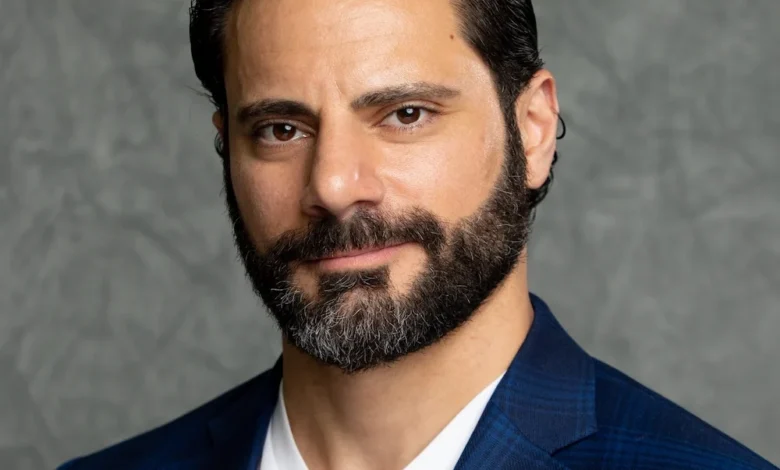
The landscape of modern transportation is undergoing a seismic shift driven by artificial intelligence and connected vehicle ecosystems, yet the critical challenge of ensuring these advancements serve the disability community remains a primary concern for policymakers and engineers alike. John Petrous, the Founder and CEO of Tappy Guide, has officially joined the Advisory Council of Disability Belongs, bringing over 14 years of automotive industry expertise to the organization’s mission of fostering equitable access. His appointment signals a strategic alignment between the private technology sector and non-profit advocacy, aimed at bridging the "accessibility gap" that has historically left individuals with vision loss and other disabilities behind in the race toward smart city integration.
A Legacy of Personal Commitment and Industry Expertise
John Petrous’s professional trajectory is intrinsically linked to his personal history. Having held high-level roles at global automotive giants including General Motors, Stellantis—formerly Fiat Chrysler Automobiles—and Ford Motor Company, Petrous has been at the forefront of the telematics and vehicle connectivity revolution. Throughout his tenure at these organizations, he specialized in the architecture of systems that allow vehicles to "communicate" with their environments. However, his work is not merely a product of corporate mandate; it is a response to a lifelong reality.
Petrous’s brother, sister, and two cousins were born with retinitis pigmentosa, a degenerative genetic eye condition that results in progressive vision loss. This firsthand exposure to the complexities of navigating public spaces without sight fundamentally altered his perspective on engineering. He recognized early in his career that the automotive industry’s focus on autonomous and connected vehicles often prioritized speed and efficiency while neglecting the nuanced needs of vulnerable road users. This realization became the catalyst for Tappy Guide, a firm dedicated to integrating artificial intelligence and Vehicle-to-Everything (V2X) communication to provide real-time, actionable navigation data for people with disabilities.
The Evolution of V2X Technology and Accessibility
Vehicle-to-Everything (V2X) technology represents the next frontier in road safety. It enables vehicles to transmit and receive data from other vehicles, infrastructure, and even pedestrians. For the disability community, this technology holds the potential to transform the environment from a source of danger to a source of empowerment.
Currently, smart city initiatives often focus on traffic flow management and fuel efficiency. Petrous’s work seeks to reorient these technologies to prioritize human-centric data. For example, by leveraging V2X, a connected crosswalk could transmit signals to a mobile device, informing a visually impaired user precisely when it is safe to cross, the width of the street, and the current state of traffic lights. By integrating these systems, Petrous aims to shift the narrative from "retrofitting" accessibility to "designing-in" inclusion.
Chronology of Innovation: From Telematics to Tappy Guide
The journey toward current mobility standards has been a decades-long endeavor. The early 2010s saw the rise of basic telematics, primarily used for emergency response and remote diagnostics. By the mid-2010s, the focus shifted to infotainment and basic driver-assist systems. It was during this period, while working within the major OEM (Original Equipment Manufacturer) ecosystem, that Petrous began to identify the limitations of existing infrastructure for the disability community.
In the years that followed, Petrous transitioned from traditional automotive manufacturing to the startup space, founding Tappy Guide to address the fragmentation in assistive technology. Over the past several years, he has successfully transitioned from internal corporate development to a broader advisory role, working with stakeholders to establish standards for V2X that include accessibility metrics as a mandatory component of urban planning.
The Data Landscape: Why Inclusive Mobility Matters

The urgency of this work is underscored by global demographic and health data. According to the World Health Organization (WHO), over 2.2 billion people globally suffer from some form of vision impairment or blindness. In the United States alone, the CDC reports that approximately 1 in 4 adults live with a disability, many of whom face significant barriers to reliable transportation.
Economic data further supports the necessity of these innovations. The "disability divide" in transportation is a significant contributor to unemployment and social isolation. When individuals with disabilities cannot navigate public transit or personal vehicles safely, their ability to participate in the workforce is severely hampered. Research from the U.S. Department of Transportation indicates that smart infrastructure, if properly implemented, could reduce pedestrian-related fatalities by up to 40% in urban environments. Petrous argues that when these systems are optimized for the most vulnerable users, they inherently become safer for the general population, creating a "curb-cut effect" where universal design benefits all citizens.
Official Response and Strategic Partnerships
The appointment of Petrous to the Disability Belongs Advisory Council is viewed by industry analysts as a move to formalize the role of technology in policy advocacy. Organizations like Disability Belongs have historically focused on social inclusion and legal rights; however, as the physical world becomes increasingly digitized, the technical expertise offered by advisors like Petrous becomes an essential component of their broader advocacy agenda.
In statements regarding the partnership, leadership at Disability Belongs has emphasized that the inclusion of an industry veteran with technical proficiency in AI and V2X is a direct response to the rapid pace of technological change. The council is tasked with reviewing emerging infrastructure projects and ensuring that accessibility standards are not merely suggestions but are integrated into the foundational layers of smart city development.
Fact-Based Analysis: The Implications of Smart City Integration
The integration of AI into public infrastructure brings both opportunities and risks. The primary implication of Petrous’s work is the creation of a standardized protocol for accessibility. Currently, technology varies wildly from city to city, creating a "patchwork" of accessibility that is difficult for users to navigate. If Petrous and his cohorts can successfully advocate for national or international standards in V2X connectivity, the result could be a seamless mobility experience for disabled users across different jurisdictions.
However, challenges remain. Privacy concerns regarding data collection, the cost of upgrading aging municipal infrastructure, and the potential for digital exclusion if assistive technology remains prohibitively expensive are all hurdles that the advisory council must navigate. Petrous’s dual background—as an engineer who understands the cost-prohibitive nature of hardware and as an advocate who understands the human cost of inactivity—positions him to negotiate these trade-offs effectively.
Looking Toward the Future of Transportation
As cities around the world continue to pilot "Smart City" projects, the involvement of experts like John Petrous ensures that the disability community is not an afterthought. The intersection of AI, connectivity, and human rights is where the next generation of transportation policy will be written.
Petrous’s role as an advisor to Disability Belongs marks a turning point in how non-profits engage with the tech industry. By shifting from reactive advocacy to proactive technical consultation, the organization is positioning itself to influence the very blueprints of future urban environments. For the millions of individuals who rely on accessible technology to navigate their daily lives, this partnership represents a move toward a future where mobility is a right enabled by innovation, rather than a privilege restricted by design.
As the industry moves toward 2030, the success of these initiatives will be measured by the reduction of accidents, the increase in independent navigation metrics, and the successful adoption of inclusive design standards by municipal governments. John Petrous, through his work at Tappy Guide and his new capacity at Disability Belongs, remains committed to the principle that technology should be an equalizer, closing the gap between the world as it is and the world as it should be for everyone, regardless of physical ability.
Related posts: