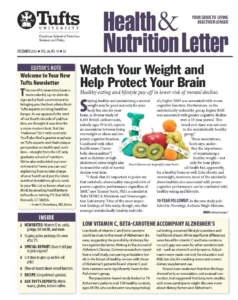
Unlocking the Science of Longevity: How Tufts Health and Nutrition Letter Continues to Guide Public Dietary Guidelines

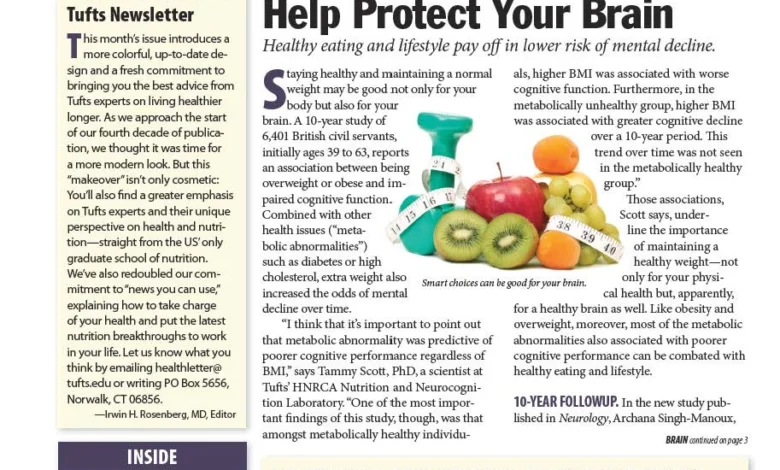
Navigating the vast and often contradictory landscape of modern dietary advice has become a significant challenge for the average consumer. In an era dominated by viral social media health trends, unverified nutritional claims, and rapidly shifting dietary fads, evidence-based guidance remains an essential anchor for public health. For decades, academic institutions and specialized publications have stepped into this space to bridge the gap between complex peer-reviewed science and everyday dietary choices. Among the most trusted resources in this domain is the Tufts Health and Nutrition Letter, a publication originating from the esteemed Friedman School of Nutrition Science and Policy at Tufts University. As public interest in preventative healthcare, longevity, and metabolic wellness reaches unprecedented heights, the role of rigorous, subscription-based scientific journalism has never been more critical to consumer health literacy.
The historical evolution of nutritional science in mainstream media reflects a broader societal shift toward proactive health management. During the mid-to-late 20th century, dietary guidelines primarily focused on the prevention of overt nutritional deficiencies, such as scurvy, rickets, and pellagra. However, as global public health challenges transitioned from infectious diseases and malnutrition to chronic conditions—including cardiovascular disease, type 2 diabetes, and obesity—the focus of nutritional research shifted dramatically. Institutions like Tufts University recognized a growing demand among the general public for transparent, unbiased, and scientifically validated information regarding what to put on their plates.
The establishment of dedicated health letters served as a direct conduit between laboratory findings and household kitchens. By translating dense epidemiological studies and randomized controlled trials into accessible, actionable insights, these publications empowered generations of readers to make informed dietary decisions. Over the years, the publication has addressed a wide array of evolving nutritional paradigms, ranging from the low-fat craze of the 1980s and 1990s to the more nuanced understanding of dietary fats, carbohydrates, and microbiome health that defines contemporary nutritional science.
Understanding the mechanics of modern nutritional journalism requires an examination of the rigorous editorial and peer-review processes that underpin publications affiliated with major academic institutions. Unlike commercial lifestyle blogs or sponsored wellness platforms, academic health letters operate under strict editorial independence. Editorial boards typically comprise leading epidemiologists, registered dietitians, and public health researchers who critically evaluate newly published literature across major scientific journals, such as the American Journal of Clinical Nutrition, the New England Journal of Medicine, and JAMA.
This evaluation process involves a multi-tiered approach:
- Literature Screening: Editors continuously monitor global scientific output to identify high-impact studies concerning human nutrition, metabolism, and disease prevention.
- Methodological Appraisal: Researchers scrutinize the methodology of selected studies, paying close attention to sample sizes, study durations, funding sources, and potential confounding variables.
- Translation and Contextualization: Findings are synthesized into clear, jargon-free narratives that highlight both the potential benefits and the inherent limitations of the research.
- Practical Application: Articles translate abstract statistical outcomes into concrete, realistic recommendations for grocery shopping, meal preparation, and overall lifestyle management.
This methodical approach helps insulate readers from the common journalistic pitfall of overhyping single studies. In nutritional science, sensationalized headlines often declare a specific food to be a miracle cure or a lethal poison based on preliminary or observational data. Academic publications play a vital role in dampening this cycle of dietary whiplash by emphasizing consensus, long-term dietary patterns, and moderation.
The financial and operational models of specialized health publications have undergone significant transformation alongside the broader publishing industry. Historically distributed primarily via print mailers, outlets like the Tufts Health and Nutrition Letter have successfully migrated into the digital ecosystem. This transition has allowed publishers to expand their global reach, offering subscribers instant access to expansive digital archives, searchable back issues, and interactive online content.
However, maintaining editorial integrity without the influence of commercial advertising requires a sustainable subscription-based model. By relying on reader subscriptions rather than revenue from food manufacturers, supplement companies, or pharmaceutical firms, these publications protect their objectivity. This independence is paramount in an industry where commercial interests frequently attempt to sway public perception regarding specific commodities, ranging from dairy and red meat to artificial sweeteners and processed snacks.
Public health advocates and consumer protection agencies frequently emphasize the importance of independent, subscription-supported journalism as a bulwark against misinformation. When consumers pay a modest fee for verified health information, they invest in an ecosystem that prioritizes scientific truth over clickbait engagement metrics. Furthermore, discounted subscription rates and promotional initiatives—such as introductory offers priced around $18 for an annual subscription—are frequently deployed to ensure that evidence-based guidance remains accessible to a broad demographic, rather than restricted exclusively to affluent households.
The implications of reliable nutritional guidance extend far beyond individual weight management; they represent a cornerstone of national healthcare cost containment and preventative medicine. According to data from the Centers for Disease Control and Prevention (CDC), chronic diseases account for the vast majority of the nation’s annual healthcare expenditures, with poor dietary habits serving as a primary modifiable risk factor for conditions such as heart disease, stroke, and type 2 diabetes.
Epidemiological research consistently demonstrates that adopting a dietary pattern rich in whole grains, fiber, lean proteins, healthy fats, and fresh produce can drastically reduce the incidence of metabolic syndrome and its associated comorbidities. Despite the widespread availability of this information, consumers are continually bombarded with conflicting messages from food marketing campaigns and unregulated online influencers promoting extreme elimination diets, unverified cleanses, and expensive, unregulated dietary supplements.
In this chaotic information environment, trusted academic publications act as a stabilizing force. By consistently reinforcing foundational principles—such as the benefits of the Mediterranean diet, the importance of minimizing ultra-processed foods, and the necessity of individualized nutritional planning—these outlets empower readers to filter out nutritional noise. The broader societal impact of this education is profound: a more scientifically literate populace is better equipped to advocate for healthier food environments, support sensible public health policies, and make sustainable choices that promote long-term vitality.
As nutritional science continues to advance into new frontiers, the demand for sophisticated, evidence-based journalism will only intensify. Emerging fields of study, such as nutrigenomics (how individual genetic variations interact with nutrients) and the human gut microbiome, are revolutionizing our understanding of personalized nutrition. Moving forward, the challenge for publications like the Tufts Health and Nutrition Letter will be to interpret these cutting-edge, highly technical discoveries and present them in a manner that is both scientifically accurate and practically useful for the everyday reader.
By maintaining a steadfast commitment to empirical evidence, editorial independence, and consumer education, academic health publications secure their place as indispensable resources in the modern wellness landscape. They remind us that while dietary fads will inevitably rise and fall, the fundamental principles of balanced nutrition, rooted in rigorous scientific inquiry, remain the true foundation of lasting health and longevity.