IAPC Releases New Infographic on Palliative Care at Home to Expand Community Awareness

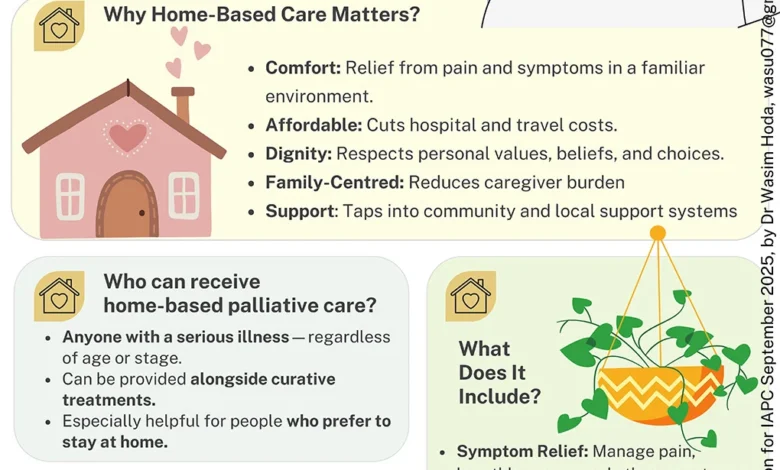
The Indian Association of Palliative Care (IAPC) has officially launched the third installment of its ongoing "Care Continuum" educational series, focusing this month on the critical subject of Palliative Care at Home. This latest resource, presented in a high-visibility infographic format, is designed to demystify the logistics, clinical necessity, and compassionate framework required to provide high-quality medical support within a patient’s own living environment. By continuing the momentum established in June 2025, the organization aims to bridge the gap between institutionalized medical care and the often-overlooked necessity of home-based support for patients suffering from life-limiting illnesses.
Chronology of the Care Continuum Initiative
The IAPC’s strategic move to utilize infographics as a primary communication tool follows a structured rollout aimed at professionalizing the understanding of palliative medicine in India. In June 2025, the IAPC inaugurated the "Care Continuum" series, which laid the foundational groundwork for understanding the various stages of patient journey, ranging from diagnosis to end-of-life care. The initiative was born out of a realization that while clinical guidelines for palliative care exist, they are often inaccessible to the general public and peripheral healthcare workers.
By July and August, the organization focused on the secondary stages of patient management, setting the stage for the September 2025 release. The focus on "Palliative Care at Home" represents a pivot toward the most common setting for long-term care in the country. This effort has been supported by medical professionals such as Dr. Wasimul Hoda, a Fellow in Pain Medicine at the Department of Anaesthesia, Critical Care and Pain Medicine at AIIMS, New Delhi, whose technical contributions ensured that the visual data remains aligned with current clinical best practices.
The Growing Necessity of Home-Based Palliative Care
The shift toward home-based care is not merely a matter of convenience; it is a clinical necessity driven by shifting demographic patterns and the rising burden of non-communicable diseases (NCDs). According to global health data, a significant majority of patients with advanced cancer, chronic obstructive pulmonary disease, and cardiovascular failure express a strong preference for spending their final stages of life in their own homes rather than in hospital settings.
In India, the challenges are twofold: the scarcity of specialized palliative care centers and the cultural preference for family-led caregiving. Home-based palliative care addresses these challenges by decentralizing medicine. It empowers family caregivers with the knowledge to manage pain, administer medication, and provide psychological support, effectively transforming the home into a microcosm of a supportive hospital unit. The IAPC’s new infographic serves as a vital tool in this process, simplifying complex medical protocols into actionable, step-by-step guidance for non-experts.
Analysis: Why Home-Based Care Matters
The implications of robust home-based palliative care are profound, impacting both the patient’s quality of life and the efficiency of the national healthcare system.
- Reduction in Hospital Readmissions: Many patients end up in emergency departments due to uncontrolled symptoms that could have been managed at home with proper guidance. By educating caregivers, home-based palliative care significantly reduces the strain on tertiary care facilities.
- Cost-Effectiveness: Hospitalization is the most expensive component of healthcare. Providing care at home allows families to avoid the catastrophic out-of-pocket expenditure associated with prolonged ICU stays, which is a leading cause of financial distress for middle- and low-income families in India.
- Psychosocial Stability: Research consistently shows that patients in familiar environments experience lower levels of anxiety and depression. Being surrounded by family members facilitates better emotional regulation and psychological resilience, which are critical components of a holistic approach to pain management.
Supporting Data and Clinical Frameworks
Clinical studies have frequently demonstrated that early integration of palliative care, regardless of the diagnosis, leads to improved outcomes. The IAPC’s initiative aligns with the World Health Organization’s (WHO) global strategy, which advocates for the integration of palliative care into primary healthcare systems.
In the Indian context, where the ratio of palliative care specialists to the population is low, the "Care Continuum" series acts as a surrogate for formal training. The data presented in the September infographic highlights key areas of concern: symptom assessment, medication management, psychosocial care, and the importance of multidisciplinary team coordination. By providing these resources via digital channels, the IAPC is reaching a broader audience, including rural health workers who may be the only point of contact for patients in remote regions.

Official Responses and Collaborative Efforts
The development of these resources reflects a collaborative spirit within the Indian medical community. The IAPC has emphasized that this initiative is part of a "constant endeavor" to improve awareness. The collaboration with AIIMS, New Delhi—a premier medical institution—lends credibility and scientific rigor to the infographic.
While the IAPC has not released a formal statement regarding the future of the series, stakeholders within the palliative care community suggest that the series will likely continue to explore specific subsets of care, such as pediatric palliative care, geriatrics, and the management of specific conditions like dementia or end-stage renal disease. The transparency of the initiative—making these resources available for free on their official website and social media—is a deliberate move to foster widespread adoption by hospitals, NGOs, and individual practitioners.
Broader Implications for National Healthcare Policy
The IAPC’s ongoing campaign highlights a broader, systemic shift toward "patient-centered" rather than "facility-centered" care. For years, the Indian healthcare system was defined by hospital architecture. The current transition recognizes that the home is a legitimate medical setting, provided there is adequate support and education.
This shift also addresses the professional training gap. For many nurses and community health workers, palliative care is not always a core component of their curriculum. By standardizing the information provided through these infographics, the IAPC is essentially creating a baseline of competency. If these materials are adopted by state health departments or integrated into community health programs, the potential for scaling these benefits across the country is immense.
Implementation and Future Outreach
For stakeholders, healthcare providers, and families looking to utilize these resources, the IAPC has provided an open-access repository. The "Care Continuum" series is currently being distributed through the organization’s social media channels, which serve as a hub for real-time information and community engagement.
Looking ahead, the success of the home-based palliative care movement will rely on the "trickle-down" effect of such educational resources. While an infographic cannot replace a doctor, it can provide the clarity needed for a caregiver to know when to escalate a symptom, when to provide comfort, and how to access local palliative care networks. As the IAPC continues its monthly releases, the cumulative effect of these infographics will be the creation of a comprehensive, digitally accessible library of palliative care knowledge.
This latest release reinforces the idea that palliative care is a human right, not a luxury. By focusing on the home, the IAPC is ensuring that the benefits of modern pain management and supportive care reach the most vulnerable, regardless of their geographical or economic status. For those interested in accessing the full library of materials produced to date, the IAPC maintains a centralized portal on its official website, encouraging all healthcare professionals and interested individuals to integrate these evidence-based practices into their own caregiving environments.
As the calendar moves toward the final quarter of 2025, the IAPC’s commitment to this educational series remains a cornerstone of its mission to transform the landscape of pain management and supportive care in India. By focusing on accessibility, clarity, and expert-led content, the organization is effectively reshaping the conversation around end-of-life and chronic illness, shifting the focus from "curing" to "caring."
Related posts: