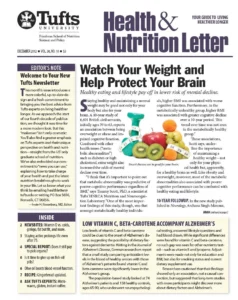
Navigating the Modern Landscape of Evidence-Based Nutrition: Why Credible Health Journalism Matters More Than Ever

In an era defined by an endless stream of digital information, the average consumer is routinely bombarded with contradictory dietary advice. From viral social media trends promoting extreme caloric restriction to sensationalized headlines claiming a single superfood can reverse chronic illness, the modern wellness landscape has become a minefield of misinformation. Amidst this cacophony of unverified claims, evidence-based publications like the Tufts Health & Nutrition Letter have served as a vital anchor of scientific integrity, translating complex peer-reviewed research into actionable, reliable guidance for the public. Understanding how to critically evaluate nutritional science and recognizing the institutional frameworks that support public health education are more important today than at any other point in modern history.
The Evolution of Nutritional Science Communication
To fully appreciate the role of trusted health newsletters, one must examine the historical context of nutritional science communication. For decades, dietary guidance was largely shaped by government agencies and academic institutions through broad public health campaigns, such as the classic food pyramid. However, as the prevalence of diet-related chronic conditions—including type 2 diabetes, cardiovascular disease, and obesity—continued to climb globally, the demand for nuanced, regularly updated scientific reporting surged.
In response, academic medical centers established specialized communication channels designed to bridge the gap between laboratory findings and everyday dietary choices. Tufts University, renowned for its Friedman School of Nutrition Science and Policy, stepped to the forefront of this movement. By launching dedicated educational initiatives, the institution aimed to distill decades of epidemiological studies, randomized controlled trials, and biochemical research into transparent, accessible insights. This commitment to objective journalism has helped generations of readers separate fleeting dietary fads from enduring physiological truths.
The Anatomy of a Credible Health Publication
In modern health journalism, maintaining editorial independence and scientific accuracy requires a rigorous review process. Unlike commercial lifestyle blogs that rely on sponsored content or sensationalized hooks to drive traffic, academic-backed publications adhere to strict journalistic and scientific standards. Every article, recommendation, and dietary guideline is typically vetted by a board of registered dietitians, medical doctors, and nutritional epidemiologists.
Data privacy, transparency, and subscription models also play a crucial role in sustaining this high-caliber journalism. High-quality health publications often utilize subscription models to insulate their reporting from external commercial biases, ensuring that their editorial stances remain impartial and dedicated solely to public welfare. Readers who invest in verified health literature are not merely purchasing content; they are supporting an ecosystem of peer review, fact-checking, and unbiased scientific inquiry.
The Economic and Logistical Realities of Health Publishing
The financial architecture of specialized health newsletters has undergone significant transformation over the past twenty years. As print subscriptions steadily gave way to digital platforms, publishers faced the dual challenge of protecting intellectual property while expanding online accessibility. Today, modern paywalls and secure account management systems are standard industry practices designed to support continuous digital archiving, back-issue accessibility, and interactive online features.
Publishers often deploy tiered pricing structures and promotional introductory rates to make expert health guidance accessible to a broader demographic. For instance, annual digital and print subscriptions can frequently be acquired at a fraction of standard costs, enabling households across various income brackets to access reliable medical insights. This sustainable financial model ensures that independent research centers can continue paying expert contributors, funding comprehensive investigative reports, and maintaining robust online libraries without compromising their editorial independence.
Chronology of Dietary Guidance: From Fat-Phobia to Whole-Food Focus
A retrospective look at nutritional guidelines over the past half-century reveals a dynamic, constantly evolving scientific discipline.
During the 1970s and 1980s, public health messaging was heavily dominated by the low-fat paradigm. Dietary cholesterol and total fat intake were frequently vilified as the primary drivers of heart disease, leading to a massive proliferation of highly processed, low-fat, high-sugar food products.
By the late 1990s and early 2000s, accumulating epidemiological data and landmark clinical trials—such as the PREDIMED study on the Mediterranean diet—began to challenge these foundational assumptions. Scientists realized that the type of fat consumed mattered far more than the total quantity. Monounsaturated and polyunsaturated fats were recognized for their cardiovascular protective properties, while trans fats were systematically phased out of the global food supply.
In the 2010s and 2020s, the focus shifted once again, this time toward the gut microbiome, ultra-processed foods, and metabolic flexibility. Modern nutritional science emphasizes individualized dietary patterns over rigid macro-nutrient restrictions, highlighting the importance of fiber diversity, plant-forward eating, and the minimization of industrial food additives. Publications that track these longitudinal shifts provide invaluable historical context, helping readers understand why dietary advice occasionally changes as new data emerges.
Statements and Expert Perspectives on Public Health Literacy
Public health experts and academic leaders frequently emphasize that scientific literacy is the most effective defense against nutritional misinformation. Dr. Dariush Mozaffarian, a cardiologist and professor at the Friedman School of Nutrition Science and Policy at Tufts University, has frequently highlighted the profound impact of diet on chronic disease. In various public addresses and policy papers, he has noted that poor dietary quality is now the leading cause of poor health and premature mortality in the United States, surpassing tobacco use and physical inactivity.
Furthermore, public health advocates stress that navigating the modern food environment requires institutional support rather than purely individual willpower. When consumers are equipped with clear, evidence-based resources, they are better positioned to advocate for policy changes, such as improved food labeling standards, restrictions on marketing ultra-processed foods to children, and increased access to affordable fresh produce in underserved communities.
Broader Impact and Implications for the Future
The implications of reliable nutritional journalism extend far beyond individual meal planning; they touch upon national healthcare expenditure, workforce productivity, and long-term societal well-being. Chronic diseases associated with poor nutrition cost the global economy hundreds of billions of dollars annually in direct medical expenses and lost work hours. By empowering readers with verified, actionable science, educational platforms help mitigate the incidence of preventable metabolic conditions.
As emerging technologies—including artificial intelligence, nutrigenomics, and personalized nutrition algorithms—begin to reshape the future of dietary science, the need for trustworthy human curation will only intensify. Algorithms can analyze genetic markers and continuous glucose monitor data, but translating those metrics into sustainable, psychologically healthy lifestyle choices requires the empathy, contextual depth, and rigorous ethics of professional health journalism.
Ultimately, maintaining an informed public relies on a collaborative relationship between researchers, journalists, and readers. By supporting evidence-based institutions and engaging critically with health literature, consumers can cut through the noise of modern wellness culture and cultivate lifelong health resilience.