
New Federal Medicaid Guidance Deepens Anxiety for Individuals With Disabilities Over New Work Requirements

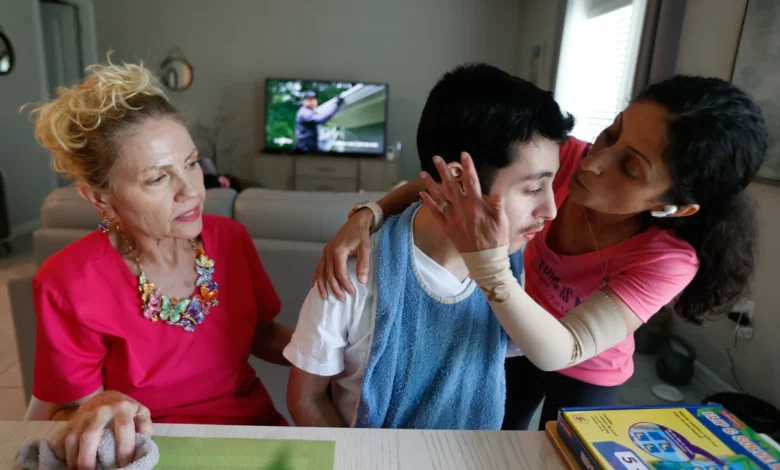
The landscape of healthcare access in the United States is undergoing a profound transformation following the release of a comprehensive 33-page federal document detailing how states must apply stricter Medicaid eligibility rules. Issued by the Centers for Medicare and Medicaid Services (CMS), the new guidance focuses heavily on the execution of exemptions tied to "medical frailty." However, rather than offering reassurance, the directives have intensified alarm among disability advocates, state policymakers, and family caregivers who warn that vulnerable populations could soon find themselves pushed off vital health coverage programs.
The newly outlined policies stem from sweeping legislative changes enacted under the One Big Beautiful Bill Act, a controversial law passed in 2025 that introduced nearly $1 trillion in cumulative cuts to the Medicaid program. Among its most disruptive provisions is a mandate requiring most states to implement strict "community engagement" rules for non-elderly, non-disabled adult beneficiaries by the start of next year. Under these guidelines, affected individuals must document a minimum of 80 hours per month participating in qualifying activities—such as employment, volunteer work, or educational programs—to maintain their health coverage.
Legislators ostensibly designed the law to include safety valves for vulnerable populations, explicitly stating that individuals deemed "medically frail" or those with "special medical needs"—including people living with physical, intellectual, or developmental disabilities—should be shielded from the work mandates. Furthermore, the statute protects parents, guardians, caretaker relatives, and family caregivers who provide continuous support to individuals with disabilities. Yet, the friction between congressional intent and administrative execution has created a regulatory battleground.
A Narrowing Definition and Growing Regulatory Friction
The current controversy traces its roots back to June, when CMS released an initial set of regulations that shocked many stakeholder groups. Rather than embracing a broad, clinical interpretation of medical frailty, the administration established stringent criteria for exemptions. Under the agency’s framework, individuals with physical, intellectual, or developmental disabilities will only qualify for a medical frailty exemption if their condition "significantly impairs" their ability to perform at least one activity of daily living (ADL).
These foundational ADLs include essential life functions such as bathing, dressing, walking, toileting, eating, or transferring independently in and out of bed or a chair. The guidance released this month doubles down on this restrictive standard, reinforcing the explicit prerequisite that a medical condition must directly impede an individual’s capacity to comply with the 80-hour monthly community engagement threshold.
This narrow interpretation has drawn sharp rebukes from legal and advocacy organizations, who argue that federal regulators are rewriting statutory definitions through administrative fiat. Critics point out that Congress originally intended to protect anyone with serious medical conditions or chronic disabilities, regardless of whether those conditions completely prevent compliance with complex bureaucratic verification procedures.
"This updated guidance from CMS does attempt to provide more clarity, but doesn’t undo the overreach of the initial proposed final rule that is causing confusion for states, families and people with disabilities," said Nicole Jorwic, chief program officer at Caring Across Generations. "Congress wrote a broad, clinically grounded definition of medical frailty into law specifically to protect people with serious conditions and disabilities. What we’re seeing now is the administration narrowing that definition through sub-regulatory guidance, without the transparency or accountability of formal rulemaking."
Operational Guidelines and State-Level Implementation Challenges
To assist state agencies in managing the impending transition, the CMS guidance outlines several potential operational pathways for verifying medical frailty. Federal officials recommend that states first attempt to automate the verification process by cross-referencing existing administrative data, specifically reviewing claims records from the preceding 12 months.
If automated data matching proves inconclusive, states are permitted to grant a temporary, one-off exemption based on a beneficiary’s self-declaration. Following this initial grace period, however, states must institute recurring recertification protocols, verifying a recipient’s medical frailty status every 12 months "using reliable information or documentation."
To streamline this process, CMS has proposed an optional tiered evaluation framework. Under this model, state Medicaid agencies would initially screen beneficiaries against a definitive list of pre-approved conditions that automatically qualify for an exemption. For cases that remain ambiguous, states could review a secondary list of conditions that "may indicate an individual is medically frail," provided additional contextual information is supplied. Only when data remains insufficient across these tiers would a full manual medical review be triggered. Alternatively, states are given latitude to develop their own data-driven verification methodologies.
While policy analysts acknowledge the utility of leveraging existing state datasets, experts warn that administrative shortcuts could easily misclassify individuals with lifelong, stable conditions.
Kim Musheno, senior director of Medicaid policy at The Arc of the United States, noted that while utilizing past claims data is a logical starting point, it fundamentally misunderstands the nature of many developmental disabilities. "A claims record doesn’t always show how a disability affects someone’s daily life. That’s especially concerning for people with intellectual and developmental disabilities whose disabilities may be lifelong but aren’t reflected in recent medical claims," Musheno explained. "If the state’s data aren’t enough, the burden can shift back to the person to track down medical records or provider documentation."
Furthermore, Musheno expressed deep concern regarding the optional nature of the federal tiered framework. Because CMS has chosen not to mandate a uniform screening tool, individual states maintain vast discretion to establish their own qualifying lists and review procedures. This decentralization threatens to create a fragmented system where a beneficiary’s protection depends entirely on geography. "Two people with the same disability could face very different processes and potentially different outcomes, simply because they live in different states," she warned.
Legal Pushback and Broader Systemic Implications
The friction surrounding the new Medicaid rules has quickly escalated from policy debates to courtroom battles. Frustrated by what they view as unlawful administrative overreach, a coalition consisting of officials from 25 states and the District of Columbia filed a major lawsuit against the administration earlier this year, seeking to block the implementation of the CMS rules.
As that litigation progresses, the legal fight has attracted significant institutional support. Earlier this month, an influential coalition of more than 70 advocacy organizations filed an amicus brief in the case. The brief was spearheaded by prominent legal and civil rights groups, including the National Health Law Program, the American Association of People with Disabilities, the Autistic Self Advocacy Network, and Easterseals.
"Congress excluded medically frail people from the work requirements," said Jane Perkins, litigation director at the National Health Law Program. "They should not have to repeatedly prove that they are unable to meet the work requirements."
Beyond the immediate threat to individual health coverage, industry leaders emphasize that the restrictions will have a destabilizing ripple effect across the entire healthcare ecosystem. Barbara Merrill, CEO of the American Network of Community Options and Resources (ANCOR), cautioned that narrowing the medical frailty exemption directly imperils the infrastructure of community-based care.
"The new Medicaid work requirements will interrupt access to community-based services for people with disabilities and threaten the fragile network of community providers," Merrill stated. "The increased Medicaid coverage losses that will result from narrowing the medical frailty exemption will ultimately reduce access to services for people who truly need them and harm community providers who will continue to deliver support without receiving payment for their services."
As the deadline for state implementation approaches, federal officials have largely remained silent regarding the mounting criticisms. CMS declined to respond to repeated requests for comment on the guidance. With millions of beneficiaries bracing for the upcoming changes, states are left rushing to interpret complex federal directives while disability advocates prepare for prolonged legal and legislative skirmishes to protect the rights of America’s most vulnerable populations.
Related posts: