Navigating the 2026 Medicare Part D Overhaul: What Seniors and Caregivers Need to Know

For millions of older adults and the family members who manage their care, the cost of prescription medications has long stood as one of the most unpredictable and burdensome financial hurdles. Historically, budgeting for chronic illnesses or complex medical regimens meant navigating an intricate maze of shifting coverage phases, unpredictable pharmacy counter bills, and sudden liability spikes. However, the official implementation of the final phases of the landmark Inflation Reduction Act has officially arrived, bringing structural changes to Medicare Part D for the 2026 plan year that radically transform how prescription drug costs are calculated, billed, and capped.
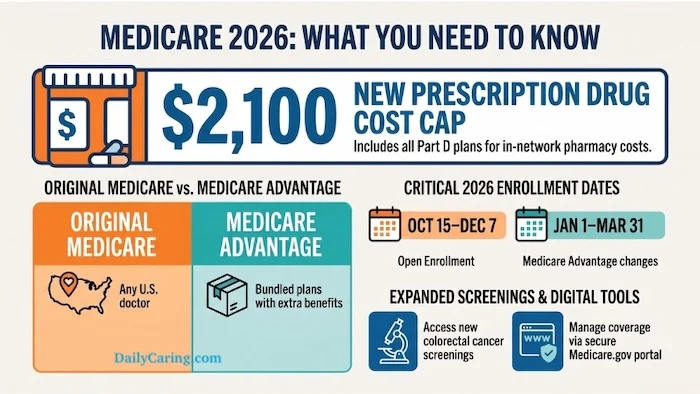
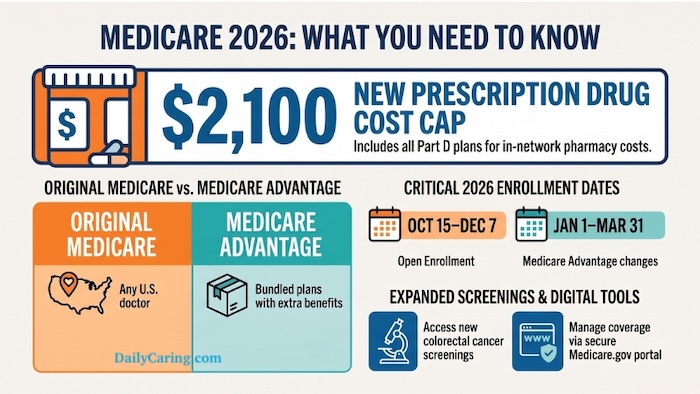
At the center of these sweeping reforms is a hard, legally mandated out-of-pocket spending cap of $2,100 annually for all covered prescription drugs under Medicare Part D and Medicare Advantage plans. Alongside this strict cap, the maximum standard deductible for the 2026 plan year has been established at $615. For caregivers and financial planners, these updates inject a degree of forced predictability into an otherwise volatile market, though they also introduce new administrative challenges and strategic considerations regarding insurance formularies.
The Demise of the Coverage Gap: Understanding the Chronology of Reform
To fully appreciate the scope of the 2026 policy shift, it is necessary to examine the historical evolution of Medicare Part D. Established under the Medicare Modernization Act of 2003, Part D provided vital outpatient prescription drug coverage to millions of beneficiaries. Yet, from its inception, the program included a structural anomaly widely known as the "donut hole," or the coverage gap.

Under this legacy system, once an enrollee’s total drug spending crossed a specific initial threshold, they fell into a gap where they suddenly became responsible for a massive percentage of their medication costs out of pocket, a liability that persisted until their total spending reached catastrophic coverage levels. For seniors living on fixed incomes, hitting the donut hole often forced heartbreaking choices between purchasing essential medications, buying groceries, or paying utility bills.
Over the past decade, incremental legislative efforts gradually chipped away at the coverage gap, shifting a larger burden of costs onto pharmaceutical manufacturers and insurance plans. The enactment of the Inflation Reduction Act in 2022 accelerated this timeline, setting the stage for the definitive elimination of the donut hole. As of the 2026 plan year, the coverage gap is permanently obsolete.
Under the current rules, enrollees move in a streamlined trajectory. Once an individual spends exactly $2,100 out of pocket on covered medications within a single calendar year, they immediately enter catastrophic coverage. In this final phase, the enrollee’s coinsurance or copayments drop instantly to zero. The Part D plan or Medicare Advantage provider assumes 100% of the financial responsibility for all covered medications for the remainder of the calendar year, with zero exceptions and no lingering 5% coinsurance requirements.
The Hidden Risk: Formulary Manipulation and Insurance Countermeasures
While the introduction of the $2,100 out-of-pocket ceiling represents a major victory for consumer advocacy and eldercare financial planning, healthcare policy experts and consumer watchdogs caution that insurance providers are actively adapting their business models to absorb these mandated caps. Because insurers are now legally barred from shifting catastrophic costs back onto high-utilization patients, many companies are employing aggressive formulary management strategies to protect their profit margins.

In practical terms, this means that an insurance carrier may alter its list of covered drugs—known as a formulary—by dropping specific brand-name medications entirely, restricting access through stringent prior authorization requirements, or shifting trusted drugs into higher pricing tiers. A medication that was fully covered and affordable in 2025 might face restrictive hurdles or total exclusion in 2026.
Healthcare advocates emphasize that policyholders and their caregivers must meticulously verify during the Annual Enrollment Period whether their specific medications remain on their chosen plan’s approved formulary. This verification process carries severe financial implications: if a patient purchases a drug that is not explicitly covered by their plan’s formulary, the money spent on that prescription does not count toward the $2,100 out-of-pocket maximum, exposing the household to unmitigated medical expenses.
Smoothing Cash Flow: The Mechanics of the Medicare Prescription Payment Plan
One of the most immediate practical challenges recognized by policymakers was the potential for enrollees to face substantial out-of-pocket expenses early in the calendar year. Because the standard deductible is set at $615 and initial prescription costs accumulate rapidly in January and February, seniors could theoretically face debilitating lump-sum bills at the pharmacy counter before the $2,100 cap is reached.
To mitigate this barrier, the 2026 regulations mandate the continued nationwide rollout of the Medicare Prescription Payment Plan. This initiative is designed to smooth out-of-pocket drug costs evenly across the entire calendar year rather than demanding large upfront payments at the point of sale.

The program operates on an opt-in basis. When a caregiver or enrollee elects to participate, they inform their pharmacy and insurance provider. Rather than paying the pharmacy directly for deductible or copay obligations, the pharmacy bills the insurance plan for the medication. The insurance plan then absorbs the cost and issues a structured monthly bill directly to the enrollee, integrating the pharmaceutical expenses into predictable, manageable monthly payments.
Financial planners note that while the payment plan does not reduce the total annual cost of medications, it fundamentally transforms cash flow management for households operating on strict monthly budgets. However, because enrollment is strictly voluntary, beneficiaries must proactively sign up through their Part D plan provider rather than relying on automatic enrollment.
Premium Stabilization and Market Reactions
Beyond out-of-pocket spending caps and payment smoothing, the regulatory framework governing 2026 introduces measures aimed at curbing runaway monthly premium increases. To prevent insurance companies from artificially inflating base premiums to compensate for the newly mandated out-of-pocket limits, federal guidelines cap base premium increases at a strict threshold of 6% per year.
Nevertheless, market analysts point out that this limitation applies exclusively to the base calculation; individual plan premiums will continue to fluctuate based on regional competition, specific formulary richness, and provider network structures. Consequently, comparative shopping during open enrollment remains an indispensable task for beneficiaries seeking the most cost-effective coverage.
Industry representatives and insurance trade associations have largely responded to the reforms by emphasizing the importance of consumer education. While insurers acknowledge the administrative and financial adjustments required by the legislation, they maintain that the primary objective remains ensuring continuity of care for vulnerable populations while complying with federal mandates.
Broader Implications for Eldercare and Financial Planning
The structural shift in Medicare Part D carries wide-ranging implications for the broader landscape of eldercare financial planning. For years, financial advisors and estate planners treated prescription drug costs as a volatile, high-variance variable that required conservative financial buffering. With the hard cap of $2,100 now legally binding, families can model healthcare expenditures with unprecedented precision.
This predictability alters how families approach long-term care budgeting, supplemental insurance selections, and asset preservation. Yet, financial advisors reiterate that this newfound stability is conditional upon active vigilance. Navigating the modern Medicare environment requires a rigorous annual audit of plan formularies, a clear understanding of opt-in programs like the Medicare Prescription Payment Plan, and an acute awareness of shifting pharmaceutical tiers.
As the healthcare sector continues to digest these regulatory adjustments, the overarching consensus among patient advocates is clear: while the 2026 Part D reforms successfully dismantle the historical barriers of the coverage gap and establish essential financial safety nets, the onus remains on the consumer to actively manage, verify, and select the coverage that best aligns with their medical and financial realities.