Navigating the Future of Rural Health: An Analysis of the 50 Billion Dollar Transformation Program and Federal Healthcare Spending Cuts

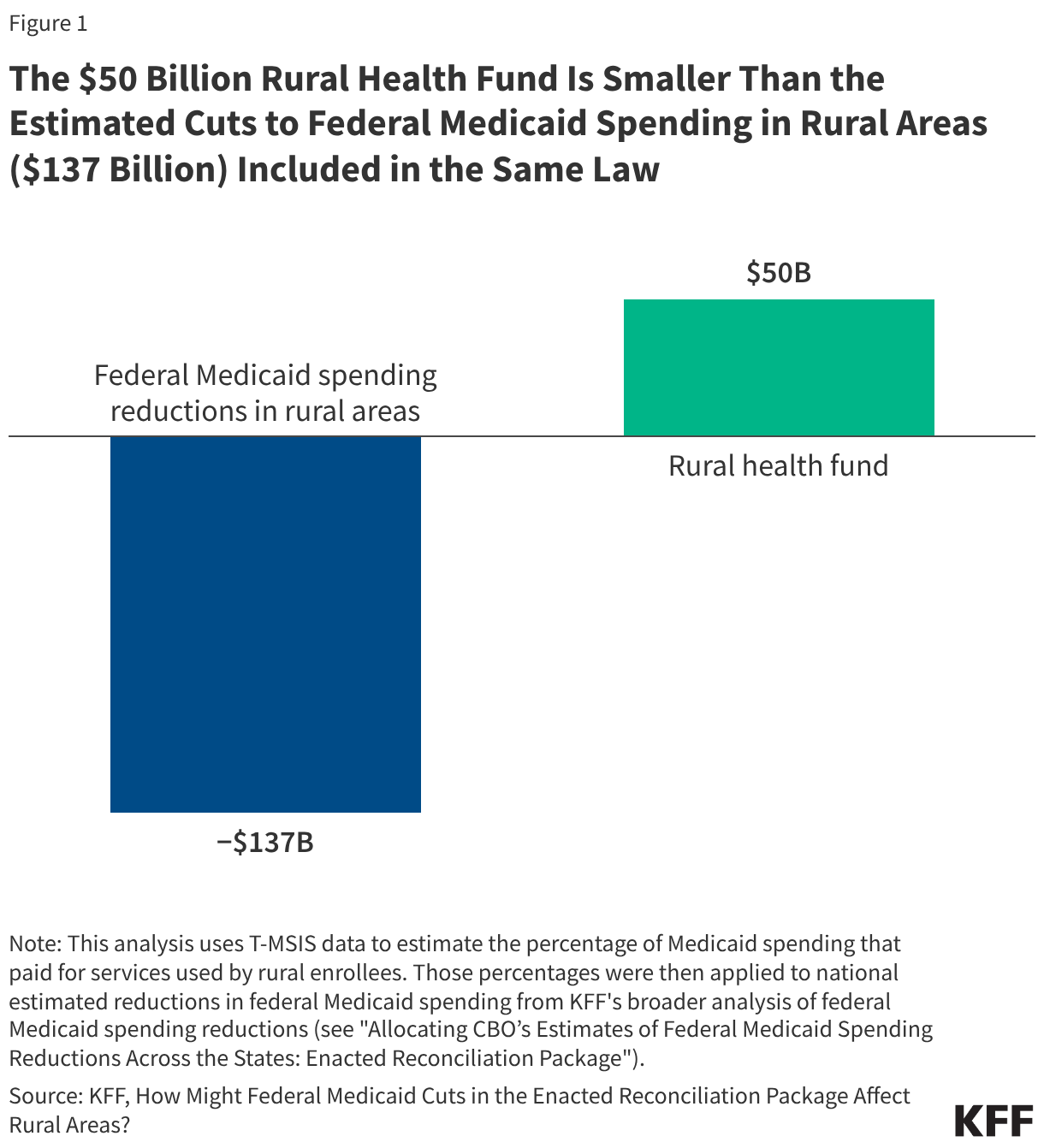
Following the passage and signing of a sweeping budget reconciliation package by President Trump on July 4, 2025—legislation initially dubbed the "One Big Beautiful Bill"—the landscape of American healthcare financing underwent a seismic shift. While the law introduced significant tax cuts and broad structural changes, its most heavily scrutinized components involved deep reductions in federal health care spending. According to analyses conducted by KFF shortly after its enactment, the legislation is projected to reduce federal Medicaid spending by $911 billion over a ten-year horizon. Of that total, approximately $137 billion in cuts are estimated to directly impact rural areas across the United States. To mitigate the profound economic shock these reductions pose to geographically isolated regions, the legislation established the Rural Health Transformation Program. Commonly referred to as the rural health fund, this initiative injects $50 billion in state-level grants into the healthcare system from fiscal years 2026 through 2030. Administered by the Centers for Medicare & Medicaid Services (CMS) through its newly minted Office of Rural Health Transformation, the fund represents a high-stakes effort to reshape how rural care is delivered, even as hospitals and healthcare providers grapple with systemic funding reductions.
The structural genesis of the rural health fund traces back to intense political compromises forged in the U.S. Senate during late June 2025. As lawmakers debated the merits and consequences of the broader reconciliation bill, Senate Republicans facing pressure from rural constituents floated specialized funding packages to insulate community hospitals from impending Medicaid contractions. Although the resulting fund was born out of concern for rural hospital viability, its statutory framework is notably broad. Rather than functioning exclusively as a hospital bailout mechanism, the program is designed to support comprehensive system transformation. CMS was granted substantial regulatory leeway to dictate grant distributions, establish terms and conditions, and expand permitted uses of the capital. Funding is channeled to states through cooperative agreements, a contractual mechanism that mandates active CMS involvement in project oversight after awards are formally granted. All 50 states swiftly applied and secured approval during a one-time application window, making them eligible for five consecutive years of funding, provided they maintain compliance with federal guidelines and demonstrate satisfactory program progress.
The timeline governing the rollout of the Rural Health Transformation Program has been exceptionally compressed, placing administrative strain on state agencies. CMS published its initial Notice of Funding Opportunity in September 2025, giving states less than two months to craft comprehensive applications that would dictate their funding scope for the duration of the program. First-year awards were announced in December 2025, after which states faced a tight deadline of less than a year to finalize bilateral agreements with CMS, establish sub-grantee application processes, obligate funding, and submit foundational progress reports. Because state administrative capacities vary wildly, the speed at which funds have been distributed locally has been uneven. Furthermore, federal regulations empower CMS to withhold, reduce, eliminate, or claw back funding if a state falls out of compliance or fails to hit strategic milestones. Crucially, the legislation explicitly bars administrative or judicial review of these CMS enforcement decisions, giving the federal agency immense leverage over state implementation strategies.
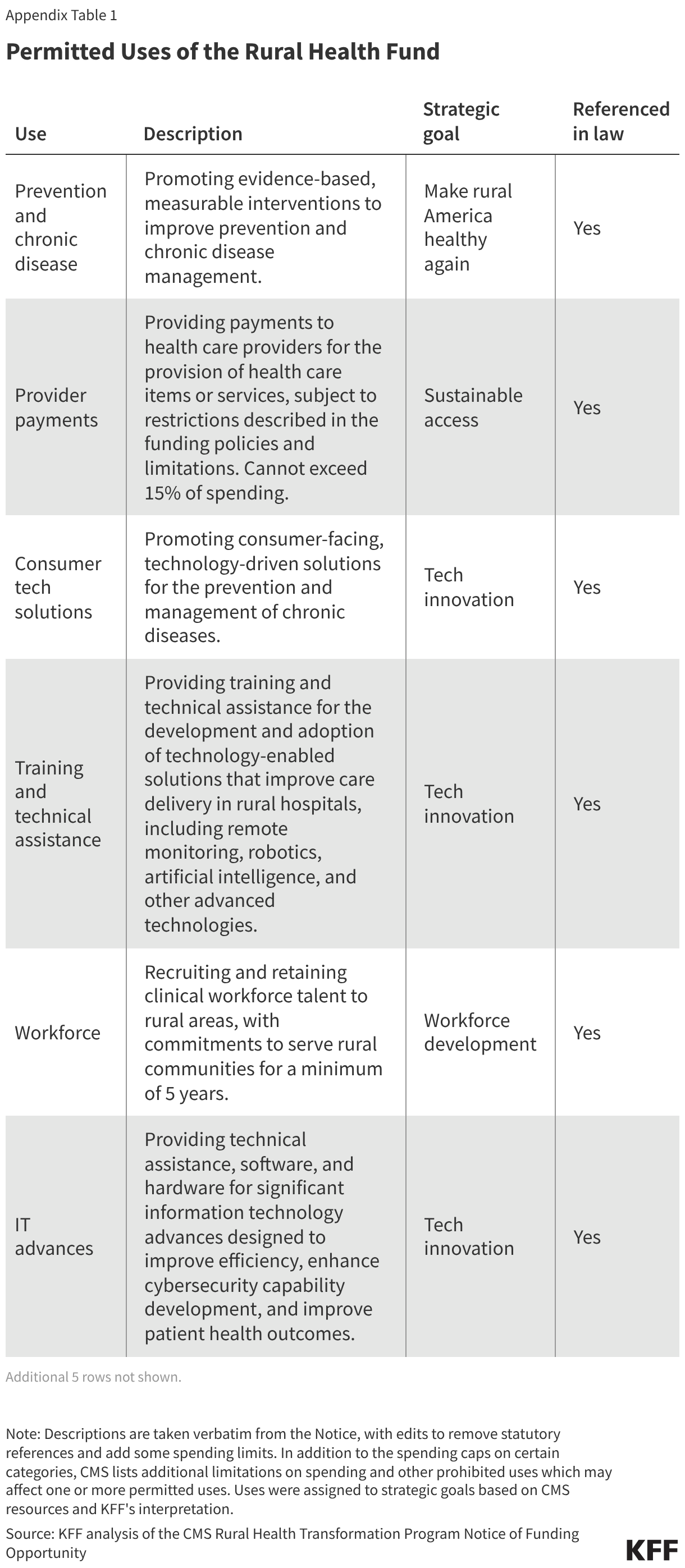
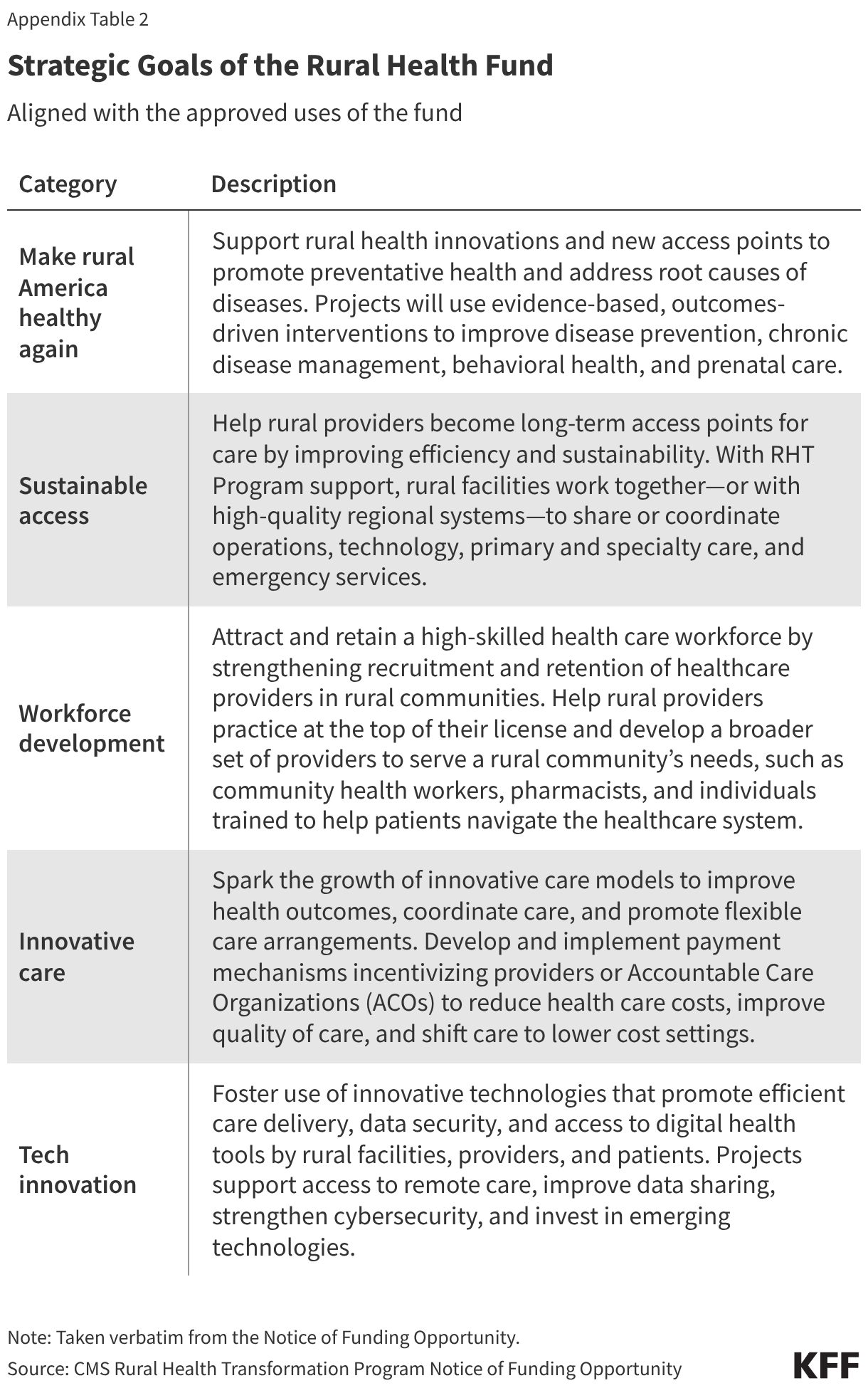
Permitted uses under the rural health fund are vast, spanning eleven distinct statutory categories intended to foster long-term structural improvements rather than temporary fiscal band-aids. CMS guidelines dictate that states must invest in initiatives yielding sustainable outcomes, such as promoting chronic disease management and preventive care, facilitating administrative and clinical collaboration among isolated facilities, recruiting and retaining rural medical personnel, and advancing healthcare technology like telehealth and artificial intelligence diagnostics. States are also permitted to invest limited capital into existing physical infrastructure, evaluate service line sustainability, and lay the groundwork for value-based care and alternative payment models. While hospitals can benefit from these targeted investments—particularly through infrastructure upgrades, shared services, and payment model transitions—strict statutory guardrails prohibit using the funds for direct patient care cost-sharing, covering general operational deficits, or supplanting existing non-federal funding streams.
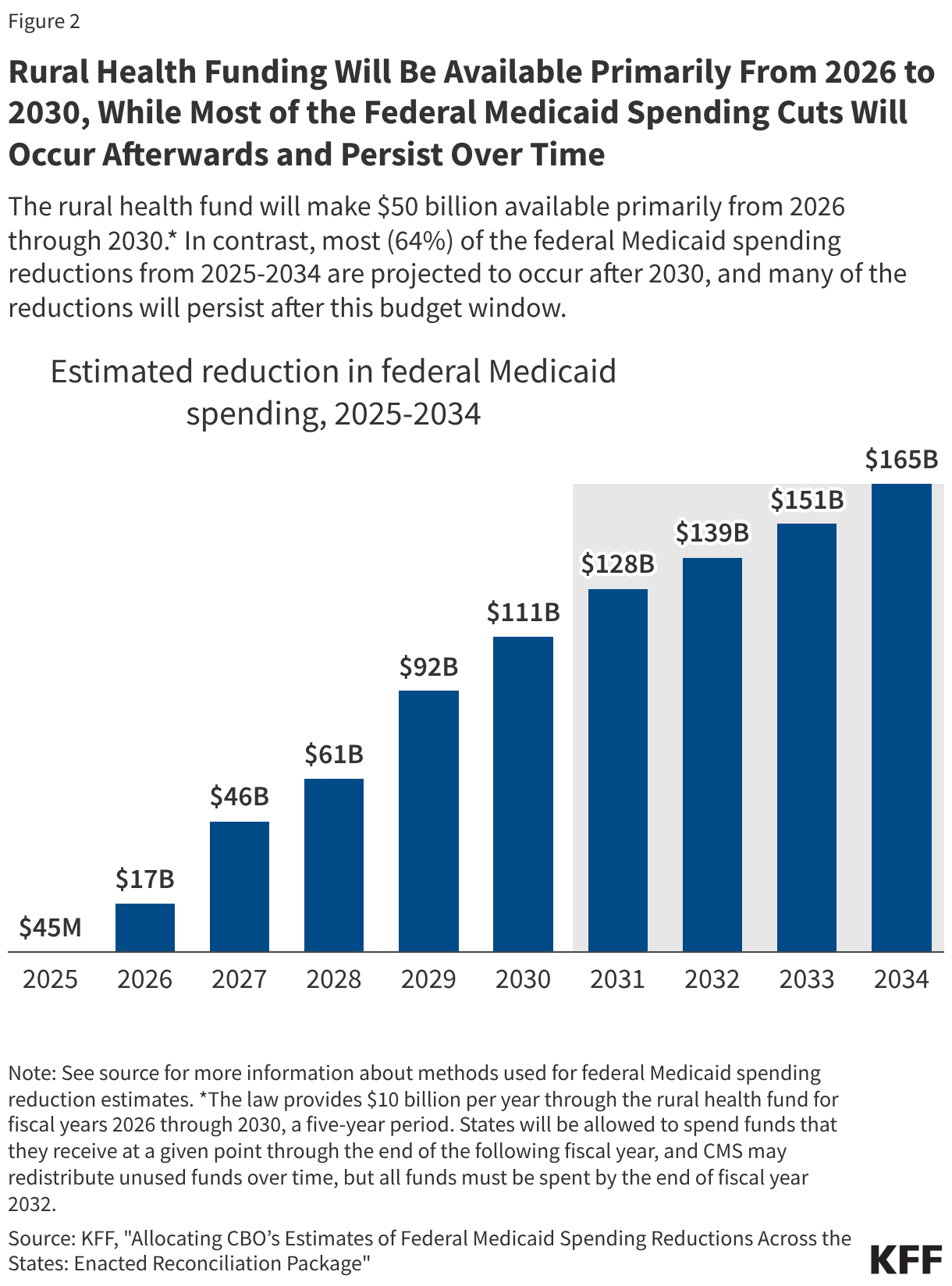
Despite its ambitious goals, a stark fiscal mismatch exists between the scale of the rural health fund and the magnitude of the concurrent Medicaid reductions. The $50 billion allocated to the rural health fund over five years offsets only about 37 percent of the estimated $137 billion in federal Medicaid cuts targeting rural regions over a decade, and roughly 5 percent of the total $911 billion in nationwide Medicaid reductions. This calculation excludes additional revenue pressures stemming from the expiration of enhanced Affordable Care Act (ACA) marketplace subsidies and new regulatory enforcement that is expected to swell the ranks of the uninsured. Furthermore, the timing of the funding exacerbates the disparity. The rural health fund is heavily front-loaded, distributing $10 billion annually between fiscal years 2026 and 2030, with all capital required to be fully spent by the close of fiscal year 2032. Conversely, nearly two-thirds of the ten-year federal Medicaid spending cuts are backloaded, materializing after 2030 and persisting indefinitely. This dynamic creates a temporary cushion that precedes a permanent fiscal cliff, leaving rural communities vulnerable once the federal grants dry up unless supplemental legislation is enacted.
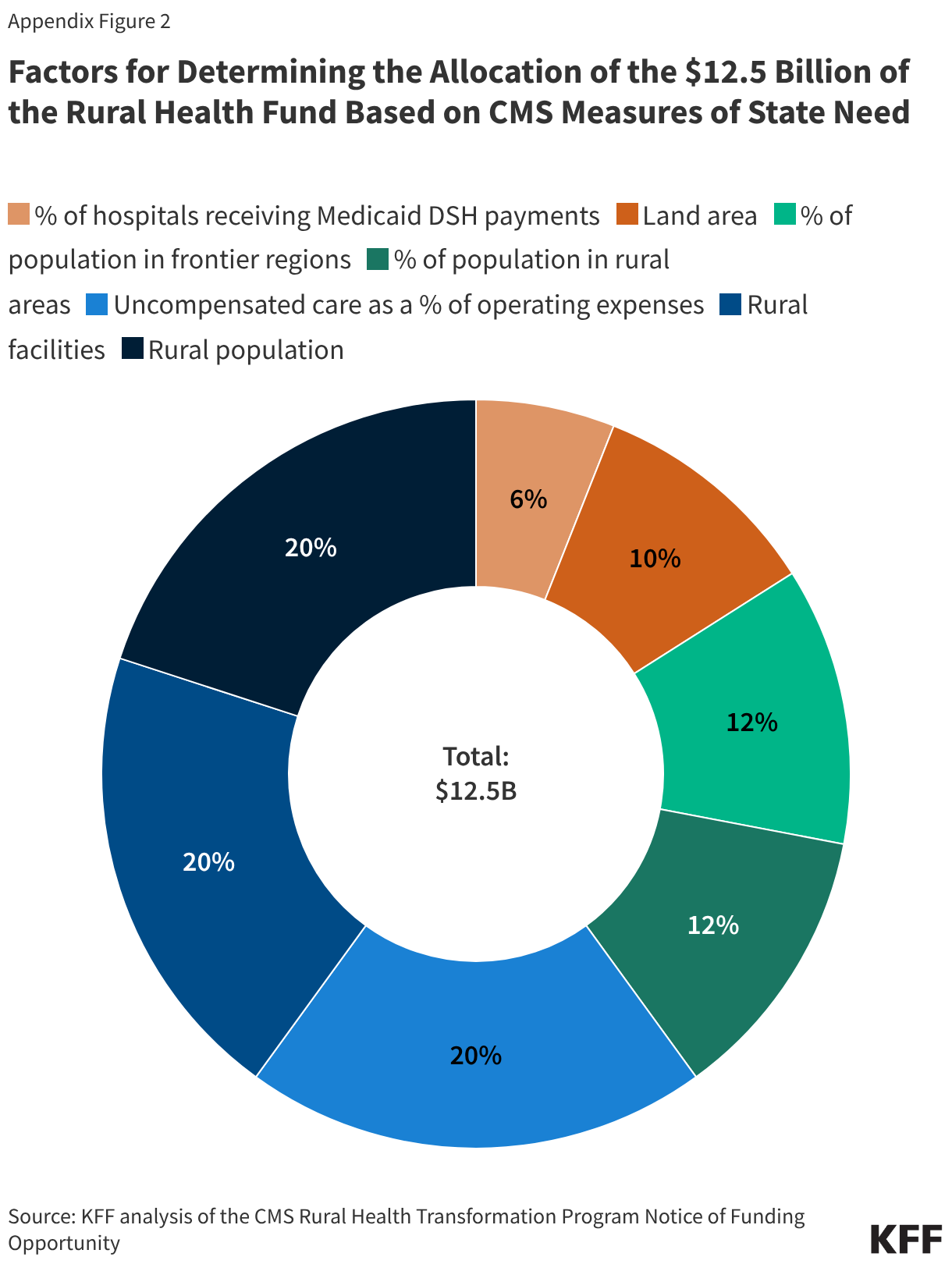
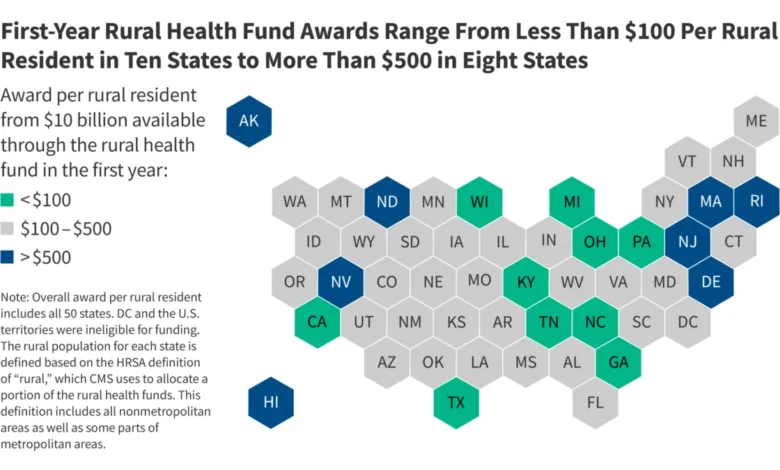
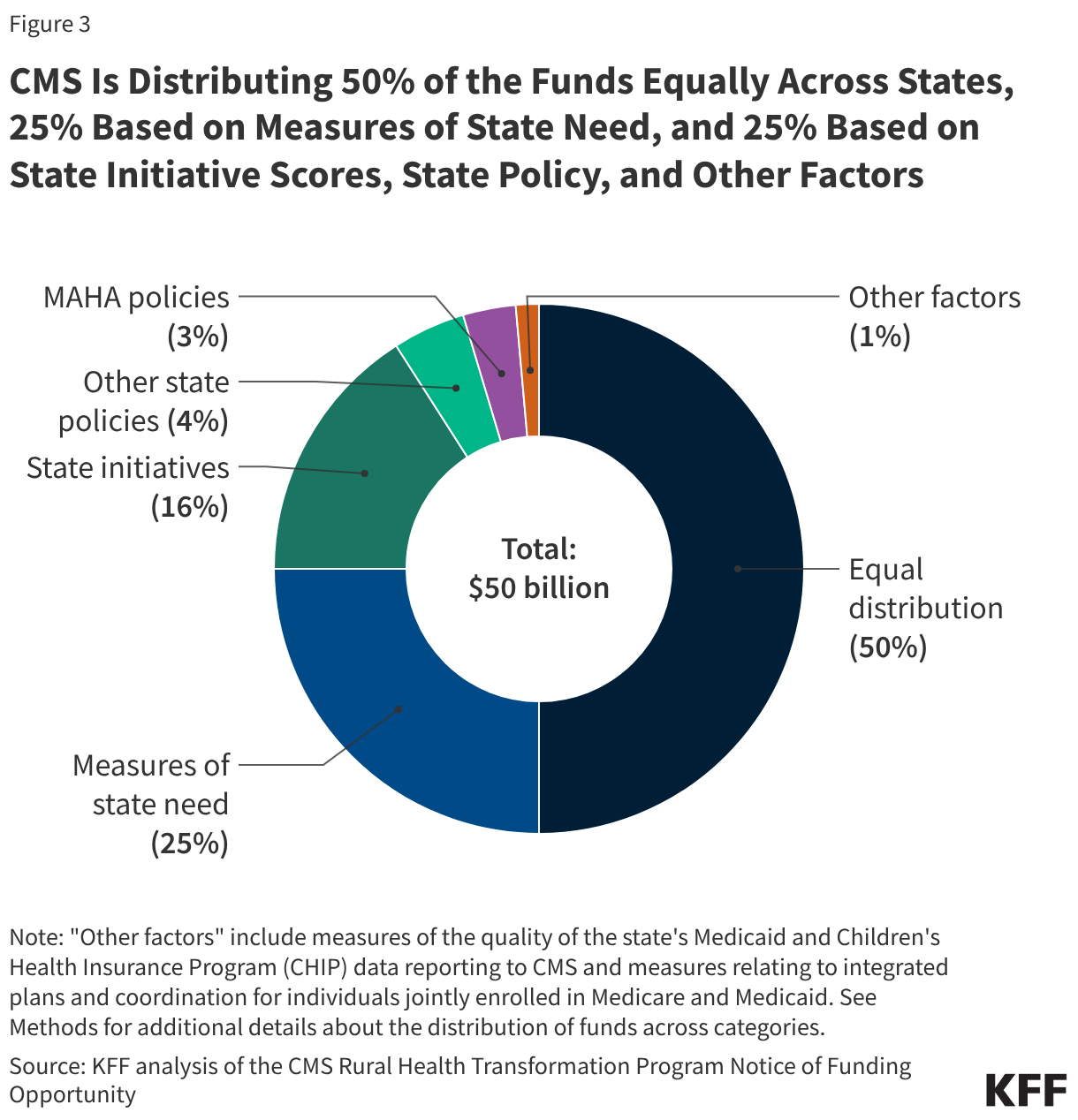
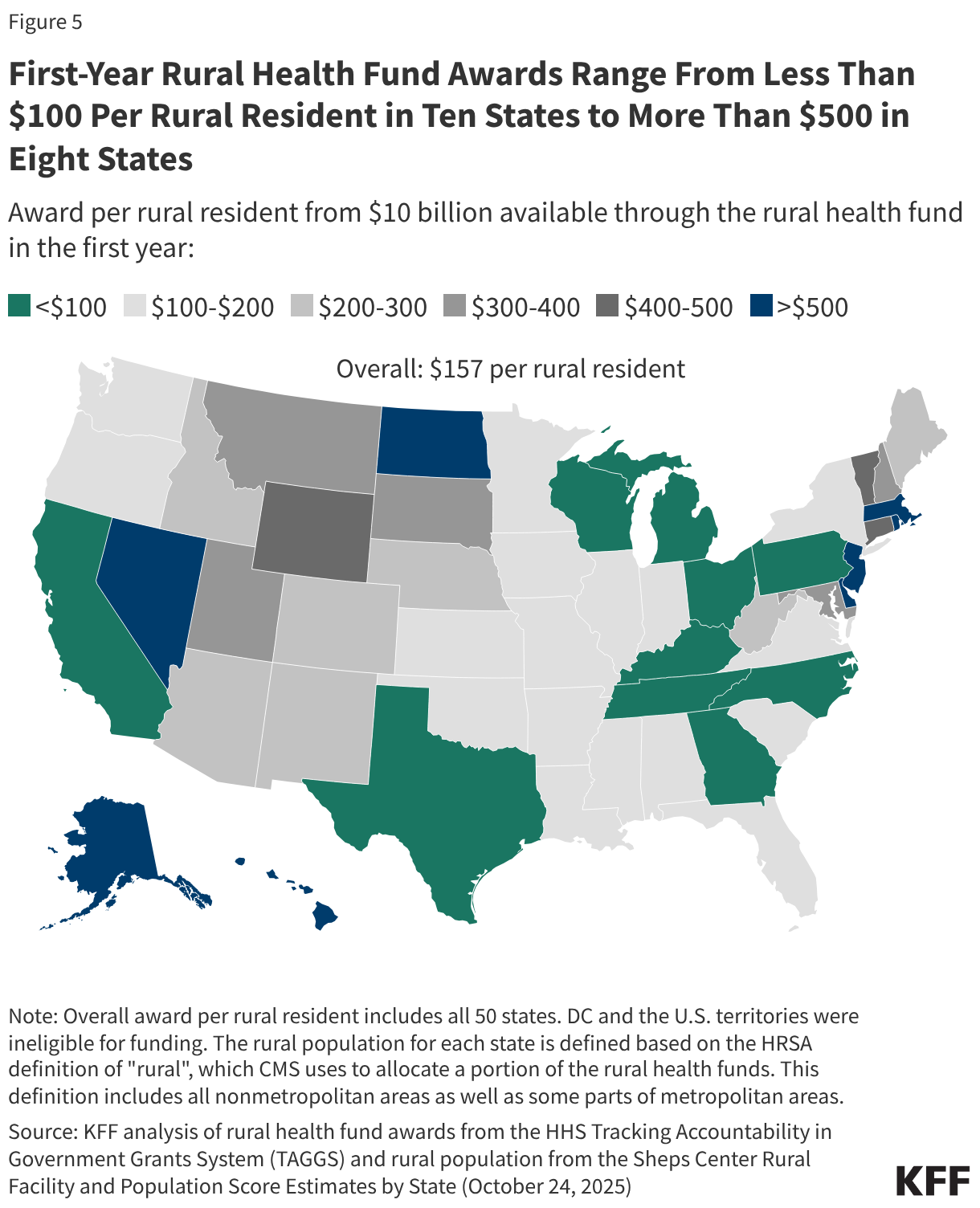
The distribution formula employed by CMS divides the $50 billion fund into two distinct tranches: baseline funding and workload funding. Exactly half of the program—$25 billion—is distributed equally among all 50 approved states, guaranteeing each state $100 million annually regardless of its geographic size or rural population density. The remaining $25 billion is allocated via workload funding based on a complex matrix of 23 weighted factors, encompassing measures of state need, health and lifestyle statistics, dually eligible Medicare and Medicaid populations, remote care infrastructure, and state policy commitments. This structural weighting creates significant divergence in per capita distributions. In the first year of the program, total state awards ranged from a modest $147 million in New Jersey to $281 million in Texas. However, when evaluated on a per rural resident basis, the divergence is extreme. States with massive rural populations, such as Texas, received the lowest funding per rural resident at just $66, whereas smaller states or outliers like Rhode Island commanded upwards of $6,000 per rural resident due to the equal baseline distribution model. Similarly, the nation’s largest states by land area—including Alaska, New Mexico, Montana, and Texas—captured elevated shares of need-based allocations.
Reactions from key stakeholders and industry groups reflect a mix of cautious optimism and sharp critique. Major hospital advocacy organizations, such as the American Hospital Association (AHA) and the Federation of American Hospitals (FAH), have consistently lobbied CMS to narrow the program’s scope toward direct financial support for rural hospitals. In formal comments submitted to the agency, hospital groups argued that federal regulators should lift strict limitations on capital investments and provider payments to help facilities survive immediate operational distress. Concurrently, a bipartisan coalition of U.S. Senators led by lawmakers like Senator Michael Bennet has pressured CMS to grant states greater implementation flexibility, voicing concern that smaller, resource-constrained rural clinics struggle to compete against large, integrated health systems for sub-grants. Critics have also raised transparency concerns, pointing out that while CMS tracks downstream obligations through quarterly reporting, it does not proactively publish granular public dashboards detailing which specific institutions receive funds, leaving researchers and journalists reliant on cumbersome public records requests.
As the Rural Health Transformation Program progresses past its initial implementation phase, its ultimate legacy will depend heavily on adaptive governance and rigorous oversight. CMS leadership has signaled a willingness to permit creative state-level experimentation while reserving the right to penalize underperforming jurisdictions by reallocating funds. Whether these federal grants can successfully modernize rural healthcare delivery fast enough to outpace the long-term damage inflicted by deep Medicaid cuts remains one of the most critical questions facing the American healthcare system. For policymakers, healthcare executives, and rural residents alike, the coming years will test whether temporary infusions of transformative capital can establish a sustainable foundation for medical care in America’s heartland before the funding expires at the end of the decade.