Navigating the 2026 Medicare Part D Overhaul: What Beneficiaries and Caregivers Must Know

The landscape of senior healthcare finance is undergoing its most profound transformation in decades as the final implementation phases of the historic Inflation Reduction Act take full effect. For millions of older adults and the family members who coordinate their care, managing prescription drug expenses has historically been a volatile and unpredictable budgetary challenge. The sweeping Medicare Part D reforms for 2026 bring a new era of forced financial predictability to the prescription drug market, permanently altering how beneficiaries interact with their health plans, pharmacies, and out-of-pocket costs.
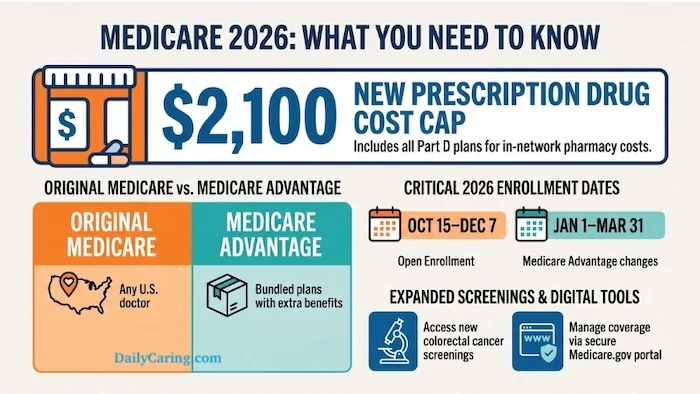
At the core of the 2026 policy shift is a strict, legally mandated annual out-of-pocket cap of $2,100 for covered prescription drugs. Alongside this consumer protection, the maximum standard deductible for the plan year has been fixed at $615. While these structural changes offer unprecedented relief for households burdened by chronic illnesses and expensive maintenance medications, healthcare economists and eldercare advocates warn that navigating the transition requires meticulous planning. Insurance providers, facing newly imposed financial ceilings, are actively reshaping their formularies to offset losses, making annual enrollment reviews more critical than ever.
The Chronology of Reform: From the Donut Hole to the $2,100 Cap
To understand the weight of the 2026 adjustments, one must look back at the persistent structural flaws of the Medicare Part D program since its inception under the Medicare Modernization Act of 2003. For over twenty years, the most notorious and financially punishing feature of the program was the coverage gap, widely referred to as the "donut hole."

Under this legacy system, beneficiaries progressed through distinct spending phases. After meeting an initial deductible, they entered an initial coverage period where they shared costs with their plan. However, once their total drug spending crossed a specific threshold, they fell directly into the donut hole, suddenly becoming responsible for a massive percentage of their medication costs until they reached catastrophic coverage. This sudden financial cliff made budgeting nearly impossible for fixed-income seniors, often forcing difficult choices between purchasing essential medications and paying for basic necessities like housing and food.
Legislative incrementalism gradually chipped away at the gap over the preceding decade, but the passage of the Inflation Reduction Act set a rigid timetable for total elimination. By 2024 and 2025, intermediate caps and structural redesigns paved the way for the definitive milestone: the complete eradication of the donut hole by January 2026. Under the current rules, the coverage gap is entirely a thing of the past. Once an enrollee accumulates exactly $2,100 in out-of-pocket spending on covered drugs within a single calendar year, their Part D or Medicare Advantage plan assumes 100% of the financial burden for the remainder of that year. The traditional catastrophic phase, which previously required a continuing 5% coinsurance payment from the patient, has been reduced to zero.
Breakdown of Key 2026 Medicare Part D Parameters
| Medicare Policy Area | 2026 Program Parameter | Operational Impact |
|---|---|---|
| Annual Out-of-Pocket Cap | $2,100 maximum | Plan pays 100% of covered drug costs for the rest of the year once reached. |
| Standard Deductible | $615 maximum | The baseline amount enrollees must pay before plan cost-sharing begins. |
| Base Premium Growth Cap | 6% annual limit | Restricts insurers from excessively inflating baseline monthly premiums. |
| Prescription Payment Plan | Optional / Smoothing | Allows beneficiaries to spread out-of-pocket costs into manageable monthly installments. |
The Hidden Risk: Formulary Manipulation and Plan Design
While the federal government has successfully capped direct consumer exposure at $2,100, policy analysts note that insurance carriers are reacting to these mandates through aggressive administrative adjustments. Because private insurers are now forced to absorb the costs of high-utilization patients who previously hit the catastrophic threshold, companies are closely evaluating their profit margins.
The primary mechanism for this adjustment is formulary manipulation—the strategic altering of lists detailing which medications a plan approves and at what financial tier. A prescription drug that enjoyed preferred status and low copays in previous years may be shifted to a higher tier, subjected to restrictive prior authorization requirements, or removed entirely from a plan’s 2026 formulary.

Healthcare advisors emphasize that beneficiaries cannot afford to auto-renew their coverage without scrutiny. If an insurance company drops a specific medication from its approved list, any money spent by the patient on that unlisted drug will not count toward the $2,100 out-of-pocket maximum. Consequently, caregivers and seniors must cross-reference their exact medication regimens against prospective plan formularies during the Annual Enrollment Period to prevent unexpected financial exposure.
Smoothing Cash Flow: The Medicare Prescription Payment Plan
Recognizing that meeting annual deductibles and initial copays can create severe liquidity issues in January and February—when the $615 standard deductible and initial drug costs hit all at once—the federal government has mandated the continued rollout of the Medicare Prescription Payment Plan.
This program is an opt-in arrangement designed to smooth out-of-pocket costs evenly across the calendar year. Rather than forcing a beneficiary or caregiver to pay large lump sums at the pharmacy counter, the payment plan coordinates directly with the insurance provider. When a prescription is filled, the pharmacy bills the insurance company as usual, but instead of demanding immediate payment from the consumer at the register, the insurance plan issues a predictable monthly bill to the enrollee.
Participation in this payment plan is entirely voluntary. Beneficiaries who prefer to pay standard copays at the point of sale may continue to do so, while those seeking predictable monthly budgeting can elect to join through their Part D provider or the official Medicare portal.

Premium Stabilization and Market Reactions
To protect consumers from predatory premium hikes designed to bypass the out-of-pocket caps, the legislative framework includes a premium stabilization mechanism. This rule legally restricts base premium increases to a maximum of 6% per year.
However, industry observers note an important nuance: this stabilization cap applies specifically to the base premium calculation, not necessarily to every individual commercial plan available on the open market. Private insurers continue to differentiate their product offerings through supplemental benefits, network restrictions, and localized pricing variations. As a result, monthly premiums will still fluctuate between different carriers and geographical regions, underscoring the necessity of comparative shopping.
Representatives from major health insurance trade associations have argued that while the reforms provide clear benefits to high-acuity patients, they necessitate tighter cost-control measures across the board. Conversely, consumer advocacy groups maintain that the caps represent a long-overdue correction to a healthcare market that historically penalized individuals with chronic, complex medical conditions.
Broader Implications for Eldercare Financial Planning
The structural evolution of Medicare Part D fundamentally reshapes long-term eldercare financial planning. Historically, adult children acting as caregivers had to maintain fluid emergency funds specifically designated for sudden spikes in pharmaceutical expenses. A single specialty medication could destabilize an aging parent’s fixed monthly budget within weeks.
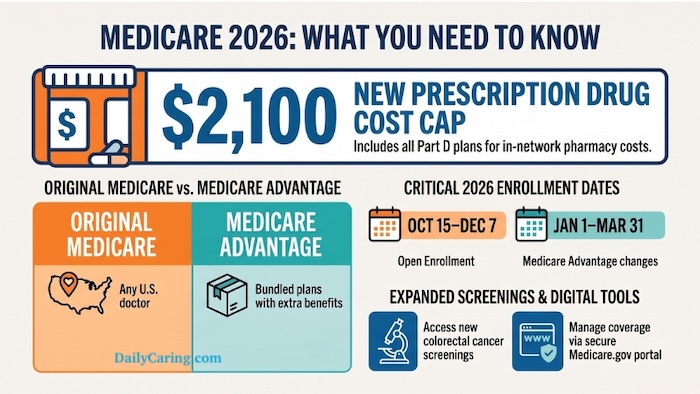
With a hard stop at $2,100, families can now project maximum annual pharmaceutical expenditures with absolute mathematical certainty. This predictability allows for more accurate integration of healthcare costs into broader estate planning, retirement asset distributions, and long-term care insurance evaluations.
Nevertheless, because the regulatory framework relies heavily on private market execution, vigilance remains the primary defense against administrative hurdles. Financial advisors and healthcare navigators urge all Medicare beneficiaries to utilize online comparison tools, consult with accredited State Health Insurance Assistance Programs (SHIP), and thoroughly review their annual Notice of Change documents sent by plan providers.
As the 2026 plan year progresses, federal oversight agencies are expected to monitor insurer compliance closely, particularly regarding formulary exclusions and patient transition rules. For now, the structural pillars of the modern Part D program stand transformed, marking a decisive shift toward financial containment for millions of older Americans navigating the complexities of modern pharmacology.
Related posts: