The Promise and Peril of Longevity Science: Navigating Miracles and Snake Oils

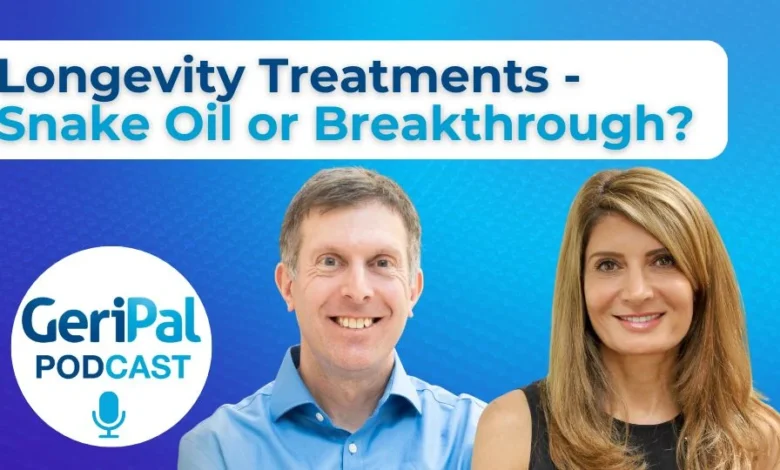
The quest for a longer, healthier life has entered a new era, marked by burgeoning scientific research, significant investment, and a proliferation of products and treatments claiming to unlock the secrets of longevity. However, amidst the exciting breakthroughs and promising avenues of exploration, a critical question looms: are we witnessing genuine scientific miracles or falling prey to sophisticated snake oil salesmanship? This complex landscape was the focus of a recent GeriPal Podcast episode, featuring a deep dive with leading experts in the field.
The discussion, hosted by Eric Widera and Alex Smith, brought together Mahtab Jafari, a professor of pharmaceutical sciences and director of the UC Irvine Center for Healthspan Sciences, and John Newman, a geriatrician and geroscientist affiliated with the Buck Institute and UCSF. Their conversation illuminated the current state of longevity science, the challenges in translating research into human applications, and the crucial distinction between evidence-based interventions and speculative claims.
The Evolving Landscape of Longevity Research
The scientific pursuit of extending lifespan and improving healthspan – the period of life spent in good health – has evolved significantly over the past few decades. Historically, aging research primarily focused on extending lifespan, with early successes in model organisms like nematodes and fruit flies demonstrating that interventions could prolong their lives. However, these extended lifespans often came at the cost of compromised health, leading to a shift in focus towards healthspan.
"We want to add healthy years to human life," explained Dr. Jafari, highlighting the contemporary emphasis on ensuring that extended life is accompanied by vitality and functionality. Her own research journey, spanning two decades in basic science labs, has involved testing hundreds of compounds, primarily botanical extracts, in model systems like fruit flies and mice. Initially, she harbored the ambitious goal of discovering a single molecule or extract that could unlock the "fountain of youth." However, her perspective has evolved, acknowledging the multifaceted nature of aging.
Dr. Newman echoed this sentiment, sharing his own formative experience in graduate school when he first encountered the concept of aging as a biological process. His research into a gene linked to premature aging syndromes underscored the profound impact of genetic factors on the aging process. This realization, coupled with his passion for geriatrics, set him on a path to bridge the gap between the biological understanding of aging and its clinical application in improving the lives of older adults.
The Surge in Investment and Public Interest
The growing interest in longevity is not confined to academic circles. The past decade, particularly in regions like Silicon Valley, has seen an unprecedented influx of capital into longevity research and companies. The establishment of entities like Altos Labs, reportedly founded with billions in funding, underscores the significant financial backing now driving this field.
"I definitely feel the difference," stated Dr. Jafari, referring to the increased attention and investment. She pointed to the substantial funding directed towards companies like Altos Labs, noting their potentially secretive approach but also their commitment to a more traditional, FDA-approved drug development pathway. This contrasts with the more speculative claims often associated with "snake oil" remedies.
Alex Smith, a host of the podcast, observed that this obsession with healthy aging is not limited to specific geographical areas, noting its prevalence across the country and even globally, fueled by influencers and public discourse.
Defining Success: The Challenge of Clinical Trials
A central theme of the discussion revolved around the formidable challenge of proving the efficacy of longevity interventions in humans. Unlike in laboratory settings where lifespan can be directly measured in weeks or months for model organisms, human trials are inherently long and complex.
"We’re not going to do like a 50-year-long trial to see if it actually extends people’s healthspan or lifespan," Eric Widera pointed out, highlighting the necessity of using surrogate markers. Dr. Jafari elaborated on her approach in fruit flies, where lifespan, reproduction, locomotion, sleep, memory, and metabolic rates are used to assess the impact of interventions. She humorously noted that while certain compounds showed remarkable results in flies, she would hesitate to recommend them to humans based solely on that data.
Dr. Newman introduced the concept of "intrinsic capacity," a framework developed by the World Health Organization. This concept offers a holistic assessment of an individual’s health across five domains: cognitive function, physical function, mobility, psychological health, sensory health, and vitality. The existence of an ICD-11 code for age-related decline in intrinsic capacity signifies its growing recognition as a clinical entity that could potentially guide drug development and approval.
"The idea that you could prescribe a drug to prevent or treat four or five or six diseases, all of which are driven by aging, but are not directly related to each other, that’s a good sign that a drug is really targeting aging," Dr. Newman explained, referencing the design of studies like the Targeting Aging with Metformin (TAME) trial. While TAME itself has faced funding challenges, its innovative approach to testing a single drug’s broad impact on multiple age-related diseases has profoundly influenced how future trials are designed.
Promising Interventions and Cautionary Tales
The experts delved into specific interventions, categorizing them based on the strength of evidence and potential for future impact.
Lifestyle Interventions: The Foundation of Healthspan
While the allure of a "magic pill" persists, the panel unanimously emphasized the foundational importance of lifestyle factors.
"Good lifestyle, exercise, sound nutrition, you know, focused on your mental health and sleep, um, and have friendships and relationships," listed Dr. Jafari, acknowledging that these are not always perceived as exciting "biohacks." She advocated for a combination of cardio (Zone 2 and 3) and strength training, stressing the importance of maintaining muscle mass as we age. Her dietary recommendation remained the Mediterranean diet, emphasizing its strong evidence base, and advising a simple approach: "stay away from sugar and processed food."
Dr. Newman concurred, noting that while these lifestyle factors are intuitively understood to promote healthy aging, robust randomized controlled trials demonstrating their broad impact on aging across multiple domains are still an active area of research. He mentioned ongoing multi-component lifestyle interventions, such as the FINGER and US POINTER studies, which aim to provide more definitive evidence.
Pharmacological Approaches: Navigating the Evidence
The discussion then shifted to pharmacological interventions, where the line between promising research and unproven claims becomes more blurred.
-
NAD+ Boosters: The panel expressed caution regarding nicotinamide adenine dinucleotide (NAD+) boosters. "As of right now, there are no clinical studies," stated Dr. Jafari, with Dr. Newman adding that the marketing has "outpaced the clinical studies." While precursors like NR and NMN are being investigated, the current evidence for their efficacy in humans remains limited, and potential harms are not fully understood.
-
GLP-1 Agonists: Glucagon-like peptide-1 (GLP-1) receptor agonists, commonly used for diabetes and obesity, are gaining attention for their potential "gerotherapeutic" effects. Dr. Newman highlighted their established benefits in treating cardiovascular and kidney diseases, even in individuals without diabetes, and their potential impact on heart failure with preserved ejection fraction, a complex geriatric syndrome. However, he cautioned about the need for more research on their effects in individuals without overweight or diabetes, as well as their safety in older adults, and potential risks like sarcopenia (muscle loss) and bone health impacts.
-
SGLT2 Inhibitors: Sodium-glucose cotransporter-2 (SGLT2) inhibitors, another class of diabetes medications, were also deemed promising. Dr. Newman pointed to their broad efficacy across multiple age-related diseases, including chronic kidney disease and heart failure, independent of diabetes status. He noted their significant impact on cardiovascular mortality, though the effects on non-cardiovascular mortality are less clear.
-
Metformin: Metformin, a long-standing diabetes medication, was discussed as a potentially gerotherapeutic agent. While promising in model systems, Dr. Jafari noted that its lifespan-extending effects are not universal and can be sex-specific. The TAME study, intended to investigate its broad impact on aging, has faced funding hurdles. Dr. Newman added that while it remains promising, its generic status and potential to blunt exercise effects place it lower on the list compared to newer drug classes being actively studied by pharmaceutical companies.
-
Resveratrol: The once-popular resveratrol, often associated with red wine’s purported health benefits, was largely dismissed as "dead in the water" due to a lack of compelling evidence in human trials.
-
Rapamycin: Rapamycin, an immunosuppressant drug, has shown significant lifespan extension in various model organisms. However, its human application faces challenges due to its side effect profile and ongoing funding issues for large-scale clinical trials. Studies are underway investigating its effects in different populations, including those with metabolic disease, pre- and perimenopausal women, and even Alzheimer’s disease, with results anticipated in the coming years.
-
Testosterone and Estrogen: Hormone replacement therapy was acknowledged as potentially beneficial for hormonal balance when medically indicated and monitored by a physician. However, it was stressed that these are not considered general anti-aging drugs and should not be pursued without professional guidance.
-
Red Light Therapy: While some preliminary studies suggest potential benefits for skin aging, the panel viewed red light therapy as an area requiring more robust, independent research, with current findings largely stemming from company-sponsored studies.
-
IGF Inhibitors for Dogs: A particularly intriguing development is the potential FDA approval of IGF inhibitors to extend the lifespan and healthspan of large dogs. Dr. Newman explained the biological rationale: a correlation between lower IGF signaling and longer lifespan, as evidenced by the shorter lifespans of larger dog breeds. This could represent one of the first FDA-approved anti-aging interventions, albeit for animals.
-
Rhodiola Rosea: Dr. Jafari highlighted Rhodiola Rosea, a less well-known botanical extract, which has demonstrated promise in her lab for extending lifespan in fruit flies. Its use for fatigue is recognized by the European Medicines Agency, and further clinical studies are being planned.
-
Zolendronic Acid: Surprisingly, zolendronic acid, a bisphosphonate used for osteoporosis, has shown an unexplained reduction in mortality in some studies, prompting further interest in its potential gerotherapeutic effects.
The Future of Longevity Science
The field of longevity science is characterized by rapid advancements and a constant influx of new data. The journey from laboratory findings to widespread clinical application is fraught with challenges, including the design of rigorous clinical trials, the translation of animal model results to humans, and the significant financial investment required.
The panel emphasized the importance of critical evaluation, urging the public to distinguish between scientifically validated interventions and unsubstantiated claims. As research progresses, the focus remains on adding not just years to life, but healthy, vibrant years. The ongoing efforts in translational geroscience, coupled with innovative approaches to clinical trial design, offer hope that the pursuit of longevity will continue to yield meaningful advancements in human health and well-being. The dynamic nature of this field suggests that future discussions will undoubtedly uncover new insights and potential breakthroughs.
Related posts: