The Power of Refusal: How Studio Fizbin’s "Say No! More" and Palliative Care Intersection to Teach the Value of Boundaries

In contemporary professional and social environments, the societal pressure to maintain perpetual agreeability is pervasive. From an early age, human socialization strongly correlates the affirmative response with cooperation and social harmony, while framing negative responses as disruptive or combative. This psychological conditioning often manifests as an involuntary reflex, compelling individuals to accept tasks, social engagements, or professional obligations that directly conflict with their personal well-being or best interests. While often viewed as a trivial behavioral habit, the inability to establish firm boundaries carries substantial implications across various domains, ranging from corporate burnout to critical healthcare communication.
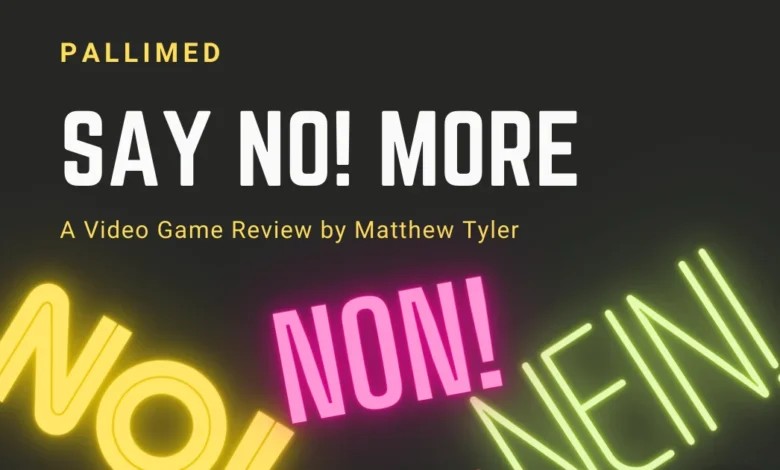
An unexpected intersection between digital entertainment and serious medical communication has recently brought this phenomenon into sharp focus. Studio Fizbin’s satirical video game, "Say No! More," utilizes absurd humor to explore the systemic weight of workplace compliance, while healthcare professionals—particularly in the field of palliative care—are increasingly recognizing that the linguistic mechanics of refusal are vital tools for patient autonomy. By examining how both mediums challenge the reflexive "yes," experts are uncovering new methodologies for improving interpersonal communication, psychological empowerment, and clinical decision-making.
The Mechanics of Workplace Compliance in Digital Media
Released across multiple platforms, including PC via Steam, iOS, and Nintendo Switch, Studio Fizbin’s "Say No! More" places players in the shoes of a corporate intern whose lunch has been unjustly confiscated by upper management. Tasked with navigating an absurd corporate hierarchy, the player’s primary weapon is a single, radical linguistic tool: the word "no." Within the game’s exaggerated universe, the mere act of verbalizing a refusal carries shockwave-like power, disrupting the authoritarian control of managers, executives, and colleagues alike.
While presented through a comedic and lighthearted lens, the core premise of the title addresses a genuine psychological hurdle. Organizational psychologists have long noted that corporate structures heavily incentivize compliance over critical pushback. Employees frequently fear that declining additional workloads, unreasonable hours, or invasive tasks will jeopardize job security, invite professional marginalization, or damage career advancement prospects.
The game’s narrative framework highlights the psychological toll of chronic compliance. When individuals are systematically denied the linguistic space to establish boundaries, chronic stress and burnout frequently ensue. "Say No! More" externalizes this internal conflict, transforming a mundane office dispute into an empowering crusade for self-determination. Although the setting is fictitious, the underlying thesis aligns with established negotiation and conflict resolution frameworks, such as those detailed in William Ury’s "The Power of a Positive No" and Chris Voss’s negotiation strategies, which argue that effective boundary-setting is essential for sustainable professional and personal interactions.
Linguistic Conditioning and Autonomy in Palliative Care
The psychological dynamics explored in interactive media find a profound and critical application in clinical settings, particularly in palliative care and serious illness discussions. Dr. Matthew Tyler, a palliative care physician practicing in Chicago, notes that the societal conditioning favoring the word "yes" heavily influences how patients respond to critical medical inquiries.
In clinical practice, communication regarding life-prolonging therapies, prognosis, and advanced care planning requires an environment of absolute psychological safety. However, standard clinical questioning frequently contains unintentional biases that favor affirmative answers. When a clinician asks, "Do you still want us to do everything?" or "Would you like to go home?", patients often experience an involuntary compulsion to agree, aiming to please the medical staff or avoid appearing difficult, even when the proposed interventions contradict their true preferences.
This behavioral autopilot is deeply embedded in human communication patterns. Because patients are conditioned to view "no" as a rejection of authority or care, they may accept invasive or burdensome treatments simply because they lack the perceived permission to refuse. Consequently, modern palliative care training increasingly emphasizes the restructuring of clinical inquiries to decouple the concept of refusal from negative social connotations.
Chronology and Evolution of Patient-Centric Communication Strategies
Over the past decade, communication methodologies within palliative medicine have undergone a significant shift, moving away from paternalistic models toward shared decision-making frameworks. Historically, medical directives were largely physician-led, with patients playing a passive role in determining their treatment trajectories.

The transition toward autonomy-driven care highlighted the necessity of refining how clinicians approach sensitive topics:
- Initial Shift (Early 2000s): Introduction of basic shared decision-making models, encouraging clinicians to present treatment options clearly while outlining risks and benefits.
- Methodological Refinement (2010s): Integration of behavioral psychology into medical education, recognizing that question phrasing heavily skews patient responses. Educators began advocating for value-based elicitation techniques rather than binary choice prompts.
- Contemporary Practices (2020s–Present): Widespread adoption of advanced communication strategies designed to disrupt reflexive agreement, utilizing targeted linguistic framing to empower patients to establish clear treatment boundaries.
Operationalizing the "Negative" Frame in Clinical Practice
To combat reflexive compliance, modern palliative care specialists utilize specific linguistic strategies that normalize negative responses, thereby granting patients genuine ownership over the dialogue. A primary example involves timing and environmental assessment during medical consultations—a challenge exacerbated by the modern reliance on telehealth and telephone communications.
Traditionally, a clinician initiating a difficult phone conversation might begin with an abrupt opening or a standard inquiry such as, "Is this a good time to talk?" This phrasing virtually guarantees an automatic, polite "Yes" from the recipient, regardless of whether they are currently driving, managing a family crisis, or sitting in a high-stakes professional meeting.
By simply inverting the question to, "Is this a bad time to talk?", the dynamic shifts entirely. A response of "Yes" allows the recipient to immediately articulate when it would be more convenient to connect, while a response of "No" actively engages their focus and establishes mutual consent for the ensuing conversation. This minor adjustment effectively interrupts the autopilot response mechanism, validating the recipient’s current reality and protecting their personal boundaries.
A similar strategic pivot is applied when discussing complex treatment options. Rather than asking leading questions that demand a simple affirmation, clinicians are trained to first elicit the patient’s core values and priorities. Once those values are explicitly stated, the clinician can frame subsequent inquiries around trade-offs. For instance, a clinician might state: "I am hearing that spending as much time at home with your family is very important to you, but that you are also interested in this clinical trial. Would you be willing to risk that time at home for the chance to extend your life?"
In this structure, a negative response ("No, I am not willing to risk that time") empowers the patient to establish firm boundaries on medical interventions to preserve their quality of life. Conversely, an affirmative response clarifies their exact prioritization hierarchy, enabling the medical team to tailor recommendations accurately.
Broader Implications and Interdisciplinary Impact
The convergence of digital media narratives like "Say No! More" and clinical communication methodologies underscores a universal truth: human agency is inextricably linked to the freedom of refusal. Whether examined through the satirical lens of an office intern reclaiming a lunchbox or the serious, solemn environment of a palliative care consultation, the ability to say "no" serves as a foundational pillar of personal autonomy.
Experts across disciplines suggest that fostering environments where negative responses are accepted without punitive social or professional consequences yields measurable benefits. In the corporate sector, encouraging transparent boundaries mitigates employee burnout and fosters healthier workplace cultures. In healthcare, empowering patients to establish clear limits improves the fidelity of advanced directives, ensures alignment with personal values, and enhances overall quality of life during serious illness.
As public discourse continues to explore the intersections of digital culture, psychology, and wellness, educational initiatives—including multimedia resources hosted by medical education platforms and cultural commentators—will likely continue examining how creative works mirror profound human needs. Ultimately, the lessons drawn from both interactive entertainment and clinical medicine point toward a singular conclusion: mastering the power of a positive, intentional refusal is essential for genuine self-determination.
Related posts: