Longevity Science: Miracles or Snake Oil? Experts Weigh In on the Promises and Pitfalls of Extending Human Lifespan

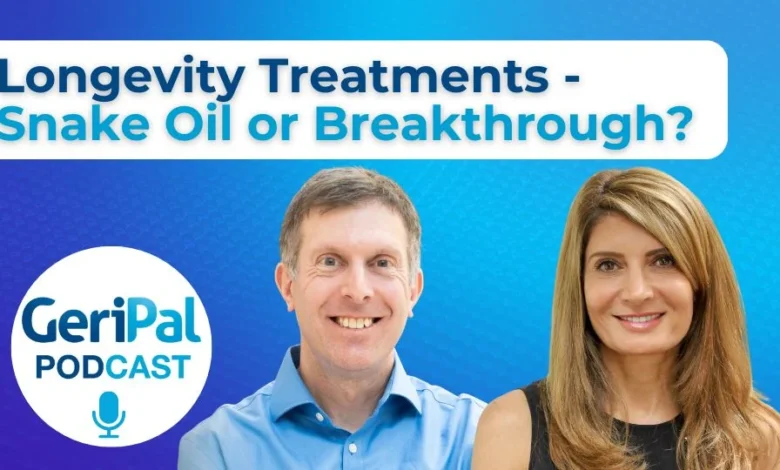
The pursuit of a longer, healthier life is a timeless human endeavor, but the burgeoning field of longevity science has recently ignited a fervor, promising revolutionary interventions. However, with this rapid advancement comes a critical question: are these promises genuine scientific breakthroughs or merely sophisticated snake oil? This was the central theme of a recent GeriPal Podcast episode, featuring a distinguished panel of experts who delved into the complexities, current landscape, and future directions of longevity research.
The discussion featured Mahtab Jafari, a professor of pharmaceutical sciences and director of the UC Irvine Center for Healthspan Sciences, and John Newman, a geriatrician and geroscientist affiliated with the Buck Institute and UCSF. Hosted by Eric Widera and Alex Smith, the podcast episode aimed to dissect the hype surrounding longevity interventions, distinguishing between scientifically validated approaches and speculative claims.
The Evolving Landscape of Longevity Research
The conversation began with an acknowledgment of the significant shifts in the field over the past two decades. Professor Jafari highlighted her personal journey, which began with a focus on extending lifespan in model organisms like fruit flies and mice. "For the past 20 years, I’ve been trying to extend the lifespan of my flies and also improve their healthspan," she explained. "Until probably two or three decades ago, aging research focused mainly on lifespan. But now a lot of focus is on healthspan because we want to add healthy years to human life."
This shift towards "healthspan"—the period of life spent in good health—resonates with the core mission of geriatric and palliative care. Dr. Newman, a clinician scientist, emphasized this point: "I want to figure out how to apply this biological understanding of aging mechanisms to meaningfully improve the health and lives of older adults." He articulated a desire to combat frailty, delirium, and other age-related conditions, thereby enabling individuals to maintain functionality and independence for longer.
The surge in interest and investment, particularly from the tech and venture capital sectors, was also noted. The establishment of entities like Altos Labs, with substantial funding, underscores a growing recognition of aging as a biological process that could potentially be modulated. However, this influx of capital also fuels the "miracles or snake oil" debate, as the line between legitimate research and market-driven hype can become blurred.
Defining Success: The Challenge of Clinical Trials
A key challenge in validating longevity interventions lies in the design and execution of robust clinical trials. Unlike traditional drug development for specific diseases, extending lifespan or healthspan requires long-term observation and the establishment of relevant surrogate markers.
"We are not going to do like a 50-year-long trial to see if it actually extends people’s healthspan or lifespan," stated Dr. Widera, posing a fundamental question about measurement. Dr. Jafari elaborated on her laboratory work, where lifespan and various healthspan assays, such as reproduction, movement, and cognitive function in fruit flies, serve as measurable outcomes. She also touched upon studies in mice, indicating improvements in biomarkers for conditions like diabetes. However, she cautioned against direct extrapolation: "If you are a fruit fly, absolutely go for it. But that’s that."
The scientific community is actively exploring innovative trial designs. Dr. Newman introduced the concept of "intrinsic capacity," a World Health Organization framework that quantitatively assesses an individual’s health across five domains: cognitive function, physical function, psychological health, sensory health, and vitality. This holistic approach aims to provide a comprehensive picture of an individual’s aging trajectory, offering potential surrogate endpoints for clinical trials. The existence of an ICD-11 code for "age-related decline in intrinsic capacity" further legitimizes this concept as a potential target for therapeutic intervention.
The "Targeting Aging with Metformin" (TAME) study was highlighted as a pioneering effort to address this challenge. The TAME study aimed to test whether metformin, a widely used diabetes drug, could delay the onset of multiple age-related diseases. While the TAME study faced funding hurdles and its design has evolved, its conceptual framework—testing a drug’s broad impact on aging by preventing a basket of chronic diseases—remains influential.
Promising Avenues and Cautionary Tales
The panel then delved into specific interventions, categorizing them into "very promising," "promising with caveats," or "snake oil."
Promising Interventions:
-
GLP-1 Receptor Agonists: Drugs like semaglutide (Ozempic, Wegovy) and tirzepatide (Mounjaro, Zepbound) emerged as highly promising, particularly given their established indications for obesity, diabetes, and cardiovascular disease. Dr. Newman identified them as "among the top 3 classes of existing widely prescribed drugs that might be gerotherapeutic." However, he noted the need for more extensive research into their long-term effects on individuals without these specific conditions and their safety profile in older adults, especially concerning potential sarcopenia and bone health.
-
SGLT2 Inhibitors: This class of drugs, including empagliflozin and dapagliflozin, also garnered significant attention. Dr. Newman pointed out their unique ability to treat multiple age-related diseases, including chronic kidney disease and heart failure, irrespective of diabetes status. Their efficacy in heart failure with preserved ejection fraction, a complex geriatric syndrome, further strengthens their therapeutic potential. While their impact on non-cardiovascular mortality is still being elucidated, their broad-reaching benefits position them as a promising area of research.
Promising with Caveats:
-
Metformin: While a staple in diabetes treatment, metformin’s role in longevity is still under investigation. Dr. Jafari noted that its lifespan-extending effects are not universally observed in model systems and can be sex-specific. Furthermore, concerns exist about its potential to blunt the benefits of exercise, a crucial component of healthy aging. The generic nature of metformin also presents a funding challenge for large-scale clinical trials, limiting pharmaceutical industry investment.
-
Rapamycin: This immunosuppressant drug has shown significant lifespan extension in various model organisms. However, human studies are still in their early stages, and concerns about its side effect profile—described as "high ceiling, low floor"—necessitate caution. Ongoing trials are investigating its effects in different populations, including those with metabolic disease, pre- and perimenopausal women, and individuals with Alzheimer’s disease.
-
Testosterone and Estrogen Therapy: While hormonal balance is important, these interventions are not considered broad anti-aging drugs. They may play a role in rehabilitation and muscle building but require careful medical supervision to ensure necessity and monitor for contraindications.
-
NAD+ Boosters (NMN, NR): Despite significant marketing hype, the panel agreed that clinical evidence supporting the efficacy of NAD+ boosters for longevity is currently lacking. While precursors like NMN and NR are being studied, the mechanisms by which they impact cellular NAD+ levels and their ultimate effects on human aging remain unclear.
Potentially "Snake Oil" or Lacking Evidence:
-
Resveratrol: Once a popular supplement derived from red wine, resveratrol has largely fallen out of favor due to a lack of robust clinical evidence supporting its longevity claims.
-
Red Light Therapy: While some small studies suggest benefits for skin aging, the broader applications and efficacy of red light therapy for systemic longevity are not yet well-established. The majority of current research is funded by companies manufacturing these devices, raising questions about potential bias.
Lifestyle Interventions: The Unsung Heroes
Despite the allure of pharmacological interventions, the experts consistently returned to the foundational importance of lifestyle factors.
-
Exercise: Dr. Jafari emphatically stated, "Exercise. That is your absolute biohack for aging." She recommended a combination of cardiovascular exercise (zone 2 and 3) and strength training to combat age-related muscle loss. Dr. Newman acknowledged that while the benefits of exercise are widely accepted, the rigorous scientific proof of its impact on aging across multiple domains and the prevention of chronic diseases through randomized controlled trials is an ongoing frontier.
-
Nutrition: The Mediterranean diet remains a strong recommendation due to its extensive supporting research. Dr. Jafari advised simplicity: "Stay away from sugar and processed food. Let’s just start there."
-
Sleep, Mental Health, and Social Connection: These elements were implicitly or explicitly acknowledged as crucial components of a healthy lifespan, reinforcing the holistic approach advocated by geriatric medicine.
The Future of Longevity Medicine
The field of longevity science is characterized by rapid evolution. The development of frameworks like "intrinsic capacity" and the ongoing research within networks like the Translational Geroscience Network are paving the way for more standardized and effective clinical trials. The prospect of FDA approval for interventions targeting aging itself, perhaps initially for our canine companions as suggested by the IGF inhibitor research for large dogs, highlights the increasing scientific rigor and public interest.
However, the panel’s consensus was clear: while the future holds immense promise, caution and critical evaluation are paramount. Consumers are urged to approach longevity claims with skepticism, prioritizing evidence-based interventions and consulting with healthcare professionals. The distinction between adding years to life versus adding life to years remains a critical guiding principle, emphasizing the importance of not just living longer, but living healthier and more meaningfully. The journey to unlocking the secrets of aging is ongoing, and it requires a careful balance of scientific inquiry, ethical considerations, and a grounded understanding of what truly constitutes a well-lived life.
Related posts: