Navigating the Shift to Medicaid Work Requirements Lessons from the Post-Pandemic Unwinding and the Path to 2027 Implementation

The 2025 federal budget reconciliation law has introduced a transformative mandate for the American healthcare safety net, requiring states to condition Medicaid eligibility for adults in the Affordable Care Act (ACA) expansion group on meeting specific work requirements. This significant policy shift, which also applies to enrollees in partial expansion waiver programs such as those in Georgia and Wisconsin, is set to become mandatory on January 1, 2027, though states have been granted the authority to initiate these requirements earlier if they choose. As state health departments and administrative agencies begin the arduous task of preparing for this transition, they are looking toward the recent "Medicaid unwinding" period—the massive redetermination process that followed the COVID-19 public health emergency—as a critical case study in the logistical, technological, and human challenges of large-scale eligibility changes.
The implementation of work requirements represents more than just a policy adjustment; it necessitates a comprehensive overhaul of state Medicaid operations. To meet the 2027 deadline, states must navigate complex policy and operational decisions, engineer new outreach strategies, execute significant IT system upgrades, and manage a massive hiring and training surge for frontline staff. This transition occurs at a time when state Medicaid departments are still recovering from the administrative exhaustion of the post-pandemic era, making the lessons learned from 2023 and 2024 essential for a successful rollout.
The Chronological Context: From Pandemic Protections to Policy Shifts
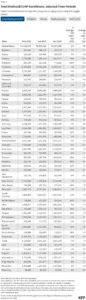
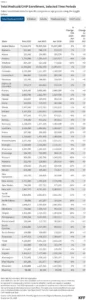
To understand the current landscape, it is necessary to trace the timeline of Medicaid eligibility policy over the last five years. In early 2020, in response to the COVID-19 pandemic, Congress enacted the Families First Coronavirus Response Act. This legislation included a continuous enrollment provision that prohibited states from disenrolling Medicaid recipients during the public health emergency in exchange for enhanced federal funding. This policy led to record-high Medicaid enrollment, peaking at over 94 million individuals by early 2023.
The "unwinding" process began in April 2023, following the passage of the Consolidated Appropriations Act, 2023, which decoupled the continuous enrollment provision from the public health emergency. For the first time in three years, states were required to conduct full eligibility redeterminations for every person on the program. Over the subsequent 14 months, more than 25 million people were disenrolled from Medicaid. Data from the Kaiser Family Foundation (KFF) indicates that a staggering 70% of these disenrollments were due to "procedural reasons"—meaning the individuals may have still been eligible, but they failed to complete the paperwork or the state could not reach them.
As the unwinding period drew to a close in mid-2024, the 2025 federal budget reconciliation law introduced the next major phase of Medicaid evolution: the mandatory work requirements. With the January 1, 2027, deadline approaching, states are now forced to apply the hard-won lessons of the unwinding to a policy that is arguably more complex to verify and administer.
Supporting Data: The Magnitude of the Expansion Population
The scope of the upcoming work requirements is vast. The ACA Medicaid expansion group, which covers low-income adults with incomes up to 138% of the federal poverty level, includes approximately 20 to 25 million Americans across the 40 states (plus D.C.) that have adopted the expansion. While many of these individuals are already employed, the administrative burden of proving that employment—or proving an exemption due to disability, caregiving responsibilities, or education—poses a significant risk of coverage loss.
During the unwinding, states that utilized "ex parte" (automated) renewals saw significantly lower rates of procedural disenrollment. However, while two-thirds of states improved their ex parte rates during the unwinding, the new work requirements present a data gap. Traditional ex parte renewals rely on income data from tax filings or social security; work requirements require real-time data on hours worked, which is often not present in existing state databases, especially for those in the "gig economy" or those with fluctuating hourly schedules.
Lessons in Communication and Outreach
One of the primary takeaways from the unwinding is that successful outreach requires a multi-modal, high-frequency strategy. States that relied solely on traditional mail often found themselves sending notices to outdated addresses, leading to high return rates. In contrast, states that adopted text messaging, email alerts, and automated phone calls saw higher engagement.
For the 2027 implementation, experts suggest that states must move beyond broad public service announcements. Because work requirements only affect a specific subset of the Medicaid population—the expansion adults—outreach must be highly targeted to avoid confusing seniors, children, and people with disabilities who remain exempt. Lessons from the field suggest that "touchpoints" should begin at least six months before the requirements take effect, utilizing "National Change of Address" databases and partnerships with Managed Care Organizations (MCOs) to ensure contact information is accurate.
The Role of Community Partnerships and Managed Care
The unwinding period demonstrated that state governments cannot manage massive eligibility shifts in isolation. Partnerships with community health centers, pharmacies, faith-based groups, and "navigators" proved essential in reaching marginalized populations. These groups often serve as a feedback loop, alerting state officials to glitches in the application portal or confusing language in official notices.
Managed Care Organizations (MCOs) played a particularly pivotal role during the unwinding. In many states, MCOs were granted waivers allowing them to assist members in completing renewal forms. However, the 2025 reconciliation law includes a critical distinction: while MCOs can help with outreach and identification, they are prohibited from making the final determination of whether a beneficiary is in compliance with work requirements. This leaves the heavy lifting of verification to state eligibility workers, who are already facing significant backlogs.
Technological Hurdles and System Integration
Perhaps the most daunting challenge for states is the technological infrastructure required to track work hours. Many state Medicaid systems are built on aging legacy platforms that are not easily integrated with other databases. To implement work requirements effectively, these systems must be able to communicate with:
- State labor department databases (unemployment insurance and wage reporting).
- SNAP (food stamp) and TANF (welfare) systems, where work requirements may already exist.
- Student enrollment databases to verify education exemptions.
- Healthcare claims data to identify individuals undergoing intensive treatment, such as for substance use disorders, who may qualify for exemptions.
The integration of SNAP and Medicaid data is seen as a potential "silver bullet" for administrative efficiency. Since SNAP already has work requirements for "Able-Bodied Adults Without Dependents" (ABAWDs), states with integrated eligibility systems can theoretically use SNAP data to satisfy Medicaid requirements. However, reconciling the different age limits and exemption criteria between the two programs remains a significant hurdle for IT departments.
Staffing Shortages and Administrative Burnout
The human element of Medicaid administration cannot be overlooked. The 23rd annual budget survey of Medicaid officials highlighted a recurring theme: staffing shortages and high turnover rates. Eligibility workers are often overwhelmed by the volume of cases, and the specialized knowledge required to navigate work requirement exemptions—such as evaluating medical frailty or caregiving status—requires extensive training.
States have reported that it takes months to hire and train new staff to a level where they can accurately process complex cases. With the January 2027 deadline looming, states that do not begin the recruitment process in 2025 may find themselves unable to handle the influx of documentation, leading to long wait times and potential legal challenges over "wrongful" disenrollments.
Broader Impact and Implications for the Healthcare System
The move toward Medicaid work requirements carries profound implications for the broader healthcare economy. If a significant number of adults lose coverage due to administrative hurdles, the burden of care will shift to hospital emergency departments and community health centers in the form of uncompensated care.
From a policy perspective, proponents of work requirements argue that the mandate encourages economic independence and ensures that Medicaid resources are preserved for the most vulnerable. Conversely, health advocates point to the experience in Arkansas—the only state to fully implement such requirements before they were halted by courts in 2019—where over 18,000 people lost coverage without a significant increase in employment rates. They argue that the "red tape" of reporting hours is a greater barrier than the work itself.
As 2027 approaches, the success or failure of this policy shift will likely depend on how well states have internalized the lessons of the unwinding. The ability to automate verification, the clarity of communication, and the robustness of the IT infrastructure will determine whether the new law achieves its intended goals or results in a secondary wave of mass disenrollment for eligible Americans. The transition period between now and 2027 represents a critical window for states to build the systems necessary to balance fiscal accountability with the fundamental goal of maintaining healthcare access for low-income populations.
Related posts: