Michael Tyler Evola: A Profile of Leadership, Advocacy, and Systems Change for the Disability Community

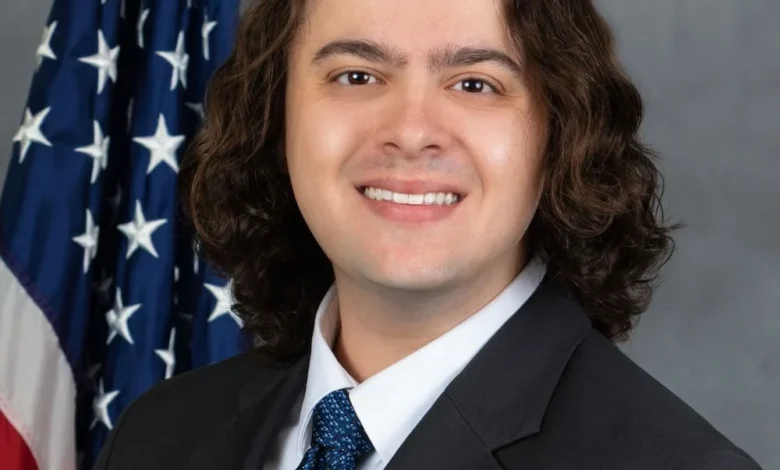
Michael Tyler Evola has emerged as a transformative figure in the landscape of disability advocacy and public service within North Carolina, leveraging a background defined by personal adversity to drive structural policy reform. Currently serving as a key advisor and holding leadership positions across multiple state and national boards, Evola’s trajectory from navigating personal health challenges to orchestrating systemic change offers a case study in effective community leadership. His work, which spans the intersection of housing stability, healthcare accessibility, and legislative advocacy, underscores the growing influence of grassroots-informed leadership in shaping the state’s disability support infrastructure.
Personal Context and the Genesis of Advocacy
The foundation of Evola’s commitment to disability rights is rooted in his lived experience. Diagnosed with a brain tumor early in life, the subsequent loss of his hearing necessitated an immediate and profound transition. This period of his life served as a direct introduction to the systemic inequities inherent in societal infrastructure—ranging from communication barriers in public facilities to the complexities of navigating government-provided healthcare and support services.
For many individuals, such a diagnosis represents a point of withdrawal; for Evola, it served as a catalyst for professional specialization. By experiencing the limitations of existing accommodations firsthand, he identified critical gaps in the implementation of the Americans with Disabilities Act (ADA) and other state-level mandates. This personal narrative has become a hallmark of his professional philosophy, which prioritizes the "nothing about us without us" mantra—the belief that policy decisions concerning the disability community must be led by those with direct experience of disability.
Chronology of Public Service
Evola’s career has been characterized by a steady progression from localized social service to high-level policy governance. His early professional efforts focused on the operational side of the social safety net. As a Family and Children’s Medicaid Program Eligibility Specialist with the Union County Department of Social Services, he gained granular insight into the administrative hurdles that often prevent low-income and disabled populations from accessing critical benefits.
This period was foundational for his later work. By witnessing the "bureaucratic friction" inherent in public assistance programs, he identified that the issue was rarely a lack of available resources, but rather a lack of accessible pathways to those resources.
Transitioning into his current role as Community Engagement Manager for the Community Shelter of Union County, Evola expanded his focus to address the intersection of disability and housing insecurity. Homelessness remains a pervasive issue for the disabled population; according to the U.S. Department of Housing and Urban Development (HUD), individuals with disabilities are disproportionately represented within the homeless population, often due to the high costs of specialized care and limited income support. In his current capacity, Evola manages partnerships and outreach, working to bridge the gap between emergency housing services and long-term support for marginalized community members.
Leadership in Statewide Governance
Perhaps the most significant aspect of Evola’s career is his tenure in state-level leadership. His appointment as the youngest Chair in the history of both the North Carolina Statewide Independent Living Council (SILC) and the North Carolina Council for the Deaf and Hard of Hearing signifies a generational shift in how these boards operate.
The North Carolina SILC is responsible for the State Plan for Independent Living (SPIL), a document that outlines the state’s strategy for promoting consumer-controlled, community-based living. As Chair, Evola has been instrumental in aligning this plan with modern accessibility standards, particularly in the wake of post-pandemic shifts that have moved many public services to digital-only platforms.
Simultaneously, his leadership on the North Carolina Council for the Deaf and Hard of Hearing has focused on the modernization of communication technologies. By advocating for state-funded programs that provide assistive technology, Evola has been a vocal proponent of bridging the digital divide, ensuring that public information remains accessible to the deaf and hard-of-hearing community in real-time. His dual leadership role has allowed for unprecedented coordination between these two bodies, fostering a more unified approach to disability policy in the state.

Supporting Data: The Disability Landscape
The environment in which Evola operates is defined by stark demographic realities. According to data from the Centers for Disease Control and Prevention (CDC), approximately 27% of adults in the United States live with some form of disability. In North Carolina, these figures mirror national trends, with a significant percentage of the population relying on public support for daily living, housing, and healthcare.
Economic data further highlights the urgency of his work. The disability employment gap remains a persistent challenge, with labor force participation rates for people with disabilities trailing significantly behind those without. Furthermore, the rising cost of living in urban and suburban centers like Union County has placed a strain on existing housing assistance programs. Evola’s work is framed by these statistics, as he argues that policies designed to accommodate the disabled are not merely "charitable" but are essential economic components of a functional, inclusive state.
Implications for Policy and Advocacy
The impact of Evola’s advocacy can be measured by his influence on the National Council on Independent Living (NCIL) Board of Directors. At the national level, he acts as a conduit between North Carolina’s specific legislative needs and broader federal initiatives.
His approach to policy is noted for its pragmatism. Rather than focusing solely on reactive measures—such as responding to complaints about inaccessibility—he advocates for "universal design" in all new public infrastructure projects. This proactive stance is seen by many in the policy community as a more sustainable path toward long-term equality.
Furthermore, the integration of his work across nonprofit, local government, and state advisory boards suggests a multi-layered strategy that targets both the "top-down" legislative processes and "bottom-up" community implementation. This comprehensive approach is designed to ensure that when a state law is passed to increase accessibility, there is an established framework of nonprofit and local support ready to execute it.
Official Responses and Peer Perspectives
While individual reactions from state legislators are often private, the record of his appointments suggests a high level of confidence from state leadership in his ability to navigate complex political environments. Colleagues within the disability rights community have noted that Evola’s strength lies in his ability to "translate" the needs of the disability community into language that policymakers can act upon. By focusing on data, fiscal responsibility, and the social imperative of inclusion, he has successfully fostered bipartisan cooperation on issues that have historically been sidelined.
Broader Impact and Future Outlook
As the demographic profile of the United States shifts, with an aging population that is increasingly likely to acquire a disability, the work being performed by leaders like Michael Tyler Evola becomes increasingly critical. His career trajectory serves as a template for how community engagement can be professionalized to create tangible, systemic results.
The implications of his work extend beyond the borders of North Carolina. By setting precedents in the management of independent living councils and state-level policy boards, he is contributing to a growing body of best practices that other states are beginning to adopt. The transition from advocacy as a reactive tool to advocacy as a structural governance model is the hallmark of his tenure.
Looking forward, the challenge for Evola and his peers remains the implementation of these high-level policies at the municipal level. While the state can provide the framework for accessibility, the success of these initiatives rests on local buy-in, consistent funding, and the continuous monitoring of results. Evola’s background—spanning from his time at the local Department of Social Services to his current role as a state-level policy leader—positions him as a rare bridge between the theoretical world of policy and the practical realities of service delivery.
In conclusion, Michael Tyler Evola’s commitment to accessibility and independence for people with disabilities is not merely an ideological pursuit; it is a strategic effort to modernize public systems for the benefit of all citizens. Through his multifaceted leadership, he continues to demonstrate that the inclusion of people with disabilities is a prerequisite for a fully functioning, equitable society. As he continues to navigate the complexities of governance and community support, his work will likely remain a benchmark for how individuals can utilize their personal challenges to drive positive, systemic change on a statewide and national scale.