Empowering Self-Determination: Project "My Life My Choice" Hosts Crucial Training on Supported Decision-Making

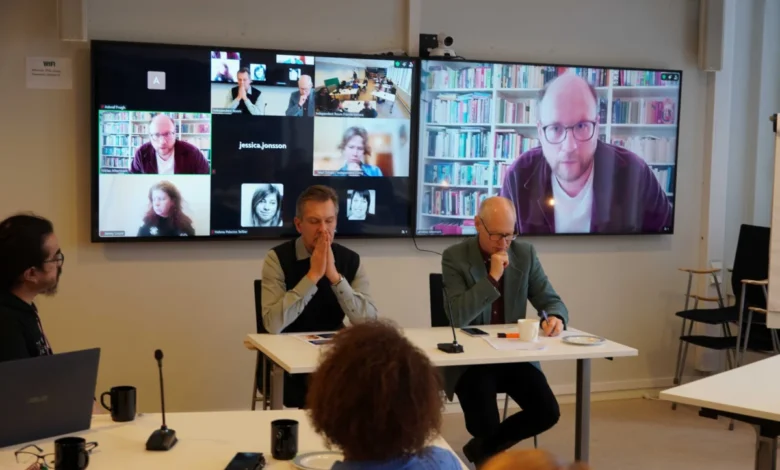
On January 13, 2026, the Independent Living Institute (ILI) hosted a pivotal training session focused on the critical concept of supported decision-making, spearheaded by the "My Life My Choice" project. This comprehensive event delved into the fundamental right to self-determination and the essential support structures required for individuals to exercise this right effectively. The training featured insights from two distinguished researchers from diverse academic fields, who shared their perspectives on the nature of decision-making and strategies for enhancing its efficacy.
The day commenced with an introduction to the "My Life My Choice" project by its project leader, Tiina Nummi-Södergren. She detailed the project’s mission: to develop and pilot innovative models for supported decision-making, drawing inspiration from successful international frameworks in Australia, Canada, and Norway. Nummi-Södergren explained that the project’s study circles engage participants in discussions about who holds decision-making power in their lives and underscore their inherent right to self-governance. A key component of the project involves testing the "decision-making group" method, which mobilizes a minimum of five individuals to support someone who requires assistance in their decision-making processes. This support network can comprise personal assistants, family members, or friends, creating a collaborative environment for navigating complex choices.
The event then transitioned to the academic contributions, beginning with Thomas Strandberg, Professor of Social Work at Örebro University. Professor Strandberg traced his academic journey from social worker to esteemed professor, highlighting his extensive research in rehabilitation and recovery processes following acquired brain injuries. His work also encompasses critical analyses of changes in the welfare sector, public trust in authorities, and employment-focused rehabilitation for individuals with psychosocial or intellectual disabilities.
Professor Strandberg presented his research on the PYC (Parenting Young Children) project, a study specifically designed to address decision-making challenges faced by parents with intellectual disabilities or cognitive difficulties. He articulated that these parents often do not receive the necessary support to effectively parent their children. The PYC project’s evaluation methodology involves assessing parental competence and child well-being through questionnaires and direct interviews with children. To facilitate communication and understanding, the project utilizes visual aids and a "daily circle" approach. A crucial aspect of the research emphasizes the importance of parents building trust with the Social Services, which provides support under the Social Services Act (SoL). Preliminary findings from the PYC project indicate positive outcomes, including observed improvements in parenting skills and overall family well-being. The discussion also touched upon the formulation of goals, the delicate balance between freedom of choice and oversight of decision-making processes, and the authority of social workers to intervene and protect children, acknowledging that sometimes, boundaries must be established for support interventions to be effective.
Following Professor Strandberg, Niklas Altermark, Associate Professor of Political Science at Lund University, shared his research on the exercise of power over individuals with norm-breaking functionalities and those who are chronically ill. Altermark specifically identified significant challenges within group homes, where ideals of self-determination and participation often fall short in practical implementation. He described a discernible gap between legal principles and actual practices, noting that staff frequently perceive individuals with disabilities as incapable of making independent decisions. Altermark also discussed his research on austerity policies and their profound impact on individuals’ daily lives and self-perception. The ensuing discussion explored the intricate balance between autonomy and assistance, emphasizing that decisions are inherently made within social contexts characterized by power dynamics, particularly within the structured environment of group homes.
Mari Siilsalu, a legal expert involved in the "My Life My Choice" project, provided a clear legal and conceptual framework for "supported decision-making." She distinguished it from "decision-making support," aligning the concept with the principles outlined in General Comment No. 12 of the UN Convention on the Rights of Persons with Disabilities (CRPD). Siilsalu asserted that Sweden must transition from substituted decision-making models, such as guardianship, towards formal decision-making tools that employ more supportive strategies. The goal of supported decision-making, she explained, is to ensure equal access to decision-making for individuals with disabilities without raising the bar for all decision-makers. This requires providing appropriate support, including access to information and assistance in analyzing complex tasks, to empower individuals to make well-informed choices across various life situations.
Emil Erdtman, Operations Manager at the Independent Living Institute (ILI), served as the moderator for the training. The day’s proceedings underscored the multifaceted challenges and complexities inherent in providing effective decision-making support to individuals with intellectual disabilities. Participants engaged in a robust discussion regarding the necessity of adapting methodologies and approaches from countries like Australia to suit the specific social structures and welfare systems present in Sweden. The consensus highlighted that support mechanisms must be both accessible and effective. Simultaneously, the ongoing austerity measures within the Swedish welfare state were recognized as having a disproportionate impact on vulnerable groups, adding another layer of complexity to the provision of adequate support.
The "My Life My Choice" Project: A Deeper Dive
The "My Life My Choice" project, a collaborative initiative facilitated by the Independent Living Institute, represents a proactive effort to address long-standing issues surrounding the autonomy and self-determination of individuals with disabilities. The project’s foundational premise is rooted in the understanding that the right to make one’s own choices is a fundamental human right, and that current societal structures and practices often fall short in adequately supporting individuals in exercising this right.
The project’s methodology, inspired by international best practices, is designed to be participatory and empowering. Study circles, a core component, provide a safe and structured environment for individuals to explore their rights, discuss existing challenges, and collectively brainstorm solutions. These circles are not merely forums for discussion but are intended to foster a sense of agency and build collective knowledge. The emphasis on international models from Australia, Canada, and Norway stems from these nations’ pioneering work in developing and implementing robust supported decision-making frameworks. Countries like Australia, for instance, have made significant strides in legislation and policy reform to promote supported decision-making, moving away from guardianship models where possible.
The piloting of the "decision-making group" is a practical manifestation of the project’s commitment to real-world application. This model aims to create a personalized support network for individuals who may require assistance in understanding information, weighing options, and communicating their decisions. The inclusion of personal assistants, family members, and friends in these groups ensures a holistic approach, leveraging the diverse knowledge and perspectives of those closest to the individual. The success of such groups relies heavily on clear communication, mutual respect, and a shared commitment to the individual’s best interests as defined by the individual themselves.
Research Insights: Bridging Theory and Practice
The contributions of Professor Thomas Strandberg and Associate Professor Niklas Altermark provided crucial academic grounding for the training. Professor Strandberg’s work on the PYC project offers a poignant example of how existing support systems can fail to meet the specific needs of vulnerable populations, such as parents with intellectual disabilities. His research not only identifies these gaps but also proposes evidence-based interventions. The evaluation methods employed in the PYC project, such as child interviews and the use of visual aids, are critical for ensuring that the voices of those most affected are heard and understood, even when communication barriers exist. The preliminary positive results from PYC underscore the potential for targeted support to significantly improve family functioning and child welfare. The discussion around social workers’ authority and the need for boundary-setting highlights the complex ethical considerations involved in child protection and support services. This is particularly relevant in light of the increasing scrutiny on child welfare systems globally, where balancing parental rights with child safety is a constant challenge.
Associate Professor Altermark’s research sheds light on the systemic power imbalances that can undermine self-determination, especially within residential settings like group homes. His observation of a disconnect between legal ideals and practical realities is a critical point of concern. The perception of individuals with disabilities as inherently incapable of making decisions, as highlighted by Altermark, is a pervasive societal bias that the "My Life My Choice" project aims to challenge. His research on austerity policies further contextualizes the challenges, indicating that economic pressures can exacerbate existing inequalities and limit the resources available for providing adequate support, thereby impacting individuals’ autonomy and self-worth. The questions raised about the balance between autonomy and assistance are central to the debate on supported decision-making, as it seeks to find a middle ground that respects individual choice while ensuring necessary safety nets are in place.
Legal and Policy Dimensions: Towards a Rights-Based Approach
Mari Siilsalu’s legal expertise provided a crucial framework for understanding the policy implications of supported decision-making in Sweden. Her clear articulation of the concept, distinguishing it from substituted decision-making, is vital for driving legislative and practical change. The reference to General Comment No. 12 of the CRPD is significant, as it provides an authoritative interpretation of Article 12, which recognizes the equal legal capacity of persons with disabilities. The call for Sweden to move away from guardianship models towards more rights-affirming supported decision-making mechanisms is a critical policy recommendation. This shift requires not only legislative reform but also a significant change in societal attitudes and professional practices.
The challenge of ensuring "equal access to decision-making" without creating an undue burden on all decision-makers is a nuanced one. It implies that the support provided should be tailored to individual needs and capacities, rather than applying a one-size-fits-all approach. The emphasis on providing information and analytical support is particularly important in complex situations, such as financial planning, healthcare choices, or legal matters. For individuals with intellectual disabilities, access to information in accessible formats and assistance in processing that information are fundamental prerequisites for informed decision-making.
Broader Implications and Future Directions
The training session, moderated by Emil Erdtman, effectively synthesized the day’s discussions, reiterating the significant challenges and the pressing need for innovative solutions. The acknowledgment of the necessity to adapt international models to the Swedish context is a practical and forward-thinking approach. Sweden’s unique welfare system, with its established structures and regulations, requires careful consideration when integrating new approaches to supported decision-making.
The stark reality of austerity measures impacting vulnerable groups cannot be overstated. As welfare states face increasing financial pressures, the risk of reduced support services for individuals with disabilities grows, potentially widening existing inequalities. The "My Life My Choice" project, therefore, not only advocates for enhanced individual autonomy but also highlights the broader societal responsibility to protect and uphold the rights of its most vulnerable citizens.
The training session served as a crucial step in advancing the discourse on supported decision-making in Sweden. It underscored that the journey towards truly empowering individuals to make their own choices is complex, requiring a multi-faceted approach that integrates research, policy reform, and a fundamental shift in societal attitudes. The "My Life My Choice" project continues its vital work, aiming to build a future where self-determination is not just a right, but a lived reality for all. The commitment to ongoing development and testing of these models, with a focus on evidence-based practices and international collaboration, positions the project as a key driver of positive change in the field of disability rights and support. The visual evidence of the training, captured in the accompanying photograph, serves as a testament to the engaged participation and collaborative spirit that marked this important event.