Liam Virgo’s Triumph Over Functional Neurological Disorder: A Journey from Paralysis to Global Exploration

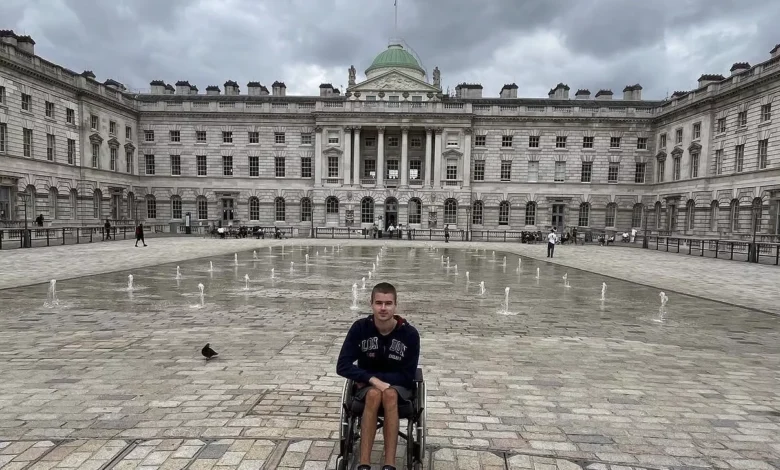
Liam Virgo, a resilient individual who has navigated life as a wheelchair user since his teenage years, is sharing his profound personal journey and extensive travel experiences, highlighting the transformative power of hope and determination in overcoming severe Functional Neurological Disorder (FND). Diagnosed with FND at the age of 13, an event that led to sudden paralysis and speech loss, Virgo’s story is a testament to the human spirit’s capacity to adapt and thrive against immense adversity. His narrative, shared with WheelchairTraveling.com, details his arduous recovery and subsequent dedication to exploring the world, proving that physical limitations do not preclude a life of adventure and fulfillment.
The Sudden Onset of Functional Neurological Disorder
In 2016, Liam Virgo’s life took an abrupt and devastating turn. At just 13 years old, he was a healthy teenager until an unforeseen neurological event, later diagnosed as a severe case of Functional Neurological Disorder (FND), rendered him paralyzed and unable to speak. FND is a complex neurological condition where there is a problem with how the brain and the body send and receive signals. Unlike many neurological disorders that have visible structural damage to the brain, FND is characterized by a functional disturbance. This means the brain circuits are not working correctly, but there isn’t a disease or structural abnormality that can be seen on standard MRI scans or other imaging tests. Symptoms can vary widely and can include motor symptoms like weakness, paralysis, tremors, and gait problems, as well as sensory symptoms, cognitive issues, and even seizures. The sudden onset and debilitating nature of Virgo’s condition meant that within days, he transitioned from an active young person to being completely reliant on others, a stark contrast to his previous life.
The initial months following his diagnosis were a blur of hospital stays and profound disorientation. Virgo describes this period as feeling like a "prisoner in a body that had stopped listening," a poignant metaphor for the loss of control over his own physical being. For six months, his mind was in a state of shutdown, a period where his sense of self and his understanding of the world around him were significantly impaired. This cognitive disconnect compounded the physical challenges, creating an overwhelming sense of isolation and helplessness.
The "London Dream" as a Catalyst for Rehabilitation
The profound physical and cognitive impact of FND left Virgo bedbound and in extreme pain, even when attempting to sit up. Standard seating equipment offered no comfort, with his hospital bed being the only place he felt a semblance of ease. The idea of using a wheelchair seemed insurmountable during this dark phase. However, it was amidst this profound struggle that a flicker of motivation ignited: the vision of London. He made a personal vow that if he could regain any measure of his former abilities, his first major goal would be to visit the British capital.
This "London Dream" transcended a mere holiday aspiration; it became an integral component of his rehabilitation. The psychological impact of having a concrete, aspirational goal provided a much-needed purpose. Instead of viewing his recovery as a passive, arduous process, Virgo reframed it as a mission. This shift in perspective was instrumental in motivating him through the difficult days, offering a tangible reward for the immense effort and perseverance required to combat the debilitating effects of FND.
The Transformative Power of Mobility and a Defined Goal
After three years of intense rehabilitation and struggle, Virgo experienced a pivotal moment: he was finally able to sit in a wheelchair. This marked a significant turning point, a tangible step towards reclaiming his independence and mobility. The ability to move beyond his bed, even with the assistance of a wheelchair, felt like entering a "whole new world." This newfound mobility, coupled with the enduring motivation of his London goal, transformed his rehabilitation. What had once felt like a relentless chore became a directed and purposeful endeavor. The prospect of experiencing London fueled his determination, providing a vital source of encouragement on days when the symptoms of FND threatened to overwhelm him.
The journey to London was not just a personal triumph but also a practical demonstration of the growing accessibility within the city. Historically, London, like many ancient cities, presented significant architectural barriers. However, in recent years, there has been a concerted effort to improve accessibility, making it one of the more accommodating cities in the UK for individuals with mobility challenges. This includes advancements in public transportation, the adaptation of historical sites, and the development of modern infrastructure with inclusivity in mind.
Navigating London: Practicalities and Accessibility Insights
Virgo’s experience in London provided valuable insights into the practicalities of accessible travel in a major urban center. He highlights that while London is an ancient city, it is progressively becoming one of the most accessible in the UK. His firsthand accounts offer practical advice for fellow wheelchair users planning a visit.
Accessible Accommodation: The Park Plaza County Hall
For his stay in London, Virgo chose the Park Plaza County Hall, a decision he found to be exceptionally beneficial. Located strategically near the South Bank and Waterloo, the hotel offered convenient access to many of London’s attractions. The hotel’s accessible rooms were noted for their spaciousness, providing ample room for wheelchair maneuverability. Crucially, these rooms featured roll-in wet rooms equipped with essential grab rails, enhancing safety and independence for guests with mobility needs. The staff’s accommodating nature and the hotel’s seamless step-free access throughout the lobby and into its lifts further contributed to a stress-free and comfortable experience, underscoring the importance of thoughtfully designed accessible accommodations.
Dining with Ease: Modern Developments and Independent Venues
Finding accessible places to eat in London, according to Virgo, is generally manageable, particularly in modern developments. Areas such as the South Bank, Central London, Canary Wharf, and Stratford boast a higher prevalence of step-free access in their restaurants and eateries. Most modern and chain establishments have been designed with accessibility in mind. However, for those seeking to dine at independent or historic venues, Virgo strongly recommends a proactive approach. A phone call ahead to confirm accessibility or a quick check of the entrance via Google Street View is advised, as even a single small doorstep step can pose a significant barrier in older buildings that are characteristic of London’s historic fabric. This practical advice emphasizes the need for thorough planning when venturing into less modern parts of the city.
Navigating Public Transport and Attractions
While the original text did not elaborate on specific attractions or public transport, Virgo’s extensive travel and advocacy suggest a keen understanding of these aspects. Accessible public transportation is a cornerstone of independent urban exploration. London’s transport network, including the Underground (Tube), buses, and Overground services, has made significant strides in accessibility. Many Tube stations are now step-free, equipped with lifts or ramps, and the iconic red buses are all equipped with ramps and designated spaces for wheelchairs. Museums, galleries, and major tourist sites across London are increasingly prioritizing accessibility, with many offering step-free access, dedicated facilities, and inclusive visitor services. Websites of these institutions typically provide detailed accessibility information, empowering visitors to plan their itineraries effectively.
Overcoming Barriers: A Mindset Shift and Advocacy
Virgo’s journey is a powerful narrative that transcends personal achievement; it carries a broader message about societal inclusion and the dismantling of physical and attitudinal barriers. He emphasizes that a wheelchair is not a limitation but rather "a different way to see the world," a "tool for freedom, a passport to independence." This reframing is critical in shifting perceptions about disability.
He articulates that the "real barriers" are not inherent to mobility devices or diagnoses but are rather systemic: "steep steps, broken lifts, and a world that forgets to build with inclusion in mind." This statement underscores the need for universal design principles in urban planning, architecture, and public services. By advocating for greater awareness of Functional Neurological Disorder and promoting inclusive design, Virgo aims to demonstrate that with the right support and a more accessible environment, individuals facing significant challenges can indeed "find their way back from the edge and start making their own dreams a reality."
Beyond London: A World of Exploration
London, while a profoundly special place for Liam Virgo, was merely the beginning of his ambitious travel endeavors. Since regaining his voice and mobility, he has embarked on an impressive journey, visiting over 120 towns and cities across the United Kingdom. This extensive exploration includes major cultural hubs such as Manchester, Leicester, Birmingham, Leeds, and Liverpool, as well as the capital cities of Scotland (Edinburgh) and Wales (Cardiff), and the vibrant coastal city of Brighton.
This remarkable accomplishment, especially after being bedridden for an extended period, highlights his unwavering determination to experience the world. His next major travel goal is to explore Cyprus, a destination chosen to connect with his heritage, further demonstrating his commitment to personal growth and cultural exploration.
Virgo’s experiences underscore a critical point: the potential for travel and exploration is often curtailed not by individual limitations but by the built environment and societal attitudes. His advocacy through platforms like Instagram, where he shares his adventures under the handle @liamloveslondon, serves to inspire others and to raise awareness about the importance of accessibility.
The Broader Implications: Fostering a More Inclusive Future
Liam Virgo’s story resonates deeply within the broader discourse on disability, accessibility, and mental health. His diagnosis of Functional Neurological Disorder, a condition that remains less understood than many other neurological disorders, brings vital attention to the challenges faced by individuals with FND. Raising awareness about FND is crucial, as it can affect individuals of all ages and backgrounds, often leading to significant disruption in their lives. The lack of widespread understanding can sometimes lead to misdiagnosis or underestimation of the condition’s severity.
The implications of Virgo’s journey extend to public policy and urban planning. His emphasis on systemic barriers points to the urgent need for continued investment in accessible infrastructure, from public transportation to public buildings and recreational spaces. The concept of "universal design," which aims to create environments and products that are usable by all people, to the greatest extent possible, without the need for adaptation or specialized design, is central to creating truly inclusive communities.
Furthermore, Virgo’s narrative serves as a powerful reminder of the psychological impact of chronic illness and disability. The ability to set personal goals, coupled with the support systems that enable their pursuit, can be as crucial as physical rehabilitation. His journey from the depths of paralysis to becoming a prolific traveler is a profound illustration of resilience and the human capacity to redefine possibilities. As he continues to share his experiences, Liam Virgo contributes significantly to fostering a more empathetic, understanding, and accessible world for everyone. His story is a beacon of hope, demonstrating that with determination and a commitment to inclusivity, even the most daunting challenges can be overcome, paving the way for a future where everyone has the opportunity to explore, connect, and thrive.
Related posts: