Comprehensive Tracking Report Details Post-Pandemic Medicaid and CHIP Enrollment Trends Alongside Historical Unwinding Outcomes

The landscape of public healthcare coverage in the United States continues to undergo monumental shifts, driven by federal policy adjustments, post-pandemic administrative adjustments, and evolving state-level implementation of health programs. According to the latest monthly enrollment data reported by the Centers for Medicare & Medicaid Services (CMS) under its Performance Indicator Project, tracking metrics for the Medicaid and Children’s Health Insurance Program (CHIP) offer a detailed window into the post-public health emergency era. While these federal indicators capture essential trends regarding full-benefit enrollees across the nation, they arrive amid a backdrop of significant legislative changes—most notably the provisions enacted within the 2025 federal budget reconciliation law—that are reshaping eligibility pathways, introducing stringent work mandates, and forecasting long-term reductions in overall program enrollment.
Historical Context and the Post-Pandemic Transition
To understand the current trajectory of Medicaid and CHIP, one must examine the unprecedented policy environment triggered by the COVID-19 pandemic. In early 2020, as the nation confronted a public health emergency, Congress enacted the Families First Coronavirus Response Act (FFCRA). A central pillar of this legislation was a continuous enrollment provision, which prohibited states from disenrolling individuals from Medicaid even if their financial or life circumstances changed, provided they maintained eligibility under the broad parameters of the emergency rule.
This continuous coverage mandate caused total program enrollment to swell to historic highs, providing a vital safety net for tens of millions of Americans during an era of economic disruption and labor market volatility. However, this period of administrative stasis concluded with the unwinding process—a massive, multi-year administrative undertaking that began in early 2023. During this phase, states were tasked with resuming regular eligibility redeterminations, reviewing millions of cases, and verifying whether enrollees still met state-specific income and residency requirements.
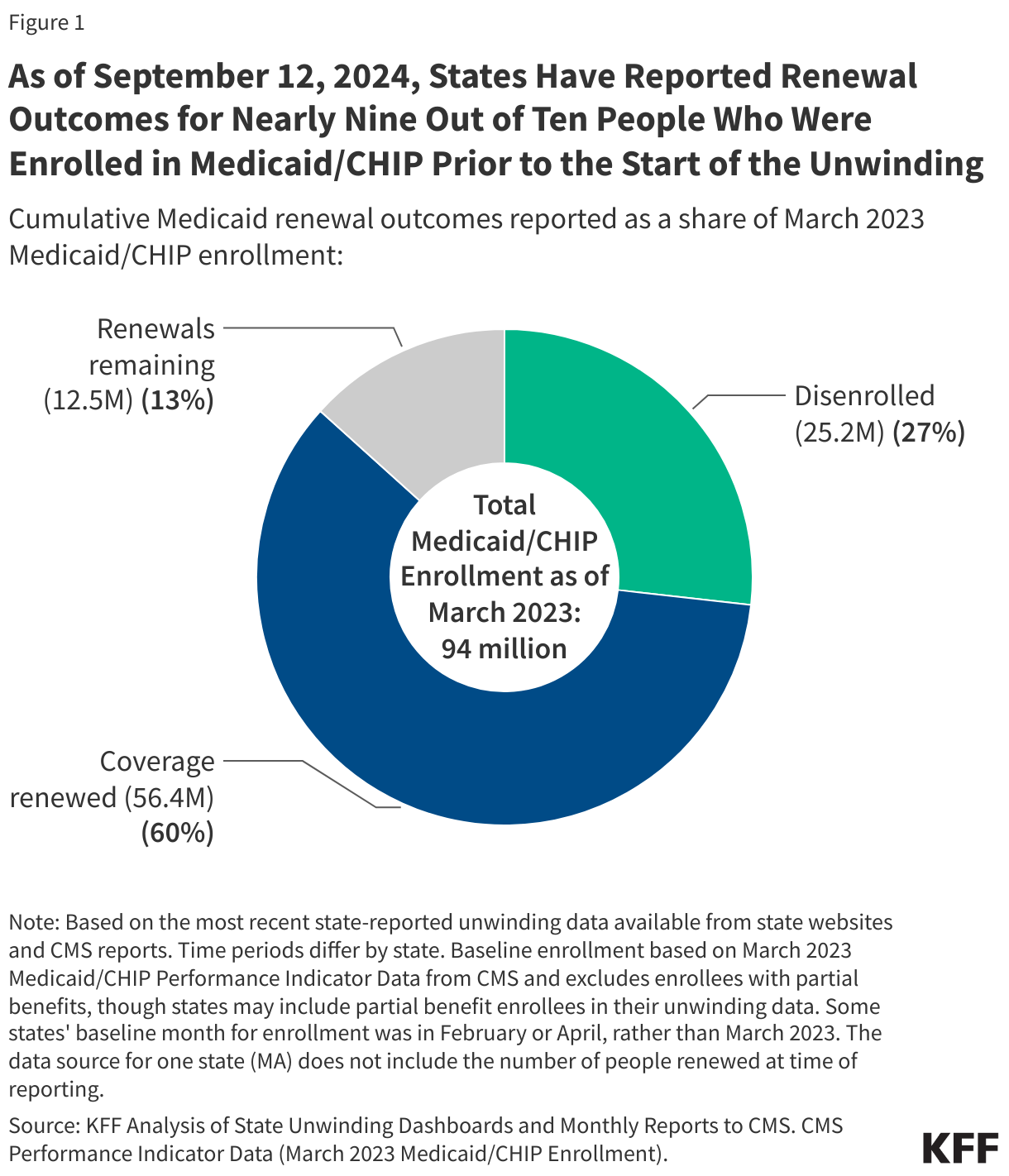
While the formal state-by-state unwinding period largely concluded by late 2024, its operational echoes and data archiving continue to inform current policy debates. Cumulative historical data compiled through September 2024 revealed that states had processed renewals for nearly nine out of ten individuals enrolled prior to the unwinding. Yet, the process also laid bare stark operational disparities across jurisdictions, setting the stage for subsequent legislative interventions designed to curb federal and state spending on public health programs.
Legislative Shifts: The 2025 Reconciliation Law and Future Projections
The policy architecture governing public health insurance experienced another major pivot with the passage of the 2025 federal budget reconciliation law. This legislation introduced profound structural changes to Medicaid, fundamentally altering the rules for non-disabled adults. Most notably, the law mandates that adults in the expansion group—as well as those participating in certain Section 1115 demonstration waiver programs—satisfy strict work and reporting requirements. Implementation of these mandates is scheduled to take effect in January 2027.
Health policy analysts and fiscal researchers project that these new regulatory hurdles will lead to a measurable contraction in Medicaid enrollment over the subsequent decade, falling significantly below the baseline projections established under prior law. Because the CMS monthly performance indicator data track full-benefit populations without isolating specific eligibility pathways (such as the expansion group), specialized tracking tools and state-level analyses have become indispensable for monitoring how these upcoming work requirements will influence broader enrollment patterns.
Current Enrollment Trends and Demographic Breakdown
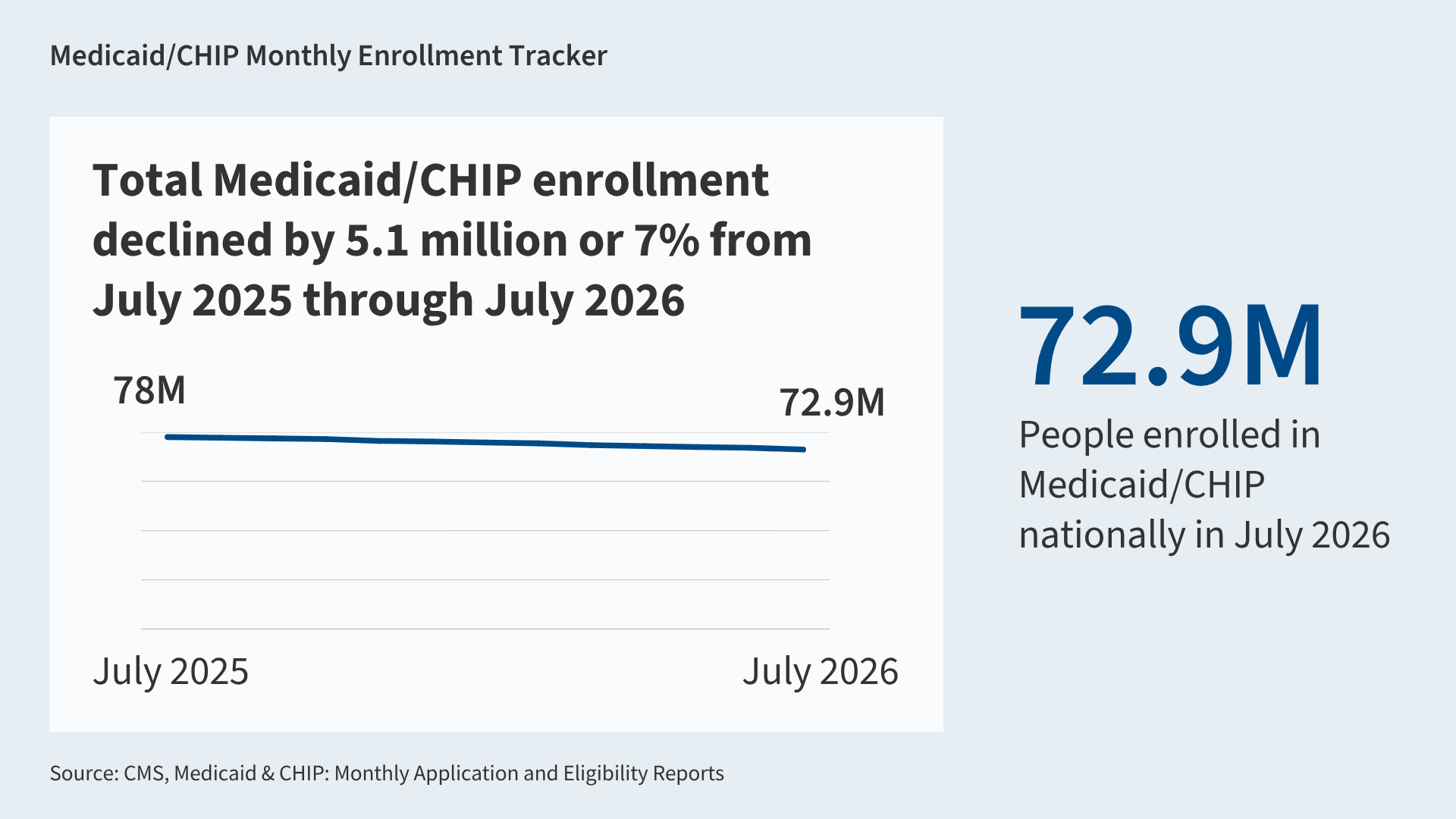
Current data up to July 2026 provide a granular look at the distribution of beneficiaries across various categories, encompassing children, adults, and dual-program tracking. According to preliminary CMS monthly application, eligibility, and enrollment reports, national totals reflect the ongoing stabilization of the program following the turbulence of the unwinding era.
The data distinguish between several distinct cohorts:
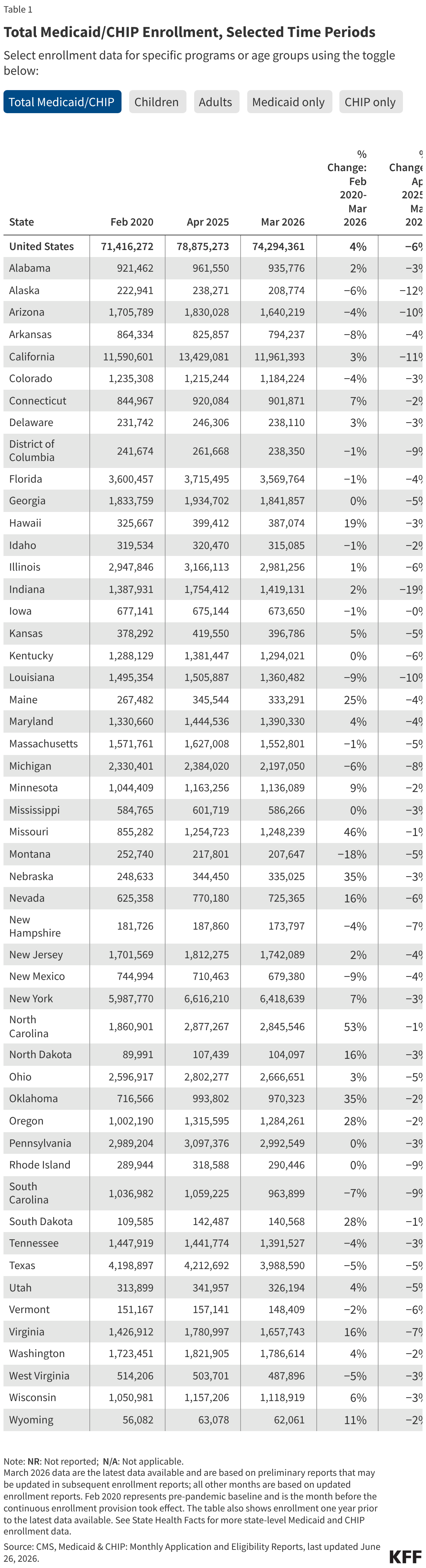
- Total Medicaid and CHIP enrollment figures, combining both adult and pediatric populations.
- Child-specific enrollment metrics, tracking the utilization of health coverage among minors.
- Adult-specific enrollment metrics, capturing populations subject to changing labor and reporting standards.
- Disaggregated counts separating pure Medicaid beneficiaries from those enrolled exclusively in CHIP programs (inclusive of both Medicaid-expansion CHIP and separate state CHIP models).
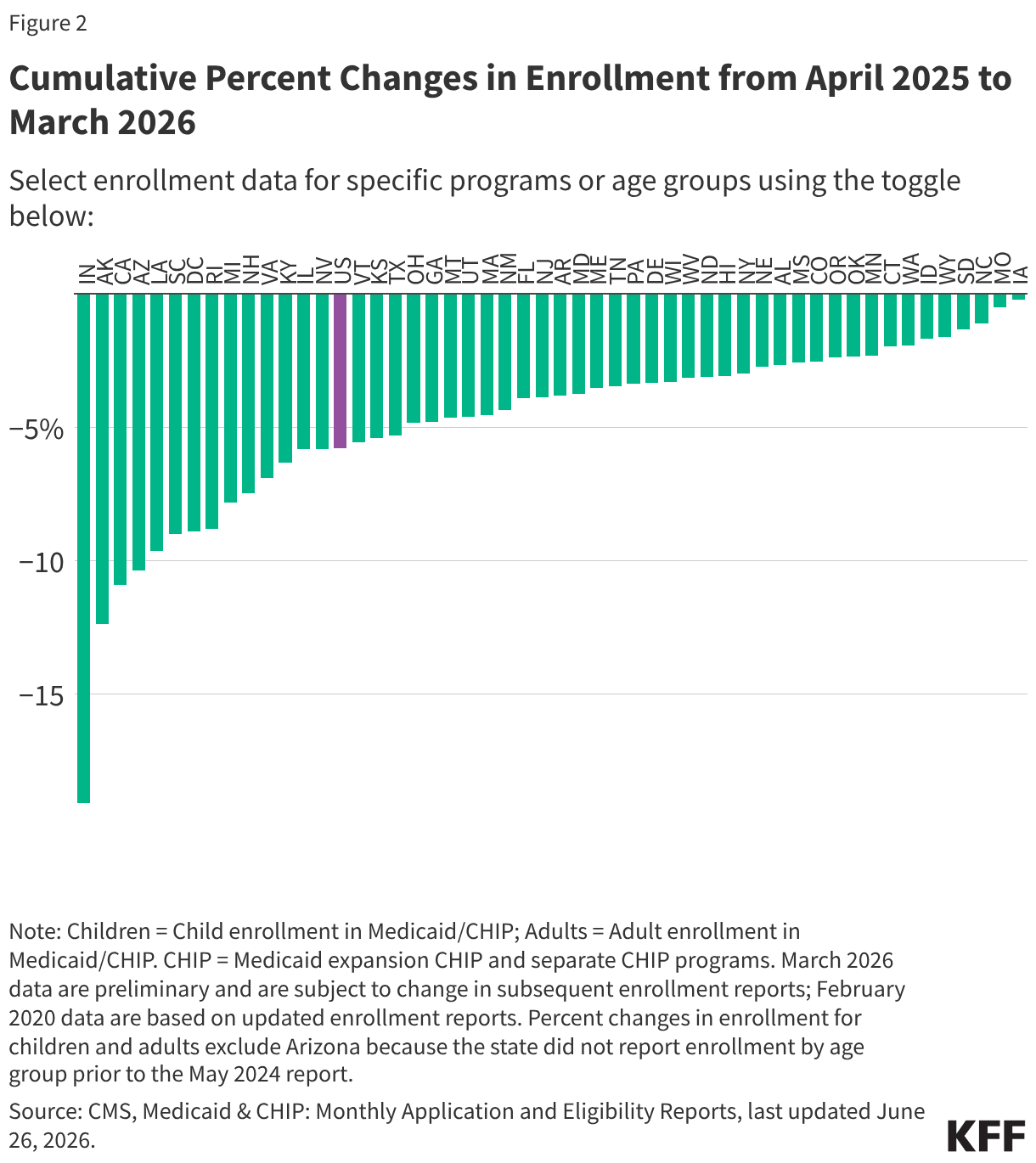
Analysts note that July 2026 figures rely heavily on preliminary state reporting, which remains subject to iterative updates as states reconcile delayed paperwork and administrative backlogs. Furthermore, national aggregate totals frequently exclude specific jurisdictions—such as Arizona—where child and adult demographic data have remained incomplete or unavailable for select monthly reporting periods. When measured against the pre-pandemic baseline of February 2020, current numbers illustrate both the lingering expansion effects and the subsequent contraction phases managed by state health agencies.
Deconstructing the Unwinding Era: Renewal Outcomes and Disenrollments
Although the core operational phase of the Medicaid unwinding concluded in 2024, the final compiled datasets offer crucial lessons regarding administrative efficiency and coverage loss. Archival data finalized through September 2024 provide a comprehensive accounting of how states managed tens of millions of renewal actions.
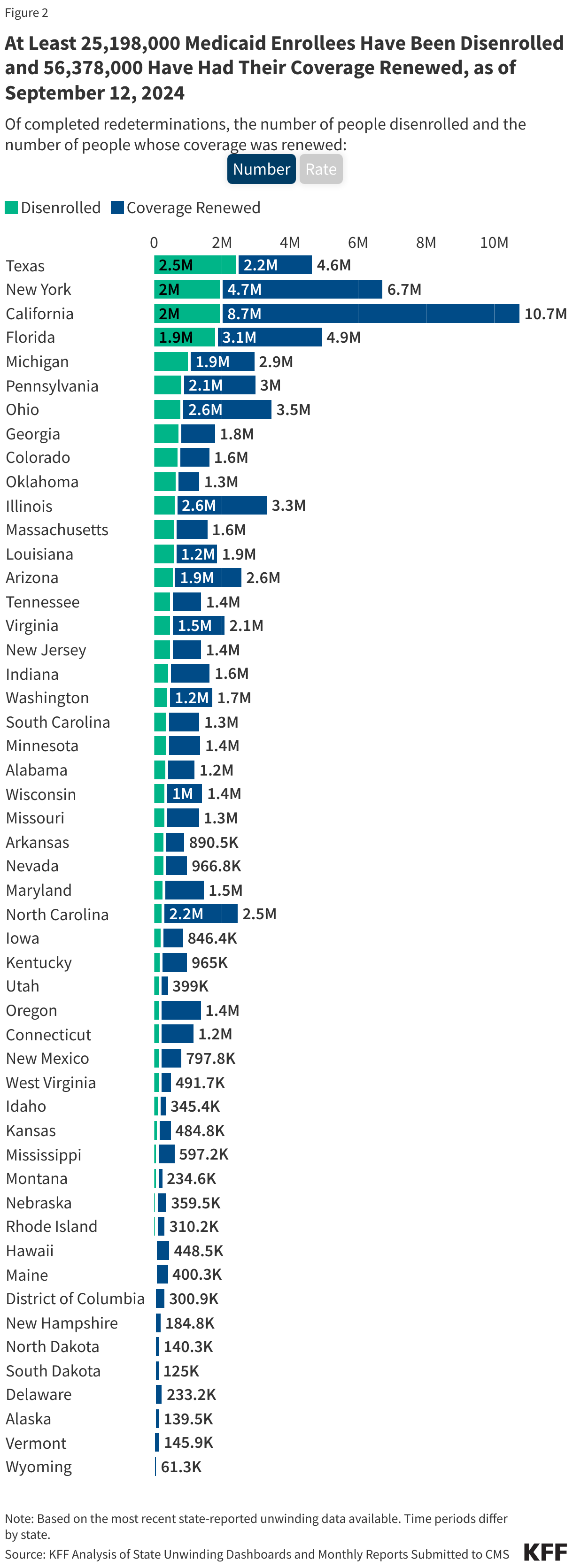
Out of the millions of individuals subjected to redeterminations, historic tracking revealed a vast divergence in state-level disenrollment rates. At the national level, approximately 25.19 million enrollees were disenrolled from the program, while roughly 56.37 million successfully had their coverage renewed. However, the probability of retaining coverage varied dramatically depending on geography. State-reported outcomes ranged from a high disenrollment rate of 57% in Montana to a low of 12% in North Carolina.
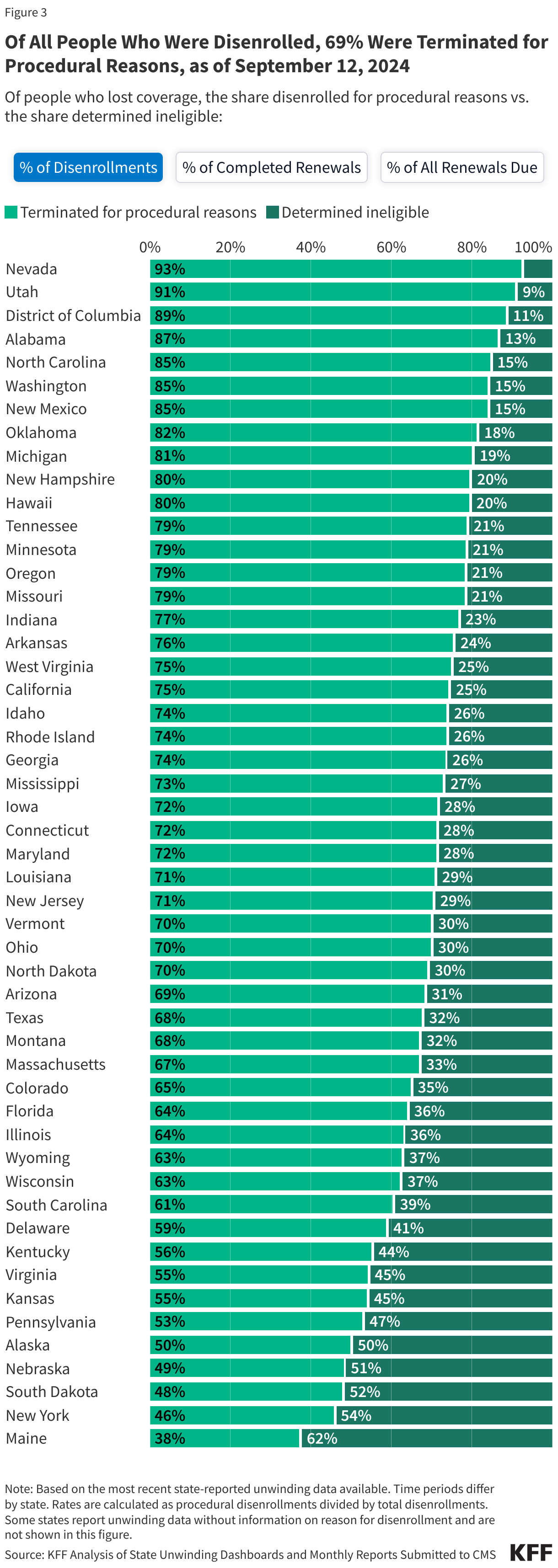
A critical finding from the unwinding analysis centers on the prevalence of procedural disenrollments—instances where individuals lost coverage not because they were formally determined to be financially ineligible, but because they failed to complete administrative paperwork, update their contact information, or respond to state requests for verification in a timely manner.
Of all individuals who were disenrolled during the unwinding period, a staggering 69% were terminated due to procedural reasons. When calculated as a share of all completed renewals, procedural terminations accounted for roughly 21% of cases, while representing about 20% of all renewals originally due. This high volume of administrative churn highlighted systemic communication barriers between state Medicaid agencies and vulnerable enrollees, many of whom experienced housing instability or shifts in employment that disrupted mail delivery of renewal notices.
Ex Parte Renewals and State Mitigation Strategies
To mitigate administrative burdens during the unwinding, federal guidelines encouraged states to maximize the use of ex parte renewals—a process whereby agencies renew an individual’s coverage automatically using available electronic data, such as wage databases or Supplemental Nutrition Assistance Program (SNAP) records, without requiring the enrollee to submit physical forms.
Cumulative data through the conclusion of the unwinding showed that approximately 61% of individuals who successfully retained their Medicaid coverage did so through these automated ex parte processes. The degree to which states successfully implemented ex parte renewals heavily correlated with their overall procedural disenrollment rates; states with more integrated electronic data systems generally experienced lower rates of administrative coverage loss.
Additionally, to counteract excessive procedural churn, several states adopted various mitigation strategies, such as extending timelines for form submission, partnering with managed care organizations to track down lost enrollees, and temporarily pausing specific termination categories while system modifications were deployed. Nevertheless, discrepancies often persisted between monthly data published by individual state web dashboards and the lagging metrics officially compiled and published by CMS. While state dashboards frequently incorporated real-time updates and localized resolutions of pending cases, federal reports often lagged by several months, reflecting rigorous data validation protocols.
Broader Implications for Public Health Policy
The interplay between historical unwinding data, current 2026 enrollment metrics, and upcoming 2027 statutory mandates underscores a pivotal transition point for American health policy. The post-pandemic surge demonstrated the capacity of public insurance programs to shield vast segments of the population from economic insecurity during a global crisis. Simultaneously, the subsequent administrative contraction and the legislative focus on fiscal restraint signal a return to stricter gatekeeping and eligibility verification.
As states navigate the implementation of the 2025 reconciliation law’s work requirements, public health advocates and policy researchers will continue to monitor whether administrative hurdles inadvertently restrict access for eligible low-income populations. The lessons learned from the procedural churn of the unwinding period serve as an empirical baseline for evaluating how future policy adjustments influence health equity, administrative capacity, and the overall stability of the nation’s public healthcare safety net.
Related posts: