Beyond the Bruise: How Midlife Falls Are Emerging as a Vital Diagnostic Marker for Cognitive Decline

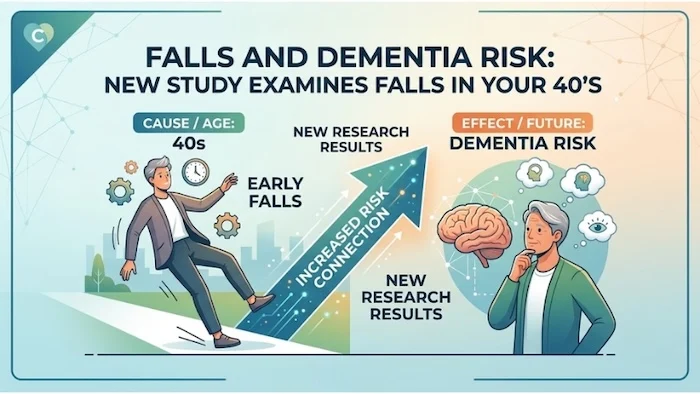
The intersection of physical mobility and neurological health has long been viewed through a compartmentalized lens by the medical establishment. For generations, a fall in middle age was routinely dismissed as an isolated mechanical accident—the result of a slippery floor, an uneven sidewalk, or a momentary lapse in concentration. However, a growing body of rigorous epidemiological research is fundamentally challenging this assumption, establishing a compelling and alarming correlation between physical instability in middle-aged adults and the onset of neurodegenerative disorders. Recent clinical reviews and large-scale public health studies indicate that unexplained physical stumbles in a person’s forties or fifties may no longer be viewed merely as orthopedic events, but rather as early, flashing indicators of accelerated cognitive decline and impending dementia.
Shifting Paradigms in Neurological Research
Historically, the medical community categorized physical trauma and cognitive impairment as entirely distinct entities. Neurologists focused on memory, executive function, and linguistic capabilities, while orthopedists and general practitioners treated fractures, sprains, and balance issues. This siloed approach is rapidly dismantling as modern longitudinal studies reveal that the brain’s motor control centers and cognitive networks share deeply interconnected pathways.
When neurodegeneration begins—a process that often initiates silently decades before a formal clinical diagnosis of Alzheimer’s disease or related dementias—it quietly erodes the brain’s spatial awareness, balance, and fine motor coordination. Consequently, a physical fall can be understood not as the root cause of cognitive decline, but as a downstream physical manifestation of an already deteriorating neurological framework. As brain atrophy progresses, it disrupts the intricate neural signaling required to navigate physical environments smoothly, translating subtle cerebral decay into tangible physical vulnerability.
Quantifying the Risk: Landmark Data from Global Studies
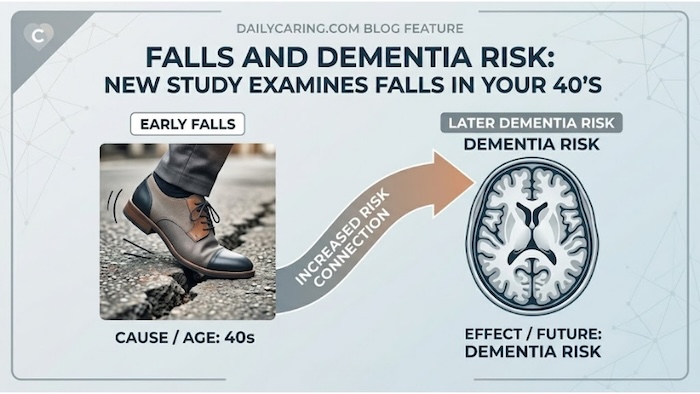
The urgency surrounding this medical shift is largely driven by comprehensive data compiled in recent systematic reviews. A notable study published in the Journal of Post-Acute and Long-Term Care Medicine synthesized health data spanning nearly three million participants. The findings provide stark statistical evidence: individuals who experience even a single fall after the age of forty face a twenty percent elevated risk of developing dementia later in life. Furthermore, when patients report multiple unexplained falls during this midlife window, that relative risk escalates dramatically by seventy-four percent.
These empirical observations are further reinforced by independent investigations conducted at major academic medical centers. Researchers at the Washington University School of Public Health demonstrated that falls serve as a clinical predictor of accelerated cognitive decline, carrying a risk profile comparable to the accumulation of amyloid-beta proteins in the brain, which are a hallmark of Alzheimer’s disease. Similarly, a massive retrospective analysis conducted by investigators at Brigham and Women’s Hospital, examining millions of Medicare beneficiary records, revealed that over ten percent of older adults who suffered a traumatic fall received a formal diagnosis of Alzheimer’s or a related dementia within a twelve-month period following the incident.
The Chronology of Neurodegeneration and Physical Trauma
To understand why a physical fall can precede a cognitive diagnosis by years, medical professionals examine the timeline of neurodegenerative pathologies. Pathological changes in the brain—such as the accumulation of tau tangles and amyloid plaques—begin accumulating up to twenty years before clinical symptoms like memory loss or confusion become apparent.

During the preclinical and early stages of this timeline, the brain compensates for cellular damage, but subtle deficits begin to manifest in domains requiring complex multi-tasking, such as gait stability and postural control. A middle-aged adult may not notice failing memory, but their ability to dynamically adjust their footing on uneven terrain may subtly diminish.
When a fall ultimately occurs, it often triggers a cascading sequence of compounding health challenges. The immediate physical trauma can necessitate periods of immobilization, leading to muscle atrophy and generalized deconditioning. Concurrently, the psychological impact of the incident frequently induces a profound fear of falling, scientifically known as balance-related self-efficacy or post-fall anxiety. This fear frequently drives individuals into voluntary social isolation and a sedentary lifestyle. Because physical exercise and social engagement are primary protective factors against cognitive decline, the withdrawal resulting from a single fall can inadvertently accelerate the very neurodegenerative processes that caused the initial instability.
Clinical Implications and Preventive Interventions
The recognition of falls as a sentinel symptom of dementia transforms the clinical approach to midlife and geriatric healthcare. Public health experts and geriatricians are increasingly advocating for proactive screening protocols that treat balance assessments with the same gravity traditionally reserved for blood pressure or cholesterol checks.
Medical professionals recommend that individuals experiencing unexplained stumbles or postural instability in their forties and fifties undergo comprehensive neurological evaluations. These evaluations are designed to establish cognitive baselines and screen for early indicators of neurodegeneration before irreversible structural damage occurs. Additionally, clinicians emphasize the necessity of rigorous medication reviews. A vast array of commonly prescribed pharmaceuticals—including antihypertensives, sedatives, and anxiolytics—can induce side effects such as orthostatic hypotension, dizziness, and delayed reaction times, all of which substantially elevate fall risks.

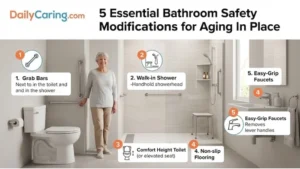
Furthermore, environmental and lifestyle interventions remain foundational in mitigating both physical and cognitive risks. Comprehensive home safety audits, which involve the removal of household tripping hazards, the installation of structural grab bars in high-risk zones like bathrooms, and the optimization of domestic lighting, are critical immediate steps. By securing the physical environment, patients can reduce the incidence of trauma while simultaneously pursuing clinical investigations into their underlying neurological status.
Broader Socioeconomic and Healthcare Impacts
The implications of linking midlife falls to dementia extend far beyond individual patient outcomes, carrying profound economic and structural consequences for healthcare systems globally. As populations age, the societal costs associated with managing both traumatic injuries—such as hip fractures and traumatic brain injuries—and long-term dementia care impose immense financial burdens on institutional healthcare payers and familial caregivers alike.
By identifying falls as an early diagnostic window, healthcare systems have a rare opportunity to pivot from reactive treatment to preventative intervention. Early detection of neurodegenerative risk allows families and healthcare providers to implement cognitive preservation strategies, engage in financial and legal planning well in advance of cognitive impairment, and explore emerging disease-modifying therapies at a stage when intervention is most likely to yield clinical efficacy.
Ultimately, the evolving consensus among researchers and clinicians reframes the narrative surrounding midlife physical stability. A fall after age forty is no longer viewed as a benign inconvenience or an unavoidable consequence of aging. Instead, it stands recognized as a vital clinical warning sign—an early alert from the neurological system that demands urgent, comprehensive medical evaluation and proactive intervention to safeguard long-term cognitive health.
Related posts: