Beyond the Panic Button: How Modern Medical Alert Systems Are Reshaping Senior Care and Aging in Place

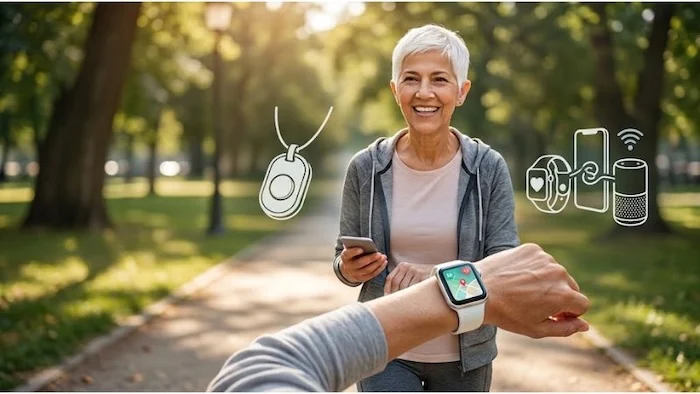
The landscape of eldercare is undergoing a profound technological transformation, driven by an aging global population and an overwhelming societal preference for aging in place. According to data compiled by AARP, nearly 90 percent of adults aged 65 and older express a distinct desire to remain in their private residences rather than transition into assisted living facilities or nursing homes. This overwhelming preference has catalyzed rapid innovation within the eldercare technology sector, steering the market toward comprehensive, proactive safety ecosystems. Industry analyses project the global medical alert systems and personal emergency response systems (PERS) market to reach $11.8 billion, fueled directly by the demand for sophisticated, non-intrusive safety monitoring tools that bridge the gap between complete independence and institutional care.
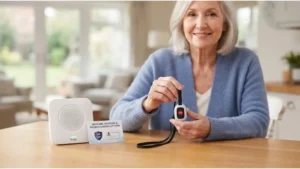
To understand the magnitude of this shift, one must examine the evolution of the technology. For decades, the industry standard was defined by the iconic tethered pendant—a simple, waterproof button worn around the neck or wrist connected to a localized base unit. Requiring a traditional landline telephone connection to dial a monitoring center, this legacy framework was functional yet severely restrictive. It operated under a rigid set of conditions: users had to remain within a radius of several hundred feet from the base station, remember to wear the device persistently, and retain enough physical consciousness and mobility to manually press the button following an incident. If a senior suffered a medical crisis outside the home, wandered off, or lost consciousness instantly from a severe fall, the legacy panic button was rendered entirely ineffective.
The technological leap observed in contemporary models marks a departure from purely reactive safety measures toward proactive, data-driven health hubs. Modern systems incorporate wearable artificial intelligence, cellular connectivity, and ambient environmental sensors, turning passive alarm triggers into dynamic health-monitoring platforms. These advancements address the inherent limitations of older equipment by offering nationwide cellular coverage, global positioning system (GPS) tracking, and intelligent motion analysis. Caregivers and healthcare providers can now monitor routine activities, track vital signs, and receive instant alerts regarding deviations in daily patterns without sacrificing the wearer’s sense of dignity or privacy.
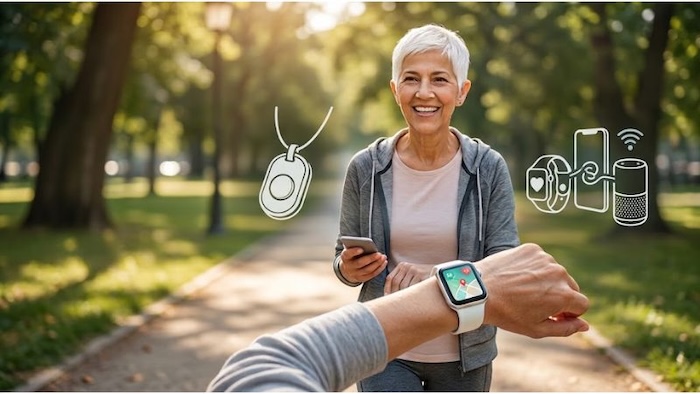
A detailed comparative analysis reveals the stark differences across three generations of safety monitoring. Traditional landline systems offered limited operational ranges—typically restricted to an 800-foot radius from the home base unit—and relied on basic mechanical impact triggers that frequently generated false alarms. In contrast, modern cellular smartwatches utilize advanced artificial intelligence paired with internal accelerometers and gyroscopes to filter out everyday movements, accurately recognizing the distinct velocity and impact signatures of a hard fall. Furthermore, ambient radar and wall-mounted sensors provide whole-home coverage utilizing Wi-Fi networks, eliminating the need for a wearable device altogether. This innovation has proven particularly vital for individuals experiencing cognitive decline or dementia who habitually refuse or remove traditional wristbands and pendants.
The integration of companion mobile applications represents another major leap forward for family caregivers and professional support networks. While legacy systems offered no digital integration beyond automated phone call notifications to designated contacts, modern smartwatches and sensor arrays interface directly with dedicated apps. These platforms supply real-time location tracking, battery status indicators, complete call logs, and routine activity metrics. Consequently, caregivers can coordinate care schedules, manage medication reminders, and assess the well-being of their aging relatives from remote locations, minimizing the friction and anxiety traditionally associated with long-distance caregiving.
Despite these remarkable engineering achievements, healthcare professionals and eldercare advocates emphasize that advanced technology must be viewed as a risk-mitigation tool rather than a comprehensive substitute for human supervision. Industry experts stress that medical alert systems are designed to buy precious minutes during an emergency and mitigate the dangers of delayed medical intervention, particularly following accidental falls. According to guidelines issued by the National Institute on Aging, falls and resulting fractures represent a leading cause of loss of independence among older adults. Integrating wearable alerts or ambient monitoring into a broader household safety strategy—which may include physical therapy, home modifications, and regular caregiver check-ins—remains an essential best practice.
Selecting the appropriate medical alert system requires a careful evaluation of the user’s specific physical, cognitive, and lifestyle needs. A sophisticated touchscreen smartwatch equipped with complex menus and navigation features will likely prove ineffective or frustrating for an individual with advanced dementia or severe visual impairment. Conversely, passive ambient sensors or simplified, single-button cellular pendants are often better suited for users with cognitive decline or limited fine motor skills. Caregivers are encouraged to conduct thorough capability assessments and consult with occupational therapists or primary care physicians before purchasing a specific device.

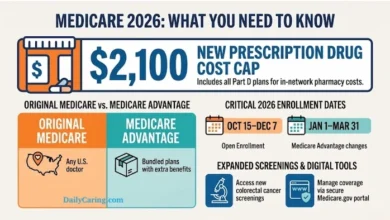
The financial and regulatory landscape surrounding these technologies also presents notable considerations for families navigating long-term care planning. Original Medicare, encompassing Part A and Part B, does not provide coverage for medical alert systems, as federal guidelines do not classify them as durable medical equipment. However, the commercial market has adapted to consumer demand by expanding options within Medicare Advantage (Part C) plans, some of which offer partial coverage, product discounts, or reimbursement incentives depending on state regulations and individual policy structures. Similarly, certain Medicaid waiver programs provide financial assistance for personal emergency response systems as part of broader home and community-based services initiatives.
As the market continues to expand toward the projected $11.8 billion valuation, manufacturers are expected to refine ambient intelligence further, integrating predictive health analytics capable of identifying subtle gait changes or early indicators of declining health prior to a critical event. This proactive paradigm shift promises to redefine aging in place, transforming homes into secure, connected environments that honor the autonomy of older adults while offering families an invaluable layer of reassurance. Ultimately, while no microchip or sensor can replicate the empathy and watchful eye of dedicated human caregiving, modern safety technology ensures that help is perpetually accessible, quietly safeguarding independence behind the scenes.