Supreme Court to Weigh Religious Freedom Against Disability Rights in High-Stakes Colorado Preschool Case

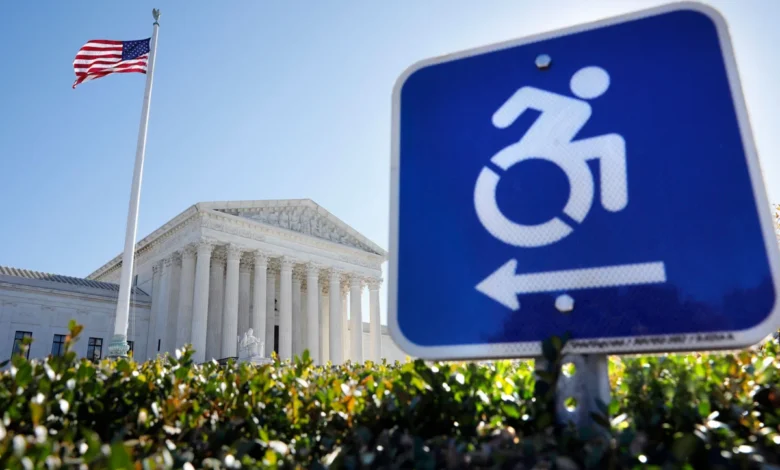
The intersection of religious liberty, state funding, and civil rights is set to collide at the highest court in the United States as justices prepare to hear arguments in a closely watched legal battle. The case, St. Mary Catholic Parish v. Roy, brings to the forefront profound constitutional questions regarding whether states can attach anti-discrimination mandates to public education funds, or if doing so unlawfully infringes upon the First Amendment rights of private religious institutions. However, beyond the traditional debate over church and state, a coalition of civil rights organizations has sounded the alarm, warning that the legal theories advanced by the plaintiffs could inadvertently dismantle decades of established protections for individuals with disabilities.
The controversy centers on Colorado’s universal preschool program, a state-funded initiative designed to expand access to early childhood education for families across the commonwealth. While private and religious schools are permitted to participate in the program and receive public subsidies, their participation is conditioned on an agreement to abide by state anti-discrimination rules. These regulations prohibit participating institutions from discriminating against prospective students and their families based on various protected characteristics, including race, sexual orientation, gender identity, and disability.
The Archdiocese of Denver, alongside several Catholic schools and participating parents, challenged these requirements in federal court. The core of their grievance is that the state’s nondiscrimination stipulations—specifically those protecting LGBTQ families—directly conflict with their religious doctrines and beliefs. To bolster their argument that the state’s enforcement is inconsistent and targeted, the religious schools pointed to specific exemptions built into the universal preschool program’s enrollment algorithm.
Chief among these exemptions is a preference system designed to ensure that children with disabilities receive the specialized services mandated by their individualized education programs, or IEPs. In their petition to the Supreme Court, the Catholic schools argued that the Colorado Department of Early Childhood treats its mandate not as a strict, universal obligation, but rather as a flexible guideline. They contend that the state accommodates certain interests—such as assisting students with disabilities and prioritizing historically marginalized communities—while simultaneously refusing to grant parallel accommodations for sincere religious exercise.
The legal question before the Supreme Court carries monumental implications: Can a state impose equal-opportunity mandates on private religious entities that accept public funding, or do such conditions violate the constitutional guarantee of free exercise of religion? While legal scholars have long debated the boundaries of government funding and religious autonomy, the current litigation has introduced an unexpected and contentious dimension concerning disability law.
The Broader Implications for Disability Rights
Disability advocates and legal experts across the nation have expressed profound concern over the arguments presented by the religious schools. At the heart of their alarm is the plaintiffs’ characterization of the state’s accommodation for students with disabilities. By pointing to the IEP preference algorithm as evidence of policy inconsistency, the Catholic schools have essentially framed the provision of special education accommodations as a form of preferential treatment that discriminates against students without disabilities.
Civil rights organizations argue that accepting this legal premise would fundamentally misinterpret the foundational principles of disability law. For decades, federal and state statutes—most notably the Americans with Disabilities Act (ADA) and the Individuals with Disabilities Education Act (IDEA)—have established that true equality often requires differential treatment to achieve accessible outcomes.
Peter Talkington, a staff attorney at the Disability Rights Education and Defense Fund (DREDF), emphasized the gravity of the potential precedent. He explained that federal and state laws guarantee individuals with disabilities specific measures, such as special education, reasonable accommodations, and accessible infrastructure, precisely because society is often structured in ways that exclude them. These provisions are designed to grant people with disabilities an equal opportunity to participate fully in public life—an access that individuals without disabilities experience by default. Talkington warned that if the Supreme Court validates the argument that accommodating students with disabilities constitutes unlawful discrimination against non-disabled peers, foundational civil rights protections could be systematically undermined, erasing decades of hard-fought progress.
Chronology and Legal Background
The path to the Supreme Court began shortly after Colorado lawmakers established the universal preschool program to provide tuition-free early education to four-year-olds across the state. As the program rolled out, state officials implemented administrative rules governing participating providers, including private and religious institutions.
Faced with mandates that required adherence to broad nondiscrimination policies, the Archdiocese of Denver and associated Catholic schools initiated legal action, seeking an injunction to block the enforcement of rules they argued infringed upon their religious freedom. Lower courts grappled with the complex interplay between the Free Exercise Clause of the First Amendment and the state’s compelling interest in preventing discrimination.
As the litigation escalated, the case attracted significant attention from interest groups nationwide, culminating in petitions to the Supreme Court. Recognizing the far-reaching constitutional questions at stake, the high court agreed to hear the case, setting the stage for oral arguments.
In response to the petition, a powerful coalition of disability advocacy groups mobilized. Led by DREDF, a total of 13 prominent organizations filed an amicus curiae brief urging the justices to reject the religious schools’ framing of disability accommodations.
Shira Wakschlag, senior executive officer for legal advocacy and general counsel at The Arc of the United States—an organization that participated in the joint amicus brief—stressed that the inclusion of IEP preferences in the preschool enrollment algorithm is not a loophole or arbitrary preference, but a necessary mechanism of compliance. Wakschlag noted that disability laws explicitly recognize that students with unique needs require specialized support to access the same educational environment as their peers. Whether it is a wheelchair-accessible school bus, assistive listening technology, or specialized behavioral instruction, these measures bridge the gap between physical existence and meaningful participation. Treating these essential accommodations as preferential treatment, she argued, fundamentally misunderstands the purpose and structure of modern disability legislation.
Fact-Based Analysis of Potential Outcomes
Legal analysts suggest that the Supreme Court’s eventual ruling, expected sometime next year, could reshape the landscape of public funding, religious liberty, and civil rights compliance.
If the court rules in favor of the Catholic schools on First Amendment grounds, it could significantly expand the rights of religious institutions to participate in public programs while maintaining exemptions from state anti-discrimination laws. Such a decision would likely build upon recent jurisprudence favoring religious autonomy, continuing a trend of rulings that have strengthened the rights of faith-based organizations in public contracting and social service delivery.
Conversely, a ruling upholding Colorado’s framework would affirm the authority of state governments to establish baseline civil rights conditions for entities receiving public dollars. However, legal observers note that the court’s approach to the specific arguments surrounding disability accommodations will be closely scrutinized. Even if the court decides primarily on the grounds of religious freedom, the justices’ treatment of how disability accommodations interact with equal protection principles will have lasting ramifications for future civil rights litigation.
As the legal community awaits oral arguments, advocates on both sides of the issue are preparing for a decision that will reverberate far beyond the borders of Colorado. For religious institutions, the case represents a critical test of their autonomy and right to operate in accordance with their faith while engaging in publicly funded initiatives. For the disability community, the stakes are existential, representing a defense of the fundamental legal structures that ensure equal access, accommodation, and inclusion in modern society.
Related posts: