New Comprehensive Voting Guide Empowers Citizens with Developmental and Cognitive Disabilities Ahead of Midterm Elections

As the nation gears up for the upcoming midterm elections, a coalition of prominent civil rights and legal organizations has released an extensive, newly updated resource designed to ensure that voters with developmental, intellectual, and psychiatric disabilities can successfully navigate the electoral process and exercise their fundamental democratic rights.
The comprehensive 88-page document—jointly published by the Bazelon Center for Mental Health Law, the National Disability Rights Network (NDRN), and the international law firm McDermott Will & Emery—serves as a vital manual for voters, family members, legal guardians, disability advocates, and institutional service providers. By breaking down complex federal statutes, state-specific competency frameworks, and polling place protocols, the guide aims to dismantle historical barriers that have long disenfranchised millions of Americans with cognitive and developmental impairments.
The release of this resource comes at a critical juncture for American democracy, where equal access to the ballot box remains a fiercely contested issue. Disability rights advocates emphasize that while legal protections have expanded significantly over the past several decades, practical obstacles—ranging from overly restrictive guardianship laws to uninformed poll workers—continue to prevent eligible voters with disabilities from making their voices heard.
Navigating the Legal Landscape: Federal Protections and State Hurdles
At the heart of the newly released guide is a detailed breakdown of the robust federal statutory framework that safeguards the voting rights of individuals with disabilities. The manual highlights cornerstone legislation, including the Americans with Disabilities Act (ADA), Section 504 of the Rehabilitation Act, the Help America Vote Act (HAVA), and the National Voter Registration Act (NVRA).
These federal laws explicitly prohibit discrimination against individuals with disabilities in public programs and services, mandate accessible voting systems, and protect the right of voters to receive physical and logistical assistance at the polls. However, the authors of the guide caution that the existence of these federal protections does not guarantee a frictionless voting experience at the local level.
One of the most persistent challenges addressed in the document is the misapplication of state voter competency laws. Historically, many states enacted broad, sweeping constitutional or statutory provisions that automatically stripped voting rights from individuals placed under conservatorships or guardianships, or from those diagnosed with specific psychiatric or intellectual conditions.
Although modern legal trends and landmark court rulings have steadily eroded these blanket disqualifications, the guide warns that local election officials and disability service providers frequently misunderstand the law. In some cases, well-meaning caregivers or misinformed poll workers have imposed unauthorized competency tests or subjective screening requirements that violate federal law and wrongfully turn eligible voters away.
To combat this, the 88-page manual provides a meticulous, state-by-state analysis of voter competency laws. It outlines clear pathways for individuals to maintain their voting rights while under guardianship, details legal procedures for restoring voting rights that have been improperly revoked, and offers strategic guidance on how to advocate for systemic legislative reform within individual states.
Understanding Guardianship and Self-Determination
The intersection of legal guardianship and voting rights remains one of the most complex areas of disability law. For generations, the appointment of a legal guardian was often treated as a wholesale forfeiture of an individual’s civil rights, including the right to cast a ballot in local, state, and federal elections.
The new voting guide addresses this issue head-on, promoting a philosophy of supported decision-making and maximum self-determination. The document underscores the legal distinction between general legal capacity and specific voting competency. Under the frameworks detailed in the guide, the mere existence of a guardianship order does not automatically invalidate a person’s right to vote unless a court has explicitly and specifically ruled that the individual lacks the capacity to understand the nature of voting.
Jennifer Mathis, deputy director of the Bazelon Center for Mental Health Law, emphasized the foundational importance of this issue during the rollout of the publication.
"Voting is in many ways the most fundamental of rights, as it is the pathway for people to secure all other rights," Mathis stated. "We want to make sure people with disabilities have the tools they need to be able to exercise their right to vote, to ensure their interests are represented by elected officials, and to hold their governments accountable."
The guide encourages families and legal guardians to adopt least-restrictive alternatives to full guardianships whenever possible, preserving the autonomy of individuals with autism, intellectual disabilities, and mental health conditions. Furthermore, it outlines legal strategies for individuals seeking to modify existing guardianship decrees to explicitly reclaim their franchise.
Practical Assistance at the Polling Place
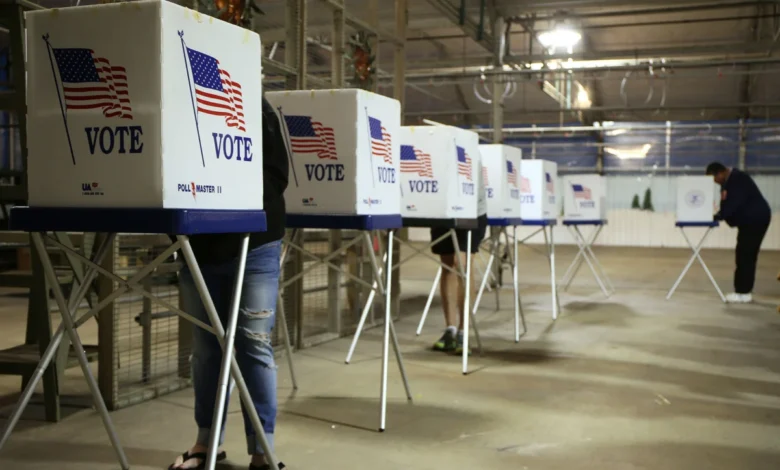
Beyond courtroom battles and legislative text, the manual provides pragmatic, step-by-step instructions for the physical act of voting. Recognizing that cognitive, physical, or sensory impairments can present challenges inside a voting booth, federal law guarantees voters the right to receive personalized assistance.
According to the guide, a voter with a disability is legally entitled to bring a person of their choice into the voting booth to help them read ballots, understand instructions, and operate voting machines. The only restrictions under federal law are that the assisting person generally cannot be the voter’s employer or a union representative representing the voter’s workplace.
To ensure that this assistance remains empowering rather than coercive, the guide outlines strict ethical guidelines for helpers:
- Helpers must thoroughly and objectively explain instructions and ballot measures without steering the voter toward specific candidates or outcomes.
- Helpers must strictly follow the explicit verbal and non-verbal wishes of the individual they are assisting.
- Helpers must maintain the absolute privacy and confidentiality of the voter’s ballot choices.
Additionally, the guide includes a downloadable, printable fact sheet designed specifically for voters with disabilities to carry with them into the voting booth. This portable resource acts as a quick-reference card, summarizing the bearer’s legal rights and providing immediate talking points should they encounter resistance or confusion from poll workers.
Handling Poll Disruptions and Provisional Ballots
Even with thorough preparation, voters with disabilities occasionally face administrative hurdles, registration discrepancies, or improper challenges to their eligibility on Election Day. The advocacy groups behind the guide stress the importance of knowing how to respond when things go wrong at the polling place.
If a voter’s eligibility is challenged by an election worker or a poll watcher—frequently due to administrative errors or confusion surrounding a voter’s cognitive status—the manual clearly states that the individual is still legally entitled to cast a provisional ballot.
A provisional ballot is designed to ensure that no eligible voter is permanently disenfranchised due to an administrative mix-up or an improper challenge. When a provisional ballot is cast, election officials set the envelope aside to investigate the voter’s registration status and eligibility following Election Day. If the voter is determined to be eligible, the vote is officially counted and added to the final tally.
The guide advises voters to remain calm, request to speak with a chief election judge or county election official if they encounter resistance, and immediately contact established voter protection hotlines—such as the Election Protection coalition (866-OUR-VOTE)—if their rights are abridged.
Broader Implications for American Democracy
The release of this comprehensive voter guide highlights a broader, ongoing evolution in American election administration: the shift toward universal accessibility. For decades, the disability rights movement focused primarily on physical accessibility—ensuring that polling places had wheelchair ramps, accessible parking spaces, and compliant voting booths.
While physical barriers remain a significant hurdle, advocates point out that cognitive and invisible disabilities have historically received far less attention in election planning and poll worker training. By addressing issues of intellectual competency, guardianship, and supported decision-making, the Bazelon Center, NDRN, and McDermott Will & Emery are pushing the boundaries of what accessibility means in the 21st century.
Data from the nonpartisan Rutgers University Program for Disability Research underscores the immense scale of this electorate. Millions of voting-age Americans live with some form of disability, and when family members and direct caregivers are included, disability-related voting issues directly impact a massive block of the American electorate. Political scientists note that candidates ignore this demographic at their peril, as voters with disabilities and their allies represent a highly motivated constituency focused on healthcare, community integration, civil rights, and economic security.
As early voting gets underway and Election Day approaches, civil rights organizations hope that the widespread distribution of this guide will significantly reduce instances of voter suppression and administrative disenfranchisement. By equipping individuals with cognitive and developmental disabilities with knowledge, confidence, and legal backing, the coalition aims to move closer to the democratic ideal of a truly universal franchise.
The complete 88-page 2026 Voter Guide is publicly available for download on the Bazelon Center for Mental Health Law’s official website, alongside supplementary materials and state-specific legal toolkits. Advocacy groups, service provider agencies, and community organizations across the country are actively distributing the document to ensure that every eligible citizen is prepared to make their voice heard at the ballot box.