The Legal Framework and Origins of Kemp-Kasten
The Kemp-Kasten amendment was the congressional response to the Reagan administration’s 1984 decision to withhold funding from the UNFPA. Named after its sponsors, Representative Jack Kemp and Senator Bob Kasten, the amendment was designed to address concerns regarding the UNFPA’s activities in China, where reports of coercive population control measures, including forced abortions and sterilizations, had surfaced. At the 2nd International Conference on Population in 1984, the Reagan administration announced a major policy shift, known as the "Mexico City Policy," which restricted U.S. family planning assistance to foreign non-governmental organizations (NGOs) that performed or promoted abortion. Kemp-Kasten was established as a complementary measure, specifically targeting multilateral organizations and government-managed programs.
The amendment’s language is broad, stating that no U.S. funds may be made available to any organization or program that the President determines is involved in coercive practices. This determination is not a permanent legal ban but a discretionary finding made by the executive branch. Consequently, the application of Kemp-Kasten has historically aligned with partisan lines: Republican administrations have generally invoked the amendment to withhold funds from the UNFPA, while Democratic administrations have typically found the agency in compliance and restored funding.
Chronology of Presidential Determinations
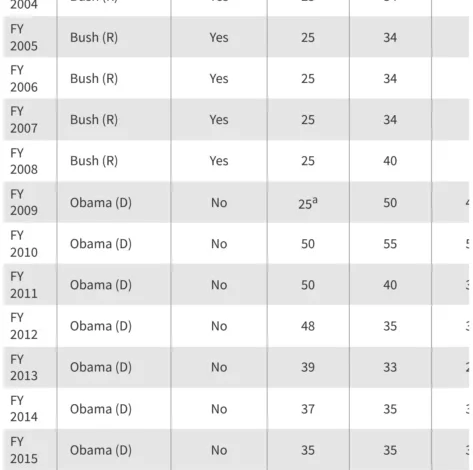
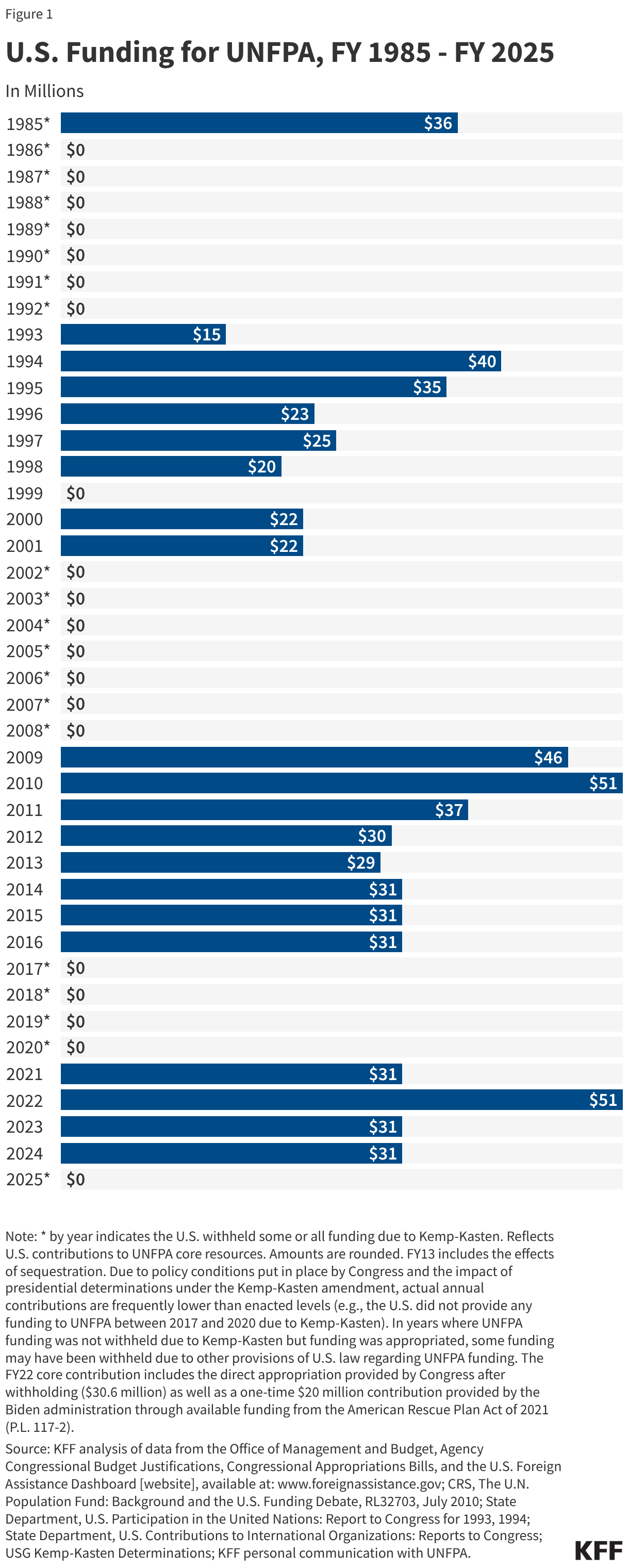
The history of the Kemp-Kasten amendment is marked by a clear divide in executive interpretation. Since its inception 41 years ago, the provision has been included in the State and Foreign Operations appropriations act every fiscal year. However, the decision to actually invoke the amendment and withhold funds has occurred in 20 of those 41 years.
Under the Reagan and George H.W. Bush administrations, funding for the UNFPA was largely withheld due to concerns over the agency’s presence in China. The Clinton administration reversed this stance, providing funding throughout its two terms. The George W. Bush administration initially provided $21.5 million in 2001 but shifted its position in 2002. Following an assessment by a State Department team, the Bush administration invoked Kemp-Kasten, arguing that the UNFPA’s support for the Chinese government’s reproductive health infrastructure constituted participation in the management of a coercive program, even if the UNFPA did not directly perform coercive acts.
The Obama administration restored funding in 2009, maintaining it until the end of its tenure. In 2017, the first Trump administration invoked Kemp-Kasten once again. The justification provided at the time stated that while there was no evidence of direct engagement in coercive acts by the UNFPA, the agency’s partnership with China’s National Health and Family Planning Commission was sufficient to trigger the amendment. Most recently, on January 24, 2025, at the start of his second term, President Trump issued a memorandum directing the Secretary of State to initiate a new Kemp-Kasten determination. By May 2025, the United States officially invoked the amendment to withhold funding from the UNFPA for the fiscal year.
Financial Impact and the Role of the US as a Donor
The United States has historically been one of the largest donors to the UNFPA, making the invocation of Kemp-Kasten a significant financial blow to the agency. In 2024, the U.S. was the largest single donor, contributing $231.8 million, which accounted for approximately 17% of the agency’s total contributions. This funding was divided into two categories: core support ($30.5 million) and non-core support ($201.3 million).
Core resources are voluntary contributions that allow the UNFPA the flexibility to support any of its global activities, from maternal health kits in conflict zones to data collection for development. Non-core resources are earmarked for specific projects or geographic regions. Because the UNFPA does not assess required "dues" from member states, it relies entirely on voluntary contributions. When the U.S. invokes Kemp-Kasten, it removes a massive portion of the agency’s predictable budget, often forcing the UNFPA to seek "bridge funding" from other donor nations like the United Kingdom, Sweden, or the Netherlands to prevent the closure of clinics and the cessation of services.
Investigating Allegations of Coercion
The central point of contention regarding Kemp-Kasten is whether the UNFPA actually supports coercive practices. Over the decades, multiple independent and governmental investigations have sought to answer this question. In 2002, a three-person assessment team sent to China by the U.S. State Department found no evidence that the UNFPA "knowingly supported or participated in the management of a program of coercive abortion or involuntary sterilization."
Similar conclusions were reached by the British All-Party Parliamentary Group on Population, Development, and Reproductive Health in 2002 and an Interfaith Delegation in 2003. These groups argued that the UNFPA’s presence in China actually served to move the country toward international human rights standards by promoting voluntary family planning and reproductive health rights.
Despite these findings, proponents of invoking Kemp-Kasten argue that the "participation in management" clause should be interpreted broadly. They contend that by providing technical assistance, equipment, and training to Chinese government agencies that oversee population policies, the UNFPA becomes complicit in the state’s overarching coercive framework. This interpretation has remained the primary justification for withholding funds during Republican presidencies.
Additional Legislative Requirements and Fund Reallocation
Kemp-Kasten is not the only legislative hurdle for UNFPA funding. Congress has enacted several other provisions to ensure that U.S. dollars are not used for prohibited activities. These include:
- The Dollar-for-Dollar Withholding: The U.S. must reduce its contribution to the UNFPA by the exact amount the agency spends on its program in China.
- Segregated Accounts: The UNFPA must keep U.S. funds in a separate account and ensure they are not commingled with other funds.
- Prohibition on Abortion Funding: No U.S. funds may be used by the UNFPA to pay for abortions.
- The "No China" Rule: U.S. funds cannot be used to fund any program specifically within the People’s Republic of China.
When funding is withheld from the UNFPA under Kemp-Kasten, the law typically requires that the money be reallocated to other global health programs, such as USAID’s bilateral family planning and maternal health initiatives. However, this reallocation is not always guaranteed. In 2025, for instance, following the Trump administration’s determination, Congress moved to rescind the funding entirely as part of a larger foreign aid reduction package, meaning the funds were permanently canceled rather than redirected to other reproductive health services.
Broader Implications for Global Health and Diplomacy
The periodic withdrawal of U.S. support for the UNFPA has implications that extend far beyond the agency’s headquarters. The UNFPA is a primary provider of reproductive health services in humanitarian crises and conflict zones, such as Yemen, Syria, and South Sudan. The loss of U.S. funding can lead to a shortage of "dignity kits," which contain essential hygiene supplies for women, and a reduction in the availability of emergency obstetric care, potentially increasing maternal mortality rates.
Furthermore, the invocation of Kemp-Kasten often coincides with the reinstatement of the Mexico City Policy, creating a cumulative effect on the global health landscape. While the Mexico City Policy targets NGOs, Kemp-Kasten targets the UN’s primary reproductive health agency. Together, these policies represent a significant retrenchment of U.S. leadership in international family planning.
From a diplomatic perspective, the "ping-pong" nature of U.S. funding creates instability within the United Nations. Long-term planning for global health goals, such as the Sustainable Development Goals (SDGs) related to maternal health and gender equality, becomes difficult when the largest donor fluctuates between being the agency’s biggest supporter and its most vocal critic every four to eight years. As the international community looks toward the future of population dynamics and reproductive rights, the Kemp-Kasten amendment remains one of the most influential and debated tools in the U.S. foreign policy arsenal.