Women’s Experiences Accessing Health Information Online: Trusted Sources and Contraceptive Information

The modern digital landscape has fundamentally transformed how individuals seek, share, and consume health care information, offering unprecedented access to medical knowledge while simultaneously accelerating the velocity of widespread misinformation. According to a nationally representative study released by KFF, the vast majority of reproductive-age adults turn to online platforms for health guidance. However, this reliance on search engines, social media applications, and artificial intelligence tools has exposed millions of women to pervasive falsehoods regarding reproductive health and contraception, triggering tangible shifts in patient behavior and exposing deep vulnerabilities in public trust.
The findings are derived from the extensive 2026 KFF Women’s Health Survey, a comprehensive evaluation fielded between March 11 and April 14, 2026. The research captured responses from a nationally representative sample of 5,854 adults aged 18 to 64—including 4,688 women and 1,148 men—with a targeted analytical focus on reproductive-age women (n = 3,538) and men (n = 840) between the ages of 18 and 49. Designed and executed by KFF women’s health researchers in collaboration with research firm SSRS, the survey utilized advanced probability-based sampling panels to evaluate how digital habits intersect with modern medical decision-making.
Widespread Reliance on Digital Tools and AI for Medical Guidance
The KFF data indicates that searching for health advice online is nearly universal among younger adults. Approximately 87% of reproductive-age women and 86% of men reported looking for health-related information or advice via internet search engines, social media, or AI chatbots over the preceding year.
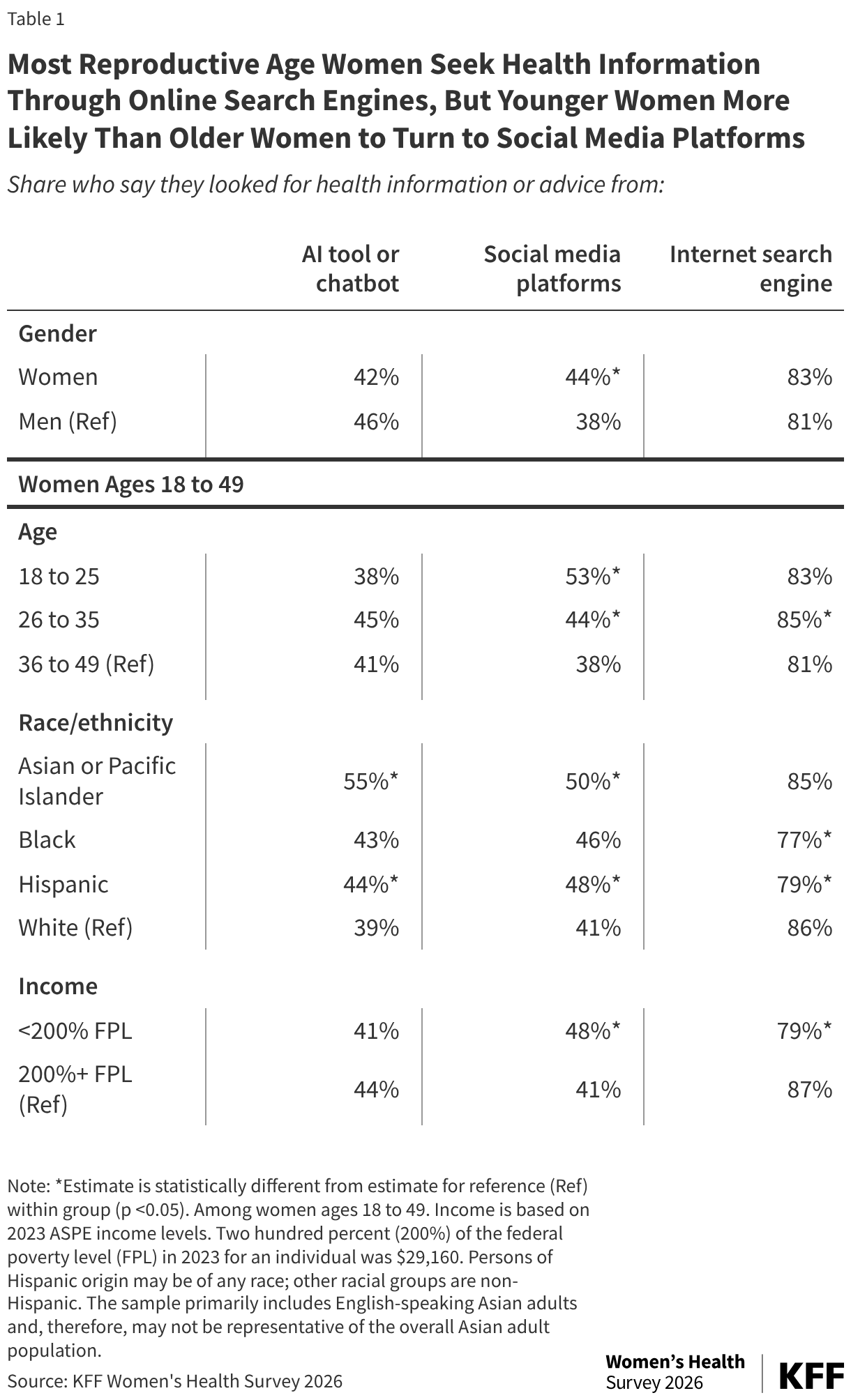
Traditional search engines such as Google or Bing remain the primary gateway for digital health inquiries, utilized by 83% of women and 81% of men. Nevertheless, newer technologies have carved out a substantial footprint. Roughly 42% of women and 46% of men reported utilizing artificial intelligence tools or conversational chatbots—such as ChatGPT, Google Gemini, or Claude—to address medical questions. Furthermore, nearly one in four women (24%) reported employing all three avenues: search engines, social media platforms, and AI tools—in their pursuit of health knowledge.
Demographic breakdowns within the survey reveal notable variances in how different populations leverage digital channels. Asian (55%) and Hispanic (44%) women reported utilizing AI tools for health information at higher rates than White women (39%). Similarly, social media adoption for health queries was more prevalent among Asian (50%) and Hispanic (48%) women compared to White women (41%), as well as among young adults aged 18 to 25 (53%) and individuals from lower-income households.
Public health analysts note that these disparities often reflect systemic barriers to traditional care. Previous KFF polling highlights that younger adults and low-income demographics frequently lean on social media and digital forums because they lack a regular primary care provider or face prohibitive out-of-pocket costs that prevent them from consulting a licensed medical professional.
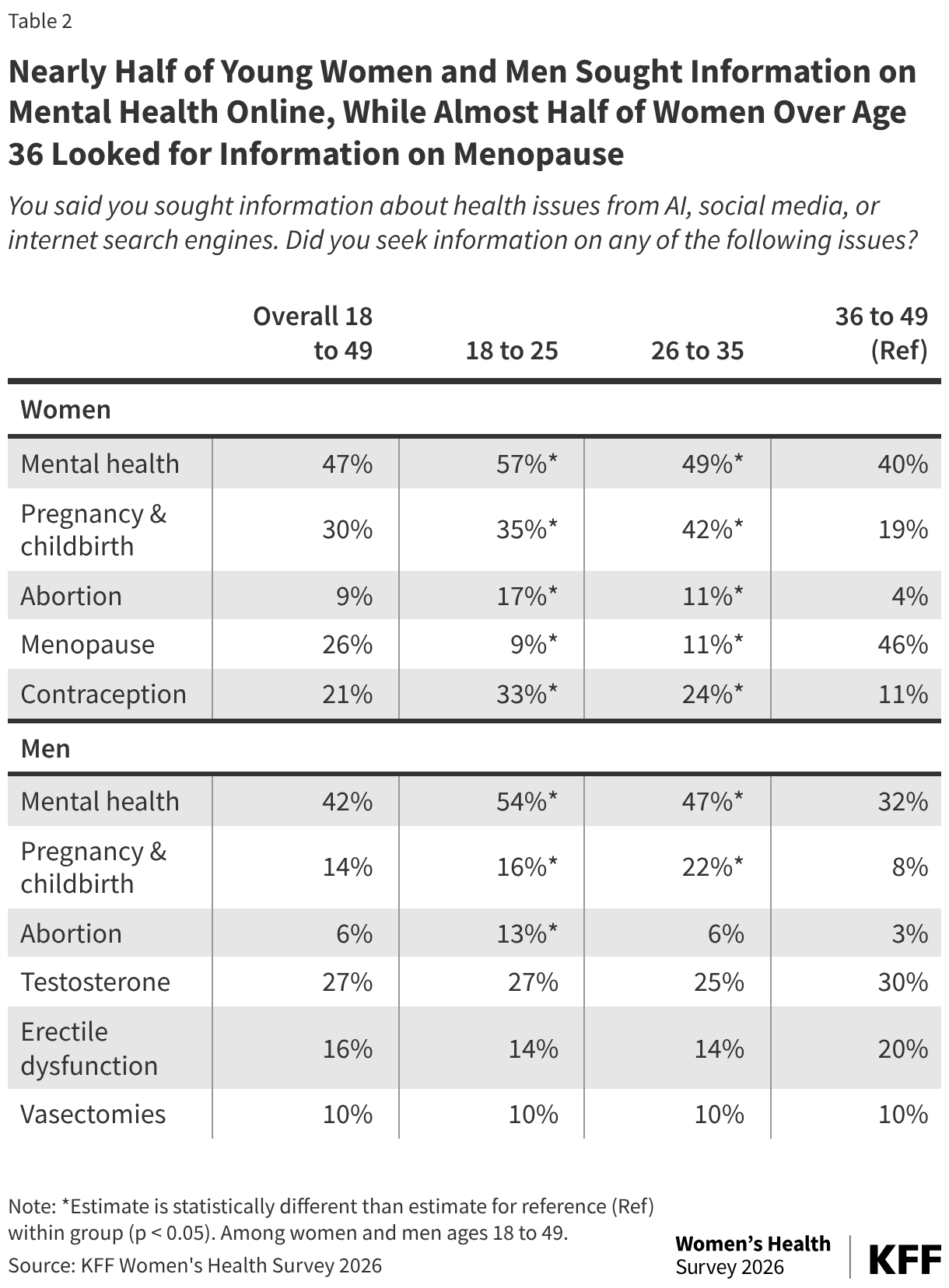
When examining specific health topics, mental health emerged as the predominant subject of inquiry. Nearly half (47%) of reproductive-age women—and 57% of those aged 18 to 25—sought mental health guidance online. Other notable topics included pregnancy and childbirth, which were researched by 30% of reproductive-age women overall, jumping to 71% among women who had been pregnant or given birth within the prior three years. Men demonstrated similar behavioral trends regarding mental health, with 42% seeking online guidance on the subject, a figure that climbed to 54% among men aged 18 to 25.
Contraception Content and Its Direct Impact on Patient Behavior
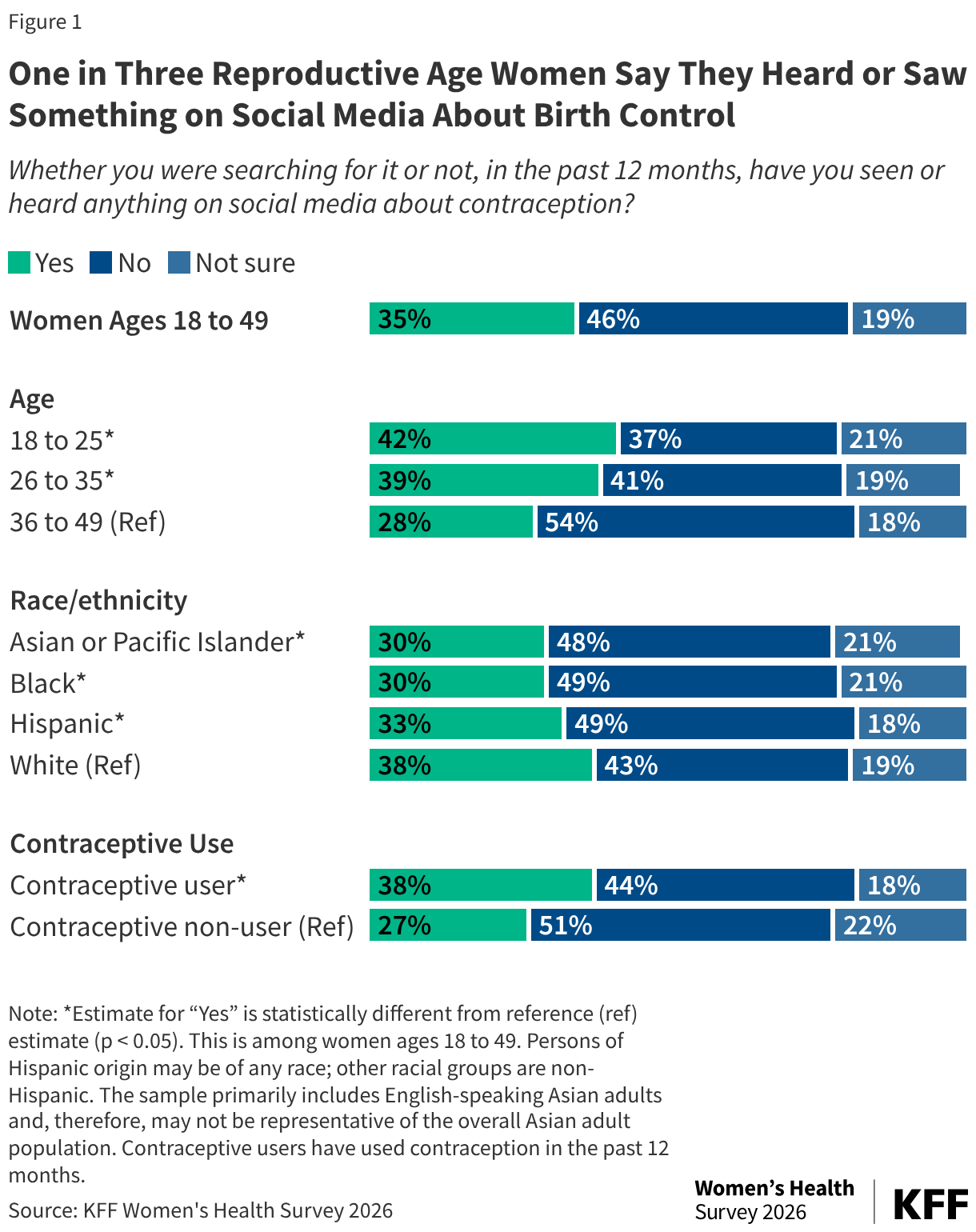
Social media has rapidly evolved into an influential environment for reproductive health discourse, whether users actively seek out the content or encounter it passively through algorithmic feeds. According to the KFF survey, 35% of women aged 18 to 49 reported seeing or hearing content about contraception on social media within the preceding 12 months. Exposure was notably higher among younger demographics, with 42% of women aged 18 to 25 and 39% of those aged 26 to 35 recalling such content, compared to 28% of women aged 36 to 49.
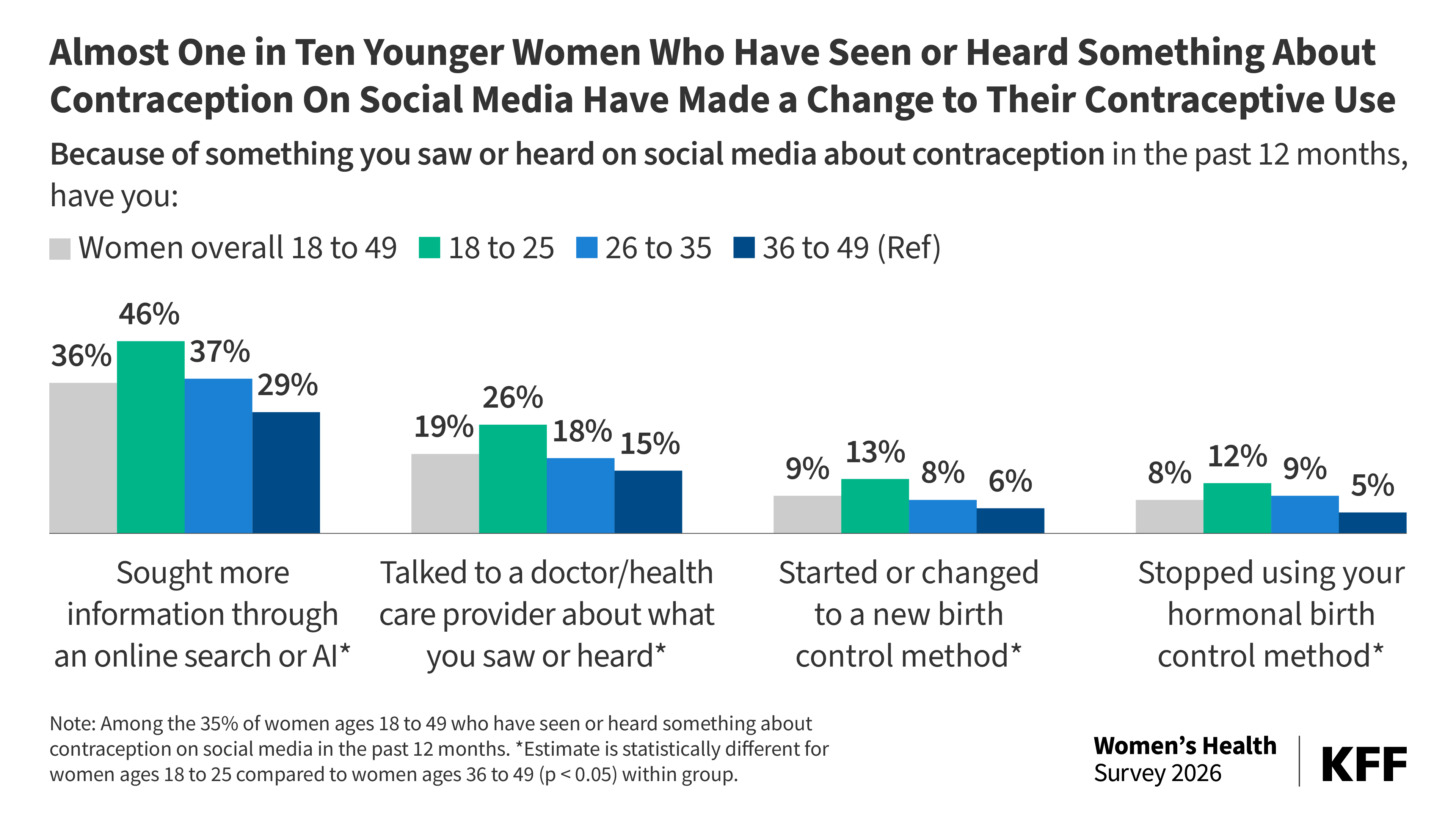
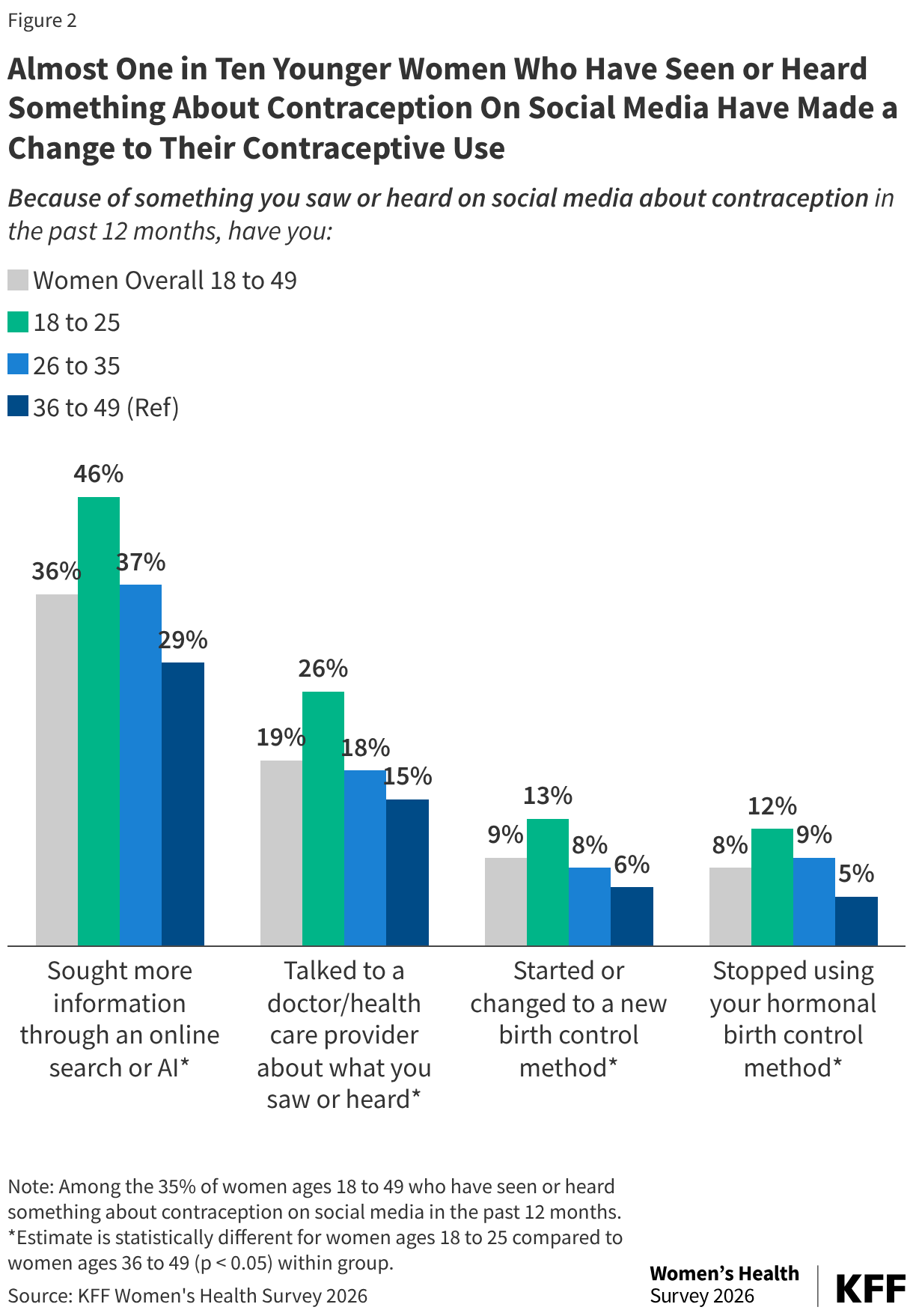
Critically, exposure to online contraceptive discourse frequently translates into real-world behavioral changes. Among women who encountered contraceptive information on social media, roughly 10% reported altering their birth control practices. This included 8% who stopped using hormonal birth control—representing 3% of all reproductive-age women—and 9% who started or switched to a new method.
The digital ecosystem also catalyzed further research and professional consultation: 36% of those exposed to social media contraception content conducted additional online searches or consulted AI tools, while 19% discussed what they saw with a doctor or healthcare provider. Younger women aged 18 to 25 were consistently more likely to take these consequential steps than older cohorts, with 12% stopping hormonal birth control, 26% consulting a clinician, and 46% performing follow-up online research.
Proliferation of False and Misleading Contraception Claims
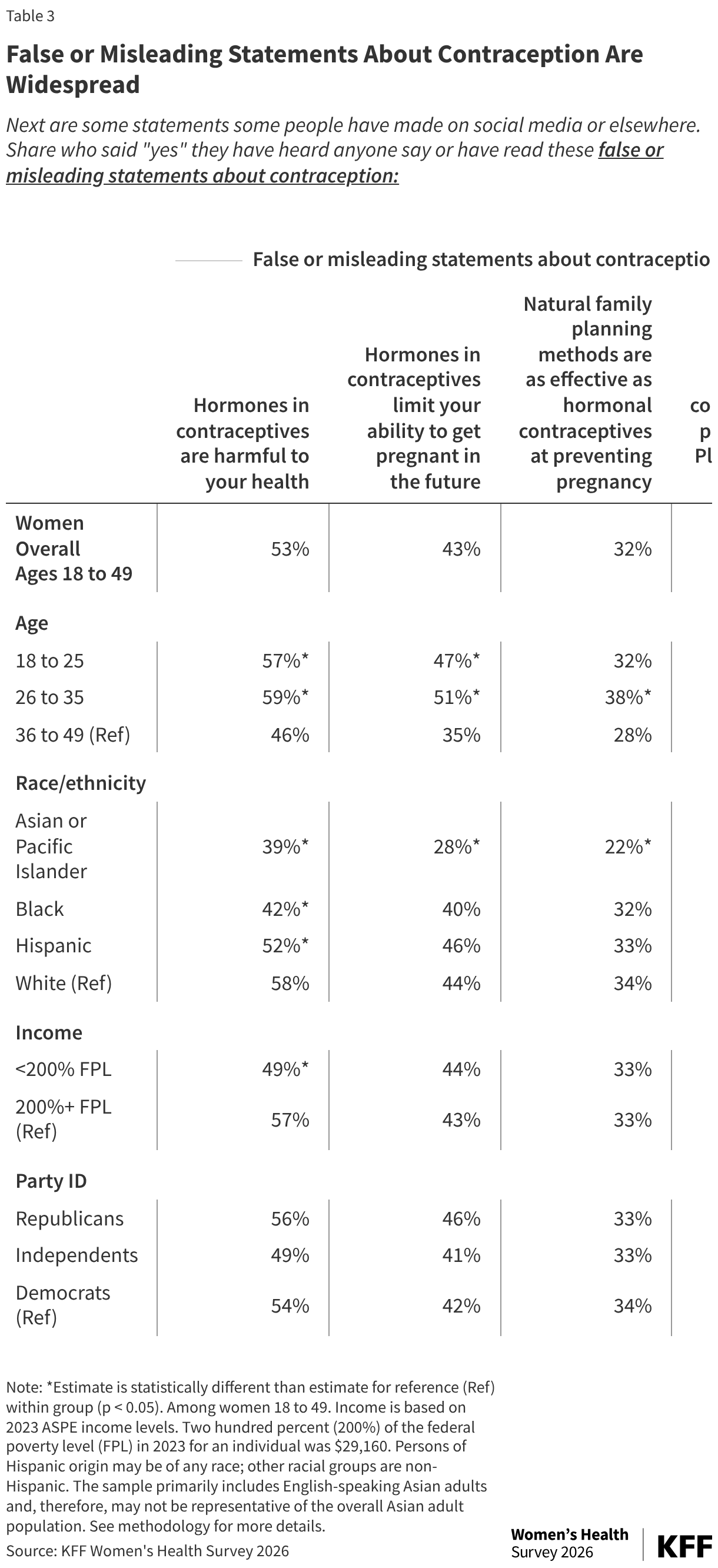
The rapid dissemination of digital health content has simultaneously amplified a steady stream of false and misleading narratives. The KFF survey evaluated exposure to four prevalent pieces of misinformation regarding contraception, revealing that millions of reproductive-age women regularly encounter factually incorrect medical claims.
- Harmful Hormones: Over half (53%) of reproductive-age women reported seeing or hearing the false claim that hormones contained in contraceptives are harmful to human health.
- Fertility Impairment: Approximately 43% were exposed to the erroneous statement that hormonal contraceptives permanently limit a person’s future ability to conceive.
- Natural Family Planning Efficacy: One in three women (32%) encountered the misleading assertion that natural family planning methods are equally as effective at preventing pregnancy as hormonal contraceptives, despite clinical data from the American College of Obstetricians and Gynecologists (ACOG) showing natural methods hold a significantly lower typical-use effectiveness rate.
- Emergency Contraception Misconceptions: An identical 32% reported hearing the false claim that emergency contraceptive pills, such as Plan B, cause abortions. Medical science confirms that emergency contraceptives do not terminate established pregnancies, prevent fertilized egg implantation, or affect a developing embryo.
Public health advocates and medical professionals have expressed deep concern over these falsehoods, noting that unverified claims circulating on platforms like TikTok, Instagram, and X (formerly Twitter) routinely undermine patient adherence to safe, highly effective birth control regimens.
Landscape of Public Trust in Health Information Sources
Amid the influx of digital advice and conflicting claims, public confidence remains heavily anchored in traditional medical institutions, though institutional trust varies widely across demographic lines.
The vast majority of reproductive-age women (86%) and men (79%) indicated they place a "great deal" or "fair amount" of trust in their personal healthcare providers for reliable medical information. This enduring confidence outpaces all other information sources by a wide margin, though trust in clinicians experiences a slight dip among lower-income populations.
Conversely, trust in digital channels remains comparatively low. Only 25% of reproductive-age women reported trusting AI tools and chatbots for reliable medical data, while just 15% expressed trust in social media platforms and digital influencers. However, trust in social media influencers rose to over one in five (21%) among the youngest cohort of women aged 18 to 25, underscoring a generational divergence in information consumption habits.
Public health agencies also navigate a complex trust environment. Roughly 48% of reproductive-age women expressed trust in federal health agencies such as the Centers for Disease Control and Prevention (CDC) and the Department of Health and Human Services (HHS). This reading follows a tumultuous period marked by administrative turnover, workforce restructuring, and federal health website revisions. Additionally, 26% of reproductive-age women reported trusting HHS leadership under Robert F. Kennedy Jr., while 55% expressed trust in state and local health departments, with notably higher confidence registered among Asian women (63%) and self-identified Democrats (64%).
Implications for the Future of Public Health Communication
The 2026 KFF survey underscores a critical paradigm shift in contemporary medicine: patients are increasingly diagnosing, researching, and questioning their care pathways through algorithms and social networks long before stepping into a clinical examination room.
As misinformation regarding reproductive health and contraception continues to saturate digital feeds, healthcare providers and public health institutions face an escalating imperative to meet patients where they are. Experts suggest that countering widespread medical falsehoods will require clinicians and health agencies to proactively engage on digital and social media platforms, providing accessible, evidence-based education to help patients separate clinical fact from viral fiction.
Related posts: