U.S. Global Health Strategy and Bilateral Program Implementation for Fiscal Year 2024

The United States government maintains its position as the preeminent leader in international health assistance, providing critical support to global health programs in more than 80 countries through a sophisticated network of bilateral agreements, regional initiatives, and contributions to multilateral organizations. As the world navigates the post-pandemic landscape, the fiscal year (FY) 2024 data reveals a comprehensive and multifaceted approach to global wellness, focusing on infectious disease control, reproductive health, and the strengthening of health systems to prevent future global emergencies. This expansive portfolio is managed primarily through the U.S. Agency for International Development (USAID), the Department of State, and the Centers for Disease Control and Prevention (CDC), reflecting a whole-of-government commitment to human longevity and regional stability.
The Strategic Framework of U.S. Bilateral Assistance
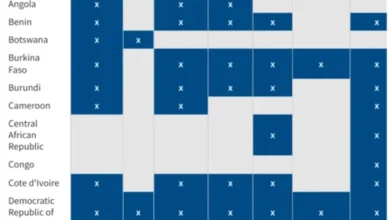
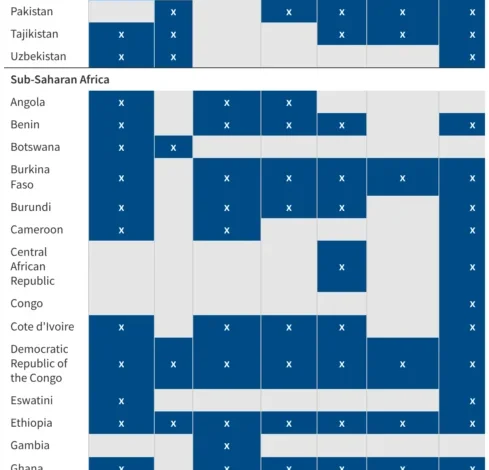
The architecture of U.S. global health engagement is built upon seven core program areas, each designed to address specific health challenges that threaten economic stability and human life. According to the latest FY 2024 tracking data, these programs are not distributed uniformly but are strategically assigned based on a country’s specific epidemiological profile and existing healthcare infrastructure.
The President’s Emergency Plan for AIDS Relief (PEPFAR) remains the cornerstone of this engagement. Launched in 2003, PEPFAR has transformed the global HIV/AIDS landscape, moving from a strategy of emergency crisis management to one of sustainable epidemic control. In FY 2024, PEPFAR programs continue to prioritize the "95-95-95" targets: ensuring 95% of people living with HIV know their status, 95% of those diagnosed are on antiretroviral therapy (ART), and 95% of those on ART achieve viral suppression.
Parallel to HIV efforts is the President’s Malaria Initiative (PMI). Since its inception in 2005, PMI has been instrumental in reducing malaria mortality rates globally. The initiative currently focuses on the distribution of insecticide-treated bed nets, indoor residual spraying, and the expansion of rapid diagnostic testing and artemisinin-based combination therapies. In FY 2024, the program has placed an increased emphasis on addressing the threat of insecticide resistance and the spread of invasive mosquito species in Africa.
Comprehensive Health Pillars: From Tuberculosis to Nutrition
Beyond high-profile initiatives like PEPFAR and PMI, the U.S. maintains robust programs in Tuberculosis (TB), Family Planning and Reproductive Health (FP/RH), and Maternal and Child Health (MCH). Tuberculosis remains one of the world’s deadliest infectious diseases, and U.S. bilateral support focuses on finding the "missing cases"—individuals who have TB but remain undiagnosed—and treating drug-resistant strains that threaten global health security.
In the realm of Maternal and Child Health, U.S. programs target 25 "priority countries" that account for the majority of global maternal and child deaths. These programs implement high-impact interventions such as skilled birth attendance, newborn resuscitation, and immunization. Closely linked to MCH is the U.S. Nutrition program, which addresses stunting and wasting in children under five, as well as micronutrient deficiencies in pregnant women. These interventions are critical, as malnutrition is an underlying cause of nearly half of all child deaths globally.
The FY 2024 tracker also highlights the growing importance of Global Health Security (GHS). This program area is dedicated to helping countries build the core capacities required by the International Health Regulations (IHR). This includes strengthening laboratory networks, enhancing real-time disease surveillance, and training a "field epidemiology" workforce capable of detecting and responding to outbreaks at their source before they become global pandemics.
A Chronology of U.S. Global Health Leadership
The current scale of U.S. involvement is the result of decades of policy evolution. The modern era of U.S. global health began in earnest with the Foreign Assistance Act of 1961, which created USAID. However, the trajectory shifted significantly in the early 2000s.
- 2003: President George W. Bush announces PEPFAR during the State of the Union address, marking the largest commitment by any nation to address a single disease.
- 2005: The President’s Malaria Initiative is launched, initially targeting 15 high-burden countries in Africa.
- 2009: The Global Health Initiative (GHI) is introduced by the Obama administration to foster a more integrated approach to health assistance, emphasizing the strengthening of health systems.
- 2014: The Global Health Security Agenda (GHSA) is launched in response to the Ebola outbreak in West Africa, formalizing the commitment to pandemic preparedness.
- 2021-2023: The COVID-19 pandemic prompts a massive surge in global health spending, leading to the permanent integration of pandemic preparedness into the bilateral health portfolio.
- 2024: The U.S. launches the new "Global Health Security Strategy," which aims to protect the health and safety of the American people and populations worldwide by strengthening the ability of countries to prevent, detect, and respond to infectious disease threats.
Regional Analysis and Distribution of Efforts
The FY 2024 data illustrates a heavy concentration of U.S. bilateral health programs in Sub-Saharan Africa. This region receives the largest share of funding and programmatic attention due to the high burden of infectious diseases and the presence of fragile health systems. Countries such as Kenya, Nigeria, South Africa, and Uganda host nearly all seven program areas, reflecting deep-seated partnerships.
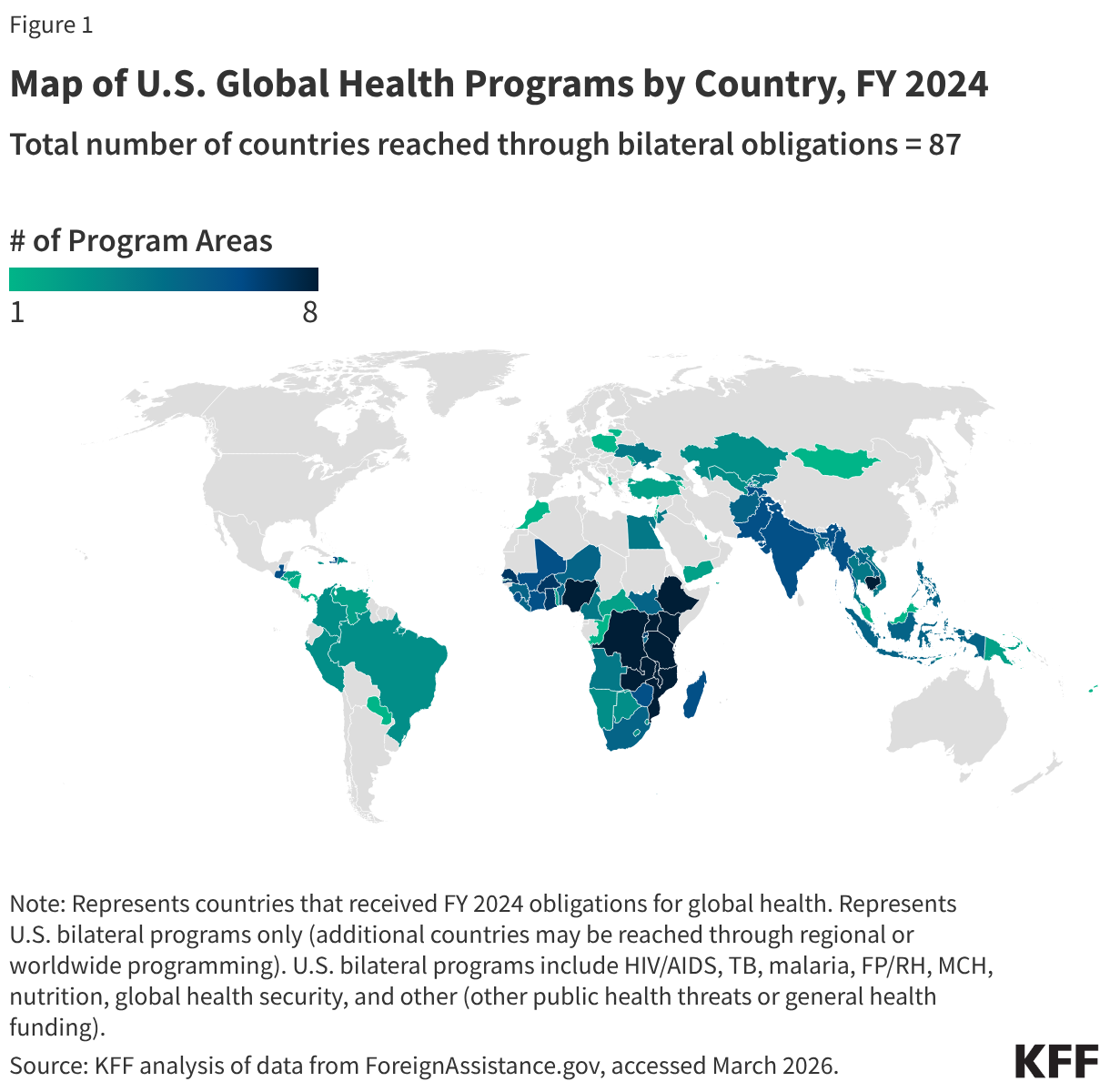
In Asia, the focus shifts slightly toward Tuberculosis and Global Health Security. Countries like Vietnam, Indonesia, and the Philippines are key partners in monitoring zoonotic diseases (diseases that jump from animals to humans) and managing the rise of multi-drug resistant TB. In the Western Hemisphere, U.S. efforts are often centered on Family Planning, Nutrition, and Maternal Health, particularly in countries like Guatemala and Haiti, while also addressing regional health security threats.
The "regional efforts" mentioned in the FY 2024 tracker refer to programs that transcend national borders. For instance, the U.S. supports regional surveillance networks in Southeast Asia and the Amazon basin, recognizing that viruses and bacteria do not respect political boundaries.
Supporting Data and Financial Implications
While the specific dollar amounts for FY 2024 are subject to final congressional appropriations and outlays, historical data provides a clear picture of the scale of investment. The United States typically allocates approximately $10 billion to $12 billion annually for global health through the Department of State and USAID.
- PEPFAR Funding: Historically accounts for roughly half of the total global health budget, supporting life-saving treatment for over 20 million people.
- Malaria and TB: These programs combined usually receive over $1 billion annually.
- Global Health Security: This area has seen the most significant percentage increase in the last five years, moving from a niche concern to a multi-billion dollar priority.
The economic argument for these investments is significant. According to analysis by the Lancet Commission on Investing in Health, every dollar invested in global health can yield a return of up to $20 in increased economic productivity in low- and middle-income countries. By stabilizing health systems, the U.S. reduces the need for costly emergency humanitarian interventions and fosters more reliable trading partners.
Official Responses and Diplomatic Perspectives
U.S. officials emphasize that global health assistance is not merely an act of altruism but a core component of national security. In a recent briefing regarding the FY 2024 strategy, representatives from the State Department noted that "health security is national security." The rationale is that a disease outbreak in a remote village can reach a major U.S. city in less than 36 hours.

International partners and multilateral organizations, such as the World Health Organization (WHO) and the Global Fund to Fight AIDS, Tuberculosis and Malaria, have frequently lauded the U.S. for its "predictable and principled" leadership. However, there is also an ongoing dialogue regarding "localization." In FY 2024, there is a concerted effort by USAID to shift more implementation power and funding directly to local organizations within partner countries, rather than relying solely on large international NGOs. This move is intended to ensure that health gains are sustainable long after U.S. direct funding might decrease.
Broader Impact and Future Implications
The implications of the U.S. global health tracker for FY 2024 extend beyond medical statistics. These programs serve as a vital tool of "soft power," building goodwill and strengthening diplomatic ties. In many partner nations, the U.S. is seen primarily through the lens of the health clinics it supports and the vaccines it provides.
Looking forward, the U.S. global health strategy faces several emerging challenges. The intersection of climate change and health is a growing concern, as shifting weather patterns alter the habitats of disease-carrying insects and increase the frequency of water-borne illnesses. Furthermore, the rise of non-communicable diseases (NCDs) like diabetes and cardiovascular disease in developing nations presents a new frontier that the current infectious-disease-heavy portfolio may eventually need to address.
The FY 2024 data serves as a roadmap for how the United States intends to navigate these complexities. By maintaining a presence in over 80 countries and covering a spectrum of health needs from nutrition to pandemic defense, the U.S. is not only saving lives but is also constructing a global safety net. As the tracker is updated periodically, it will continue to provide a transparent look at how American resources are being deployed to meet the most pressing biological threats of the 21st century.
In conclusion, the U.S. bilateral global health programs for FY 2024 represent a mature, data-driven, and strategically vital enterprise. Through the continuation of PEPFAR, the expansion of Global Health Security, and a renewed focus on maternal and child outcomes, the United States remains the central pillar of the global health community, ensuring that progress made over the last two decades is preserved while preparing for the health challenges of the future.
Related posts: